Blog

“Go to physiotherapy.” That’s what you hear at the surgery, and you nod while having no idea who you should actually see. A physiotherapist? A physical therapist? Are they the same? And where does the massage therapist fit in, along with that “medical fitness” trainer your neighbour mentioned? Rehabilitation is teamwork, but if you don’t know who does what, you can easily knock on the wrong door – and lose valuable weeks.

I receive letters every day from people who have been carrying some complaint for weeks, months, sometimes years. Everyone is driven by a single shared hope: perhaps I know something other doctors haven’t said so far. Maybe there’s a shorter route, maybe more precise, maybe finally a solution.
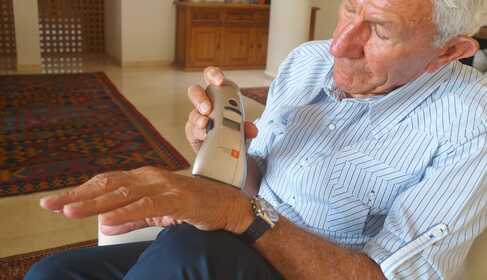
If you've already read about the possibilities of home medical technology, you’ve probably wondered: if these devices can really be that useful, why haven't you heard about them? Why didn't your GP, rheumatologist, or physiotherapist recommend them?
That's a fair and important question. The answer is complex — and it's not about doctors being malicious or deliberately withholding information. The situation is much more complicated.
If you want a more detailed explanation of what these devices are actually for, read my comprehensive article What is home medical technology for?.

Recently, I came across this picture on Facebook. It illustrates today's healthcare situation well, and even more so the mindset of many patients. This is not only the case in our country, but also in countries with advanced healthcare systems. But what do I read into this single picture? What could I pass on to you so that you can learn from it?

COVID has thoroughly reshaped medical care. Although the pandemic has subsided, the problem remains: clinic capacity is limited, access is centralized in many places, and waiting lists have grown. Pain, however, doesn't wait for a new appointment. What can you do if you have complaints but can't reach therapy fast enough—or if regular travel during working hours simply isn't possible? This article explains how to assemble an evidence-based home therapy system that complements (but does not replace) medical care.

Most patients live under the mistaken belief that their complaints will disappear immediately after taking the first tablet or after a single physiotherapy session and that their health will be instantly restored. Well… that's not how it works. You need to understand a few things about how diseases develop and about your body's self-healing abilities.

According to a survey, only about 15% of the Hungarian population exercises at least once a month, and far fewer do so regularly (3–4 times a week). The result is obvious: 66% of the adult population is overweight or obese, and 45% suffer from one or more chronic illnesses. We are among the top consumers of medications in Europe. By age 50 a significant portion of Hungarians lose their health and can no longer perform competitively in the labor market, losing their jobs and income. Their financial situation inevitably deteriorates. A vicious circle... health is lost, although health is what you need to create proper living conditions for yourself. Despite the severe situation, there is a great silence around promoting a healthy lifestyle. Yet this would be the key…

Let’s start with two figures, because they say everything about why I wrote this article. In Hungary, the number of years spent in good health is roughly 50–55 years — in other words, the average Hungarian spends the last two or three decades of life with illness, medicines and limitations. And around half of the adult population lives with at least one chronic disease: high blood pressure, diabetes, joint degeneration, or cardiovascular disease.
As a physician, I have seen for decades that most diets do not work, at best producing only temporary results. I imagine you have tried some kind of diet yourself. Many types are recommended—low-carb, low-fat, intermittent fasting, calorie counting. And despite the self-denial... the results are usually temporary.
The root of the problem is that these general methods do not take individual differences into account. Each of our metabolisms works differently, and what helps one person may fail for another. The key is not only how much we eat, but understanding how our body processes nutrients.
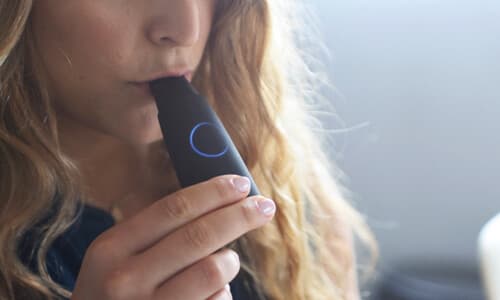
The Lumen device fills precisely this missing link: it measures in real time whether your body is burning fat or carbohydrates, and therefore provides personalized guidance for your nutrition. This is not just another "gadget"—this is a revolution in nutrition grounded in science.
How is care structured, and where do you fit in? When you have a health problem, a complex system comes into play – hospital, specialist clinic, family doctor, rehabilitation. Each is important, but they all share a common limitation: they can only help episodically. You spend days in hospital, see the specialist a few times a year, and visit the physiotherapist once a week. And in between? Chronic conditions require daily treatment, which this system cannot provide. In this article I show how these links fit together – and why you are the most important one of them.
You surely know the feeling: something hurts, you go to the doctor and expect to be given a tablet that will put everything right. Then you leave disappointed because it turns out the matter is much more complicated than that.
You are not alone. Most people imagine recovery in exactly this way – and that is precisely why they do not understand why it does not always work.
In this article, I explain what you need to know about the true nature of healing. Once you understand this, it will be much easier to work together with your doctor – and you will have a much better chance of getting better.