Blog

If you need to go to the toilet frequently, get a sudden, urgent need to urinate, wake several times at night because of it, or sometimes cannot reach the toilet in time, you have probably already heard about medication and pelvic floor exercises. TTNS is a third option that is discussed much less, even though it can be done comfortably at home.

Incontinence – the inability to control urine or stool – means the affected person cannot hold back urine or cannot control bowel movements. This is not a natural part of aging, and you should not have to “get used to it”. It is estimated that about 500,000 people in Hungary struggle with some degree of incontinence, but many remain silent because of shame.
In my experience, most patients believe the only solution is the “adult” diaper. However, targeted pelvic floor muscle training – sometimes supported by electrical stimulation – can produce meaningful improvement in a large proportion of cases.1
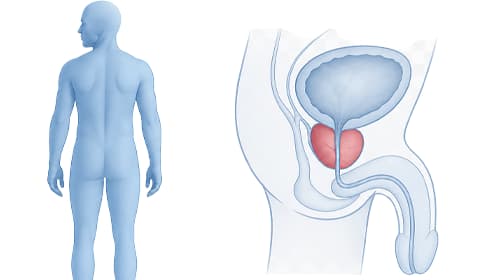
If you have undergone a prostatectomy — that is, prostate surgery — you have likely noticed changes in your erections after the procedure. This is not your fault, nor is it necessarily permanent or unchangeable. It is the consequence of a biological process that can be influenced.
Here are the important things to know!

Pelvic floor exercises — also called pelvic floor training, perineal exercises or Kegel exercises — are a specialized exercise system developed to specifically train the pelvic floor muscles and preserve their elasticity.
These muscles hold the pelvic organs (bladder, uterus, rectum) in place and play an important role in urination, defecation and sexual function. Imagine them as a hammock that stretches from the pubic bone to the tailbone and supports your internal organs. When these muscles weaken or become injured, various problems can occur — many of which can be helped by pelvic floor exercises.

Prostate surgery is most often performed to treat prostate cancer or benign prostate enlargement (BPH). The term prostatectomy means the complete surgical removal of the prostate. The procedure may cause various complications, which can be divided into acute (short-term) and long-term complications.
Let’s look at what you can expect — and what treatment options are available.

Female urinary incontinence is often caused by uterine prolapse (prolapsus uteri) or bladder prolapse (prolapsus vesicae). In these cases the uterus or bladder is displaced from its position, descends downward, and presses on the pelvic floor muscles. This can cause a constant uncomfortable sensation, make sexual activity painful, and disrupt urinary and fecal continence.
Its treatment is more difficult than that of “simple” incontinence – but with early detection pelvic floor muscle training and electrostimulation can bring real improvement.
Fecal incontinence (anal incontinence) means that stool or intestinal gas is passed involuntarily because of weakness or injury of the anal sphincter. Most people affected stay silent out of shame, yet estimates suggest tens of thousands of people in Hungary are affected — especially older adults and women in the postpartum period.

Erectile dysfunction (erectile disorder) — commonly called “impotence” — is a frequent problem affecting men. It occurs when, despite sexual desire (libido), sufficient penile rigidity does not develop, or an erection occurs but its firmness or duration is reduced. This can make intercourse difficult or impossible, significantly lowering the pleasure and quality of sexual relations. This article reviews its background, prevention, and drug-free treatment options.

This piece was inspired by a reaction to one of my Facebook posts. I recommended a device to eliminate incontinence, and a lady angrily remarked: “It costs 35,000! Good thing you can buy them!”. But is she right? Is that really expensive? Let’s look around.

Peyronie's disease is a condition affecting the penis: hard lumps develop in the penis and cause increasing curvature. It is painful in some cases, and in an advanced stage it may make sexual intercourse difficult or impossible. Despite this, only a small proportion of those affected seek medical help – often because of embarrassment. If you notice such symptoms, see a doctor: a urologist or andrologist is the appropriate specialist. The sooner you start treatment, the greater the chance that progression can be stopped and symptoms reduced. Read the details!

Urinary incontinence means that urine leaks involuntarily – whether just a few drops or a larger amount. It is not a natural part of ageing, and there is no need to feel ashamed. An estimated 400,000 women and 100,000 men are affected in Hungary, but the actual number may be much higher because many people do not seek medical help.