
 What is radiofrequency (RF) skin treatment?
Radiofrequency treatment is one of the most widely used non-surgical skin-tightening methods in dermatology and aesthetic clinics. A weak, high-frequency alternating current passes through the skin between the device's two electrodes, warming the deeper layer of the skin – the dermis, where collagen and elastin fibres are found – by a few degrees. The surface feels pleasantly warm; the treatment takes place 2-4 millimetres below it.
The heat triggers two things: existing collagen fibres contract, while connective tissue cells in the skin produce new collagen and elastin over the following weeks and months.1 The result is gradually firmer, smoother, more toned skin – not overnight, but as the connective tissue actually remodels.
The method appeared in cosmetic clinics in the early 2000s and has since become available in home-use devices too: lower-power devices with bipolar treatment heads work on the same principle, but more gently. This means they require more sessions and patience, but you can continue the course for months according to your own schedule. In this article, I explain what you can realistically expect, how a treatment and a course work, who should not use it – and when owning a device may be worth it compared with a salon course.
 Key point
RF does not work on the skin's surface. It warms the deeper connective tissue so it can regenerate and rebuild itself. The mechanism is real: new collagen has been identified in skin samples, and studies of home-use devices have also measured a reduction in wrinkles and firmer skin.26
However, the effect is gradual and depends on a course of treatment: the first visible change appears after 3-6 sessions, meaningful results build over 6-12 weeks of regular treatment, and without maintenance, the skin returns to its starting point over several months.
If you understand this and use the device regularly, you can expect realistic results. If you expect a miracle from a single treatment, you'll be disappointed.
 How does RF work in the skin?
Radiofrequency current is neither light nor laser: it is not absorbed by skin pigments. Instead, the electrical resistance of the tissues converts it into heat. That's why it works on all skin types and does not burn the surface.
Collagen is the skin's supporting network: long, twisted protein fibres that keep the dermis firm. With age and sun exposure, this network thins and loosens, leading to wrinkles and sagging.
When the temperature of the dermis remains above 40-43 degrees, the twisted structure of the fibres partly unwinds, and the fibres shorten and contract. Researchers using electron microscopy have shown that collagen fibres thicken and the tissue contracts during treatment.1
This creates the first mild feeling of firmness – but it is not long-lasting on its own.
The controlled heat generated deep in the skin is a mild “injury” to the skin. The skin responds as it does to any injury: it activates its regeneration and healing processes. Connective tissue cells produce new collagen and elastin – over weeks and months, not days.
In a study lasting two weeks, treated skin samples contained measurably more newly formed collagen, and this was still present three months after the course of treatment.2
That's why you can't judge RF after a single treatment: the skin rebuilds between sessions.
For body treatments, the heat also reaches the subcutaneous fat: in skin samples, a home-use RF device increased both fat release from fat cells and collagen production.9
The warmth also widens blood vessels and improves local circulation and lymph flow. This is why the treated area becomes red and warm after treatment.
On the face, the heat also affects the sebaceous glands: skin oil production was still measurably lower months after treatment.13
 Why use conductive gel, and why should you keep the device moving?
Home-use devices are bipolar: current flows between the treatment head's two electrodes through the upper 2-4 millimetres of skin. Conductive gel ensures full contact between the head and the skin and helps distribute heat evenly. Without gel, the current concentrates in tiny points, which can cause stinging and redness.
Keeping the head moving slowly and continuously serves the same purpose: if you stop at one point, heat builds up there. A “pleasantly warm” feeling is a good sign; a sharp, hot or stinging sensation means you should lower the intensity.
One important difference: clinics often use high-power monopolar devices, which reach deeper but require cooling and professional expertise.
Home-use devices – including the Globus RF Clinic family – are bipolar and operate at frequencies between 470 kHz and 2 MHz, deliberately using less energy. This lower energy means these devices can be used without supervision, but they also require more sessions.
Research shows that the physiological effects of RF are well substantiated, with consistently favourable results.4
 What skin concerns may it help with – and what can you realistically expect?
The aim of RF is firmer, smoother skin that looks “a few years younger”.
This is RF's main area of use. A large international review of face and neck treatment found that the method improves skin firmness and elasticity and reduces wrinkles.3
In a study of a home-use device, after a one-month course of five sessions per week, more than 90 per cent of participants were rated as having improved wrinkles by three independent dermatologists, with no side effects.6
The “lifting effect” can also be measured: in the most rigorous study, which included a placebo comparison, the eyebrow on the treated side visibly lifted.8
The RF100 head is just the right size for the thin skin of the neck and décolletage. On the décolletage, treat the skin only and avoid breast tissue.
Realistic expectations: fine and moderate wrinkles may soften, the skin may feel firmer and the contours more defined. Deep expression lines and old sun damage may only fade slightly.
The eye area is often the most responsive because the skin is thin here, so even low energy reaches the dermis.
After six weeks of treatment and six weeks of maintenance with a home-use device, wrinkles around the eyes were reduced by an average of 41 per cent, as measured using 3D skin-surface imaging.5
Realistic expectations: the skin responds fastest and most visibly here. This is often where you notice the first change.
After weight loss, childbirth or with age, the skin on the abdomen and thighs may become loose.
With a home-use body treatment device, thigh circumference decreased by an average of 2.4 centimetres, and loose abdominal skin also improved, while abdominal circumference decreased only slightly.9
With a clinic device, after eight weeks of treatment, abdominal circumference decreased by 3.5 centimetres and thigh circumference by 1.7 centimetres, while there was no measurable result on the buttocks or arms.10
Realistic expectations: firmer, smoother skin and a centimetre or two off the thighs; the abdomen is more resistant. RF is not a weight-loss method: diet and exercise reduce fat deposits, while the device helps firm the skin.
Cellulite is not easy to treat. You should not expect lasting, permanent results from a single RF course (or any other single cosmetic treatment).11 However, an eight-week RF course improved the appearance of cellulite by roughly half.10
RF can improve the appearance of cellulite by firming the skin and improving circulation, but it does not alter the connective tissue structure that causes cellulite. That's why maintenance treatments and repeat courses are needed.
Realistic expectations: moderate, temporary improvement in appearance, which can be maintained with regular repeat treatments. I wrote more about cellulite in a separate article.
Stretch marks are scars formed when collagen fibres tear as the skin stretches rapidly. An analysis of fourteen comparative studies found that bipolar radiofrequency – alone or combined with a vitamin A derivative cream – was the treatment among those studied most likely to improve the appearance of stretch marks, ahead of lasers too.12
Fresh, reddish-purple marks respond much better than old, white stretch marks.
Realistic expectations: the marks may become paler, smoother and less indented; no single method can be expected to remove them completely.
An international review found that radiofrequency reduces skin oil production and the number of acne lesions, and improves acne scars.313
However, do not use RF on active, inflamed or pus-filled acne. See a dermatologist first, and treat the skin only once the inflammation has settled.
Realistic expectations: less oily, more even-looking skin; an additional method alongside dermatological treatment, not a replacement for it.
 What does a home treatment involve – and how is a course structured?
A treatment takes 10-20 minutes, and the steps are the same for every area. Much of the success depends on following these few rules.
| Step | What to do | Why |
|---|---|---|
| 1. Clean, dry skin | Remove make-up, cream and oil; treat intact skin only | Residue acts as insulation, making the heating uneven |
| 2. Conductive gel | Apply a generous layer to an area about the size of your palm; top it up if it starts to dry | Ensures even heat and allows the head to glide |
| 3. Programme and intensity | Choose the programme for the area; start at a low intensity and increase it until the skin feels pleasantly warm, not hot | A higher setting does not mean better results, only more redness |
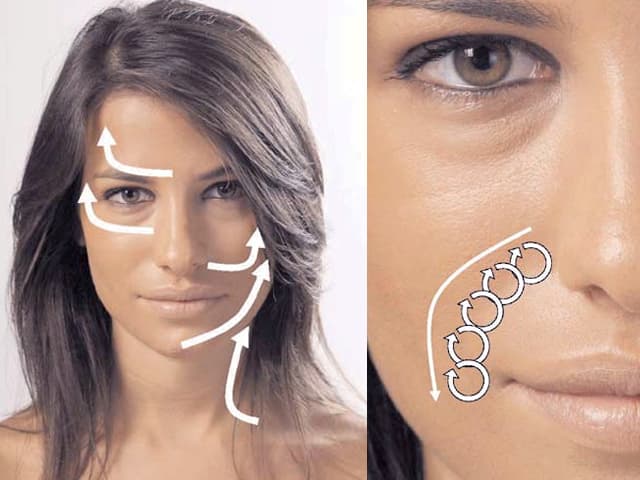
| 4. Movement | Use slow, circular movements, keeping the full surface of the head on the skin; never stop in one place | Stopping creates a “hot spot” |
| 5. Area and time | Treat an area about the size of your palm for 3-5 minutes, then move on; treat the face by zones (forehead, eye area, cheeks, jawline) | The dermis needs time to reach the effective temperature |
| 6. Afterwards | Wipe off the gel and clean the head; you can apply moisturiser; avoid saunas and sun exposure for 24 hours; use sunscreen daily during the course | The skin may look pink for 15-60 minutes – this is normal; UV breaks down new collagen fastest |
Because the effect depends on gradual collagen remodelling, think of RF as a course of treatment. Home-use schedules in research are similar: 2-5 sessions a week for 4-12 weeks, followed by less frequent treatments for maintenance67 – the recommended schedule for Globus devices, 2-3 sessions a week for 10-15 treatments, follows the same approach.
| Stage | Frequency | What you may notice |
|---|---|---|
| Weeks 1-2 | 2-3 sessions a week | Temporary firmness after treatment; no lasting change yet |
| Weeks 3-5 | 2-3 sessions a week | The first visible change after 3-6 sessions, especially around the eyes |
| Weeks 6-12 | 2 sessions a week (completing the 10-15-session course) | Meaningful results: softer fine lines, more defined contours and firmer body skin |
| Maintenance | One session every 1-2 weeks | Without maintenance, the skin gradually returns to its starting point over 3-6 months |
 My advice
The most common mistake with an RF course is psychological: someone looks in the mirror after two weeks, sees “nothing” and puts the device in a drawer – even though this is when the skin is working hardest.
So before starting, take a photo in good light, from the same place and angle. Repeat it in the same way every four to eight weeks: the mirror can fool you from day to day, but a photo from two months ago won't.
Start around the eyes, where the skin responds fastest. If you're getting ready for a summer event or a wedding, start three months beforehand.
 Home-use RF devices: the Globus RF Clinic range
The online shop carries two bipolar RF devices from Italian manufacturer Globus. They differ in the number of treatment heads and programmes. These are cosmetic devices: they care for the appearance of the skin and do not treat disease.
RF Clinic Body radiofrequency cosmetic device
The entry-level model comes with one RF100 treatment head and ten programmes (4 for the face, 6 for skin/body): eye wrinkle and facial microlifting, a wrinkle programme for sensitive skin, décolletage microlifting, and programmes for skin elasticity, stretch marks and acne. It is intended for the face, neck and décolletage. The smaller head is not ideal for large areas such as the abdomen and thighs. I recommend it if your main focus is your face and neck.
RF Clinic Pro radiofrequency device
The complete system has two treatment heads (RF100 for the face, RF500 for the body) and thirty programmes – 7 for the face, 13 for skin/body and 10 for cellulite. You can treat every area from the forehead to the thighs; the larger head also lets you treat the abdomen, hips, thighs and upper arms in a reasonable amount of time. It's for anyone who wants to treat both face and body, or whose main concerns are cellulite and stretch marks.
Find the full range and replacement conductive gel in the radiofrequency devices category.
Salon course or your own device?
Salons use higher-energy devices, so you may see more noticeable changes in fewer sessions. But collagen breaks down there too, and results fade over several months without maintenance. A single facial treatment can cost from several thousand to tens of thousands of forints, while body treatments cost several times more. A meaningful course takes 10-20 sessions: the cost of one season's courses is on the same order as the price of your own device, and maintenance treatments add further expense. Buying your own device is a one-off cost, and you can use it for years on your own schedule. In return, the gentler energy means you need more sessions and patience to see results. Many people start with a more intensive course at a salon and then maintain the results at home.
 Before you start: who should not use RF treatment?
Home-use RF devices have limited energy output and do not damage the skin's surface, so side effects are rare and mild. However, in some situations, current or heat may pose a risk.
When should you not use it?
- Pacemaker or other implanted electronic device – radiofrequency current may interfere with its operation
- Large metal implant or metal prosthesis in the treatment area – metal concentrates heat and may cause deeper tissue burns
- Silicone or filler implant in the treatment area – do not treat over breast implants, recent hyaluronic acid fillers or permanent fillers; wait at least 2-4 weeks after a filler treatment and ask the doctor who performed it
- Connective tissue (collagen) disorders – for example, scleroderma or lupus
- Reduced sensation in the treatment area – if you cannot reliably feel warmth, you may not notice overheating in time
- Damaged, inflamed or infected skin – open wounds, herpes, fungal infection, inflamed acne, eczema or psoriasis lesions, recent sunburn
- Cancer or a suspicious skin lesion in the treatment area – do not apply heat over an unknown mole, spot or lump; have it examined by a dermatologist first
- Pregnancy – treatment of the abdomen and surrounding area is prohibited; other areas may be treated only after consulting a doctor
- Inflamed varicose veins or a post-thrombosis condition in the treatment area – heat widens blood vessels
Side effects
When used correctly, treatment is painless. The treated area may be red and warm afterwards. In studies, this redness went away within 15 minutes to an hour; mild swelling occurred rarely and settled within a day.7
An international review of more than a hundred studies found only one serious complication, and that followed treatment in a clinic.3 A serious complication with a home-use device could occur practically only through serious misuse – for example, by using the device without gel, holding it in one place or setting the intensity too high.
When should you ask your doctor first?
If you have a chronic condition, take regular medication (especially anticoagulants or vitamin A derivatives), have had surgery, fillers or an implant in the area to be treated, or have any skin condition, discuss using the device with your doctor or dermatologist. Home-use RF is a cosmetic device and does not replace medical treatment for skin conditions. You can read about general contraindications to electrical treatments and implants here and here.
Frequently asked questions
No. Home-use bipolar treatment creates a pleasant feeling of deep warmth, and many people describe it as relaxing. If you feel a sharp, stinging or hot sensation, the intensity may be too high, there may not be enough gel, or the head may be staying in one place.
The temporary firmness after treatment lasts a few hours. Lasting changes start to become visible after 3-6 sessions, and meaningful results build over 6-12 weeks. New collagen can still be detected months after the course.2 However, collagen breakdown is ongoing: without maintenance treatment, the skin moves back towards its starting point over 3-6 months. One maintenance session every one to two weeks can help preserve the results over the long term.
Avoid treating the area of the injected muscle for at least two weeks after Botox. Wait 2-4 weeks after fillers, and treat the filled area afterwards only with your doctor's approval – heat may theoretically speed up the breakdown of filler. RF must not be used over permanent fillers or silicone implants.
RF is most useful for slowing collagen loss, so the 35-50 age group gains the most from it, when the first signs of sagging and fine lines appear. It may still be useful after 60, but keep expectations realistic: firmness and skin quality may improve, but the method will not resolve deep lines. It is suitable for men too; thicker, oilier male skin may need slightly higher intensity and one or two extra sessions.
They work through three different mechanisms. RF uses heat deep in the dermis and aims to remodel collagen. Microcurrent “exercises” the facial muscles, with its main effects seen in muscle tone and temporary lifting. LED light affects cell energy production and inflammation without heat. They can complement each other, but use only one on any given day. I wrote more about beauty technologies in a separate article.
 Summary – Quick overview
Read more
Sources
- Zelickson BD, Kist D, Bernstein E, et al. (2004). Histological and ultrastructural evaluation of the effects of a radiofrequency-based nonablative dermal remodeling device: a pilot study. Archives of Dermatology, 140(2):204-9. DOI: 10.1001/archderm.140.2.204
- el-Domyati M, el-Ammawi TS, Medhat W, et al. (2011). Radiofrequency facial rejuvenation: evidence-based effect. Journal of the American Academy of Dermatology, 64(3):524-35. DOI: 10.1016/j.jaad.2010.06.045
- Austin GK, Struble SL, Quatela VC. (2022). Evaluating the effectiveness and safety of radiofrequency for face and neck rejuvenation: a systematic review. Lasers in Surgery and Medicine, 54(1):27-45. DOI: 10.1002/lsm.23506
- Araújo AR, Soares VP, Silva FS, Moreira TS. (2015). Radiofrequency for the treatment of skin laxity: myth or truth. Anais Brasileiros de Dermatologia, 90(5):707-21. DOI: 10.1590/abd1806-4841.20153605
- Beilin G. (2011). Home-use TriPollar RF device for facial skin tightening: clinical study results. Journal of Cosmetic and Laser Therapy, 13(2):69-76. DOI: 10.3109/14764172.2011.552607
- Shemer A, Levy H, Sadick NS, Harth Y, Dorizas AS. (2014). Home-based wrinkle reduction using a novel handheld multisource phase-controlled radiofrequency device. Journal of Drugs in Dermatology, 13(11):1342-7. PubMed: 25607700
- Sadick NS, Harth Y. (2016). A 12-week clinical and instrumental study evaluating the efficacy of a multisource radiofrequency home-use device for wrinkle reduction and improvement in skin tone, skin elasticity, and dermal collagen content. Journal of Cosmetic and Laser Therapy, 18(8):422-427. DOI: 10.1080/14764172.2016.1202419
- Nobile V, Michelotti A, Cestone E. (2016). A home-based eyebrows lifting effect using a novel device that emits electrostatic pulses containing RF energy: double blind, randomized clinical study of efficacy and safety. Journal of Cosmetic and Laser Therapy, 18(4):234-8. DOI: 10.3109/14764172.2016.1156704
- Boisnic S, Branchet MC, Birnstiel O, Beilin G. (2010). Clinical and histopathological study of the TriPollar home-use device for body treatments. European Journal of Dermatology, 20(3):367-72. DOI: 10.1684/ejd.2010.0938
- Manuskiatti W, Wachirakaphan C, Lektrakul N, Varothai S. (2009). Circumference reduction and cellulite treatment with a TriPollar radiofrequency device: a pilot study. Journal of the European Academy of Dermatology and Venereology, 23(7):820-7. DOI: 10.1111/j.1468-3083.2009.03254.x
- Luebberding S, Krueger N, Sadick NS. (2015). Cellulite: an evidence-based review. American Journal of Clinical Dermatology, 16(4):243-256. DOI: 10.1007/s40257-015-0129-5
- Lu H, Guo J, Hong X, Chen A, Zhang X, Shen S. (2020). Comparative effectiveness of different therapies for treating striae distensae: a systematic review and network meta-analysis. Medicine (Baltimore), 99(39):e22256. DOI: 10.1097/MD.0000000000022256
- Suh DH, Lee SJ, Song KY, Yang H, Chae SJ, Ryu HJ. (2025). Evaluation of improvement in skin laxity and oiliness after monopolar radiofrequency treatment: a pilot study utilizing multiple assessment tools. Journal of Cosmetic Dermatology, 24(10):e70463. DOI: 10.1111/jocd.70463