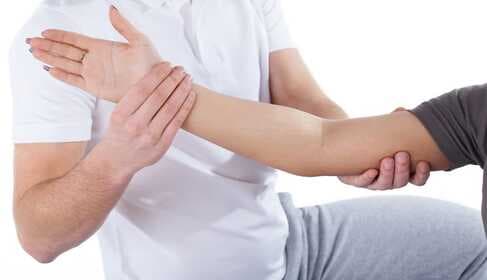

 What is spasticity, and why do your muscles “turn against you”?
Spasticity means an abnormal, sustained tightening of muscles. This is not a simple muscle cramp or stiffness — it is a condition caused by damage to the central nervous system (brain or spinal cord), in which the brain can no longer properly regulate muscle tone. Under normal circumstances the brain constantly “talks” to your muscles: sending signals about when to contract or relax. When this communication is disrupted, muscles switch to a "default mode" — resulting in excessive tension.
 Key point
Spasticity is a central (brain- or spinal cord–origin) consequence of paresis. For home NMES treatment the 20–50 Hz range, particularly 35–40 Hz, is preferable. Meaningful change is expected after regular use for 4–6 weeks. Never use selective current — that would increase spasticity!
 Most common causes of spasticity
Spasticity is always the consequence of some form of nervous system damage. The most common triggers:
Post-stroke spasticity is the most common form. According to a comprehensive review, roughly one-fifth to one-third of stroke patients (about 20–40%) experience some degree of spasticity, typically 1–6 weeks after the stroke.1 It mainly affects the arm and leg on the involved side and can significantly complicate rehabilitation.
Early recognition and a multidisciplinary approach (medication + physiotherapy + NMES) are key to preventing persistent functional loss.
Multiple sclerosis (MS): most people living with MS develop some degree of spasticity.2 The autoimmune process damages the myelin sheath, causing gradually developing and often progressive muscle stiffness.
Cerebral palsy (CP): the result of brain injury at birth or in early childhood. A large proportion of children with CP experience varying degrees of spasticity, which is a lifelong condition. Early NMES-based rehab (under professional supervision) aims to preserve functional ability.
- Spinal cord injury: after trauma or disease causing spinal cord damage, spasticity can develop in muscles below the level of injury.
- Traumatic brain injury: following head injury.
- Post-brain-tumor state: neurological damage from surgery or the tumor itself.
- Hereditary spastic paraplegia: an inherited neurological disorder.
- Advanced ALS: spasticity may develop during disease progression.
How to recognize the symptoms of spasticity?
Symptoms of spasticity develop gradually and can vary in severity between individuals:
- Persistent muscle tightness: muscles remain continuously tense, especially in the arms and legs. This tightness does not subside with rest.
- Resistance to movement: when you try to move, your muscles resist — as if someone is holding your limbs back.
- Gait disturbance: steps become uneven. The knee or ankle may stiffen.
- Fine motor difficulties: writing, using cutlery, buttoning become difficult.
- Painful muscle cramps: sudden, severe cramps, especially at night or during rest.
- Temperature sensitivity: cold usually worsens symptoms, while heat may relieve them.
Severity can change from day to day. Stress, fatigue, infections or even constipation can worsen the condition.
Conventional treatment options
Treating spasticity generally requires a combination of methods. Below are the classic therapeutic pillars:
Muscle relaxant drugs (baclofen, tizanidine, diazepam) can reduce muscle tension, but they may have side effects: drowsiness, dizziness, muscle weakness. Long-term use requires careful medical supervision. Dose adjustments are performed by a neurologist.
Injected into targeted muscle groups, these can provide local muscle relaxation lasting 3–6 months. They are especially used when only certain muscles are involved. Treatments must be repeated regularly and are specifically a specialist task (neurologist, rehab specialist).
The foundation of rehabilitation. Stretching and strengthening exercises taught by professionals help maintain range of motion and prevent contractures. Exercises instructed by a physiotherapist should be repeated daily at home — doing them only in the clinic is not enough.
Neuromuscular electrical stimulation can be used at home as a complement to classic rehabilitation. It delivers controlled electrical impulses to the muscles through electrode pads on the skin — aimed at reducing spasticity and maintaining muscle strength. You will find a detailed explanation in the following sections.
 NMES therapy: how does it work in spasticity?
Neuromuscular electrical stimulation (NMES) delivers controlled electrical impulses to muscles via electrode pads on the skin. These impulses mimic the nervous system’s natural signals and trigger muscle contractions — partially bypassing the damaged central neural pathways.
 NMES is NOT the same as TENS and NOT the same as denervated muscle treatment!
Spasticity is a central type of paresis — the peripheral nerve is INTACT. Therefore:
- TENS = primarily for pain relief (NOT for spasticity reduction)
- Selective current (denervated) = would INCREASE spasticity on an innervated muscle — FORBIDDEN for spasticity treatment! Details in the selective current article.
- NMES (biphasic square wave) = appropriate for spasticity treatment
Clinical studies suggest NMES may act through multiple mechanisms:3
- Enhances activation of IIb fibers, which may support the inhibitory function of Renshaw cells
- Stimulates reciprocal inhibition of antagonist muscles
- Improves the function of sensory receptors in the skin
- Promotes spinal cord plasticity
NMES frequencies and their effects in spasticity
The effectiveness of NMES therapy depends greatly on the frequency used. The three main ranges:
| Frequency | Effect | For spasticity |
|---|---|---|
| Low (1–10 Hz) | Fine muscle twitches, relaxation effect, improved blood circulation | Less suitable for direct spasticity reduction |
| Medium (20–50 Hz) | Continuous, controlled muscle contraction, optimal balance | Preferable range for spasticity |
| High (50–100 Hz) | Powerful contraction, rapid muscle fatigue | Use cautiously — may increase tension |
 The preferable spasticity frequency
Clinical practice suggests the 20–50 Hz range, particularly 35–40 Hz, appears most favorable for spasticity. This frequency primarily targets slow-type (type I) muscle fibers, whose stimulation can be advantageous in spasticity.
 What do clinical studies say?
“Does NMES really reduce post-stroke spasticity?”
A comprehensive review of the clinical literature based on 29 studies and nearly 1,000 participants concluded that NMES, when combined with other treatments, can reduce spasticity and increase range of motion after stroke. The effect is more pronounced when NMES is applied together with conventional physiotherapy rather than alone.3
“Can I regain daily activities with NMES?”
A 2021/2022 systematic review and meta-analysis concluded that NMES can have a positive effect on activities of daily living (ADL) after stroke, especially when applied in the subacute phase.4 Improvements were seen in dressing, using cutlery and writing — functions that are key to quality of life.
“What to expect from lower-limb NMES after chronic stroke?”
A comprehensive review indicated that in the chronic phase after hemiplegia, NMES applied to the lower limb can improve muscle strength, reduce spasticity and support recovery of walking ability. A combined approach (NMES + active exercises + stretching) produced better outcomes.5
 Scientific review summary
A 2022 scoping review examined the literature on NMES treatment for post-stroke spasticity.6 The conclusion: NMES can show positive effects as part of conventional rehabilitation, but due to methodological heterogeneity among studies, a unified protocol recommendation is still under development. Realistic expectation: NMES is not a miracle cure, but an effective tool within a comprehensive spasticity rehabilitation plan.
 Home NMES application – practical guide
Before you start
Before starting NMES therapy, consult your treating physician or physiotherapist. They will help determine:
- Whether this therapy is suitable for you
- Which muscles to treat
- What frequency and intensity to use
- How it fits with your other treatments
The procedure
| Step | Details |
|---|---|
| Electrode placement | Place them at the two ends of the treated muscle, following the muscle’s direction. Clean, dry skin. Electrodes should not touch each other. |
| Settings | Start at a low intensity and gradually increase until you feel a pleasant but noticeable muscle contraction. For spasticity the 20–50 Hz frequency is recommended. |
| Duration | 15–30 minutes per session. As a beginner, use it once a day; later — if well tolerated — up to twice a day, with 4–6 hours between sessions. |
| Regularity | Meaningful change is expected after 4–6 weeks of regular use. After stopping treatment the condition may gradually return to baseline — maintenance treatment is therefore important. |
Using reciprocal inhibition
An important technique is to stimulate not only the spastic muscle but also its antagonist (the muscle performing the opposite action). For example, if the biceps is spastic, stimulating the triceps can help relax the biceps. Learn this technique with your physiotherapist — reciprocal inhibition is a neurophysiological mechanism.
Combined approach for better results
- Heat + NMES + stretching: warm bath or heat pack → NMES session → gentle stretching. Heat prepares the muscles, NMES reduces tension, and stretching helps maintain range of motion.
- Massage + NMES: gentle massage of the treated area → NMES → short follow-up massage.
- Active movement + NMES: clinical studies indicate that combining NMES with conscious movement exercises yields better results than either alone.4
Which device is suitable for home NMES treatment?
Spasticity is a central-type paresis — the peripheral nerve is INTACT. Therefore a biphasic square-wave NMES or ETS (EMG-Triggered Stimulation) is required. Never use selective current!
Primary recommendations
DuoBravo N – ETS specialist (top pick)
The specialist for post-stroke spasticity: uses ETS technology that triggers stimulation based on the patient’s own voluntary attempt. This temporal coincidence of active attempt + stimulation provides valuable reinforcement for neuroplasticity (brain reorganization). Also suitable for people with MS and CP when voluntary attempt is preserved.
Genesy 300 Pro – classic NMES
A classic NMES device, specifically suitable for central-type spasticity treatment. DOES NOT include selective current programs (which are FORBIDDEN for spasticity!) and DOES NOT include ETS function, but provides broad NMES functionality. A cost-effective choice.
Versatile Globus Genesy line – these devices are suitable for other indications beyond classic NMES. Do NOT use their selective programs for spasticity, but their NMES function is valuable:
Genesy 600 – entry–mid range
4-channel device with NMES programs suitable for spasticity treatment. A cost-effective choice if you want to use it for purposes beyond NMES.
Genesy 1500 – mid range
4-channel device with extensive NMES functionality. Excellent value for home spasticity rehab.
Genesy 3000 – professional level
The top of the Genesy line. Clinically documented NMES protocols, suitable for numerous rehabilitation needs.
What NOT to choose for spasticity treatment!
Do NOT use devices specialized for selective current (e.g. PeroBravo) for spasticity treatment. Selective current is designed for denervated muscles (those that lost their nerve). On an innervated spastic muscle it is unpleasant, painful and would INCREASE spasticity. Detailed explanation in the selective current pillar article.
Device selection criteria
- Frequency range: at least 1–80 Hz (20–50 Hz preferable for spasticity)
- Intensity: should be finely adjustable
- Number of channels: 2 channels for one muscle group, 4 channels for larger areas
- Pre-programmed protocols: very useful for getting started
- Menu and manual in your language
- Reciprocal inhibition program: for stimulating the antagonist muscle
 MS and muscle stimulation (related indication) →
 Lifestyle tips to ease spasticity
Regular activity
Daily activity is key. It’s better to do 15–20 minutes of targeted exercise daily than one hour once a week. Consistency matters more than intensity.
Stretching exercises
Perform stretches slowly and controlled, holding each for 20–30 seconds. Do not jerk — a spastic muscle can reflexively contract with sudden movements and worsen symptoms.
Stress management
Stress can significantly increase spasticity. Progressive muscle relaxation, breathing exercises and meditation can help. The role of the autonomic nervous system is detailed in the autonomic nervous system article.
Environmental factors
Keep your living space warmer — cold increases muscle tension. Wear comfortable, non-restrictive clothing. Avoid long periods of immobility — at least a few minutes of movement or position change every hour is recommended.
Frequently asked questions
Clinical experience suggests meaningful change after 4–6 weeks of regular use. Treating spasticity is a long-term process — don’t expect dramatic results after a single session. Improvement is gradual, and maintenance treatment is important (after stopping treatment the condition may gradually return to baseline).
NMES devices can be used at home, BUT consult your treating physician or physiotherapist before starting and at regular intervals. Determining spasticity severity, the muscles to treat and the appropriate frequency/intensity is a medical/physiotherapy task. After training, the protocol can be safely continued at home.
NO. NMES is an adjunct therapy, it does not replace muscle relaxant drugs (baclofen, tizanidine) or botulinum toxin treatments prescribed by your doctor. Changes to medication should only be made by a physician. In some cases, combining NMES may allow a LOWER drug dose to achieve similar effects — discuss this with your treating doctor.
For spasticity the 20–50 Hz range, particularly 35–40 Hz, is generally recommended. Discuss exact settings with your physiotherapist based on your current condition. Do NOT use frequencies above 50 Hz — they may increase spasticity.
Selective current (denervated programs — e.g. PeroBravo devices) is developed for muscles where the nerve is damaged or severed (e.g. peripheral peroneal palsy). In spasticity the peripheral nerve is INTACT — only the central nervous system (brain/spinal cord) is damaged. Selective current on an innervated muscle is unpleasant, painful, and increases spasticity. Instead use biphasic square-wave NMES or ETS.
Reciprocal inhibition is a neurophysiological mechanism: when one muscle (e.g. the triceps) contracts, the opposing muscle (the biceps) should automatically relax. In spasticity this mechanism may be impaired — therefore it is worth stimulating the antagonist muscle to encourage relaxation of the spastic muscle. For example, if the biceps is spastic, stimulating the triceps can help.
 When NOT to use NMES?
NMES is generally safe, but it is contraindicated in certain situations. If any of the following apply to you, do not start using NMES without consulting your treating physician.
When to be cautious?
- Cardiac pacemaker or implanted defibrillator – use is FORBIDDEN
- Selective current (denervated) program for spasticity – INCREASES spasticity, painful
- Pregnancy – not recommended, obstetric consultation required
- Epilepsy – only under medical supervision
- Active cancer in the treatment area – forbidden
- Acute inflammation, infection, fever – postpone treatment
- Damaged or irritated skin – avoid the affected area
- Implanted metal implant at the treatment site – consult a physician
- The chest area, front of the neck, the head – NEVER apply here
- Severe sensory loss at the treatment site – increased caution (you may not feel overheating)
- Children under 18 – only with medical supervision
- Severe cardiovascular disease – only with medical supervision
Possible side effects (usually mild)
- Redness at electrode sites (usually fades)
- Mild muscle fatigue after treatment
- Rarely: skin irritation or allergic reaction to electrode gel
If persistent redness, itching, pain or swelling occurs, reduce the intensity or pause treatment and consult your doctor.
Complementary treatment, not standalone therapy
Home NMES is a complement to spasticity rehabilitation, not a replacement for specialist neurological care, medication or physiotherapy. Diagnosis, determining the treatment plan and follow-ups should always be performed by a professional. Detailed contraindication list in the electrotherapy contraindications article.
When should you urgently see a doctor?
Urgent medical attention required
Stop NMES treatment and see your doctor if:
- Spasticity suddenly and significantly worsens
- New neurological symptoms appear (severe pain, sensory loss, loss of movement)
- Fever, swelling or redness accompany symptoms
- You see no change after 6–8 weeks of home treatments
- Spasticity significantly reduces your quality of life
 Summary – Quick overview
References
- Ward AB. (2012). A literature review of the pathophysiology and onset of post-stroke spasticity. European Journal of Neurology, 19(1), 21-27. PubMed: 21707868
- Rizzo MA, Hadjimichael OC, Preiningerova J, Vollmer TL. (2004). Prevalence and treatment of spasticity reported by multiple sclerosis patients. Multiple Sclerosis, 10(5), 589-595. PubMed: 15471378
- Stein C, Fritsch CG, Robinson C, Sbruzzi G, Plentz RD. (2015). Effects of Electrical Stimulation in Spastic Muscles After Stroke: Systematic Review and Meta-Analysis of Randomized Controlled Trials. Stroke, 46(8), 2197-2205. PubMed: 26173724
- Kristensen MGH, Busk H, Wienecke T. (2022). Neuromuscular Electrical Stimulation Improves Activities of Daily Living Post Stroke: A Systematic Review and Meta-analysis. Archives of Rehabilitation Research and Clinical Translation, 4(1), 100167. PubMed: 35282150
- Hong Z, Sui M, Zhuang Z, Liu H, Zheng X, Cai C, Jin D. (2018). Effectiveness of Neuromuscular Electrical Stimulation on Lower Limbs of Patients With Hemiplegia After Chronic Stroke: A Systematic Review. Archives of Physical Medicine and Rehabilitation, 99(5), 1011-1022.e1. PubMed: 29357280
- Chasiotis A, Giannopapas V, Papadopoulou M, Chondrogianni M, Stasinopoulos D, Giannopoulos S, Bakalidou D. (2022). The Effect of Neuromuscular Electrical Nerve Stimulation in the Management of Post-stroke Spasticity: A Scoping Review. Cureus, 14(11), e32001. PubMed: 36600817