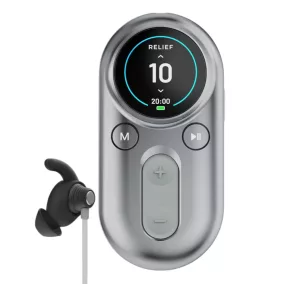
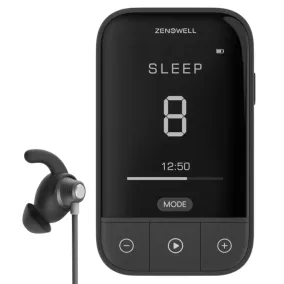
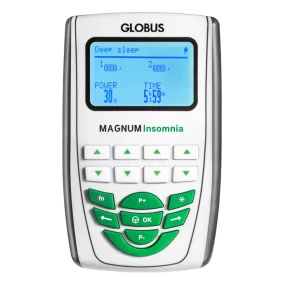
Struggling with chronic sleep problems? Hard to fall asleep, frequently waking during the night, and waking up exhausted and foggy-headed? Have sleeping pills caused dependence or lost effectiveness? Looking for a drug-free, clinically studied alternative? The TensCare Somnus is a CES (Cranial Electrotherapy Stimulation) sleep aid device that uses the classic ear-clip electrode CES method. Low-intensity electrical impulses act via nerves around the ear canal on the brain's sleep-regulating systems. It aims to ease sleep onset, reduce nighttime awakenings, and improve sleep quality — with an added potential benefit of anxiety and depression symptom relief. Up to 30 hours of battery life, USB rechargeable, wearable. Why choose the Somnus? Classic CES technology with ear-clip electrode CES (Cranial Electrotherapy Stimulation) is a sleep-support method used in clinical practice for decades. Somnus stimulates via an ear-clip electrode — acting through nerves around the ear canal on the brain's sleep-regulating systems. Gentle, non‑invasive, drug‑free. Three‑way sleep support 1) Reduced time to fall asleep – easier sleep onset. 2) Fewer nighttime awakenings – more sustained, deeper sleep. 3) Increased total sleep time + improved sleep quality – wake up feeling more rested. Additionally: may relieve anxiety and depression symptoms. 30‑hour battery + USB charging The built‑in lithium‑ion battery can provide up to 30 hours of use on a full charge. USB charging — no battery replacement. Take it on trips or to hotels — wherever you need better sleep. Compact, portable design. Customizable + LCD display Intensity and session duration are fully adjustable — everyone can find their ideal setting. Start at a low level and gradually increase to a comfortable intensity. For improving sleep, a daily treatment time of 20–60 minutes is recommended. When is Somnus recommended? If you have difficulty falling asleep – tossing and turning for hours after going to bed Difficulty falling asleep (initial insomnia) is the most common sleep disorder. Causes vary: chronic stress, anxiety, low daytime physical activity, coffee consumption, screen use before bed. Somnus CES stimulation acts on the brain's sleep‑regulating system — not as an immediate sedative, but to support long‑term improvement of sleep routines. IMPORTANT: use it 3 hours before bedtime, NOT immediately before sleep. If you wake up several times during the night and have trouble falling back asleep Nighttime awakenings (sleep maintenance insomnia) are also common — especially in middle‑aged and older adults. CES treatment may support the stability of deeper sleep phases, reducing full awakenings. Regular use over weeks is required for effect. If you want to overcome dependence on sleeping pills Long‑term use of classic hypnotics can cause dependence and tolerance, reducing their effectiveness. Many patients seek non‑drug alternatives. Somnus CES treatment can be a valuable support during medication tapering. VERY IMPORTANT: NEVER stop hypnotics abruptly — after long‑term use withdrawal symptoms can be severe (including epileptiform seizures). Dose reduction MUST be done UNDER medical supervision and GRADUALLY. Somnus can support the tapering process. If stress prevents you from switching off in the evening — "your mind is racing" Stress‑related sleep problems typically feature racing thoughts — workplace or personal issues repeatedly intrude at bedtime. Daytime or early evening CES use (2–3 hours before sleep) can support relaxation and conditioning for a calm evening. The anxiety‑reducing effect is particularly valuable here. If you suffer from anxiety or symptoms of depression Clinical studies show CES can, besides improving sleep, reduce anxiety and depressive symptoms. One hour of daily use may result in noticeable anxiety reduction. IMPORTANT: this does NOT replace psychotherapy or psychiatric medication — it is an adjunct. In depression, psychiatric supervision is ALWAYS required. If you work multiple shifts Shift work (healthcare, security, manufacturing) often disrupts sleep patterns. The circadian rhythm may be disturbed, leading to chronic sleep problems. Somnus can support sleep during rest periods between shifts — e.g., use 2–3 hours before daytime sleep. If you travel frequently and struggle with jet lag Jet lag disrupts the circadian sleep‑wake rhythm. Somnus is compact and USB‑rechargeable — easy to take when traveling. CES before bedtime in the new time zone can help support sleep adjustment. Try it with realistic expectations (3–4 weeks for cumulative effect) IMPORTANT: Somnus is NOT an immediate sedative. Effects are seen after 3–4 weeks of regular daily use. Do not expect immediate change in the first days. A realistic approach: 4–6 week trial with a sleep diary (bedtime, time to fall asleep, number of night awakenings, morning restfulness). If there is no clear improvement after 6 weeks, consider other treatment options. How to use it step by step? 1 Charge the battery (with USB cable) A full charge is recommended before first use. A full charge can provide up to 30 hours of operation — allowing weeks of treatment at 20–60 minutes per day. You can charge from any standard USB charger. 2 Attach the ear‑clip electrode The included ear‑clip attaches to the earlobe. Ensure good contact — if loose, current will not flow properly. Before applying the clip, moisten the earlobe or apply a small amount of contact gel for better conductivity. 3 Timing – 3 hours before bedtime! Somnus is NOT a sedative — do not use it immediately before sleep. Ideal use is 2–3 hours before bedtime. For example, if you plan to sleep at 22:00, use it around 19:00. This is important because CES stimulation conditions the autonomic nervous system — the effect is gradual, not immediate. 4 Gradually adjust intensity Start at low intensity and increase gradually. A good level is a noticeable tingling at the earlobe that is NOT painful or uncomfortable. If you experience dizziness or headache, reduce intensity. Individual sensitivity varies — do not train yourself to use very high intensity. 5 Treatment duration: from 20 minutes up to 1 hour The initial protocol recommends daily sessions of 20 minutes to 1 hour, adjusted to your response. Many find 30–45 minutes optimal. The LCD displays time and intensity. Rest, read, or listen to calming music during the session (DO NOT watch TV or use your phone. Blue light disrupts sleep processes). 6 Long‑term rotation + sleep diary Once improvement is noticeable (after 2–3 weeks), reduce weekly frequency from daily to 2–3 times per week. Perform maintenance sessions in the morning, as this supports a calm rhythm throughout the day. Keep a sleep diary: bedtime, time to fall asleep, night awakenings, morning restfulness. This helps objectively evaluate progress. How Somnus works and what to expect CES (Cranial Electrotherapy Stimulation) is a method used for decades in clinical practice for sleep disorders, anxiety, and mild depression. Somnus uses the classic ear‑clip form of CES. Mechanism of CES (cranial electrotherapy) CES stimulation delivers low‑intensity electrical impulses via the ear‑clip. Clinical studies suggest these impulses act through neural structures around the ear canal on autonomic centers in the brainstem — including centers involved in sleep regulation and mood. Suggested effects: Sleep regulation: support for melatonin and serotonin systems. Anxiety reduction: activation of the parasympathetic nervous system, dampening of the stress response. Depression support: modulation of mood‑related centers. IMPORTANT: clinical evidence for CES is mixed — some studies show clear improvement, others show modest or non‑significant effects. Individual responses vary. Expected effects and timeline What to expect during use: Week 1: usually no clear change. Some users report mild tension relief after sessions. Weeks 2–3: easier sleep onset and fewer night awakenings may be noticeable. Weeks 4–6: effects may stabilize, total sleep time can increase, and morning restfulness may improve. 6+ weeks: if clear improvement occurs, you can switch to maintenance (2–3 times per week). IMPORTANT: individual outcomes vary. Some experience rapid relief, others need longer, and some see no clear benefit. A realistic approach is a 4–6 week trial with a sleep diary. Why NOT use it immediately before bed? Many assume a sleep aid should be used right before bed like a sedative. Somnus does NOT work that way: CES stimulation targets the brain's sleep‑regulating systems, producing a gradual, cumulative effect. Used immediately before bed, stimulation can in some cases activate arousal systems — making you more alert. Using it 3 hours before bedtime: CES needs time to act — the autonomic nervous system's gradual calming after a busy day is a slow process. 2–3 hours allows the sleep‑regulating system to 'prepare' for sleep. Typical protocol: if you plan to sleep around 22:00, use Somnus at about 19:00. Gradual tapering of hypnotics with Somnus Many chronic hypnotic users (especially benzodiazepines) wish to break free from medication dependence. Somnus can support the tapering process: Consultation: a tapering plan led by a psychiatrist or GP. Introduction phase (weeks 1–4): medication dose REMAINS while Somnus is used daily for 30–60 minutes. Reduction phase (weeks 5–12): medication dose is gradually reduced under medical supervision while continuing Somnus. Stabilization phase (12+ weeks): if tapering is successful, Somnus maintenance (2–3 times weekly) can help stabilize sleep quality. CRITICAL: NEVER stop hypnotics abruptly on your own — especially benzodiazepines (alprazolam, clonazepam, diazepam, etc.), where sudden discontinuation can cause severe withdrawal (including epileptiform seizures). MEDICAL supervision is MANDATORY. Realistic expectations – not a miracle cure Clinical evidence for CES is mixed. Some patients achieve significant relief, others little or none. Somnus is not a miracle cure and should not be expected to produce miracles. A realistic approach: Minimum 3–4 week trial with a sleep diary. Adopt good sleep hygiene! Regular bedtime, avoid afternoon coffee, no screens before bed. The device does not replace these measures. If no clear improvement after 4–6 weeks, consider other options. Consulting a physician is useful — especially for chronic sleep disorders where other diagnoses (sleep apnea, hormonal disorders, etc.) may apply. What's in the package? The Somnus base package — everything needed for immediate use. 1 pc Somnus sleep aid device 1 pc ear‑clip (electrode) 1 pc stimulation cable 1 pc USB charging cable 1 pc Hungarian user manual Maintenance and hygiene Ear‑clip: clean after each use with a damp wipe or gently with soapy water. Do not boil or use alcohol. Cables: do not yank or sharply bend. If a cable shows contact problems, replace it. Battery: lithium‑ion, built‑in. Designed for 500+ full cycles. If unused for long periods, charge it every 1–2 months to preserve lifespan. Device cleaning: wipe exterior with a dry or slightly damp cloth. Accessories available separately Somnus can be complemented with additional accessories: Replacement ear‑clip: if the original wears out or is damaged. Replacement USB cable: if the original is damaged or lost. Replacement stimulation cable: if contact issues occur. Frequently asked questions Can I use it with a pacemaker or implanted device? No. A pacemaker, implanted defibrillator (ICD) or any implanted electronic device is an absolute contraindication. Although CES is low intensity, the risk is too great. If you have such a device, do not use Somnus under any circumstances. Can I stop my sleeping medication while using Somnus? NOT on your own! Never stop your medications abruptly — especially benzodiazepine hypnotics (alprazolam, clonazepam, diazepam, etc.), as sudden discontinuation can cause severe withdrawal, including epileptiform seizures. Medication tapering MUST be done UNDER medical supervision (GP or psychiatrist) and GRADUALLY. Somnus can support the tapering process but does not replace medical oversight. What is the difference between Somnus and Mynd Migraine Relief? (Both are CES) Both are TensCare CES devices, but with different targets: Somnus (sleep aid): ear‑clip electrode, classic CES. Acts on brainstem autonomic centers — sleep regulation, anxiety and depression relief. General wellness focus. Mynd Migraine Relief (migraine‑specific): gel pads applied to the forehead, skull‑TENS (cTENS). Stimulates trigeminal nerve branches to relieve migraine pain. A migraine‑specific device. If you have sleep issues → Somnus. If you have migraines → Mynd. If both, trying both devices may be reasonable (they act via different mechanisms). Why use it 3 hours before bedtime? CES effects are not immediate — it is a gradual process targeting autonomic calming. Used immediately before bed, it may in some cases increase alertness. If used 3 hours before bedtime, there is time for: The autonomic nervous system to gradually shift toward parasympathetic dominance (rest state). The body to prepare for natural sleep onset. Conditioning of the sleep‑regulating system to suitable sleep patterns. Typically: for a 22:00 bedtime, use around 19:00. A 30–45 minute session before dinner, between 7–8 PM, is ideal. How long until I notice effects? Individual responses vary, but general timeline: Week 1: typically no clear change. Weeks 2–3: easier sleep onset and fewer night awakenings may be noticeable. Weeks 4–6: effects may stabilize and total sleep time may increase. Realistic approach: 4–6 week trial with a sleep diary. If no clear improvement after 6 weeks, consider other treatment options. Can it be combined with other sleep‑hygiene methods? Yes — and it is HIGHLY RECOMMENDED. Somnus does NOT replace healthy sleep hygiene; it complements it. The following habits can enhance CES effects: Regular bedtime: go to bed at roughly the same time each day. Limit afternoon coffee: so caffeine is cleared by evening. No screens before bed: blue light disrupts melatonin production. Dark, cool room: essential for sleep quality. Daytime physical activity: exercise helps sleep onset. Relaxation techniques: meditation, breathing exercises, yoga. Somnus + good sleep hygiene together are often more effective than either alone. What if I suspect sleep apnea or another organic sleep disorder? Somnus is NOT suitable for treating sleep apnea or other organic sleep disorders. If typical symptoms (loud snoring, breathing pauses at night, excessive daytime sleepiness, morning headaches, high blood pressure) are present, a sleep‑lab evaluation is necessary — arranged by your GP or a sleep specialist. Somnus is primarily useful for functional (non‑organic) sleep disorders: stress‑related, anxiety‑related, chronic psychogenic insomnia. If unsure about your sleep disorder type, seek medical diagnosis first. Technical specifications – detailed Feature Value What it means for you Type CES (Cranial Electrotherapy Stimulation) Classic CES sleep aid, a method used for decades Stimulation mode CES (with ear‑clip electrode) Acts on brainstem autonomic centers Channel 1 (ear‑clip) Simple, targeted stimulation Placement Ear‑clip electrode Gentle, non‑invasive Intensity Adjustable Find the ideal level for you Session length Adjustable from 20 minutes to 1 hour Flexible, based on your response Timing Use 3 hours before bedtime (NOT immediately before sleep) CES effect is gradual — allow enough time Display Color LCD – intensity, time Continuous feedback on session status Power Lithium‑ion rechargeable battery No battery replacement, portable Battery life Up to 30 hours on a full charge Allows weeks of treatment at daily use Charging Via USB cable (included) Charge from any standard charger Portability Compact, wearable Take it to travel, office, or hotel Tolerance No tolerance develops Safe for long‑term use Certification CE medical device European conformity Manufacturer TensCare Ltd (United Kingdom) Manufactured to UK quality standards When NOT to use Somnus? Somnus is a specific CES device. Although the stimulation is low intensity and non‑invasive, it should be avoided in certain situations. If any of the following apply to you, do not start using the device without consulting your physician. Presence of a pacemaker, implanted defibrillator (ICD) or any implanted electronic device Epilepsy or other seizure disorders (CES may affect seizure threshold) Pregnancy or possibility of pregnancy (a physician may advise differently, but generally avoid) Active or suspected cancer in the head or neck area Severe cardiovascular disease (post‑myocardial infarction phase, severe heart failure, uncontrolled high blood pressure) Unresolved brain or head injury, recent skull trauma Ear infection, auricle skin damage, recent ear surgery, or acute skin issues at the ear‑clip application site Metal implants in the head or neck area (screws, plates) Severe depression or suicidal thoughts — psychiatric supervision REQUIRED Bipolar disorder in a manic phase (CES may affect mood) Psychotic disorders (schizophrenia, acute psychosis) Previously diagnosed sleep apnea or other organic sleep disorders (sleep‑lab evaluation required) Children using unsupervised (under 18 only under physician supervision) Not sure? Consult your physician, psychiatrist or sleep specialist before use. In chronic sleep disorders, clarifying the underlying cause is important — organic causes require different treatments. Detailed information is available in Dr. Zátrok Zsolt's article on electrotherapy contraindications. Important information The TensCare Somnus is a CE‑certified medical device for home use. However, its use does not replace medical diagnosis, a psychiatrist's or sleep specialist's protocol, or prescribed pharmacotherapy. The device is an adjunct tool to be used alongside comprehensive sleep and mental health therapy. Individual results vary. Clinical evidence for CES is mixed — some patients achieve significant relief, others little or none. A realistic expectation is a 4–6 week trial with a sleep diary. If no clear improvement occurs, consider other treatment options. For new or worsening sleep problems, or new mental symptoms (worsening depression, panic attacks, suicidal thoughts, psychotic symptoms) SEEK URGENT medical or psychiatric help. Do NOT use Somnus to mask serious mental symptoms — these require specialist care. Never start tapering hypnotics or sedatives (especially benzodiazepines) on your own — always do so under medical (GP or psychiatrist) supervision, gradually. Somnus can support tapering but does not replace medical oversight. Do not operate heavy machinery or drive during or immediately after use — CES stimulation may temporarily affect concentration. Use only original accessories. Keep the device out of reach of children. The information on this page is for general guidance and does not replace individual medical advice, diagnosis or treatment. Always consult your physician regarding specific complaints. Related devices and knowledge base Mynd Migraine Relief – migraine‑specific CES (forehead application) → Nurosym – tVNS (vagus nerve stimulation), another neuromodulation device → TensCare UniPro – multifunctional TENS+EMS+IFT+Microcurrent → Cranial stimulation (CES) – background and mechanism (article) → Autonomic nervous system – stress, anxiety, sleep (article) → Parasympathetic system and chronic diseases (article) → Electrotherapy – overview of TENS/EMS/CES devices → Which electrotherapy is for what? – decision support guide →