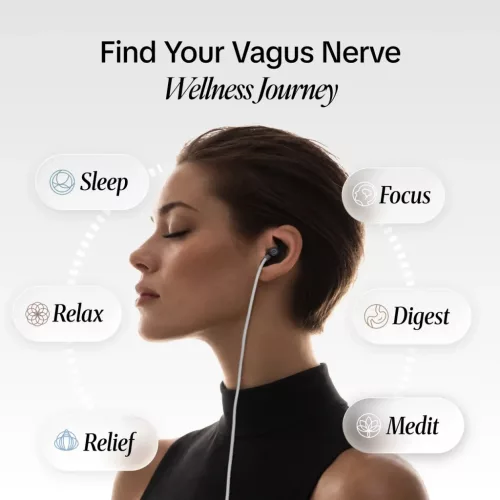
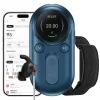
Your mind races at night, and you wake up tired in the morning – and despite trying different things, you can never tell what really helps?
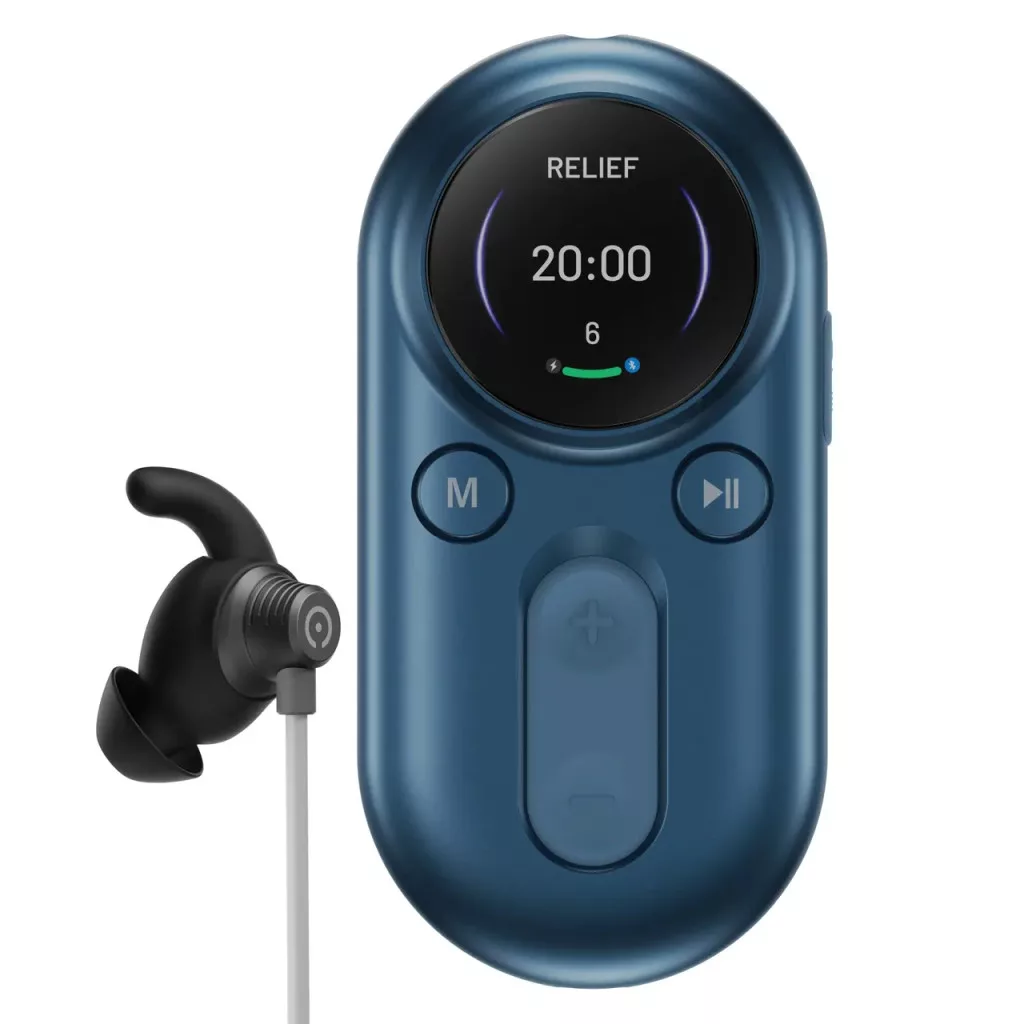
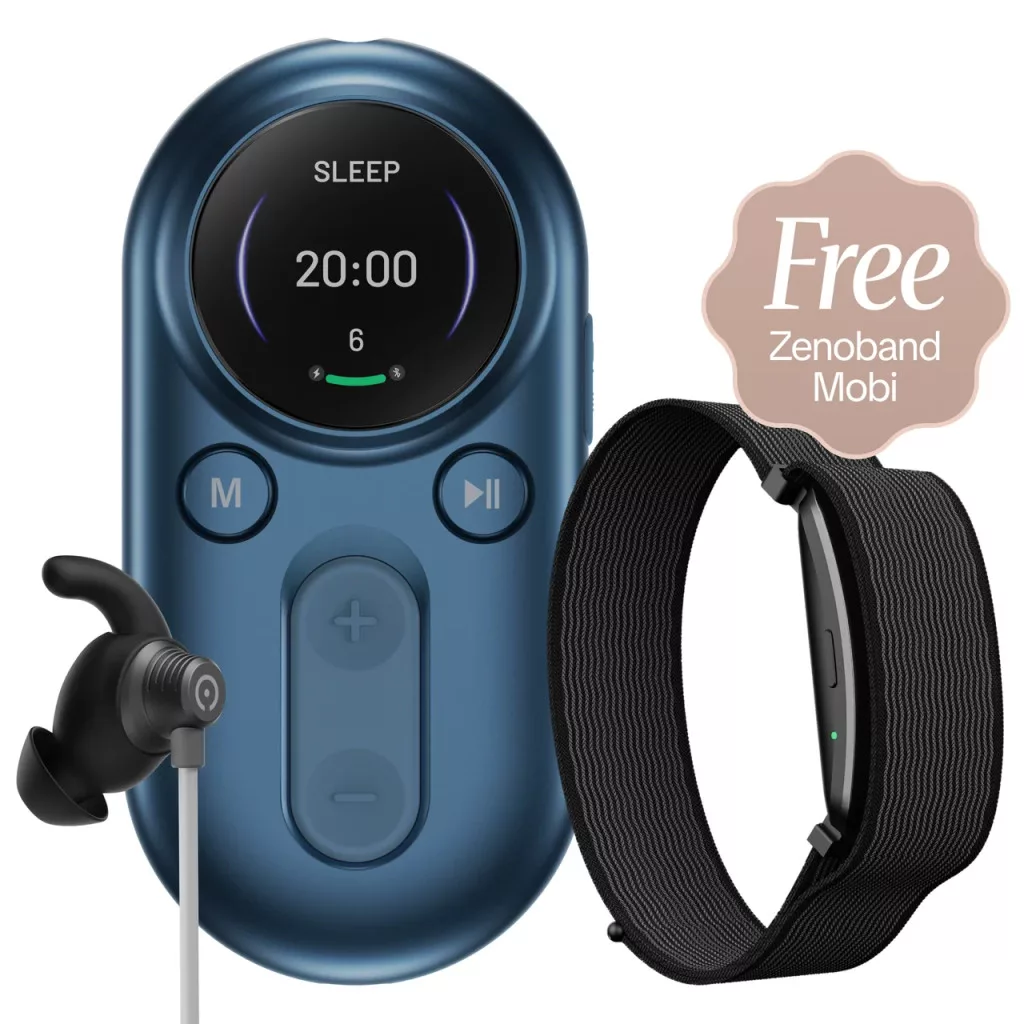
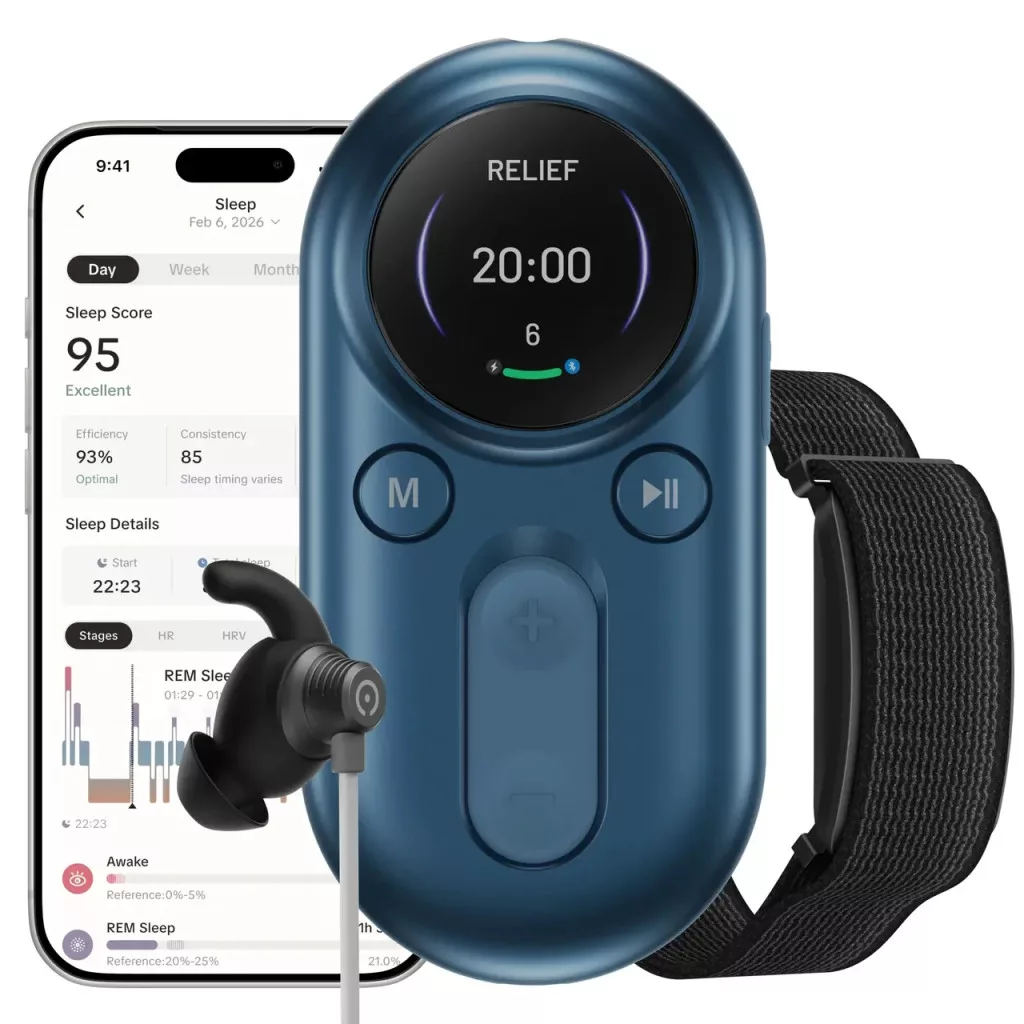
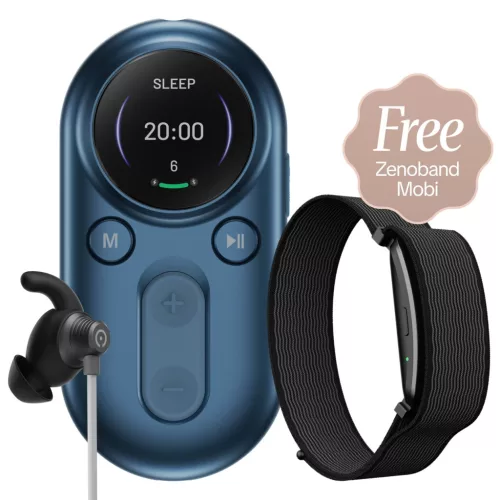
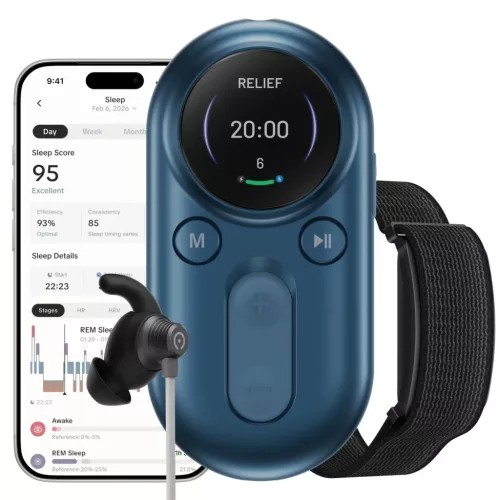
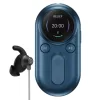
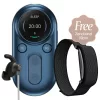
ZenoWell Luna Plus addresses the problem from two angles. Gentle vagus nerve stimulation through the ear may help your nervous system switch from a state of alertness to rest. The ZenoBand Mobi smart bracelet, included as a gift, and the Zeno app show how your pulse, heart rate variability and sleep respond. So you are not left guessing: you can track changes in your own data.
Who is ZenoWell Luna Plus for?
If you have already tried different approaches – sleep hygiene, herbal tea, or sleeping tablets for a short time – but chronic difficulty falling or staying asleep is still part of your daily life, the Sleep mode, used as a 20-minute evening routine, may positively affect sleep quality according to research.
One extra benefit of Luna Plus is that you can track your sleep scores and sleep duration from ZenoBand Mobi week by week, to see how your values change.
The effect does not appear overnight: studies use daily, regular treatment over several weeks.
A persistently heightened state of alertness is one of the most common underlying factors in the combination of tension, muscle tightness, sleep problems and digestive discomfort after meals.
The Relax mode can support activation of the “rest-and-digest” response during a daytime break. Resting pulse may decrease and heart rate variability (HRV) may improve.
The Digest mode, available in the app, is designed specifically to support a calmer period of digestion after meals. You can follow how your nervous system responds through your HRV trend.
If you have headaches on several days each month, or side effects from preventive medicines are a concern, Relief mode may be used as a complementary option alongside medical treatment.
Research suggests that consistent use twice a day for at least 4 weeks may positively affect the number of headache days and the severity of pain.
The effect is cumulative, not a one-off. The app’s treatment diary helps you keep up the routine and look back at what happened over the past few weeks.
The vagus nerve also plays a role in regulating inflammatory responses. For chronic muscle and joint problems, Relief and Medit modes may therefore be used as complementary options alongside physiotherapy, physical therapy and medication.
After exercise, travel or demanding days, Relax mode may support the wind-down period. ZenoBand Mobi’s pulse and HRV data let you see how long it takes your body to return to a resting state.
It does NOT replace rheumatological or sports medicine care!
If you like making decisions based on data, Luna Plus is the ZenoWell family member for you: ZenoBand Mobi tracks your pulse, HRV and sleep, while the AI Coach compares your sessions with your measurements and suggests ways to shape your daily routine.
Keep things in perspective: the data is for guidance, trends emerge over several weeks, and “more sessions = more results” does not apply here – you do not need more than 1-2 sessions a day.
How does vagus nerve stimulation through the ear work?
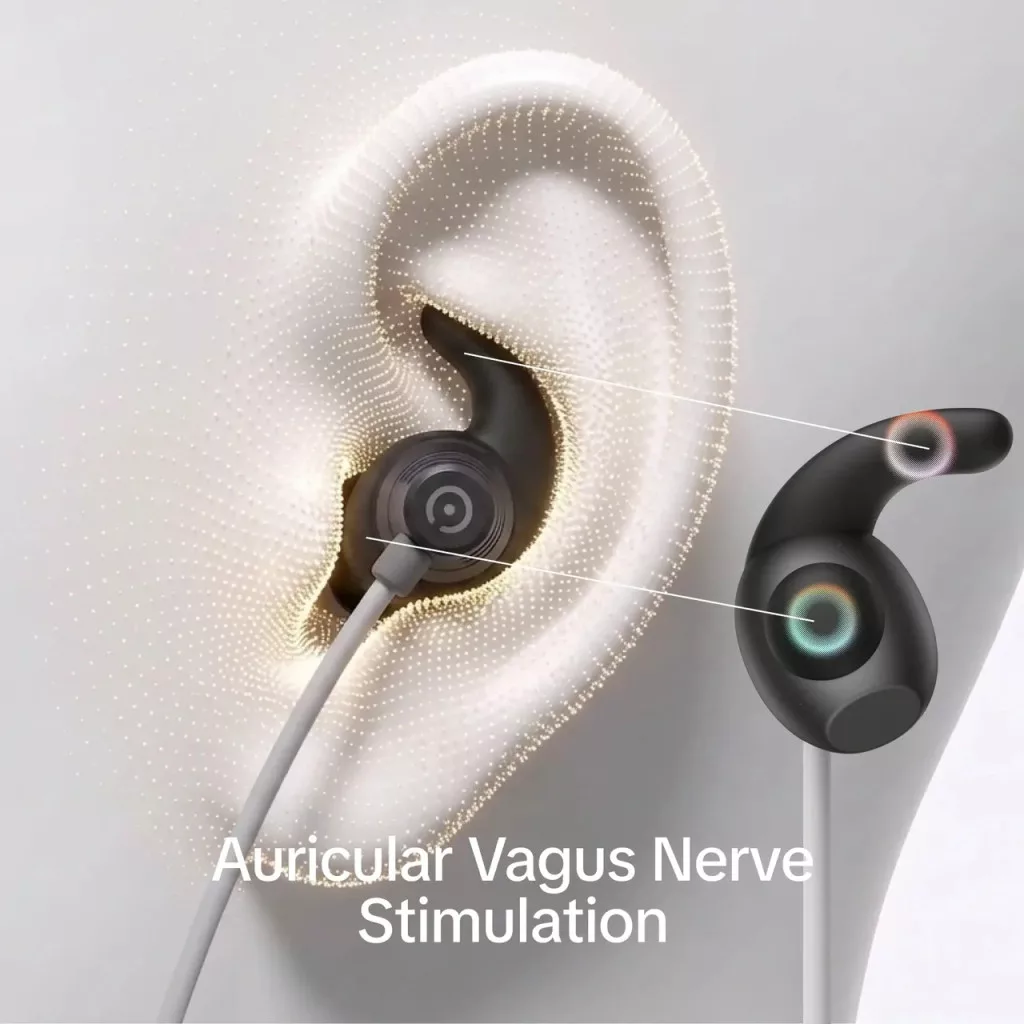
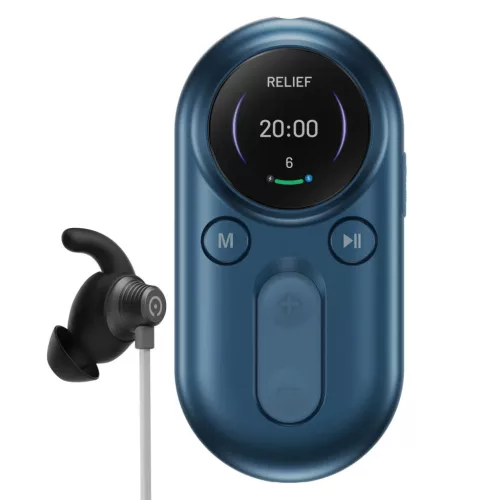
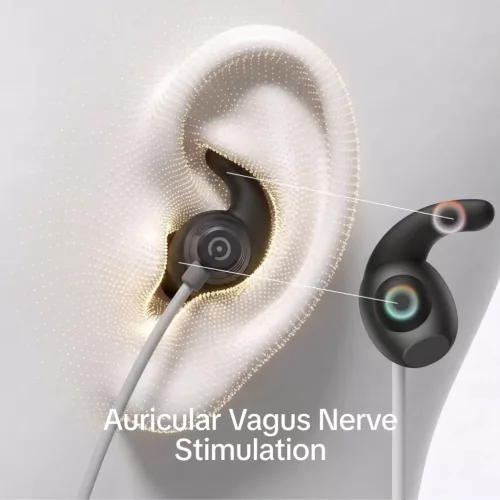
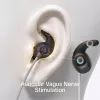
The vagus nerve is the most important “pathway” of the parasympathetic nervous system: it helps switch the body from a state of alertness and stress to rest and recovery. One branch – the auricular branch – runs just beneath the skin in the inner areas of the outer ear, so it can be reached through the skin without surgery or medication. Transcutaneous auricular vagus nerve stimulation (taVNS) uses this pathway: Luna Plus’s earplug electrode delivers gentle pulses, felt as a pleasant tingling sensation, to the cymba conchae and cavum conchae areas of the ear. Through this connection, it “sends a message” to regulatory centres in the brainstem.
Research suggests that regular taVNS treatment may:
- modulate ascending pain pathways – which is why there is a Relief mode,
- support the body’s own cholinergic anti-inflammatory mechanism,
- positively affect heart rate variability (HRV),
- activate the parasympathetic “rest-and-digest” response – the basis of the Relax and Digest modes,
- support regulation of the sleep-wake cycle – the focus of Sleep mode.
Two things are worth bearing in mind.
First, the effect is cumulative: imaging studies suggest that regular treatment over several weeks can also shape the activity of brain networks involved in pain processing. So lasting change is not to be expected after just one or two sessions.
Second, HRV – the small variations in the time between heartbeats – is a useful measure for tracking autonomic nervous system balance. The more flexibly the body switches between exertion and rest, the higher it tends to be. This makes HRV a natural way to track the effect of treatment – and that is exactly what the ZenoBand Mobi included in the pack is for.
What is ZenoBand Mobi for?
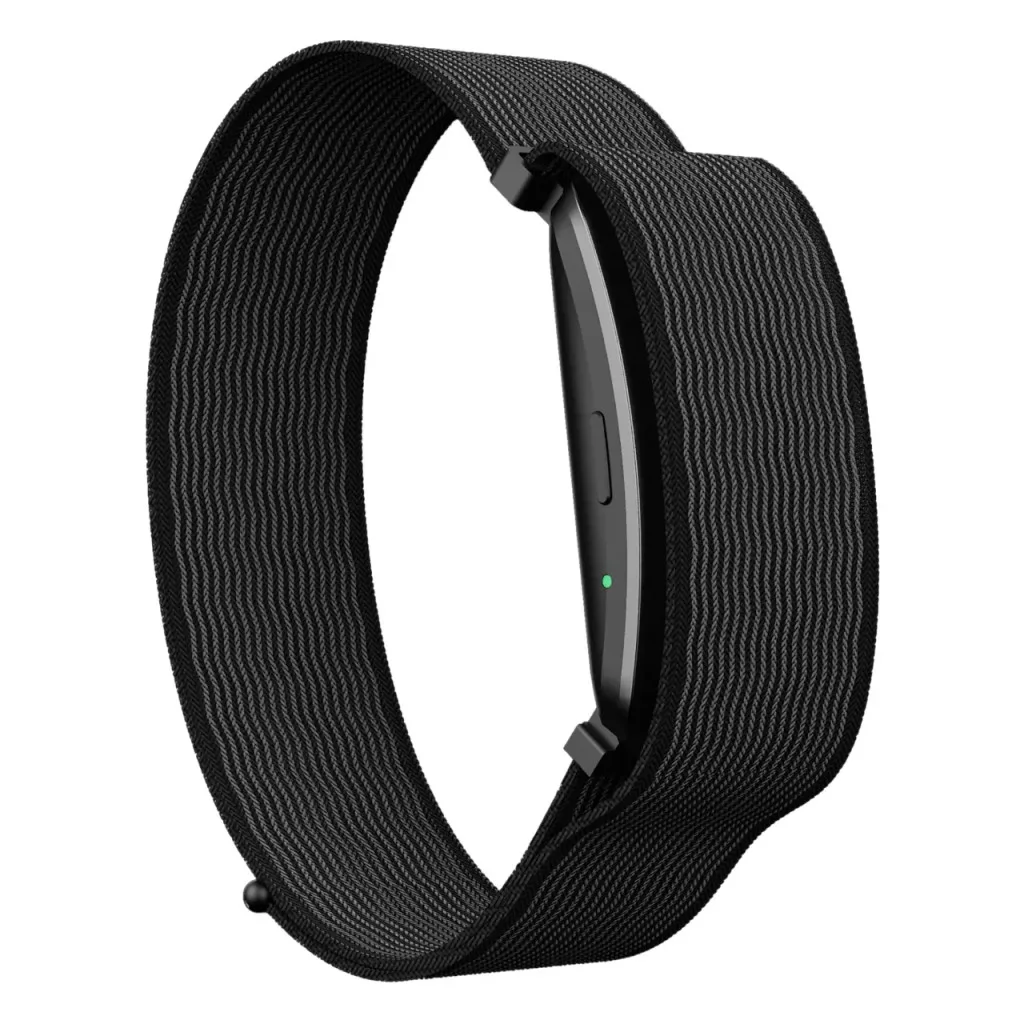
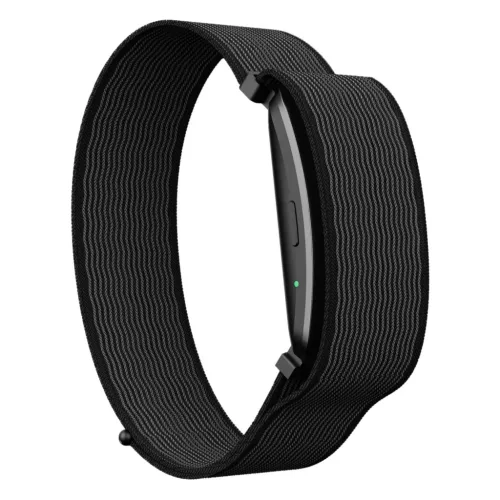
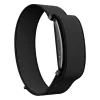
ZenoBand Mobi is a wrist-worn smart bracelet that acts as the “dashboard” for Luna Plus: it measures the things vagus stimulation aims to affect. What you would have tracked in a handwritten diary with the original Luna is recorded for you here by the bracelet and app. It is currently included as a gift with Luna Plus. It tracks four measurements:
- Pulse (HR) – how your resting pulse changes during the day and at rest,
- Heart rate variability (HRV) – a subtle indicator of nervous system balance that you can track at home,
- Sleep score – a summary score for the quality of your night’s sleep,
- Sleep duration – how long you actually slept.
The data is sent via Bluetooth to the Zeno app, where it appears alongside your taVNS sessions. This lets you see the trend over several weeks: whether your HRV is changing, whether your sleep score is shifting, and whether it takes less time to settle down. You need to wear the bracelet at night to track your sleep. Bear one thing in mind: ZenoBand Mobi provides information for guidance and reference as you track your own routine. It is not a medical measuring device and does not replace medical reports.
The Zeno app and AI Coach
The Zeno app is free to download for iOS and Android, and connects to the Luna Plus device and ZenoBand Mobi bracelet via Bluetooth. It is not available in Hungarian, but you can use it in the major world languages. The four basic modes (Sleep, Relax, Medit, Relief) also work on the device itself without the app – just as they did on the previous Luna model. The app adds personalisation:
- Unlock two more modes: Focus supports periods of concentrated work, while Digest supports calmer digestion after meals,
- Session diary: when you used each mode and at what intensity,
- Measurements in one place: ZenoBand Mobi pulse, HRV and sleep data alongside your sessions,
- Quick status check: a snapshot of your current state based on a face scan,
- AI Coach: based on brief daily questions and your measurements, it suggests which mode to use and when. For example, if you had coffee late and are still awake later than usual, it may suggest an evening Sleep routine; if your pulse is high, it may suggest a 20-minute Relax break.
Keep this in perspective: AI Coach is an assistant for your daily wellness routine, not a medical diagnostic tool. If you have symptoms or concerns, or suspect an illness, consult a doctor – the app’s suggestions do not replace this. The manufacturer provides software updates for the app for 2 years.
How to use Luna Plus – step by step
Before you start, watch the following videos. The first shows how to use Luna Plus in practice. You will also find detailed written instructions below, step by step.
The second video shows how to use ZenoBand Mobi.
1
Download the Zeno app and pair the devices
Install the Zeno app on your phone, then pair the Luna Plus device and ZenoBand Mobi bracelet via Bluetooth. You can also start without the app: the four basic modes are available on the device itself, and you can set up the app later.
2
Choose your goal and mode
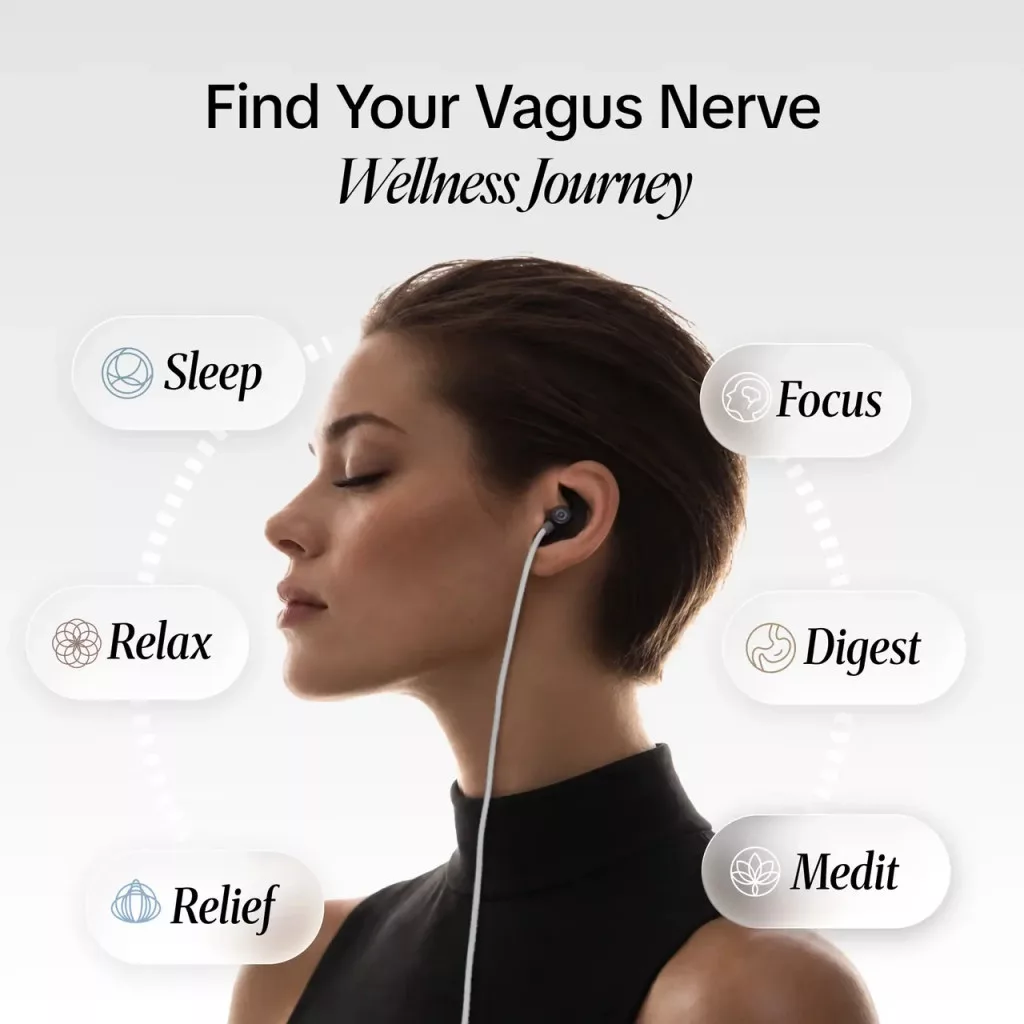
Before falling asleep → Sleep. Daytime stress → Relax. Meditation and winding down → Medit. Headache or chronic pain → Relief. Focused work → Focus (in the app). After a meal → Digest (in the app). For headache prevention, a routine of twice daily use for at least 4 weeks is a starting point.
3
Prepare the earplug
Moisten the electrode surface of the earplug with contact gel (or the supplied spray if you have run out of gel). Stimulation will not work properly without moist contact!
4
Position it in your left ear
The electrodes should touch the cymba conchae and cavum conchae areas of the ear – the auricular branch of the vagus nerve runs here. Incorrect positioning may make stimulation uncomfortable or ineffective. Follow the diagrams in the user guide!
5
Start and gradually adjust the intensity
Start at ZERO intensity and slowly increase it until you feel a “distinct but not painful” tingling. Forcing the intensity to an uncomfortably high level will not produce better results.
6
20 minutes – slow down and let it work
Each session lasts 20 minutes. Sit or lie down comfortably, close your eyes, slow your breathing and let the device work. You can fit a session into your evening routine, a break at work or a rest after a meal.
7
Keep to the routine and track the trend
The effect of taVNS is cumulative: 1-2 sessions a day for at least 4 weeks is a realistic starting point. Use the Zeno app charts and ZenoBand Mobi data to track week by week how your HRV and sleep score change.
Moist contact is needed for stable electrical conduction between the metal electrode and the skin of the ear. Conductive gel provides more stable contact and is less likely to dry out than plain water. The earplug electrode and contact gel are wear-and-consumable items, so regular users may want to keep supplies on hand.
Wipe the electrodes with a soft, dry cloth after every use. Once a week, clean them more thoroughly with an alcohol wipe. NEVER wash the main unit under running water! You can clean the silicone fitting with lukewarm soapy water. Wipe the ZenoBand Mobi strap from time to time too, especially after exercise.
Frequently asked questions about Luna Plus
Luna Plus is the upgraded successor to Luna. The original Luna is being phased out and Luna Plus takes its place. Stimulation and the four basic modes (Sleep, Relax, Medit, Relief) are unchanged: without the app, you get exactly what Luna offered. What is new is Bluetooth and the Zeno app, which unlock two more modes (Focus, Digest) and AI Coach. You can also view measurements from the ZenoBand Mobi included as a gift.
Not necessarily. The four basic modes – Sleep, Relax, Medit, Relief – work on the device itself without the app, so you get exactly the same functionality as with the previous Luna model. The app adds Focus and Digest modes, AI Coach suggestions, a session diary and ZenoBand Mobi measurements. However, you do not need your phone for your daily session.
It combines your daily feedback, session history and ZenoBand Mobi measurements, then uses them to suggest which mode to use and when, and what to keep in mind in your routine. It is a bit like a reminder and training diary in one – but it is not a medical diagnostic tool. If you have concerns or suspect an illness, the right response is always to seek medical assessment.
It tracks your pulse, heart rate variability (HRV), sleep score and sleep duration. The more you wear it, the more complete the picture. You need to wear it on your wrist at night to track your sleep. The data is for guidance: it is intended to help you track your own trends and does not replace medical measurements or reports.
The vast majority of taVNS studies used left-sided stimulation – this is the established protocol in the scientific literature. The right vagus nerve is more closely connected to the heart’s conduction system, so the left side is preferred for safety reasons. An earplug for the right ear can be purchased separately, but always treat only one ear at a time!
Luna Plus is non-invasive and works independently of medicines, so no direct drug interaction is expected. However, do NOT change or stop treatment prescribed by your doctor – such as preventive migraine medicines – because of the device. Luna Plus is a complementary device. If you want to use it alongside your treatment, discuss this with your doctor.
After a single 20-minute session, many people feel calmer and more relaxed, but a meaningful, trackable effect builds over several weeks. For example, the research starting point for headache prevention is twice-daily use for at least 4 weeks, while sleep studies typically look at periods of several weeks. Individual responses vary considerably. This is where ZenoBand Mobi is useful: its HRV and sleep trends let you see more objectively whether anything is changing for you.
At first, you may feel a mild tingling or prickling, which soon settles into a gentle vibration. Always start at zero intensity and increase it only to a comfortable but distinct level. If you try Relief mode during a migraine attack and notice any worsening – increasing pain, nausea or sensitivity to light – stop the session immediately. It is best to start headache treatment between attacks, with prevention in mind.
NO. A pacemaker, ICD, cochlear implant, deep brain stimulator or any implanted electronic device is an absolute contraindication. Epilepsy is also a contraindication: although vagus nerve stimulation was originally developed to treat epilepsy (in an implanted form, under medical supervision), unsupervised home use of taVNS is NOT recommended for people with epilepsy. It must not be used during pregnancy either, as clinically validated data is lacking.
Vita or Luna Plus – which should you choose?
Both ZenoWell devices use the same ear-worn taVNS technology. The difference is the number of modes and the smart features:
| ZenoWell Vita | ZenoWell Luna Plus | |
|---|---|---|
| Modes | 3 (Sleep, Relax, Medit) | 4 on the device + 2 in the app (6 in total) |
| Relief pain mode | – | |
| Bluetooth + Zeno app | – | |
| AI Coach | – | |
| Pulse, HRV and sleep tracking | – | (ZenoBand Mobi – currently included as a gift) |
| Who is it for? | Sleep, stress relief, meditation | The same, plus headaches and chronic pain, tracking, and support for digestion and focus |
The previous four-mode ZenoWell Luna is being phased out and replaced by Luna Plus. Used without the app, Luna Plus offers exactly the same functionality as Luna; with the app, it offers more.
Package contents
The ZenoWell Luna Plus box contains everything you need to get started:
- 1 pc ZenoWell Luna Plus device
- 1 pc earplug electrode (for the left ear)
- 1 pc contact gel (20 ml)
- 1 pc spray bottle (water spray for quick moistening)
- 1 pc charging cable
- 1 pc fabric carry case
- 1 pc user guide and warranty certificate
Currently INCLUDED AS A GIFT:
- 1 pc ZenoBand Mobi smart bracelet
- 1 pc ZenoBand Mobi charging cable
- 1 pc ZenoBand Mobi user guide
The earplug electrode and contact gel are wear-and-consumable items. Replacements and an earplug for the right ear can be purchased separately in the online shop.
Technical specifications
| Device type | Transcutaneous auricular vagus nerve stimulator (taVNS) |
| Stimulation modes | 6 – Sleep, Relax, Medit and Relief on the device; Focus and Digest in the Zeno app |
| Recommended session duration | 20 minutes / session, 1-2 sessions a day (for headache prevention: twice daily for at least 4 weeks) |
| Stimulation target area | Left ear – cymba conchae and cavum conchae (auricular branch of the vagus nerve) |
| Intensity control | Adjustable gradually, starting from zero |
| Connection | Bluetooth – Zeno app (iOS and Android) |
| AI Coach | In the app – session suggestions based on measurements and the session diary |
| ZenoBand Mobi (gift) | Tracks pulse, heart rate variability (HRV), sleep score and sleep duration |
| Battery | Built-in, rechargeable – charging cable included |
| Software updates | 2 years |
| Model number | A102 / B102 series |
| Manufacturer | ZenoWell (Heidelberg, Germany – backed by BrainClos technology) |
| Warranty | In accordance with applicable EU and Hungarian legislation |
 When should you NOT use the device?
Luna Plus is a non-invasive device, but its use is not recommended in certain conditions and circumstances. Read the following list carefully before buying or using the device:
- Presence of a pacemaker, implantable cardioverter defibrillator (ICD), cochlear implant, deep brain stimulator or any implanted electronic device
- Severe heart rhythm disorders, unstable heart disease, uncontrolled high blood pressure
- Epilepsy or a history of seizures – unsupervised home taVNS treatment is not recommended
- Pregnancy and breastfeeding (the effects on the foetus and breast milk have not been clinically studied)
- Active cancer in the head or neck region, or the recovery period following it – without prior consultation with an oncologist
- Injury, inflammation or infection of the left ear; recent ear surgery; or skin disease in the stimulation area
- Under 18 years of age (effectiveness and safety have not been validated in children)
- Acute headache of unknown cause – in the case of a new type of headache or an unusually severe headache, ALWAYS consult a doctor first; the device is not a diagnostic tool
- Do NOT use while driving, operating machinery or engaging in water activities – the relaxing effect may reduce concentration
- Numb or significantly damaged skin in the ear (the appropriate intensity cannot be felt)
Unsure? Consult your doctor before use, especially if you have a chronic condition, are receiving preventive migraine treatment or regularly take medicines!
 Important information
ZenoWell Luna Plus is a wellness device for home use. It is non-invasive and, according to the scientific literature, is generally well tolerated. Nevertheless, it does NOT replace medical diagnosis, neurological assessment or specialist treatment.
Always consult a healthcare professional about a new type of headache, an unusually severe headache or recurring headaches – diagnosis is the responsibility of a medical professional alone.
AI Coach suggestions and ZenoBand Mobi measurements are for guidance and do not replace a medical examination or report. The device is intended as a complement to medical treatment. Effects may vary from person to person and, according to research, may develop cumulatively after 2-4 weeks of daily use.
The information in this product description is for guidance only and does not constitute individual medical advice. Read the supplied user guide before use and consult your doctor if in doubt.
Scientific background – References
Over the past decade, a substantial body of evidence has emerged on transcutaneous auricular vagus nerve stimulation (taVNS), particularly for migraine and insomnia:
- Straube A, Ellrich J, Eren O, et al. (2015). Treatment of chronic migraine with transcutaneous stimulation of the auricular branch of the vagal nerve (auricular t-VNS): a randomized, monocentric clinical trial. The Journal of Headache and Pain, 16:543. PubMed
- Zhang Y, Liu J, Li H, et al. (2021). Transcutaneous auricular vagus nerve stimulation (taVNS) for migraine: an fMRI study. Regional Anesthesia & Pain Medicine, 46(2):145-150. PubMed
- Systematic Review (2023). Management of auricular transcutaneous neuromodulation and electro-acupuncture of the vagus nerve for chronic migraine: a systematic review. Frontiers in Neuroscience. PubMed
- Zhang S, Zhao Y, Qin Z, et al. (2024). Transcutaneous Auricular Vagus Nerve Stimulation for Chronic Insomnia Disorder: A Randomized Clinical Trial. JAMA Network Open, 7(12):e2451217. PubMed
- Systematic Review & Meta-Analysis (2025). Transcutaneous Auricular Vagus Nerve Stimulation in Insomnia: A Systematic Review and Meta-Analysis. Neuromodulation. PubMed
- RCT (2025). Effects of vagal nerve stimulation on pain frequency and intensity in chronic migraine in adults: A randomized controlled trial. PubMed