A literature review of soft laser therapy
Soft laser therapy has received increasing attention in medicine over recent decades. Although many remain skeptical about this treatment modality, numerous high-quality scientific studies demonstrate its efficacy in treating various diseases and symptoms.
Below you can learn about scientific publications reporting results from studies that meet strict methodological standards. Most of the studies presented are randomized, double-blind, placebo-controlled trials, which represent the highest level of scientific evidence.
I paid special attention to presenting key publications from various fields — from musculoskeletal diseases through dermatology to neurological conditions. For each study I briefly summarize the most important parameters and results so you can get a comprehensive picture of the possible applications and expected effectiveness of laser therapy.
Most of the studies presented were published in the past two decades in reputable international journals. The results convincingly show that when properly applied, laser therapy can be a safe and effective treatment option for many conditions. It is particularly noteworthy that positive results have been independently confirmed by different research groups in different geographic regions.
This scientific overview can be useful for both professionals and patients to obtain an objective, evidence-based understanding of the real possibilities and limitations of laser therapy.
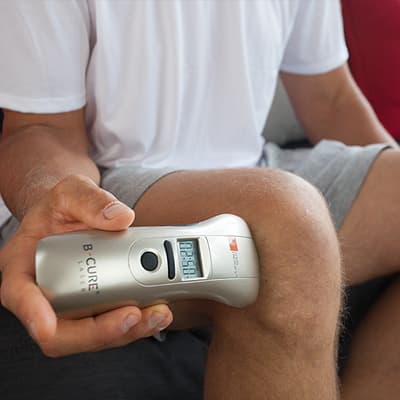
Product recommendation: our softlaser devices
The primary effect of a softlaser device is supporting cellular regeneration processes and thereby accelerating healing; it also provides pain relief by stimulating endorphin production.
Arthritis and musculoskeletal diseases
The effect of laser therapy in rheumatoid arthritis
Korolkova O M et al. The effect of laser therapy in complex treatment of patients with rheumatoid arthritis
In a study of 115 patients with stage II–III rheumatoid arthritis, the baseline therapy combined with laser treatment showed significantly better results than medical treatment alone. In stage II patients, steroid dosage could be reduced 8–10 days earlier, and in some cases steroids could be discontinued entirely.
The effect of low-intensity laser in rheumatoid arthritis
Sidorov-V-D et al. The interauricular laser therapy of rheumatoid arthritis
The study demonstrated that an infrared laser at 809 nm (7.6 J/cm²) has anti-inflammatory and immunomodulatory effects in patients with rheumatoid arthritis. The treatment’s selective, pathogenetic-based immunomodulatory effect was similar to that of basic antirheumatic drugs.
Clinical application of GaAlAs laser in rheumatoid arthritis
Kanji Asada et al. Clinical application of GaAIAs 830 nm diode laser in treatment of rheumatoid arthritis
In treatments of 170 patients (411 affected joints) an 830 nm diode laser (60 mW) was used. Analgesic effect was excellent in 59.6% and good in 30.4%. Range-of-motion improvement was excellent in 12.6% and good in 43.7%. Overall efficacy regarding pain relief was 90%, and for range of motion it was 56.3%.
Q-switched neodymium laser in rheumatoid arthritis
Goldman JA et al. Laser therapy of rheumatoid arthritis
A neodymium laser at 1.06 µm (15 J/cm²) was used in 30 patients. Most patients showed improvement in MCP and PIP joints of both hands. The treated side showed significantly greater improvement regarding erythema and pain, and grip strength improved more as well.
Tendinopathies and soft tissue injuries
Soft laser therapy in Achilles tendinopathy
Bjordal JM et al. A randomised, placebo controlled trial of low level laser therapy for activated Achilles tendinitis
In the double-blind trial an infrared laser at 904 nm was used (5.4 J/point). The treated group showed a significant reduction in PGE2 concentration and an increase in pressure pain threshold. The study demonstrated the laser’s anti-inflammatory and analgesic effects.
Combination of soft laser and eccentric exercises
Stergioulas A et al. Effects of Low-Level Laser Therapy and Eccentric Exercises in the Treatment of Recreational Athletes With Chronic Achilles Tendinopathy
A study with 52 athletes showed that combining laser therapy with eccentric exercises was more effective than exercises alone. Pain and morning stiffness were reduced to a greater extent in the combined treatment group.
Wound healing and dermatology
Herpes simplex treatment
Schindl A, Neumann R. Low-intensity laser therapy is an effective treatment for recurrent herpes simplex infection
In a double-blind trial of 50 patients with recurrent herpes simplex, treatment with a 690 nm laser (48 J/cm²) significantly reduced recurrence frequency. The median recurrence-free period was 37.5 weeks in the treated group versus 3 weeks in the placebo group.
Improving skin graft survival
Kazemikhoo N et al. Evaluation of the Effects of Low Level Laser Therapy on the Healing Process After Skin Graft Surgery in Burned Patients
In a randomized clinical trial of burn patients after skin grafting, red (655 nm) and infrared (808 nm) lasers were applied. The rate of graft failure was significantly lower in the treated group.
Neurological applications
Treatment of carpal tunnel syndrome
Dincer U et al. The effectiveness of conservative treatments of carpal tunnel syndrome
In a comparison of 100 hands with carpal tunnel syndrome, splinting, ultrasound, and laser therapy were evaluated. The combination of laser therapy and splinting proved the most effective, especially in reducing symptom severity and pain.
Treatment of chronic neck pain
Chow RT et al. The effect of 300 mW, 830 nm laser on chronic neck pain
An 830 nm laser (300 mW) applied to 90 patients with chronic neck pain significantly reduced pain and improved quality of life. The effect persisted for 3 months.
Lymphatic circulation disorders
Treatment of postmastectomy lymphedema
Lau RW, Cheing GL. Managing postmastectomy lymphedema with low-level laser therapy
In the study 21 women with unilateral postmastectomy lymphedema were treated. Laser therapy reduced arm volume by 16% at the end of the treatment period, which further improved to 28% at follow-up. Tissue resistance also decreased significantly.
Other applications
Treatment of rhinosinusitis
Naghdi S et al. A pilot study into the effect of low-level laser therapy in patients with chronic rhinosinusitis
In 15 patients with chronic rhinosinusitis, 830 nm laser treatment (30 mW, 1 J/point) produced a 39% improvement after 2 weeks, which increased to 46.34% after 4 weeks. The therapeutic effect lasted on average 5 months.
Treatment of chronic tinnitus
Gungor A et al. Effectiveness of transmeatal low power laser irradiation for chronic tinnitus
In a randomized, double-blind trial of 66 ears with chronic tinnitus, a 650 nm laser at 5 mW significantly reduced tinnitus loudness, duration, and complaints compared with the placebo group.
This summary clearly illustrates the wide range of applications and the scientific basis of soft laser therapy. Most of the studies presented are randomized controlled trials, providing high-level scientific evidence for the method’s effectiveness in various conditions.