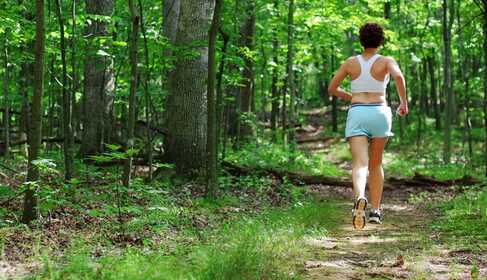
About breathing – not just for athletes
Most people know only that during running and other sports you must breathe more than at rest, because intense movement requires more air. By improving breathing you can achieve greater oxygenation at the cellular level, which then leads to increased vitality, more muscle building, better recovery, a stronger immune system, reduced need for sleep, and reduced appetite (good news for those dieting). […]
Most people know only that during running and other sports you must breathe more than at rest, because intense movement requires more air.
By improving breathing you can achieve greater oxygenation at the cellular level, which then leads to
- increased vitality
- greater muscle building
- improved recovery
- a stronger immune system
- reduced need for sleep
- reduced appetite (good news for those dieting).
The breathing-control system works in such a way that the more someone alters or regulates their breathing away from the resting state, the easier it becomes to change it to a healthier pattern also during the times when they are not consciously focusing on breathing. Thus, regulating breathing during running is one of the best ways to transform overall breathing.
I can see the question marks in readers' minds. Can breathing really be changed??
Yes, it can. If our breathing changes for a prolonged period, the breathing-control system follows and adapts. That's simply how we work.
Breathing – CO2 level controls oxygen uptake
Human breathing works so that if the carbon dioxide concentration in the blood and cells increases over a longer period while there is still sufficient oxygen supply, the body slowly adapts to this and the higher level persists even during times when the person is not exercising, e.g. while running. This results in all of the runner’s cells having a consistently higher carbon dioxide level.
According to the Bohr effect, this improves training and competition performance and speeds up recovery, while the immune system also becomes better (allergies or asthma-like symptoms may even disappear, if they were present). This, of course, also brings increases in things like VO2max.
The Bohr effect describes the physiological process that when carbon dioxide concentration is higher in the cells, hemoglobin in the blood releases its oxygen content to a greater extent than when carbon dioxide concentration is lower.
The Haldane effect works in the opposite direction, but overall, if carbon dioxide concentration in the blood and cells increases, cellular oxygenation improves, which allows for higher performance and better recovery.
It is possible to overdo increasing carbon dioxide concentration, but this usually does not happen during running.
Control pause
How good someone's breathing is can be measured simply by the method devised by Professor K.P. Buteyko, called the control pause (CP).
The control pause is the duration of time, measured in a normal resting state, between an exhalation and the first appearance of breathing discomfort while the person holds their nose and does not breathe. It is especially important to measure this right after waking in the morning. CP is a useful metric because its value does not depend on how much a runner can endure holding their breath.
The measurement should be performed (and is correctly done) as follows:
- Sit upright on a chair or on the edge of the bed so that your thighs are horizontal and your feet are on the floor.
- Breathe normally as you usually do. Before the measurement, sit quietly for at least 4–5 minutes, preferably 10 minutes. (After waking, 1 minute is sufficient.)
- After a normal exhalation, pinch your nose and keep your mouth closed during the measurement. At the same time start a stopwatch.
- While maintaining a resting position, wait for the first sign of breathing discomfort to appear in your chest. This is usually a small contraction or tension of the diaphragm or chest muscles.
- Stop the stopwatch: the control pause is the time elapsed between the two timepoints.
- The measurement is valid if after the time is up and you resume breathing, your breath is the same as before. It is not valid if you need deeper breaths after the test than you normally do — that would only be deceiving yourself.
- With a 5-second increase in CP, an individual typically feels noticeably more energetic, thinks a bit more clearly, and experiences calmer, more cheerful mood.
When is your breathing good?
If the control pause measured after waking in the morning is 40 seconds or longer. The Hungarian average is 15–20 seconds, and among runners it is usually not more than 25 seconds.
What can be gained if, for example, one increases their control pause from 18 seconds to 40 seconds? In my case:
- Sleep need decreased by 1.5 hours (from 8.5 to 7)
- my knees no longer ache on the days following runs and basketball games
- more stable mood
- I can perform more
- I have become more resistant to infections (I haven't even caught a cold since my CP > 40 s) (they haven't found anyone with CP > 40 s who developed cancer; asthma generally disappears at around 30 s, and above 35 s it is almost impossible)
Increasing the control pause
One of the best ways to increase CP is by regulating breathing while running. There are other methods, but I won't discuss them in this article.
There are two ways to increase carbon dioxide concentration during running:
- Restricted breathing
- Using a training mask
There are several techniques for restraining breathing during running. Let's look at them one by one:
- Nasal-breathing mode
- Rhythmic (paced) breathing
- Mouth-restricting technique
Whichever technique the runner uses, one element must always be included: breathlessness. Breathlessness signals to the runner that the carbon dioxide concentration in the body is higher than normal. (The stimulus for inhalation is triggered by increased blood carbon dioxide concentration.) It's unpleasant, but very useful. 🙂
The degree of breathlessness can be small, medium, or large. I suggest starting gently and possibly increasing it later.
More about the techniques:
Nasal-breathing mode
The runner breathes through the nose at such a pace that if they sped up a little, they would have to switch to mouth breathing. The practitioner of this method runs with a continuous, barely tolerable level of breathlessness. The advantage is that you don't have to pay attention to a breathing rhythm, only to keeping your mouth closed and choosing the right pace.
Because there is no mouth breathing (neither in nor out), this method is especially useful for running in cold weather, particularly if the runner's throat, windpipe or lungs are sensitive to the cold.
When you start using nasal breathing, your running speed will likely be lower than before. Those who are used to a certain pace while breathing with an open mouth may be reluctant to reduce speed to improve breathing. If so, try adding at least a 10-minute nasal-breathing test at the end of a run — you will be surprised at how much better your recovery will be after such a run than before.
If someone runs to preserve or improve their health, the nasal-breathing mode is an excellent method. It improves health even though the initial physical load may decrease. If you doubt it, try it! Run or jog at a speed that causes a barely tolerable breathlessness and DO NOT open your mouth. Very likely, after the first kilometer run this way, you may even speed up a bit, because your body will have switched to the higher carbon dioxide "mode."
Rhythmic (paced) breathing
This is not complicated. Inhale for x steps (x usually 1), exhale for y steps (the more the better), preferably through the nose. Breathing can even be such that you take three small sniffs over three steps, then exhale slowly over eight steps in eight small pushes.
An individually suitable, healthy rhythm can be established. It is very important that preferably during the second half of each exhalation there is some breathlessness, even if not strong.
Mouth-restricting technique
This is relatively simple. Inhale through the nose, exhale through a partially closed mouth with a pressed (restricted) exhalation. There should be breathlessness during the second half of the exhalations. This is especially good for those who do not want to slow down significantly from their usual running speed but still wish to improve cellular oxygenation.
What is good breathlessness?
One important fact about tolerating breathlessness.
During exhalation, breathlessness is less uncomfortable than if the runner holds pauses in breathing after exhalations. I do not recommend the method of holding breath after inhale and exhale. It can be useful, but it is much more unpleasant than a continuous gentle exhalation. I prefer that you inhale in one step as much as your body needs, then prolong the exhalation. After finishing the exhalation, take another natural inhalation. I do not recommend severely restricting inhalation; rather, prolong the exhalation.
Prolonged exhalation also has an energizing effect! The longer the exhalation compared to the inhalation, the more energy the runner will have. Of course only to the extent that the body can tolerate without suffering.
You can try this method in a resting position too. Quickly take a SMALL inhalation, preferably abdominal breathing, then slowly release this small intake of air — as slowly as you can — and repeat for 3 minutes. It is good if you feel some breathlessness in the second half of the slow releases, even if only a little. After the 3 minutes you will feel increased vitality. (Also usable during meetings. 🙂 )
If it works at rest, it will work during running as well. You may need to slow your pace for a while, but the energy increase will return the speed within a few minutes.
It's worth experimenting. You can "play" with breathing: run with restricted breathing, then try a paced run, for example inhaling in two small parts, then exhaling in two small parts through the nose, finishing the exhalation with a small mouth-restricted blow.
It is worth using a training mask
Besides or instead of restricted breathing, you can use a training mask to change your breathing. You "just" put it on and your breathing improves.
The great Czechoslovak 400 and 800 m runner of the last century, Jarmila Kratochvílová, who still holds the 800 m world record, sometimes trained in a gas mask to boost performance.
Today's runners have better tools available. The most commonly used masks are designed so that the resistance during inhalation and exhalation can be adjusted. This allows setting the load on the respiratory muscles and the level of breathlessness.
An important part of training masks that is often not discussed is dead space. Dead space is the volume inside the mask that ensures that with each inhalation the runner re-inhales the last portion of the previous exhalation.
When running with a training mask the composition of the inhaled air changes!!! Carbon dioxide concentration rises significantly and oxygen concentration decreases slightly. As a result, carbon dioxide increases throughout the runner's body and the effects described earlier can be experienced.
Training with a mask usually increases the body's carbon dioxide concentration more than restricted breathing does, so physiologically it is more effective, especially if a mask with larger dead space is used.
Reasons some people dislike the training mask include feeling less free with a mask on their face, concern about what others think, and the cost — a good training mask costs roughly 20–30,000 HUF.
You can buy a training mask by clicking here.
Advice for using a training mask
I run with a training mask for half an hour two to three times a week. The first use felt strange, but then I got used to it. The mask's weight is negligible and it only slightly reduces the field of vision. I clearly feel the mask's positive effect after about 3 minutes of running with it. The mask should only be kept on for the duration of the run and afterwards at most until breathing returns to normal (about 2 minutes). Then you must remove it!!!
Using the mask beyond this or wearing it without load may be unfavorable, because the increased oxygenation is no longer consumed by physical activity and thus can become excessive — essentially a mild oxygen overexposure may develop. Many people experienced this during the pandemic, especially those who used masks with large dead space for prolonged periods and were sensitive.
In winter, in the cold, a major advantage of the training mask is that the runner perceives the air temperature inside the mask to be about 5 degrees higher, since the exhaled air warms the mask and the partial rebreathing of the exhaled air also increases the temperature of the inhaled air.
Mask or altitude training?
Training masks are sometimes advertised as replacements for high-altitude training camps. This is partly true, but masks work differently than high mountains.
In a mask the composition of the air changes, whereas at high altitudes the air pressure is lower than at sea level. You don't need to go up thousands of meters for several weeks; the results achieved in such camps can also be reached at sea level.
If someone has done sufficient breathing exercises and uses a mask, the effects can be very similar or even better than those of high-altitude camps. After returning from an altitude camp, an athlete's physiology typically reverts to the previous state in about two weeks, which limits the usefulness of such camps.
A training mask strengthens the respiratory muscles (diaphragm, intercostal muscles) because it makes both inhalation and exhalation harder, especially when higher resistance is used. It also slightly increases vital capacity and significantly increases the volume of air inhaled and exhaled per unit time. It even facilitates breathing during large-volume ventilations, although that may not be needed much since masked training reduces overall air demand.
It has also been observed that training with a mask strengthens trunk muscles not directly involved in breathing more than training without a mask. The explanation is that the increased strength of the respiratory muscles provides support to the other trunk muscles. This is particularly beneficial for runners who are also active in sports where trunk strength is important (tennis, ball games, canoe-kayak, rowing, combat sports, swimming, ice hockey, and many others).
With considerable use of the training mask, especially if training with strong resistance, even the respiratory muscles can become sore. In more severe cases this can be very unpleasant because we tense the respiratory muscles at least eight times per minute, and with muscle soreness this hurts eight or more times per minute. Therefore, progress gradually! Start with 5 minutes and increase according to tolerance. (The training mask can also be used without resistance. In that case it does not strengthen the respiratory muscles but still improves endurance and recovery.)
Can anyone use a training mask?
NO!!! A training mask is a great tool, but only if you are prepared to use it.
Anyone who wants to use a training mask should have a CP of at least 20 seconds. There needs to be a basic level (generally 20 s) to achieve good results with the mask and avoid problems.
What problems might occur if someone with a CP of 20 s, or especially below 15 s, tries to use a training mask?
Headache, heart rhythm disturbances, sleep problems, insomnia (especially with evening use), diarrhea, dizziness, fainting. Fainting can especially occur in people with blood sugar problems because increased cellular oxygenation can boost insulin production and decrease insulin resistance, which can easily lead to a near-collapse during exertion.
So, the training mask is a great thing, but not a toy! First measure your control pause; if it is under 20 s, find appropriate tools and exercises (e.g. restricted-breathing running) to reach that level, and only then start using a training mask.
Exercises and methods can be found in two books: Miklós Barna's The Healing Power of Breathing and Patrick McKeown's The Oxygen Advantage, which contain many of these practices.
It is worth noting that as CP increases, cleansing or detox-like symptoms may occur for some (cold-like sensations, a few hours or 1–2 days of fatigue, darker and smellier urine, smellier sweat, halitosis). This "comes with the territory."
But: regular use of the training mask strengthens the immune system, so its use tends to reduce health problems rather than increase them.
Improved recovery
Because of a higher average carbon dioxide concentration and better oxygenation, lactic acid (lactate) is used by the muscles — especially the red fibers responsible for higher endurance — as fuel.
With low carbon dioxide concentration and thus poorer oxygenation, lactate is mainly broken down by the liver, so in a well-breathing runner (CP > 40 s) the liver's load in this regard is significantly smaller.
You can really help recovery if, at the end of a run, the runner continues at low or moderate speed for 10–15 minutes, because this ensures abundant oxygenation alongside high carbon dioxide in the red fibers.
Faster recovery allows larger volumes of training work and means that athletes who are exhausted during training can more quickly achieve serious mental performance afterwards. This is especially helpful for those who study or work alongside training. (Training consists not only of training but of training AND recovery.)
Reduced need for sleep
Not least: if cellular oxygenation improves, the need for sleep decreases. It can be seen as if breathing exercises or masked running above a certain level do not reduce the time available for other things, because the more you run, the more your sleep time decreases accordingly.
Lower blood pressure
Carbon dioxide is a vasodilator, it helps blood vessels dilate, so increasing its concentration in the blood and cells reduces blood pressure during and after running. It has been observed many times that as CP increases, blood pressure decreases.
Reduced appetite
Another observation is that people with a more acidic internal environment have less appetite. With higher CP there is a higher carbon dioxide concentration in the body. Carbon dioxide is slightly acidic, so even slightly it acidifies the body and reduces appetite. I have noticed that if I hadn't eaten for 16 hours and went for a run with some initial hunger, I still didn't feel hungry for another 1–1.5 hours after the run; and even in such cases I didn't binge afterwards, although I ate somewhat more than I usually do without a run.
Increased muscle building
If CP increases above 50 seconds, muscle-building clearly and noticeably increases. It becomes easier to put on muscle with a high CP. This is certainly important for bodybuilders.
It can also be important for non-bodybuilders because the high CP acquired during running also benefits any weight training sessions.
Thus this effect is only markedly noticeable at very high CP, but there is still some effect at lower values, which is helpful for body-shaping as well.
Why does breathing decrease?
Because cellular oxygenation has improved and oxygen utilization has become more efficient. Simply less air is needed during physical activity and at rest.
During intense aerobic load more than 3% of all muscular work occurs in the respiratory muscles. If regular mask use or restricted-breathing running reduces this to, say, 2%, you can already gain more than 1% while VO2max also increases. For athletes that 1% can be very important.
Another benefit may be that reduced breathing simply gets someone to stop snoring, if they used to snore. Snoring is the precursor to night-time breathing pauses, apnea, which causes large drops in cellular oxygenation and is therefore useful to avoid.
How much is enough?
How much breathing-regulated running is needed to achieve noticeable results? A good question. The answer is complex because it depends on several factors. Which ones?
- Starting control pause value
- Daytime breathing habits
- Handling of stressful situations
- How much the breathing is changed during running
- Posture
- Sleeping position, sleep habits
- Time devoted to running
- Use of other breathing techniques and
- Individual factors
Nice list. Let's consider them one by one:
The higher the starting control pause, the harder further progress becomes. Athletes typically have a CP of 20–25 s. Initially rapid progress can be achieved up to about 35–40 s. After that, progress slows. The first 5-second improvement, which is already clearly noticeable in vitality and endurance, usually takes about two weeks. The next 5 seconds may take about a month.
Daytime breathing habits matter because if they are good, it is easier to maintain the gains achieved by CP-enhancing runs during non-training times.
What are the common problems? Mouth breathing, unnecessary talking, taking a big breath through the mouth before starting to speak, chest breathing.
What is good? Nasal breathing, abdominal breathing at rest, and inhaling through the nose even while speaking.
Handling stressful situations is important because under stress people automatically become chest breathers and their breathing often increases; sometimes they even switch to mouth breathing, which is harmful to overall breathing because slight abdominal nasal breathing is the healthy pattern.
Posture matters because if the spine is not in a good position during the day (straight is good), for example when slouched in front of the TV, using a computer, traveling, or at any other time, breathing automatically becomes more chest-dominant due to hunched shoulders or collapsed posture. Abdominal breathing is healthier than chest breathing because the lower parts of the lungs near the diaphragm have more blood vessels and better perfusion, so oxygen and carbon dioxide utilization is better there (the upper region is mainly storage). Good posture also helps retain the gains achieved during runs.
Sleeping position matters because we spend about one-third of our time sleeping, and it makes a difference how we breathe during sleep. The ideal sleeping mode is prone (on the stomach), with the mouth closed — this results in the least amount of breathing and the most abdominal breathing. If someone sleeps on their back with an open mouth, their situation resembles the story of Kőműves Kelemen: "What was built during the day collapses by morning." It's pointless to wear a training mask while running if you then sleep on your back with an open mouth and overbreathe at night (you will certainly overbreathe), thereby undoing daytime gains. Night-time overbreathing also impairs recovery. Sleeping on the back facilitates breathing and chest movement, and an open mouth halves the airway resistance. (If it wasn't clear before: the goal is to use as little air as possible via nasal abdominal breathing even when not running, of course to a healthy extent.)
The amount and scheduling of running matter because the respiratory center in the back of the neck and the whole body need sufficient time to develop and maintain increased carbon dioxide tolerance. Professor Buteyko, who laid the foundations of this method, prescribed up to 3 hours daily breathing practice to his patients. Runners don't need that much. Daily 30–40 minutes is enough, especially if you support breathing improvement in other ways. If you only use the running method and nothing else, progress will be slower.
If someone uses other breathing techniques and methods in addition to breathing-regulated running, then less running is needed or progress will be faster and a higher CP will be achieved. The maximum CP is around 180 seconds!!!