
 What is atherosclerosis – and how is it related to arterial narrowing?
The two terms are often confused, although their relationship is simple: atherosclerosis is the process, while arterial narrowing is its consequence. Over the years and decades, cholesterol-rich, inflamed plaques build up in the artery walls; as the plaque thickens, the artery's inner diameter narrows, and the tissues beyond it receive less and less oxygen-rich blood. The disease that develops depends on which artery narrows: angina and heart attack in the coronary arteries, stroke in the carotid arteries, and the leg pain of peripheral arterial disease in the leg arteries.
The most common misconception is that atherosclerosis “comes with age”, so there is nothing you can do about it. The reality is that age is only one factor – smoking, diabetes, high blood pressure and high cholesterol drive the speed of the process, and all of these can be changed.1 This article explains how to recognise the problem and what the evidence-based order of treatment is – including something few people know: the first-line “remedy” for narrowing in the leg arteries is not a tablet or surgery, but systematic walking training.
 Key point
Atherosclerosis is not a sentence, but a process driven by risk factors: stopping smoking and controlling blood pressure, blood glucose and cholesterol slows it down. Once narrowing has developed in the leg arteries, the strongest evidence supports regular, supervised walking training – research shows that it measurably extends the distance that can be walked without pain within weeks.2
 Where does the artery narrow – and how do you notice it?
Atherosclerosis is insidious: it can remain symptom-free for years or decades because the body initially adapts to the narrowing. Symptoms usually appear when the narrowing is already significant – which is why risk factors must be addressed before the first symptom. The three most common locations are:
| Affected artery | How do you recognise it? | What should you do? |
|---|---|---|
| Carotid artery | Nothing for a long time – then temporary visual disturbance, speech difficulty, weakness or numbness on one side (TIA), or, in the worst case, stroke | Even temporary symptoms require an immediate ambulance call – I described the details in the stroke article |
| Coronary artery (heart) | Chest tightness or pressure on exertion (angina), relieved by rest; breathlessness and reduced exercise capacity | Cardiological assessment – call an ambulance immediately for chest pain at rest that does not go away |
| Leg arteries (peripheral arterial disease) | Cramping pain cutting into the calf when walking (less often the thigh or buttock), relieved within minutes of stopping – the classic “shop-window disease”. Later: a cold foot, impaired wound healing and pain at rest | Vascular surgical and angiological assessment, including an ankle-brachial index measurement – the rest of this article covers this |
A cold limb on its own does not necessarily mean arterial narrowing – I have collected the possible causes in the article on cold hands and cold feet. If you have diabetes, however, your feet deserve special attention: arterial narrowing together with nerve damage can lead to diabetic foot complications.
 How does it develop – and what drives it?
The inner surface of an artery is lined by a single layer of cells: the endothelium. If it is exposed to prolonged stress – the shearing force caused by high blood pressure, toxins in cigarette smoke or high blood glucose – LDL particles circulating in the blood pass through it and become trapped in the inner layer of the artery wall, attached to connective-tissue fibres. According to current knowledge, the key step comes next: the retained LDL undergoes a chemical change between the layers of the artery wall – it becomes oxidised – and oxidised LDL is no longer simply a “fat particle”, but a signal that triggers inflammation.7 The endothelium displays alarm molecules on its surface, and scavenger cells migrate in from the blood. They consume the oxidised particles uncontrollably until they become cholesterol-filled foam cells – and remain trapped there. This ongoing inflammation builds the plaque over years, with smooth muscle cells, a dead cell core and a thinning cap – and the inflammation makes it vulnerable: the weakened cap ruptures, a blood clot forms within minutes at the rupture, and this causes heart attacks and a significant proportion of strokes.7 Atherosclerosis is therefore not passive “limescale”, but a chronic inflammatory process – fuelled by LDL circulating in the blood. This is why cholesterol reduction remains one of the pillars of treatment.
According to an analysis combining 118 studies from around the world, the four main risk factors for peripheral arterial disease are smoking, diabetes, high blood pressure and high cholesterol.1 Smoking is the most serious factor for narrowing in the leg arteries: it not only drives plaque formation, but also narrows the arteries. You can find detailed articles on the other factors: high cholesterol and high blood pressure. I wrote about the role of diet and exercise in the article on physical activity – the same lifestyle factors are at work here as in other chronic diseases.
At rest, the narrowed artery still lets enough blood through – but during walking, the oxygen demand of the working muscle rises several times over, and the section beyond the narrowing cannot supply it. The muscle switches to oxygen-starved metabolism, acidic metabolic products accumulate, and this cramping pain makes the person stop. When they stop, demand falls and the pain eases – hence the characteristic “walk-stop” pattern. This is also why walking training works: repeated, controlled oxygen shortage encourages the body to build collateral vessels and helps the muscle use oxygen more efficiently.
 Treatment steps – in order of the evidence
Step 1: control the risk factors. This is not an “optional lifestyle tip”, but the foundation of treatment, because it determines the speed of the process. Stopping smoking is the most important step in peripheral arterial disease. In addition, blood pressure, blood glucose and cholesterol targets must be reached – your doctor sets these, while your job is to take the prescribed treatment and attend follow-up appointments. An anti-inflammatory diet works in the same direction.
Step 2: walking training – first-line treatment for intermittent claudication. According to a Cochrane review, a structured walking programme extends both pain-free and maximum walking distance, with high-quality evidence – by an average of 82 and 120 metres respectively compared with controls, with improvement remaining measurable for up to two years.2 You will find the protocol below, in my Advice box.
Step 3: medication. Antiplatelet treatment, cholesterol-lowering treatment and, where necessary, control of blood pressure and blood glucose – these primarily do not treat leg pain, but prevent heart attack and stroke, because someone with plaque in the leg arteries typically has it in the heart and carotid arteries too. Medication adjustment is a medical task.
Step 4: vascular surgical solutions. If the narrowing is severe, training and medication are not enough, or the limb is at risk: balloon angioplasty and stenting, or bypass surgery. Treatment is not “finished” after these procedures either – without risk-factor control and exercise, the new section will also start to narrow.
Bath and physiotherapy methods may also have a role as adjuncts – carbon-dioxide baths (mofetta) have traditionally been used for arterial narrowing. You will find an overview of this group of methods in the physiotherapy article.
 My advice – how to do walking training
The key point, which sounds strange at first, is that you need to walk into the pain. Walk until the calf pain becomes moderate in intensity (not only until the first warning, but not until it is unbearable either), then stop and rest until it has completely gone, and start again. Repeat this for 30–45 minutes, at least three times a week, for at least 12 weeks. Keep a diary: how many metres can you walk without pain? This number should increase week by week, and it is the most accurate feedback. If there is a supervised vascular exercise programme near you, choose it: supervised training has been shown to be the most effective form.4
What can muscle stimulation do for arterial narrowing?
Let us clarify the limits: EMS (electrical muscle stimulation) does not widen a narrowed artery, and it does not replace either medication or walking training. Its role is to activate the calf and leg muscles passively, stimulating venous and muscular circulation. Research suggests that, as an adjunct, it may improve walking distance – it may be most useful for people who find conventional training difficult or who are looking for an additional home option alongside walking.3, 4 I described the principle of using it in the article on muscle stimulation in disease management.
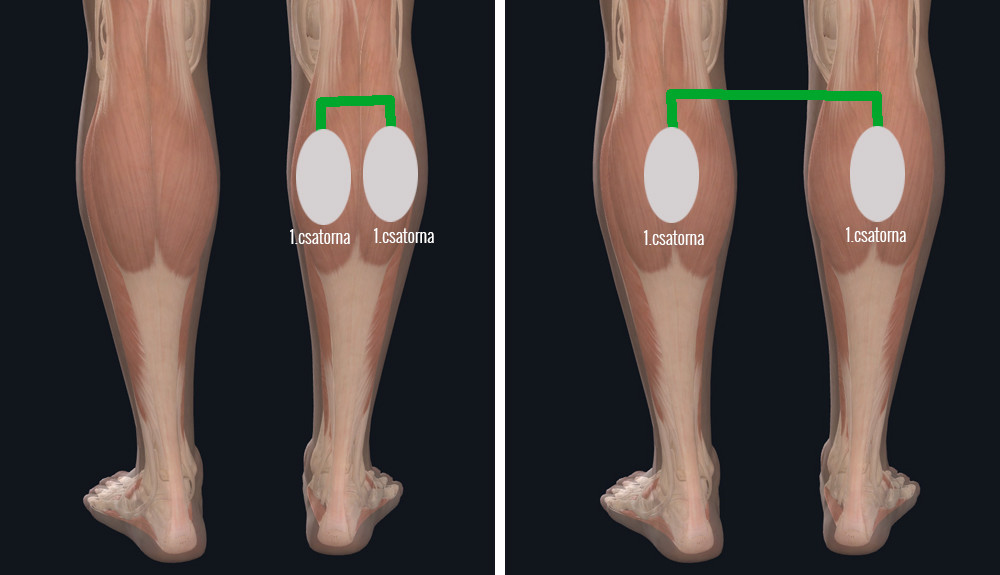
Globus Runner Pro
A four-channel muscle stimulator that lets you treat both calves and thighs at the same time. It has specific lower-limb programmes – for stimulating venous and microcirculation and maintaining muscle strength – so it is suitable as a home adjunct to walking training when used regularly each day.
Globus Elite S2
A simpler, two-channel device for the same purpose if you only want to treat both calves at the same time. It is sufficient for starting; the difference is the number of channels and the range of programmes, not the mechanism of action.
What about magnetotherapy and BEMER?
PEMF is another way of supporting the microcirculation – and there are specific Hungarian data for its use in arterial narrowing. The BEMER treatment was studied in 30 patients with Fontaine stage II arterial narrowing at the angiological department of Honvéd Hospital: after 16 sessions, pain-free walking distance increased by 57% and maximum walking distance by 37%; combined with pentoxifylline infusion, an even greater improvement was measured.5 The size and limitation of the study are important, however: it was a small, single-centre study, and the magnetic field acts at the capillary level – it does not open a narrowed large artery. I wrote a separate article about the relationship between BEMER and conventional PEMF devices: BEMER therapy and its effects; for the general framework of magnetotherapy, see the magnetotherapy guide.
Whichever device you choose: get a diagnosis and medical treatment plan first. The device is added to these – neither device replaces walking training.
 When must you NOT use a muscle stimulator?
- Pacemaker or another implanted electronic device – electrical stimulation must not be used
- Recent thrombosis or suspected thrombosis – treatment is prohibited until a doctor advises otherwise
- Open wound, ulcer or gangrene in the treatment area – the electrode must not be placed on damaged skin
- Pregnancy – only after medical consultation
- Cancer – treatment only with the approval of the treating doctor
- Epilepsy – only with the treating doctor's permission
 When should you see a doctor immediately?
If leg pain occurs even at rest or at night; if a toe or foot wound does not heal, changes colour or turns black; or if the foot suddenly becomes cold, pale and painful – these are signs of critically impaired limb blood supply and require immediate vascular surgical care. An ambulance is likewise needed for any suspected stroke symptoms (facial, arm or speech problems) and for persistent chest pain at rest – even if it lasted “only” a few minutes.
Frequently asked questions
An established plaque does not disappear completely – but that does not mean there is nothing you can do. Controlling the risk factors can slow the process and stabilise the plaque, meaning that it is less likely to rupture and cause a heart attack or stroke. With intensive cholesterol reduction, the plaque may even decrease slightly in size. In peripheral arterial disease, walking training also builds collateral vessels – the narrowing remains, but blood supply and exercise capacity improve.
The recipe that has worked in studies is at least 3 sessions a week, 30–45 minutes per session, for at least 12 weeks – walking until pain appears, resting, then starting again. Improvement is modest in the first weeks and then accelerates; in the Cochrane review, participants walked an average of 82 metres further without pain, and the effect lasted for up to two years in those who continued the programme.2 The key is persistence: this is a training programme, not a course of treatment.
No. The largest multicentre study, involving 200 people, showed that supervised walking training is the effective foundation, while EMS added a measurable benefit in patients with milder symptoms.4 The device is your ally if you use it alongside walking, or if temporarily – for example because of wound healing, bad weather or reduced mobility – you cannot walk enough and want to keep your muscles and circulation active in the meantime.
Unfortunately, that does not follow. Arterial narrowing remains symptom-free for a long time in a significant proportion of cases, while plaques also build up in the arteries of the heart and brain – it affects 236 million people worldwide, and one in five people over 80 is affected.1 This is why it is worth requesting an ankle-brachial index measurement after the age of 50, or earlier if you have risk factors: it is a painless screening test that can be completed within minutes and provides information about blood supply to the legs.
It may be considered as an adjunct – but do not expect miracles. In a Hungarian hospital study, BEMER treatment measurably extended walking distance in patients with arterial narrowing, and even more when combined with medication5 – but it was a small study, and the magnetic field acts on the microcirculation, not on the narrowed large artery. The correct order for arterial narrowing is also: risk-factor control + walking training + medication, with magnetotherapy or muscle stimulation added alongside these. I described the details in the BEMER article.
When conservative treatment has been exhausted or the limb is at risk: intervention is necessary in cases of pain at rest, a wound that does not heal or gangrene. In the “walk-stop” stage, however, international recommendations say to try the combination of risk-factor control + walking training + medication first, typically for at least 3–6 months. Many patients avoid the procedure or postpone it for years with this approach. The decision always belongs to the vascular surgeon; your task is to get everything possible from conservative treatment.
 What does the research say?
“How common is this disease – could it affect me too?”
According to an analysis combining 118 studies from around the world, 236 million people were living with peripheral arterial disease in 2015. The prevalence rises sharply with age, and in wealthy countries it affects more than one in five people aged 80–84. The four strongest risk factors were smoking, diabetes, high blood pressure and high cholesterol – precisely the factors that can be changed.1
“Is walking really the treatment? Don't I need something stronger?”
The Cochrane Collaboration combined data from 32 randomised trials involving 1,835 patients: according to high-quality evidence, the walking programme extended pain-free walking distance by an average of 82 metres and maximum walking distance by 120 metres compared with controls, and also improved quality of life. This is a greater improvement than is generally seen with medication for intermittent claudication – which is why walking training is first-line treatment.2
“What about electrical stimulation? Does it work for arterial narrowing?”
The honest picture is that it is promising, but supplementary. In one randomised study, muscle stimulation applied to the leg improved pain-free walking distance by 46% on its own and produced a further measurable improvement when added to supervised exercise.3 However, the larger multicentre study involving 200 people found no significant additional benefit in the full patient group – the benefit appeared in patients with mild symptoms, without serious side effects.4 The lesson is that EMS belongs alongside walking training, not instead of it – and the earlier it is used, the more it may contribute.
“Someone I know uses BEMER for arterial narrowing – is there any basis for this?”
There is a study, and it is Hungarian: in the angiological department of Honvéd Hospital, 30 patients with Fontaine stage II disease had a 57% increase in pain-free walking distance and a 37% increase in maximum distance after 16 BEMER sessions. Combined with pentoxifylline infusion, both distances increased to roughly one and a half times their original value. According to the authors, the magnetic treatment acted through capillary-level circulation, while the medication acted through the flow properties of the blood.5 In a Serbian randomised study, a package of electrotherapy and magnetotherapy added to therapeutic exercise also improved claudication distance – but the ankle-brachial index did not change in either group, meaning that the narrowing itself did not become smaller.6 The balance of evidence is that magnetotherapy may be a reasonable adjunct for symptoms, but it does not treat the underlying disease and does not replace risk-factor control or walking training.
 Summary – Quick overview
Read more
Scientific sources
- Song P, Rudan D, Zhu Y, et al. (2019). Global, regional, and national prevalence and risk factors for peripheral artery disease in 2015: an updated systematic review and analysis. The Lancet Global Health, 7(8), e1020–e1030. DOI: 10.1016/S2214-109X(19)30255-4
- Lane R, Harwood A, Watson L, Leng GC (2017). Exercise for intermittent claudication. Cochrane Database of Systematic Reviews, 12, CD000990. DOI: 10.1002/14651858.CD000990.pub4
- Babber A, Ravikumar R, Onida S, Lane TRA, Davies AH (2020). Effect of footplate neuromuscular electrical stimulation on functional and quality-of-life parameters in patients with peripheral artery disease: pilot, and subsequent randomized clinical trial. British Journal of Surgery, 107(4), 355–363. DOI: 10.1002/bjs.11398
- Burgess L, Babber A, Shalhoub J, et al. (2023). Neuromuscular Electrical Stimulation for Intermittent Claudication (NESIC): multicentre, randomized controlled trial. British Journal of Surgery, 110(12), 1785–1792. DOI: 10.1093/bjs/znad299
- Bernát SI (2013). A pentoxifillin és a bioelektromágnes-reguláció kezelés hatásossága alsó végtagi obliteratív verőérbetegek járástávolságára. Orvosi Hetilap, 154(42), 1674–1679. DOI: 10.1556/OH.2013.29693
- Marković MD, Marković DM, Dragaš MV, et al. (2016). The role of kinesitherapy and electrotherapeutic procedures in non-operative management of patients with intermittent claudications. Vascular, 24(3), 246–253. DOI: 10.1177/1708538115593651
- Libby P, Buring JE, Badimon L, et al. (2019). Atherosclerosis. Nature Reviews Disease Primers, 5(1), 56. DOI: 10.1038/s41572-019-0106-z