
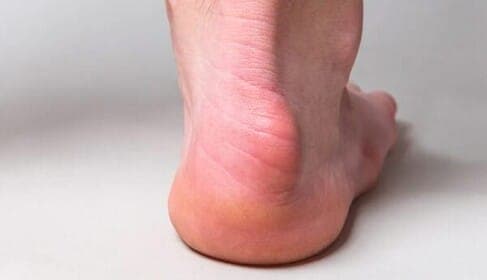
Causes of Heel Pain
Heel pain most often occurs at the bottom or back of the heel. Although it rarely indicates a serious disease, it can interfere with everyday activities—particularly making physical activity difficult. The foot (from below the ankle to the toes) is made up of 26 bones, the largest of which is the heel bone. The heel's job is to provide a stable support for the body's weight, which is why our heel is subjected to significant impact with every step. This area is more vulnerable, and pain here significantly affects mobility. Heel pain is one of the most common complaints affecting the foot.

Possible causes of heel pain
Most pains are caused by mechanical reasons, but arthritis, infections, autoimmune and neurological problems, trauma, osteoporosis and other bone diseases can also underlie the complaint. I list them here in alphabetical order.
Achilles tendinitis
An overuse injury of the Achilles tendon. The tendon connects the calf muscles at the back of the lower leg to the heel bone.
It most commonly occurs in runners who suddenly increase the intensity or duration of their running. It is also common in middle-aged people and so-called weekend athletes who play sports such as tennis or basketball on days off.
Most cases of Achilles tendon inflammation can be treated relatively simply at home with medical supervision. Self-care measures are usually needed to prevent recurring symptoms. More severe cases can lead to tendon rupture, which may require surgery.
Achilles tendon rupture
An injury affecting the back of the lower leg. It primarily occurs in people doing recreational sports but can happen to anyone.
The Achilles tendon is a strong fibrous “rope” that connects the muscles at the back of your calf to your heel bone. If you overstretch this band, it can tear completely or partially. The rupture often happens with a popping sound, followed by sudden sharp pain at the back of your ankle and lower leg, which will very likely affect your ability to walk normally.
Restoration often requires surgery, although non-surgical treatment can be effective in some cases.
Bursitis (bursa inflammation)
A painful condition affecting the small, fluid-filled sacs called bursae that cushion bones, tendons and muscles near the joints and reduce friction between moving parts of the body's joints.
Bursitis is the inflammation of these bursae.
It most commonly affects the shoulder, elbow and hip, but can also occur at the knee, heel and at the base of the big toe. It often occurs near joints that perform frequent repetitive motions.
Treatment generally involves resting the affected joint and protecting it from further injury. In most cases, bursitis pain subsides within a few weeks with appropriate treatment, but recurrent flare-ups are common.
Bone tumor
Osteomyelitis (bone infection)
Infections can reach the bone via the bloodstream or by spreading from nearby tissues. They can also originate in the bone itself if an injury exposes the bone to bacteria.
Smokers and people with chronic conditions such as diabetes or kidney failure are at higher risk of developing osteomyelitis. In the feet of people with diabetes, osteomyelitis can develop if they have a foot ulcer (diabetic foot).
Although once considered incurable, osteomyelitis can now be treated successfully. Most people need surgery to remove dead bone tissue, followed by strong intravenous antibiotics.
Haglund deformity
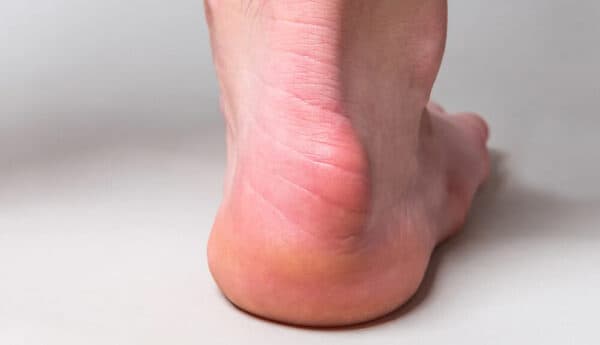
It must be distinguished from a bone spur. Both Haglund deformity and heel spur can cause pain at the back of the foot, but not in the same place. A Haglund heel develops at the origin of the Achilles tendon (at the transition between the calf muscles and the tendon), whereas a spur forms where the Achilles tendon attaches to the posterior surface of the heel bone.
Haglund deformity is associated with a bony prominence on the back of the heel, which is often visible. It appears above the point where the Achilles tendon attaches to the bone. It does not always involve calcification, which may develop if Haglund deformity leads to chronic inflammation.
The Haglund deformity can press on the Achilles tendon, and the posterior heel prominence can grow into the tendon where calcifications may form. People with a prominent posterior heel often have difficulty finding comfortable footwear.
Paget's disease
It disrupts the body's normal bone regeneration process in which new bone tissue gradually replaces old bone tissue.
Over time, bones can become fragile and misshapen due to the condition.
It most commonly affects the pelvis, skull, spine and legs. The risk increases with age and if family members also have the disease.
For unknown reasons, it has become less common in recent years and when it does occur it tends to be less severe.
Complications can include bone fractures, hearing loss and nerve compression in the spine. Bisphosphonates—the drugs used to strengthen bones weakened by osteoporosis—are a mainstay of treatment. Surgery may be required for complications.
Peripheral neuropathy
The result of damage to the nerves outside the brain and spinal cord (peripheral nerves).
It often causes weakness, numbness and pain, usually in the hands and feet. It can also affect other areas and bodily functions, including digestion, urination and circulation.
The peripheral nervous system sends information from the brain and spinal cord (the central nervous system) to the rest of the body, and these peripheral nerves also send sensory information back to the central nervous system.
The condition can result from traumatic injuries, infections, metabolic problems, inherited causes and exposure to toxins. One of the most common causes is diabetes.
Pain is usually described as stabbing, burning or tingling. In many cases symptoms improve, especially if the underlying cause is treatable. Medications and TENS treatment can reduce complaints caused by peripheral neuropathy.
Reactive arthritis
Joint pain and swelling triggered by an infection elsewhere in the body—most commonly in the bowel, genital tract or urinary tract.
It usually affects the knee and the ankle and foot joints. The inflammation can also involve the eyes, skin and urethra.
It was previously sometimes called Reiter's syndrome, characterized by eye, urethral and joint inflammation.
It is not a common disease. For most people symptoms appear suddenly and then subside, often resolving within 12 months.
Retrocalcaneal bursitis - inflammation of the heel bursa
Rheumatoid arthritis
A chronic inflammatory disease that can affect more than just the joints.
In some people the condition can damage many different body systems, including the skin, eyes, lungs, heart and blood vessels. It is an autoimmune disease in which your immune system mistakenly attacks the tissues of your own body.
Unlike the wear-and-tear damage of osteoarthritis, rheumatoid arthritis affects the lining of the joints, causing painful swelling that can eventually result in bone erosion and joint deformity. As the tissue that lines the joints (the synovium) becomes inflamed and thickened, fluid accumulates and the joints erode and break down.
The associated inflammation is what can damage other parts of the body. Although newer drugs have dramatically improved treatment options, severe disease can still cause physical disability.
Sarcoidosis
A disease characterized by small clusters of inflammatory cells (granulomas) in any part of the body—most commonly the lungs and lymph nodes. It can also affect the eyes, skin, heart and other organs.
The cause is unknown, but experts believe it arises from the immune system responding to an unknown substance. Some research suggests infectious agents, chemicals, dust and possible abnormal reactions to the body's own proteins may be responsible for granuloma formation in genetically susceptible people.
It cannot be cured, but most people recover very well without treatment or with only modest therapy. In some cases sarcoidosis resolves on its own, though it can persist for years and may cause organ damage.
Heel spur
A bony growth at the attachment point of the lower leg muscles to the heel bone (where the Achilles tendon reaches the back of the heel).
It develops where bone and tendon rub together. As a result, the bone may begin to grow abnormally and surrounding tissues can become inflamed.
A heel spur can form in two places: at the attachment of the Achilles tendon and on the plantar side of the heel where the plantar fascia originates.
Stress fractures
Small cracks in a bone caused by repetitive force. They often result from overuse—for example, repeated jumping up and down or long-distance running.
They can occur during normal use of a bone, but in those cases the bone is already weakened by a condition such as osteoporosis. They most commonly occur in the weight-bearing bones of the lower leg and foot.
Athletes and military recruits carrying heavy loads over long distances are at highest risk, but anyone can suffer a stress fracture.
For example, if you start a new training program, you can develop a stress fracture if you do too much too soon.
Plantar fasciitis (inflammation of the plantar fascia)
One of the most common causes of heel pain. It involves inflammation of the thick, fibrous band of tissue (the plantar fascia) that runs along the bottom of the foot, connecting the heel bone to the toes.
It usually causes stabbing pain that is felt with the first steps in the morning. As you get up and move around, the pain generally decreases, but it can return after prolonged standing or when rising after sitting.
It is more common in runners. Overweight people and those who wear shoes that do not provide adequate support (for example walking barefoot on hard surfaces, thin-soled shoes, sandals) also have a higher risk of developing plantar fasciitis.
Tarsal tunnel syndrome
A syndrome of symptoms including pain, numbness and muscle weakness. The name refers to the condition: in a healthy state a nerve in the area runs through a tunnel formed by tendons, muscles, blood vessels and bones; if this area narrows for any reason, the nerve becomes compressed within the tunnel. Similar compressive syndromes can occur elsewhere in the body (e.g. carpal tunnel syndrome).
In tarsal or plantar tunnel syndrome, pain occurs from the big toe to the inner ankle due to compression of the tibial nerve, which can be caused by, among other things, wearing tight shoes.
The conditions listed above therefore often accompany heel pain. Appropriate treatment can only be applied after an accurate diagnosis. So first request an examination.
When should you see a doctor?
Immediately see your doctor if:
- You feel sudden pain and swelling near your heel;
- You are unable to point your foot down, stand on tiptoe or walk normally;
- You notice heel pain accompanied by fever, numbness or tingling;
- You experience severe heel pain immediately after an injury.
Make an appointment to see a clinic if:
- The heel pain persists even when you are not putting weight on your feet;
- Your heel pain lasts more than a few weeks—see a doctor even if you have tried rest, ice and other home treatments.
Self-care for heel pain
Heel pain often resolves with home treatment. If your condition is not severe, try the following:
- Rest: If possible, avoid activities that strain your heel, such as running, long periods of standing or walking on hard surfaces.
- Ice: Apply an ice pack or a bag of frozen peas to your heel for 15–20 minutes three times a day.
- New shoes: Make sure your shoes fit properly and provide adequate support. If you play sports, choose shoes appropriate for your activity and replace them when they are worn out.
- Insoles: Over-the-counter heel cushions or wedges often provide relief. Custom-made orthotics are generally not necessary for common heel problems.
You may consider home physiotherapy treatments for heel pain after you have undergone an examination. Different methods are suitable for different diagnoses, so choose the method that matches your diagnosis. Therapeutic ultrasond, microcurrent, softlaser and PEMF treatments are most commonly used for heel pain. Ask your treating physician for recommendations.

