COPD – chronic obstructive bronchitis and its treatment
If you're being treated for COPD (chronic obstructive bronchitis), it's important to know that the disease is currently not curable. Therefore, treatments aim to reduce or eliminate your symptoms. But they won't do much without you! If you don't take your medications or quit smoking, your symptoms will worsen. Breathlessness can even interfere with your everyday activities. Let's look at what you can and should do!
Chronic obstructive bronchitis (COPD)
COPD is a chronic inflammatory lung disease that results in narrowing and obstruction of the airways. Air cannot flow properly in your lungs. This means you cannot take in enough oxygen and you suffer from persistent shortness of breath and reduced exercise capacity.
The main cause is long-term inhalation of gases and substances that irritate the airways. COPD is primarily a disease of smokers; there is a clear link between tobacco smoke and the disease. Workplace air (mining, metallurgy, chemical industry) can also be a cause, and even urban air can be irritating for more sensitive individuals.
Symptoms are caused by the fact that the mucous membrane lining the inner walls of the airways is continuously inflamed due to harmful substances. As a result, a large amount of mucus is produced—so much that you cannot cough it up or spit it out. The lungs cannot clear themselves. Initially the smaller, then the larger airways become “clogged” and airflow stops. Air does not reach the alveoli. This reduces oxygen uptake, which can lead to breathlessness even at rest.
The mucus irritates the airways and triggers coughing in the person with COPD, especially in the early morning hours. Mucus is produced abundantly and can be coughed up, but the condition does not improve because chronic inflammation causes continuous mucus production.
One of the most common consequences of COPD is emphysema. Behind the mucus plugs that obstruct smaller airways, the walls of the alveoli expand and then rupture. Several alveoli can “merge” into one another. The surface area for gas exchange decreases. The larger the affected area, the more severe the shortness of breath.
Symptoms of COPD
Symptoms of COPD often appear only after significant lung damage has already occurred. If the triggering cause (for example, smoking) is not stopped, symptoms will then worsen rapidly.
- cough and abundant sputum production (especially strong in the morning)
- shortness of breath, especially during physical activity (after a while even household chores or walking to the store can require unmanageable effort)
- wheezing
- tight chest pain
- sputum may be clear, white, yellow or even greenish
- lips and nail beds may turn bluish (cyanosis)
- frequently recurring respiratory infections
- general weakness, lack of energy
- weight loss (in advanced stages)
- swelling of the ankles and legs
COPD is characterized by periodic flare-ups of symptoms. After a calmer period with fewer symptoms, the condition can suddenly worsen.
Patients often require repeated hospital treatments. The risk of heart disease and lung cancer is also increased.
Risk factors for COPD
- Smoking or exposure to tobacco smoke. The single most significant risk factor is smoking. The longer you smoke and the more packs you smoke, the higher your risk. People exposed to secondhand smoke from smokers in their environment may also be affected.
- Asthma combined with smoking. The combination of asthma and smoking further increases the risk of COPD.
- Occupational dust and chemical exposure. Regular and prolonged inhalation of workplace chemical fumes, vapors and dust can irritate the lungs and cause inflammation.
- Inhalation of combustion products. Inhaling substances produced by burning fuels and vehicle fuels (environmental pollution) poses a particularly high risk.
- Age. COPD develops slowly, so most people are at least 40 years old when the first symptoms appear.
- Genetics. The rare genetic disorder alpha-1 antitrypsin deficiency can be a cause of COPD.
Eliminating the harmful cause
The most important step in treating COPD is eliminating the triggering cause. ACT NOW! Quit smoking immediately, leave a dusty or chemical-laden workplace and look for other employment.
If you don't do this, your symptoms will continue to worsen at an accelerating pace. Over time COPD will damage your lungs so much that everyday activities (bathing, shopping, cleaning) become difficult or impossible and you may become bedridden. If you don't want that to happen, do everything you can to change your workplace and stop smoking.
If the harmful exposure stops, your lungs are capable of “miracles.” The sooner you stop damaging your lungs after the first symptoms appear, the better they regenerate. If you act in time, they can recover enough that your everyday complaints will be minimal or gone. If you leave everything as it is... you are essentially shrugging off your life... this will lead to severe complaints. The decision is in your hands; only you can take the step!
Changing jobs can sometimes be difficult, especially in rural areas—but you must try. Quitting smoking is also very hard; ask your doctor for help! Nicotine replacement patches and other methods can help.
Medical treatment of COPD
Your treating physician may prescribe several types of medications to manage COPD symptoms and complications and to prevent exacerbations. None of these will restore the damage to your lungs, but they will relieve your symptoms!
- Bronchodilators. These medications relax the muscles of the airways. They can help relieve cough and shortness of breath and make breathing easier. The best effect is achieved with bronchodilators inhaled via an inhaler. The inhaled medicine acts directly where it is needed: in your airways.
- Steroids. Corticosteroid medicines can reduce airway inflammation and help prevent worsening. They can be delivered by inhalation or taken orally. In COPD exacerbations, corticosteroids can prevent further deterioration of the disease.
Long-term use of steroids can have serious side effects, such as weight gain, diabetes, osteoporosis, cataracts and an increased risk of infections. - Phosphodiesterase-4 inhibitors. They reduce airway inflammation and relax the airways. Common side effects include diarrhea and weight loss.
- Theophylline. It may help improve breathing and prevent exacerbations. Side effects can include nausea, headache, rapid heartbeat and tremor. Side effects are dose-dependent, so low doses are recommended.
- Antibiotics. Respiratory infections can worsen COPD symptoms. Antibiotics help treat acute exacerbations but are not recommended for regular use. Antibiotics may be needed if your sputum is discolored yellowish-green. Antibiotics kill bacteria. To choose the appropriate drug, the pathogens in the sputum should be cultured to determine the most effective agent. The full course must then be completed (even if symptoms improve in 2–3 days, you must not stop the antibiotic; take the entire prescribed dose)!
- Oxygen therapy. If your blood oxygen level drops below a certain threshold, oxygen supplementation may be necessary. You can read about measuring blood oxygen level and its significance in my article.
Oxygen can be supplied from a cylinder via a pressure reducer, an airhose and a mask or nasal cannula. A drawback of cylinders is that they often run out, need refilling and are heavy, making mobility difficult.
There are devices that produce concentrated oxygen from the surrounding air. They can even be small enough for travel. They can be used anywhere and never run out, but even the simplest such machine costs well over one hundred thousand forints.
Oxygen therapy improves your quality of life and is one of the COPD treatment methods proven to prolong life.
Further home treatment options for COPD
- Respiratory muscle training. The aim of respiratory muscle training is to strengthen the muscles that assist inhalation and thereby improve inhalation efficiency. Devices shaped like a pipe or tube have been developed for this. They usually contain one or more small balls inside. The air blown into the device raises these balls. The stronger your exhalation, the higher the balls rise. Regular respiratory muscle training can increase your physical performance. (Today there are devices significantly more effective than the old ball trainers.)
- Salt therapy. Salt therapy does not replace medication but complements it. Salt generally does not work immediately, but by loosening mucus it can significantly relieve your shortness of breath within a few days. It destroys pathogens in the airways. Its main role is to reduce the frequency of exacerbations. You may also need fewer medications. This is important in preventing unwanted drug side effects!
Such treatment can be performed using the SaltDome salt therapy device.
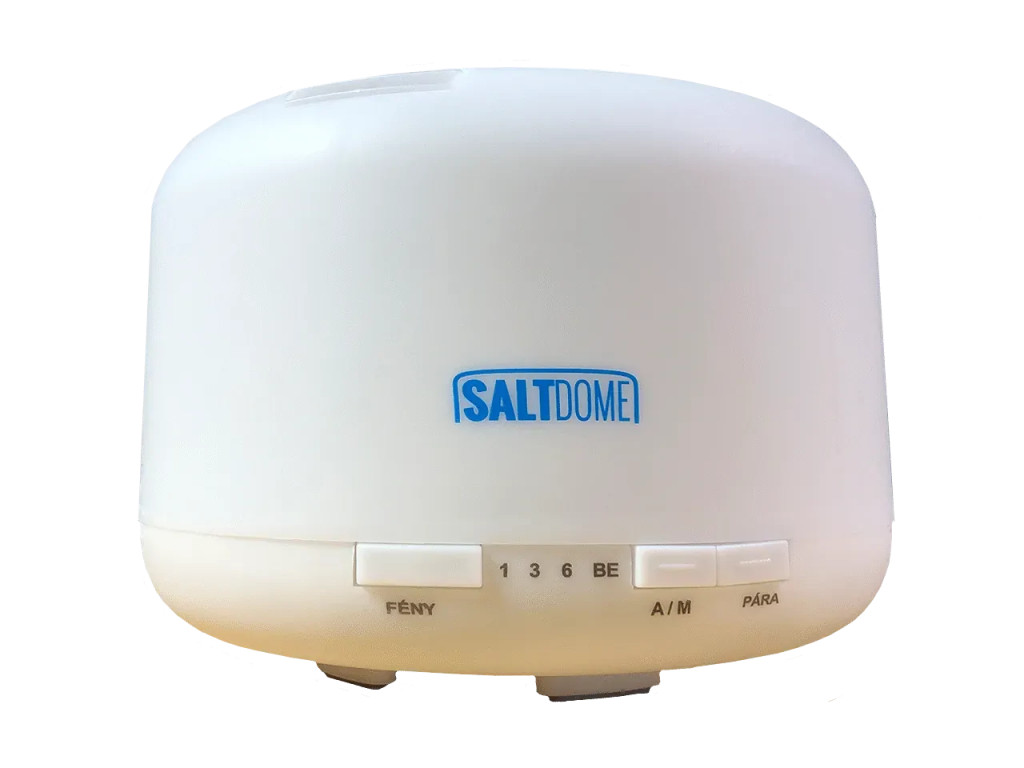
Product recommendation: SaltDome salt therapy device
If you want to generate the beneficial salty air in the comfort of your home, choose the SaltDome ultrasonic salt therapy device. Read customer reviews to learn about users' experiences!
- Airway vibration. Vibration has been used in the most modern ventilators for decades. It has been adapted for COPD treatment. By forcing air through a device, vibration is generated in the airways. This vibration "breaks up" and loosens the mucus layer, aiding airway clearance and expectoration. COPD produces a lot of mucus, which accelerates lung damage and suffocation. Coughing up and spitting out the mucus helps prevent disease progression!
For airway vibration treatment I recommend the Aerobika OPEP device. Read my article about it.
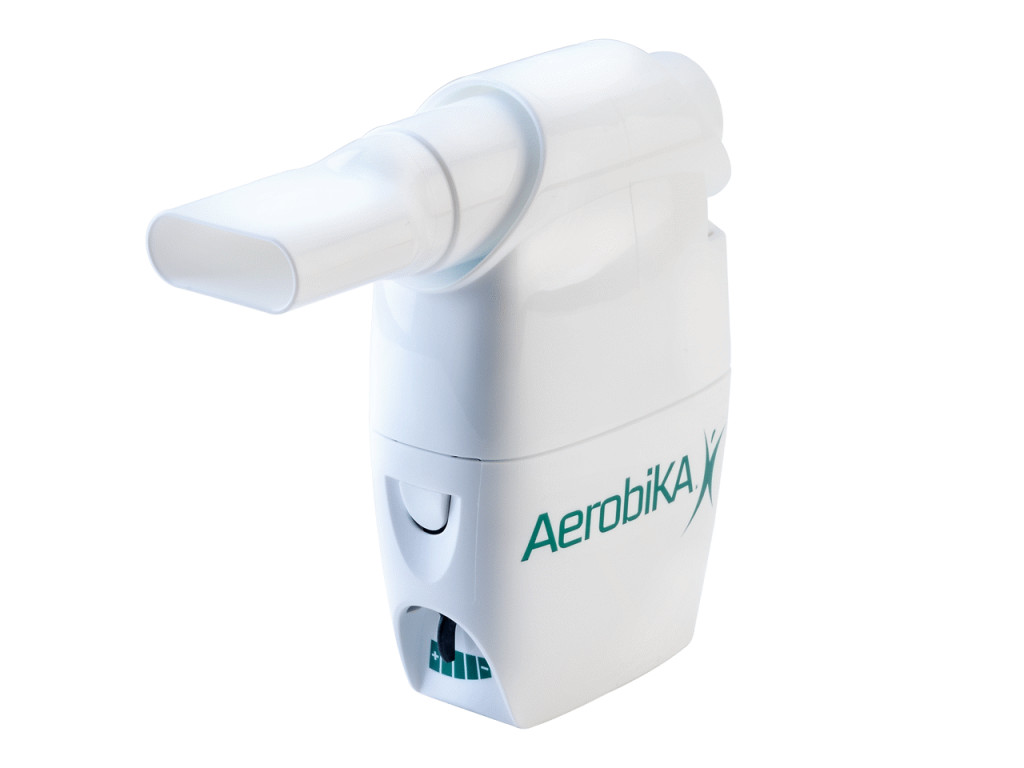
Product recommendation: AerobiKa OPEP
Vibration and positive expiratory pressure help dislodge and remove mucus. An effective aid for airway mucus clearance. Primarily used in COPD.
What is a COPD exacerbation?
The symptoms of chronic obstructive pulmonary disease (COPD) vary continuously. The spectrum ranges from calmer periods with few symptoms to severe episodes that often require hospitalization. The latter, severe phase is called a "COPD exacerbation." Symptoms worsen over a short period, signaled by increased shortness of breath, rapid, shallow breathing and paroxysmal coughing. Without immediate and effective treatment, emergency care or hospitalization may become necessary.
A COPD exacerbation is frightening and distressing. Although you may be able to "ride out" a single exacerbation, the more often they occur, the more likely you will require hospital treatment.
Therefore it is worth learning which symptoms predict an approaching COPD exacerbation and, more importantly, how to prevent an "outbreak" and avoid hospitalization.
Signs indicating worsening COPD
During a COPD exacerbation, airway condition and lung function change rapidly and dramatically. Accumulating mucus forms "plugs," while the muscles in the airway walls contract, cutting off air (and thus oxygen) from reaching the alveoli.
- Difficulty breathing or shortness of breath. You feel you cannot fully fill your lungs with air.
- Increased coughing. Your lungs try to "clean out" mucus through coughing. In COPD the mucus is thick and sticky and very hard to get rid of. Coughing—especially in the morning—comes in fits, is agonizing and exhausting.
- Change in sputum. Discolored sputum (yellowish, greenish) suggests infection. Reddish streaks may indicate small bleedings, usually from forceful coughing.
- Wheezing. You gasp for air and due to airway narrowing you may hear wheezing sounds over your lungs.
- Fatigue or sleep problems. This indicates your lungs are taking up less oxygen than your body needs.
- Confusion, slowed thinking, depression or memory problems mean your brain is not getting enough oxygen and dysfunction occurs. These signs are often noticed by relatives rather than by you.
Pulse oximeter – shows how serious it is
If you suffer from COPD, it's almost "mandatory" to have a pulse oximeter at home. The simplest clip-on finger devices are available for around 10,000 forints and measure the oxygen saturation of your blood—i.e., they show how oxygen-deprived your body is.
A normal value is between 97–100, in which case no action is needed. Between 93–97 it is reduced but usually does not require intervention. Below 92, you should start the treatments agreed with your doctor. At 88 or lower you should not wait at home; seek medical attention (go to the hospital).
Acute COPD exacerbations are generally treated in a hospital ward (internal medicine or pulmonology).