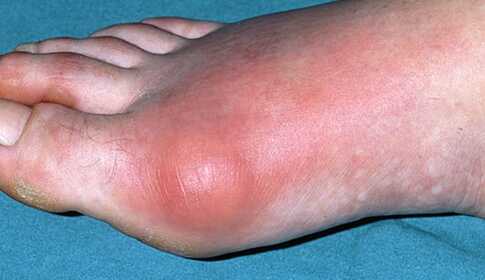

 What is gout?
Gout is one of the most common forms of joint inflammation (arthritis). An attack typically starts suddenly, often in the middle of the night: the base of the big toe feels as if it is “on fire”, while the joint becomes hot, swollen and red. It is so sensitive that even the weight of the bedclothes can be unbearable. The pain is usually at its worst during the first 6-12 hours, then eases over days or weeks.
The most common symptoms are severe, agonising pain (most often in the base joint of the big toe, although the ankle, knee, elbow, wrist and fingers may also be affected), swelling, warmth and redness, restricted movement because of the pain, followed by an unpleasant sensation lasting for days or weeks after the attack subsides. Later attacks may last longer and affect more joints.

 Key point
Gout is a “two-front” disease, and few people understand this: treating the attack is just firefighting — treating the disease happens during the weeks without attacks. Whether you have another attack is not decided in the clinic, but at home: by your daily food choices and by taking your prescribed medicine consistently. Your doctor provides the diagnosis and the framework — most of the work is yours.
 When should you seek immediate medical attention?
If the joint is hot and red AND you also have a fever, this may not be gout: a bacterial joint infection could be responsible, and it requires urgent treatment. You should always have your first gout attack medically assessed as well: untreated gout can lead to worsening pain and permanent joint damage.
 How does gout develop?
Uric acid is a natural waste product of metabolism: it is produced when purine compounds are broken down and is excreted by the kidneys. If too much is produced, for example because of a purine-rich diet, or the kidneys excrete too little, uric acid builds up in the blood and precipitates in the joints as sharp, needle-like urate crystals. These crystals cause the pain and inflammation of an attack. Pork, beef and turkey, organ meats such as liver and kidney, and seafood are rich in purines. Alcohol, especially beer, and drinks sweetened with fructose also raise uric acid levels.
A meat-rich diet, regular alcohol and sugary-drink consumption, excess weight, certain diseases such as high blood pressure, diabetes, heart and kidney disease, and some medicines such as certain diuretics and aspirin all increase the risk — as does a family history. Gout is more common in men and typically develops between the ages of 30-50. In women, uric acid levels rise after the menopause, and symptoms often appear then.
Some people have only one attack — but in most people it returns, and untreated recurrent gout slowly damages the joint. Over time, urate crystals may collect in lumps under the skin, called tophi. They appear on the fingers, hands, feet and elbows, and can also collect in the urinary tract, causing kidney stones. That is why it is not enough simply to “survive” the attacks — uric acid levels need to be brought under lasting control.
How is it diagnosed?
Gout can often be recognised “at first sight”: sudden, red and agonising inflammation of the base joint of the big toe is highly characteristic. Tests are mainly used to rule out other diseases. Blood tests measure uric acid and creatinine levels, although be careful: laboratory results can be misleading. Some people have a high uric acid level without gout, and the reverse can also occur. Ultrasound may show the crystals, while X-rays help rule out other forms of joint inflammation.
What can you do during an attack?
The aim of treating an attack is to reduce pain and inflammation quickly. International clinical guidelines recommend three groups of medicines for this: a non-steroidal anti-inflammatory, colchicine or a steroid. Your doctor will decide which is suitable for you based on your other diseases and medicines.1 You can also do the following yourself:
 Your home attack protocol
Rest and elevate the affected limb. Apply ice using an ice pack wrapped in a towel, for 15-20 minutes several times a day. Drink plenty of water — good hydration helps the body excrete uric acid. Do not massage or warm the inflamed joint — during an attack, both can make things worse. Most importantly, start taking your prescribed medicine at the BEGINNING of the attack — the earlier you start, the shorter the attack is likely to be.
As a complementary option, soft laser treatment may be considered: applying light locally to the inflamed joint may reduce pain and inflammation. It is important to be honest about the evidence: there is still little research, and it is old. Treat it as a complementary method, not as the cornerstone of treatment. With a home device, one treatment a day is recommended, and you will need more sessions than with high-powered clinical lasers.
The real treatment happens BETWEEN attacks
This is where the future of your disease is decided. You have two tools: your diet and — if your doctor prescribes it — uric-acid-lowering medicine.
Basic dietary rules
Drink plenty of water and avoid sugary drinks and drinks containing fructose. Limit alcohol and, if possible, give up beer — research suggests that beer increases the risk of attacks the most. Eat only small amounts of meat — avoid organ meats and seafood; low-fat dairy products are good sources of protein. Avoid large feasts — attacks occur strikingly often during the night after a pork feast or a rich stew-based lunch. Keep your weight under control — losing weight lowers uric acid levels, but drastic fasting temporarily raises them, so lose weight gradually.
If the attacks recur, you have tophi, or joint damage is already visible, your doctor will prescribe long-term uric-acid-lowering medicine, most often allopurinol. The aim is to bring the blood uric acid level permanently below the target value. This is monitored with regular blood tests, and the medicine dose is adjusted accordingly.1
Realistic expectations
Medicine does not replace the diet: if you continue drinking beer and eating purine-rich food while taking the prescribed tablets, the attacks will return. The reverse is also true: do not stop the medicine on your own during a symptom-free period. Uric acid levels can still rise then, only without symptoms, while the crystals continue to build up silently.
 A home device for attack pain
For gout, only one type of device makes sense at home: a soft laser, as a complementary treatment for the pain and inflammation of an attack. You do not need several devices — one soft laser is enough, and you can also use it for other joint problems.
B-Cure Laser Classic soft laser device An entry-level model with a wide treatment surface — a convenient choice for treating the big toe and smaller joints. During an attack, treat the inflamed joint once a day; the effect builds up over a course of treatment.
Personal Laser L400 soft laser device A stronger 808 nm version with a shorter treatment time. Choose it instead of the Classic if you want to treat several joints regularly, such as the knee and ankle. You do not need both.
 Before starting home treatment
- A first attack not yet assessed by a doctor – get a diagnosis before starting home treatment: infection or another joint disease may be behind symptoms that resemble gout.
- Fever or suspected infection – no home treatment is appropriate in this situation; seek immediate medical assessment.
- Active cancer – use a soft laser only with your oncologist's approval.
- Pregnancy – ask your doctor for advice before using the device.
- Skin injury or open wound in the treatment area – do not treat until it has healed.
 Important information
Never direct the soft laser into the eyes. Home device treatment is a complement to medical treatment — do not stop your prescribed medicines because of it.
 What does the research say?
“What really matters in gout treatment?”
International rheumatology guidelines are clear: for people with recurrent attacks, tophi or joint damage, long-term uric-acid-lowering treatment is the key, bringing the blood uric acid level below the target value. For attacks, an anti-inflammatory, colchicine or a steroid is appropriate. Lifestyle measures, including diet, avoiding alcohol and fructose, and weight management, are an integral part of the recommendation.1
“Does soft laser really help with an attack?”
Honestly, the evidence here is limited. In a small, older study, daily laser treatment eased pain in people with acute gout about as quickly as an anti-inflammatory tablet. In other words, it was not better, but may offer a similar, medicine-free option where tablets cannot be taken. Current data do not support a stronger claim, so soft laser is a complement, not a cornerstone.2
“Which food or drink is the main culprit?”
Research summarising risk factors suggests that alcohol, a diet rich in meat and seafood, and fructose-containing drinks increase the risk in both sexes. Dietary advice is therefore not just “old wives' wisdom”, but is based on measured associations. One interesting point is that the effect of seafood appears to be even more pronounced in women.3
Frequently asked questions
All alcohol raises uric acid levels, but not equally. Beer is the worst choice, as it is also high in purines. Spirits are in the middle, while the risk from wine consumed in moderation is the lowest. The safest option for preventing attacks is to avoid alcohol, especially during periods when you are more prone to attacks.
Do not stop it on your own. Being symptom-free actually indicates that the medicine is working. After stopping it, uric acid levels rise again and the crystals quietly start to build up. Always decide about changing the medicine with your doctor, based on the results of your follow-up blood tests.
Take the medicine prescribed for your attacks as soon as possible — the earlier you start, the shorter the attack is likely to be. Then rest, elevate the limb, apply ice and drink plenty of water. Do not massage, warm the joint, drink alcohol or try to “walk it off”.
Yes — losing weight measurably lowers uric acid levels and the risk of attacks. There is one important condition: lose weight gradually. Drastic fasting and rapid weight loss temporarily raise uric acid levels and can trigger an attack.
No — the amount and type matter. Small portions of poultry or lean meat are acceptable. It is best to avoid organ meats, game and seafood, and especially “big blowouts” such as pork feasts and rich stew-based meals. How often you have attacks will show you where your personal limit lies.
 Summary – Quick overview
Sources
- FitzGerald JD, Dalbeth N, Mikuls T, et al. (2020). 2020 American College of Rheumatology Guideline for the Management of Gout. Arthritis Care & Research. PubMed: 32391934
- Soriano F, Campana V, Moya M, et al. (2006). Photobiomodulation of pain and inflammation in microcrystalline arthropathies: experimental and clinical results. Photomedicine and Laser Surgery. PubMed: 16706692
- Evans PL, Prior JA, Belcher J, et al. (2019). Gender-specific risk factors for gout: a systematic review of cohort studies. Advances in Rheumatology. PubMed: 31234907