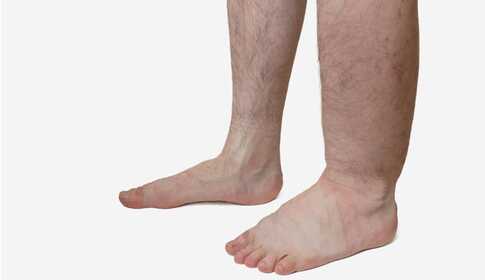

 Leg swelling – a symptom that warns of disease
In this article I go through all possible causes of leg swelling – from minor injuries to serious internal diseases – and in each case show what to do and which of my detailed guides you should consult next.
 Key point
Leg swelling is a symptom, not a disease. Proper treatment always targets the cause. If you notice a new or increasing swelling, the first step is investigation. Only knowing the cause allows selection of the most effective home or medical treatment.
 First steps for an edematous leg
If the leg swelling has appeared recently, your first task is to find out what's causing it! Do yourself a favor and see a doctor as soon as possible and ask for an evaluation!
Treatment can only be effective once the cause of the swelling is known. Therapy is most effective when it is targeted to the underlying cause!
There are many possible causes of leg swelling. Let's go through them – and how the necessary actions differ.
“Simpler" causes of leg swelling
- In some cases the cause of the edematous leg is obvious. For example, if you sprain your ankle you know what caused it, and the swelling is usually temporary – it will subside over time (unless there is a fracture).
- Injuries (strain, sprain, dislocation, ligament rupture and bone fracture) almost always cause swelling, which can have a twofold cause. First, small vessels torn at the time of injury bleed and form a hematoma. Second, blood flow toward the injury speeds up. This brings protection (a “troop” of white blood cells arrives to prevent pathogens entering through the wound). Blood flow also delivers substances that promote healing and regeneration. Thus more fluid reaches the injury than usual, causing swelling.
- Lack of movement (all-day sitting or standing work, long car, bus or plane trips) can cause leg swelling even in a healthy person. The sock edge can leave a dent above the ankle. This is the easiest to fix – with physical activity: walking, jogging or cycling usually makes the swelling disappear quickly.
- Arthritis – the area around the affected joint(s) is swollen, warm, painful and difficult to move, sometimes red.
- Rheumatoid arthritis – a common autoimmune form of arthritis characterized by inflamed, swollen and painful joints.
- Osteoarthritis: a painful condition due to wear of joint cartilage, which can be accompanied by swelling around the joint.
- Gout: acute attacks caused by uric acid crystals, often after heavy eating/drinking; the foot joints (especially the big toe) become swollen and very painful.
- Knee bursitis (bursa inflammation): a bursa is a fluid-filled sac that cushions between bone and muscle or tendon and helps movement. Its inflammation causes swelling and pain, most often at the back of the knee.
- Infections (e.g., erysipelas, cellulitis): when bacteria such as streptococcus or staphylococcus enter the skin, the skin becomes red, warm and the infection rapidly spreads. The area becomes tender, painful and fever may develop. Details in the Erysipelas – the bacterial infection of the skin guide.
General medical treatment
- A fracture must be immobilized (cast).
- For traumatic injuries, rest the swollen joint, apply ice, use a bandage (compression) and elevate the limb.
- For infections, start medical treatment (antibiotic therapy) as soon as possible.
- For newly appearing inflammatory conditions, see a doctor and treat according to the diagnosis.
- If the pain or inflammation is chronic (arthritis, osteoarthritis), you don't need to rush to the doctor every time the pain increases, as that won't help. In these cases, follow what you and your doctor have agreed on and you can use home physiotherapy methods. Consult your doctor about which method or combination to use.
“More serious" causes of leg swelling – when investigation is important
While a sprained ankle clearly explains the swelling, there are a number of diseases where leg swelling may be the first sign. These are the conditions for which you should take early edema seriously and rule them out with medical tests.
In the sections below I go through the most common more serious causes. I attach a detailed guide to each, where you can find concrete home measures.
Edematous leg due to medication side effects
Some prescription drugs can have the unwanted side effect of swollen legs. Most often calcium channel blockers used for the heart (amlodipine, nifedipine) are responsible. Non-steroidal anti-inflammatory drugs, such as aspirin and ibuprofen, and some diabetes medications can also cause swelling. Hormonal drugs containing estrogen or progesterone (birth control pills), and certain antidepressants are known to have edema-causing side effects.
What to do if a drug is causing the swelling
- Talk to your prescribing physician and ask if the drug can be changed to one with a different mechanism of action.
- Choose a different method of contraception if relevant.
Pregnancy and pregnancy-related varicose veins
In the last third of pregnancy (in medical jargon the third trimester) the growing baby can press on the vessels near the uterus. This compresses them and makes blood flow more difficult. This can result in swelling in the legs.
Consult your attending physician! This is especially important if the swelling is not limited to your legs but spreads upwards, and for example appears around your eyes – such edema can be due to a more serious cause!
Compression massage, i.e. the lymphatic massage device, can be used safely. With gentle 10–15 minute treatments (which you can repeat 2–3 times a day) you can reduce swelling. Details in the Pregnancy varicose veins – really troublesome guide.
Varicose veins and chronic venous insufficiency
Varicose veins most commonly develop slowly in people who stand or sit a lot at work or due to lack of exercise.
A feeling of “heavy legs" is the first sign of venous disease. Veins slowly dilate, thicken and become tortuous. Blood pools in the veins instead of returning to the heart. Tension-type pain and leg swelling develop. The first warning sign is when your sock starts to cut into your skin.
If venous insufficiency is neglected it can lead to serious complications such as deep vein thrombosis or venous ulcers (non-healing wounds).
What you can do to help yourself
- Wear compression stockings; this can slow the increase of edema.
- During work, exercise your legs thoroughly every half hour: walk around and contract your calf muscles.
- Exercise regularly! At least 45 minutes of daily walking, slow jogging or cycling is needed for the muscles to refresh venous and lymphatic circulation and reduce symptoms.
- If you cannot exercise for some reason, use a muscle stimulator. The device produces contractions in the leg muscles similar to walking, effectively improving circulation in the legs and helping reduce edema.
- You can also use a compression therapy unit; a 15–20 minute treatment can “squeeze out" pooled blood and lymph from the limb, quickly relieving the heavy-leg feeling.
Read my detailed guide where you can find home treatment methods for varicose vein–related leg swelling: Causes, symptoms and treatment of varicose vein disease
Deep vein thrombosis and thrombophlebitis
Thrombophlebitis (inflammation of superficial veins) and thrombosis (deep vein clot) often present with a swollen leg (especially the calf). As a layperson you cannot determine which it is, so seek medical attention immediately. If you notice a painful swollen area on your leg and the skin over it is warm, red or bluish, seek urgent care.
In superficial thrombophlebitis clots form in veins near the skin surface; this is less dangerous than deep vein thrombosis, where a clot forms in a deep vein between the muscles.
What to do in acute thrombosis or thrombophlebitis
- Do not perform any physical exercise – if there is a clot, muscle movement may dislodge it and cause an embolism!
- If you notice the mentioned symptoms, seek medical help immediately – call an ambulance if possible, and do not walk!
- Do not try any home mechanical treatments in these conditions, as they may worsen the symptoms. Treatment in such cases must be medical.
- Your own interventions will only be considered about 3 months after the acute phase begins, when the final and lasting condition after deep vein thrombosis becomes apparent.
The detailed clinical background – including differentiation of superficial and deep forms, symptoms, diagnosis and urgent treatment protocol – can be read in the Thrombosis – when your vein is blocked guide.
Post-thrombotic condition (post-thrombotic syndrome)
The post-thrombotic syndrome (PTS) is the most common late complication of deep vein thrombosis (see previous section). While acute thrombosis must not be treated at home, the symptoms that appear 3–4 months after thrombosis can and should be addressed at home.
Thrombosis means a vessel is blocked by a blood clot. Over a few weeks the clot changes, adheres firmly to the vein wall and is partly absorbed. In the vast majority of cases full recovery does not occur: residual symptoms must be expected, because the vein wall and venous valves are permanently damaged and venous return remains chronically impaired.
Main symptoms of PTS
- persistent swelling (especially on the previously affected side, more pronounced by the end of the day);
- tension, heavy-leg sensation;
- brownish–bluish–reddish skin discoloration (hemosiderin deposition);
- skin dryness, later lipodermatosclerosis (hard, inflamed skin area);
- in severe cases chronic, slowly healing venous leg ulcers.
What can you do at home?
If you want to avoid serious complications such as lymph leakage, wounds or ulcers, you need regular treatment. The main therapy is daily regular walking or cycling. To supplement this, electrical stimulation of the calf muscles or compression massage can be used. The cornerstone: lifelong, individualized compression therapy (properly sized stockings with accurate leg length).
The detailed clinical background of the post-thrombotic residual condition and a complete home treatment protocol can be found in the thrombosis pillar PTS section.
Related symptomatic branches
The PTS clinical picture can include several symptoms already discussed individually:
- Reddish-brown pigment spot on the lower leg – often the first visible sign of PTS (hemosiderin);
- Venous leg ulcer with muscle stimulation – the most severe late consequence of PTS.
Leg swelling of cardiac origin
Heart disease can cause edema. If the heart's contractions are weak it cannot pump blood effectively, so fluid gradually accumulates in the legs. Common symptoms of congestive heart failure include shortness of breath, fatigue and a dry cough.
Edema of cardiac origin requires medical treatment.
What you can do to help yourself
- Wear compression stockings to slow the progression of edema.
- Exercise regularly, adjusted to your capacity. Walking or slow cycling moves the muscles and improves venous and lymphatic circulation, reducing swelling.
- If you can no longer exercise and you do not have a pacemaker, use a muscle stimulator. The device produces contractions in the leg muscles similar to walking and effectively improves leg circulation, helping to reduce edema.
Leg swelling due to kidney disease
In kidney disease the kidneys do not function properly, so water and waste that should be excreted remain in the body. Fluid accumulates and causes swelling in the legs and sometimes the arms.
Symptoms of kidney disease can include fatigue, shortness of breath, nausea, thirst and bleeding.
If kidney disease is suspected, do not start self-treatment; see a doctor as soon as possible! There is no home medical device that can be used for kidney disease.
Lymphedema
If all the previously listed causes of leg swelling have been ruled out, then what remains may be lymphedema.
This is a condition in which the swelling is due to disease or damage of the lymphatic system. Because lymph cannot return to the circulation, swelling (most commonly of the leg) develops. It can also affect the arm, trunk or face.
Read my articles about lymphedema and home treatment options for lymphedema: Treatment of lymphedema at home
Lipedema (fat edema) – a predominantly female leg swelling
Lipedema is one of the most common yet most often misdiagnosed causes of female leg swelling. It is a chronic, symmetric, pathological accumulation of subcutaneous fatty tissue that typically affects the hips, thighs, calves and upper arms. It occurs almost exclusively in women and often begins in relation to hormonal life phases (puberty, pregnancy, menopause).
Typical recognition signs:
- Symmetric, bilateral fat accumulation on the hips, thighs, calves and upper arms while the waist remains slim,
- The dorsum of the foot and back of the hand remain free – the “mansette sign”,
- Sensitive skin prone to easy bruising,
- Diet-resistant: weight loss reduces waist and abdomen but has little effect on hip–thigh–calf regions,
- Symptoms start or worsen after childbirth or hormonal changes.
If these signs fit you, consult a lipedema specialist (lymphologist, vascular surgeon, plastic surgeon with lipedema practice). Clinical details: Lipedema (fat edema) symptoms and treatment. Differentiation from lymphedema: Lipedema or lymphedema? Differential diagnosis. Stage guide: Lipedema stages 1–4.
Post-exercise or overuse leg swelling
After intensive training (especially running, intense cycling, long hikes) leg swelling and heavy-leg sensation can be a normal regenerative phenomenon. Increased blood flow and microtrauma of muscle tissue together lead to a transient accumulation of fluid. It usually resolves within 24–48 hours.
In athletes, to speed recovery, pneumatic compression and cold-compression (ice massage) are increasingly used in clinical practice. Details: Compression therapy for athletes, Pneumatic compression and muscle regeneration, Regenerative ice massage – cold compression therapy.
Note: if post-exercise swelling does not resolve after 48 hours, is painful, or unilateral, it is not a regenerative phenomenon and requires medical consultation.
 Clinical evidence on compression therapy
In treating complaints caused by leg swelling – whether venous insufficiency, lymphedema, lipedema or BCRL – the evidence base for compression treatment has significantly strengthened in recent decades.
Su et al. (2025) – BCRL meta-analysis, 1397 patients
Based on 14 randomized clinical trials, prophylactic pneumatic compression significantly reduces the development of breast cancer–related lymphedema (RR=0.36; 95% CI 0.22–0.58). Optimal protocol: ≤40 mmHg, >2 weeks, started ≤24 months after surgery.1
Kulchitskaya et al. (2024) – IPC microcirculation, 60 patients
In lower limb lymphedema patients (stages I–III) home IPC significantly improved endothelial function, reduced arteriolar spasm and increased capillary perfusion. It is also a useful reference for home treatment of venous insufficiency.2
Nickles et al. (2023) – Compression in PAD review
Compression therapy can be safe in peripheral arterial disease with appropriate individual assessment. It also has a role in preventing post-venous surgery edema.3
The clinical message is clear: compression (compression garments + pneumatic compression + lifestyle) is effective in multiple indications. The exact protocol should always be discussed with your treating physician, reading the cause-specific pillar guides.
More of my writings on the topic
Lymphedema
- Lymphedema – forms, causes and stages →
- Lymphedema treatment at home →
- Lymphedema stages (ISL 0–3) →
- Breast cancer–related arm swelling (BCRL) →
- Lymphatic drainage – manual and machine lymphatic massage →
- Lymph reconstruction surgery →
Lipedema
- Lipedema (fat edema) symptoms and treatment →
- Lipedema stages 1–4 →
- Lipedema or lymphedema? →
- Lipedema diet →
- Lipedema physiotherapy →
Venous disease
- Varicose vein disease – What you can do at home? →
- Thrombosis – when your vein is blocked →
- Leg ulcer with muscle stimulation →
- Reddish-brown spot on the lower leg →
Sports and pregnancy
- Compression therapy for athletes →
- Pneumatic compression and muscle regeneration →
- Regenerative ice massage →
- Pregnancy varicose veins →
Related complications
Device selection
 When is it urgent? – Red lines
If you have any of the following symptoms, seek medical attention IMMEDIATELY – even to the emergency department, do not wait until the next working day.
Urgent warning signs
- Sudden, painful, unilateral leg swelling – suspicion of deep vein thrombosis. DO NOT move, call an ambulance!
- Sharply demarcated, rapidly spreading skin redness + fever – suspicion of erysipelas. Urgent antibiotic treatment is required.
- Leg swelling + shortness of breath, chest pain – suspicion of pulmonary embolism or heart failure. Could be life-threatening.
- Leg swelling + swelling around the eyes, reduced urine output – suspicion of kidney disease.
- Non-healing skin lesion or ulcer on the ankle – suspicion of venous ulcer. Do not wait long.
- Persistent skin discoloration, lumpy skin hardening – suspicion of lipedema or lymphedema. Lymphologist consultation.
 Important information
Home treatment of leg swelling – compression garments, pneumatic compression, exercise, elevation – is only safe if the cause is known and approved by the doctor. Do not start home machine treatments in ACUTE thrombosis, ACTIVE skin infection, or new swelling of unknown origin!
Frequently Asked Questions
Some basic rules: if the swelling is sudden, unilateral, painful, and accompanied by warmth and skin discoloration → URGENT medical consultation (suspected thrombosis). If it is bilateral, gradual, worse in the evening and better in the morning → likely venous or lifestyle-related; schedule a medical consultation. If the foot on the affected side is also swollen and the skin is tense → suspicion of lymphedema or lipedema; consult a lymphologist. In uncertain situations always start with your GP.
Generally yes, compression stockings (class II, 23–32 mmHg) are safe and useful for most symptomatic swelling. EXCEPTIONS: severe peripheral arterial disease, ACUTE deep vein thrombosis, acute skin infection. In these cases medical approval is required. If uncertain, get individually measured compression stockings at a health store and start with a low class (I – 18–21 mmHg).
This is the classic “reversible" pattern – typically venous insufficiency, early lymphedema, or lifestyle-related (standing/sitting work). When lying down the limb is horizontal and some fluid is reabsorbed. During the day, gravity causes gradual reaccumulation. Treatment: daily wear of compression stockings + hourly foot/ankle exercises + evening pneumatic compression. If the trend worsens, consult a lymphologist.
Emergency consultation is needed if: 1) sudden, painful, unilateral leg swelling (DVT suspicion), 2) fever + sharply demarcated skin redness (erysipelas suspicion), 3) leg swelling + shortness of breath or chest pain (pulmonary embolism, cardiological emergency), 4) severe swelling around the eyes also appears (nephrotic syndrome). In other cases GP consultation is sufficient, but do not delay investigation.
For a simple sprain or mild twist, 3–7 days is the typical swelling period. With strong compression (elastic bandage), icing (RICE protocol: Rest-Ice-Compression-Elevation) and rest the recovery is quick. If there is no improvement after 7 days, or the pain is severe, an X-ray is indicated – a fracture or ligament rupture may be possible. For severe injuries go to the emergency department immediately.
Typical signs of lipedema: symmetric, disproportionate fat accumulation on the hips, thighs, calves (waist remains slim), the foot remains free (“mansette sign"), sensitive and easily bruised skin, and classic dieting does not reduce the affected regions. If these fit you, consult a lipedema specialist (lymphologist, vascular surgeon). Detailed differential diagnosis: Lipedema or lymphedema?
Some practical tips: 1) Stand up and walk 2–3 minutes every hour (set an alarm on your phone). 2) While seated do ankle rotations and toe exercises for 30 seconds each hour. 3) Wear compression stockings (at least class I for prevention). 4) A 5-minute walk after lunch on a workday helps a lot. 5) Evening 30-minute walk + elevation of legs. 6) Pneumatic compression treatment 2–3 times a week. If symptoms persist, consult a lymphologist.
 Summary – Leg swelling in brief
Sources
- Su L, Huang H, Tong Y, and colleagues (2025). Intermittent pneumatic compression devices for the prevention and treatment of breast cancer-related lymphedema – a systematic review and meta-analysis. Supportive Care in Cancer. DOI: 10.1007/s00520-025-10159-8
- Kulchitskaya DB, Fesyun AD, Konchugova TV, Apkhanova TV (2024). Influence of intermittent pneumatic compression on microvasculature condition in lymphedema. Voprosy Kurortologii, Fizioterapii, i Lechebnoi Fizicheskoi Kultury. DOI: 10.17116/kurort202410106148
- Nickles MA, Ennis WJ, O'Donnell TF, Altman IA (2023). Compression therapy in peripheral artery disease: a literature review. Journal of Wound Care. DOI: 10.12968/jowc.2023.32.Sup5.S25