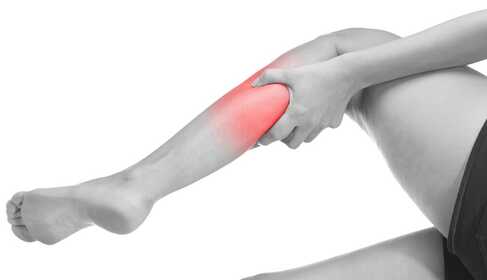

 What is a muscle cramp — and when should you take it seriously?
A muscle cramp is a sudden, involuntary, painful contraction of a muscle that lasts seconds to minutes and most commonly affects the calf at night. Almost everyone has experienced it: a stone-hard calf that wakes you from sleep is the classic example. Most cramps are so-called idiopathic — there is no underlying disease; the nerve controlling the muscle simply "overfires": fatigue, unusual strain or a muscle kept short for long periods.
In a smaller proportion of cases a cramp can be a warning sign: circulatory narrowing, diabetes, kidney or thyroid problems, or side effects of certain medications can be behind it. This article gives you two things: a practical home programme for everyday cramps, and a clear map of when you should see a doctor.
 Key point
The main weapon against cramps is not a tablet in the drawer but regular pre-bedtime stretching — research supports this. Expectations around magnesium deserve a reality check: the evidence is much weaker than the advertising. Five minutes of stretching each night, however, is irreplaceable.
 Are you sure it's a cramp?
If at night you feel not a painful contraction but an unpleasant restlessness with an urge to move your leg, that may be restless legs syndrome. If your calf pains you when walking and forces you to stop, that raises suspicion of peripheral arterial disease. For dull, muscle-soreness-type pain see the muscle pain article.
 Why do cramps happen?
Current research suggests that most common cramps are not caused by the muscle itself but by the nerve that controls it: in a tired, overworked or chronically shortened muscle the neural control "overspeeds" and pulls the whole muscle in. That is why the calf cramps at night — during sleep the foot points down and the muscle stays shortened for hours. That is also why stretching works: it restores the muscle’s resting length and calms the hypersensitive reflex.
Dehydration, heavy sweating, diarrhoea and a one-sided diet can upset the body's salt balance and increase cramp tendency. Medications can also be responsible: diuretics, some antihypertensives, and the cholesterol-lowering statins are known to cause muscle cramps. If your cramps increased after starting a new medicine, tell your doctor — but never stop a prescription on your own.
Persistent, accumulating cramps can signal disease: peripheral arterial disease, diabetes and other conditions with nerve damage, kidney and liver disease, thyroid disorders, and less commonly neurological diseases. The common feature is that cramps in these cases come with other symptoms — these are summarised in the table below.
When should you suspect the cramp is not "harmless"?
| What do you notice besides the cramp? | What might it indicate? | What to do? |
|---|---|---|
| Calf pain when walking, cold, pale foot | Peripheral arterial disease | Vascular surgery assessment |
| Numbness, burning, sensory loss in the leg | Nerve damage (e.g. with diabetes) | Investigation; neuropathy article → |
| Fatigue, weight gain/loss, palpitations | Thyroid disorder | GP, blood tests |
| Urine changes, swollen legs, known kidney disease | Kidney or liver dysfunction | GP, blood tests |
| Increasing cramps since starting a new medicine | Drug side effect | Discuss with the prescribing doctor |
| Muscle weakness, muscle wasting alongside cramps | Neurological disease | Neurological examination as soon as possible |
 When to see a doctor?
If your cramps have suddenly become more frequent, regularly disturb your sleep, recur during the day, you notice any of the accompanying symptoms above, or the cramping is accompanied by muscle weakness — don’t experiment with home remedies; seek medical evaluation.
What to do when a cramp is happening?
 The acute cramp-relief sequence
1. Stretch against it: for a calf cramp grab your toes and pull them firmly but gently toward your shin — or stand up and put weight on the foot. The cramp usually eases within seconds. 2. Massage it with long, deep strokes. 3. Warm it: a hot shower or a heat pack wrapped in a towel helps relaxation. 4. Move it: a few minutes of slow walking prevents the recurring "afterspasm".
Prevention — where the game is won or lost
The proven trick against recurrent nighttime cramps is surprisingly simple: stretch before bed, every night.1,2
The 5-minute evening stretching routine
Calf: facing a wall, step back with one leg, keep the back heel on the floor and lean forward — 30 seconds, 3 repetitions per side. Hamstring: sit, extend one leg and bend forward with a straight back until you feel tension in the back of the thigh — 30 seconds, 3 repetitions. Do this right before bed, every night — the effect builds up over a few weeks.
Also: drink steadily during the day (not a lot at once before bed), increase training load gradually, and replace salt during long, sweaty exercise. In athletes cramps most often signal fatigue: a proper warm-up, graded conditioning and cool-down relaxations after training are worth more than any miracle product. If the same muscle cramps repeatedly during sport, strengthen that muscle group and add regular loosening (massage, foam roller).
 Home devices for muscle relaxation
Honesty is important: the backbone of cramp prevention is stretching and lifestyle — it works without devices. The devices below can offer comfortable help in loosening stiff, tired muscles and supporting circulation; you don’t need any of them at once, and certainly not all of them.
Mambo Max 3 az 1-ben masszírozó henger
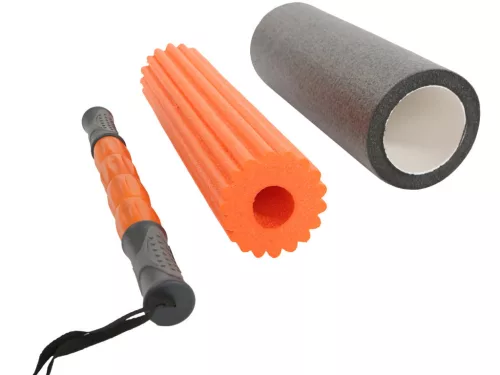 The cheapest entry: rolling your calf and thigh in the evening before your stretching routine loosens shortened muscles. If you are prone to nighttime calf cramps, this simple habit can help a lot — without expecting miracles from a device.
4 Vibe massage gun
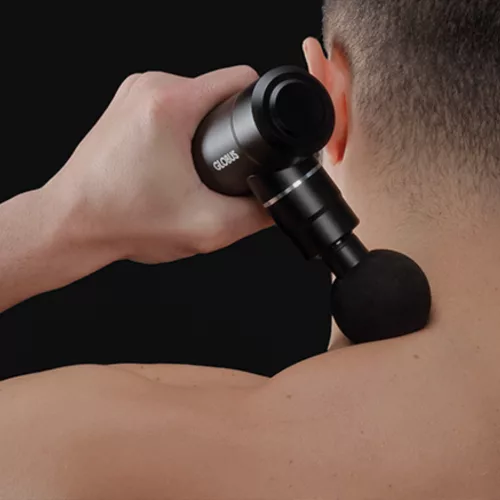 A more convenient, targeted alternative to the roller: vibration massage deeply relaxes tired muscle, useful after training and in the evening. I recommend it for athletes and those doing heavy physical work where cramps stem from chronically overloaded, tight muscles.
Premium 400 electrotherapy device
 Consider this if you prefer machine-assisted relaxation: with EMS programmes for muscle relaxation and circulation improvement you can do an evening "maintenance" for the calf, and the TENS programme can ease post-cramp muscle soreness. If you already own a TENS/EMS device, use its programmes first.
 Before you begin device-based muscle relaxation
- Unexplained, increasing cramps – if your cramps are new, becoming more frequent or have accompanying symptoms, get medical evaluation first, then start a home programme.
- Deep vein thrombosis or suspected DVT – massaging, vibration or machine treatment of the leg can be dangerous in this case.
- Inflamed varicose veins, fresh injury, skin lesion on the treatment area – do not massage or stimulate until healed.
- Cardiac pacemaker – electrotherapy (TENS, EMS) must not be used.
- Pregnancy – consult your doctor before device treatment; ask your midwife or obstetrician about pregnancy leg cramps.
- Active cancer – consider treatments only with approval from your oncologist.
 What does the research say?
"Is magnesium really the solution?"
The most thorough scientific summary is sobering: in older adults with recurrent, non-disease-related cramps magnesium supplementation did not significantly reduce the number or severity of cramps — while causing digestive complaints more often than placebo.3 Results are mixed for pregnancy leg cramps.4 If you have confirmed magnesium deficiency, of course replace it — but the automatic "cramp = magnesium deficiency" assumption is not supported by the evidence.
"What has been proven to reduce nocturnal leg cramps?"
Pre-bedtime calf and thigh stretching. In a well-designed trial, people who stretched every night for six weeks had fewer and significantly milder cramps than the control group — and this worked even in people over 75.1,2 This is the best value "treatment": it's free and asks for five minutes a day.
"How do I know it's a cramp, restless legs, or something else?"
The literature stresses that nighttime leg complaints fall into three groups to distinguish: a painful, hard contraction (cramp), restlessness with an urge to move (restless legs syndrome), and spastic (neurological) muscle tension — because each requires different treatment.5 If you are unsure, a clear description of your symptoms will help your doctor decide quickly.
Frequently asked questions
During sleep your foot points downward, so the calf stays shortened for hours — then the neural control of a tired, tight muscle can easily "pull in" the whole muscle. That is exactly why pre-bedtime stretching helps.
Not routinely: studies do not support magnesium supplementation for cramp prevention without proven deficiency. If deficiency is suspected (e.g. you take diuretics, eat a one-sided diet), let blood tests decide — and supplement according to your doctor’s advice.
Sport-related cramps are most often a sign of fatigue and exceeding your conditioning. Build load gradually, warm up, replace fluids and salt during long sweaty sessions, and relax afterwards (stretching, roller, massage). If the same muscle cramps repeatedly, strengthen it specifically.
Quinine is no longer recommended for cramp prevention: its potential side effects (arrhythmia, blood abnormalities) outweigh the modest benefit. The amount in tonic is also too small to have a meaningful effect — stick to stretching.
When they suddenly increase, occur during the day, or are accompanied by other symptoms: calf pain on walking, numbness, muscle weakness, swelling, or known kidney, liver or thyroid disease. In such cases get evaluated before starting home measures.
 Summary – Quick overview
Sources
- Hallegraeff JM, van der Schans CP, de Ruiter R, de Greef MHG (2012). Stretching before sleep reduces the frequency and severity of nocturnal leg cramps in older adults: a randomised trial. Journal of Physiotherapy. PubMed: 22341378
- Hallegraeff J, de Greef M (2019). Pilot testing a stretching regimen for prevention of night time nocturnal leg cramps. Geriatric Nursing. PubMed: 31405532
- Garrison SR, Korownyk CS, Kolber MR, et al. (2020). Magnesium for skeletal muscle cramps. Cochrane Database of Systematic Reviews. PubMed: 32956536
- Luo L, Zhou K, Zhang J, Xu L, Yin W (2020). Interventions for leg cramps in pregnancy. Cochrane Database of Systematic Reviews. PubMed: 33275278
- Diener HC, Westphal K (2013). Differential diagnosis and treatment of cramps. MMW Fortschritte der Medizin. PubMed: 24930318