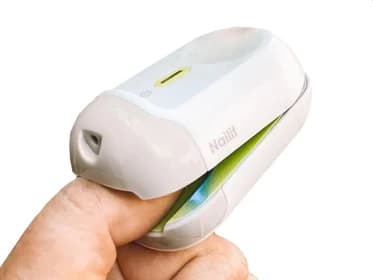

 Why is nail fungus so stubborn?
Nail fungus (medically known as onychomycosis) affects a significant proportion of adults and is one of the most stubborn dermatological infections: the nail thickens, becomes yellowish-brown, turns brittle and debris builds up underneath it. The most common pathogens are filamentous fungi (dermatophytes), which live in the keratinised layers of the skin. Yeasts and moulds are less common.
There are three reasons why it is so difficult to get rid of. The nail's hard, dense keratin plate protects the fungus living inside it from external treatments like armour. Toenails grow extremely slowly — complete replacement takes 12-18 months — so the healthy nail literally has to grow out beyond the infected part. And conventional drug treatment (oral terbinafine, itraconazole) takes months and places a strain on the liver, so many people cannot or do not want to take it. Laser treatment has stepped into this gap — and in this article, we look at what it can actually do.
 Key point
Laser is a real, research-supported option for nail fungus — but it is not a magic wand. In studies, the fungus was eliminated in roughly two-thirds of treated people. However, a completely clear, cosmetically healthy nail only becomes visible when the fungus-cleared section grows out, which inevitably takes months. The best chance comes from combined treatment: laser + topical antifungal medicine + consistent prevention — and patience.
 How does laser act on nail fungus?
The high-power lasers used in dermatology clinics (typically 1064 nm Nd:YAG or CO2 laser) work with heat: the light energy heats the fungal cells under the nail enough to damage them, while the surrounding tissue can still tolerate the heat. This is “selective photothermolysis”. It is effective, but uncomfortable: the treatment feels hot and stinging, and can sometimes be painful. Several sessions are needed, and it is not cheap. Most studies — and this is important — have been carried out using these clinic-based devices.
Home-use devices work with low-power, non-heating light and combine two wavelengths. The 405 nm blue light acts through a photochemical process: it creates reactive oxygen molecules in the fungal cells that damage the cell structure. The 635-808 nm red and infrared light may support circulation in the tissue under the nail and the activity of local immune cells. Advantages: it is painless, can be used at home every day and has no significant side effects. So far, fewer studies have examined this method, so there is less evidence for it than for clinic-based laser.
Laser does not make the visible, discoloured nail plate beautiful again — it is already damaged keratin, which does not repair itself. Treatment clears the tissue of fungus at the base of the nail, in the growth zone, and the new nail growing from there will be healthy. Toenails grow 1-1.5 millimetres per month, so the first clear strip appears at the base of the nail after 4-8 weeks, while complete replacement takes 12-18 months. Anyone who expects results after two weeks and stops treatment is starting out with the wrong expectations.
What treatment options are available?
Laser is not the only option — it is worth seeing where it stands among the alternatives:
| Method | Advantages | Disadvantages |
|---|---|---|
| Oral antifungal medicine (terbinafine, itraconazole) | Supported by the largest amount of data, reaches the nail bed from within | 3-6 months of treatment, strains the liver, drug interactions; many people cannot take it |
| Topical nail lacquer, cream | Safe, free from side effects | Penetrates the nail plate poorly; long course, modest results when used alone |
| Clinic-based thermal laser | Several sessions, good antifungal effect | Can be painful or uncomfortable, expensive, requires clinic visits |
| Home-use non-thermal laser | Painless, can be used daily at home, no significant side effects | Requires daily discipline during treatment lasting several months |
| Combination (laser + topical medicine) | Research suggests significantly better results than topical medicine alone | Double the discipline — but this offers the best chance |
 How to carry out laser treatment at home
The success of home treatment depends not on the device, but on preparation and consistency. Five steps:
1. Cleaning and drying. Wash your feet thoroughly, then dry them completely — including between the toes. Wet nails and skin are allies of the fungus.
2. Trimming. Cut the infected nail as short as possible without pain — especially the infected, loose sections. Use a separate nail clipper for healthy nails.
3. Filing. File away the upper layer of the thickened nail plate — light penetrates more deeply through a thinner plate. Do not use the file on healthy nails, and replace it regularly.
4. Laser treatment. Treat every affected nail daily for 7 minutes — the device sets the timer automatically. The light targets the base of the nail and the nail bed; treatment is painless and can be done while reading or watching television.
5. Combination. After the laser treatment, apply the antifungal nail lacquer or cream as recommended by your dermatologist or pharmacist — research suggests that the combination offers the best chance.
| When? | What can you expect? |
|---|---|
| 4-8 weeks | The first clear, healthy strip appears at the base of the nail — the first real sign that the method is working for you |
| 3-6 months | The clear strip continues to grow and an increasing part of the nail looks healthy |
| 12-18 months | Complete replacement of the toenail — the infected section has fully grown out |
 My advice: take photos and mark the progress
The nail changes so slowly that you see nothing from one day to the next — and this is the most common reason people give up. Take a photo at the start of treatment, then once a month in the same light.
An old dermatology trick: draw a thin line at the base of the nail, marking the boundary of the infected area (for example, by gently scratching it with a needle or using nail polish), and watch the line move outwards month by month — this is your “progress marker”.
Home-use device for laser treatment of nail fungus
Among the non-thermal lasers developed for home use, I recommend the dual-wavelength Nailit device.
Nailit laser for treating nail fungus
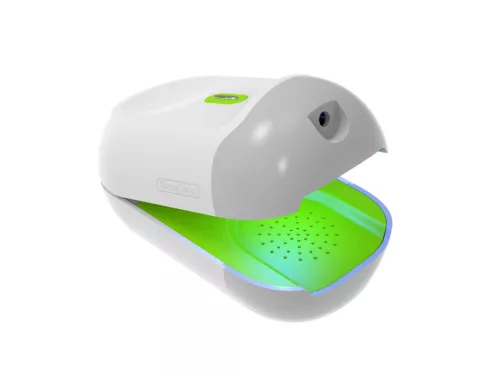 Dual-wavelength (blue + infrared), non-thermal, painless home-use device. One treatment takes 7 minutes per nail, with automatic timing; it is designed for daily use over several months. Use it together with the preparation described in this article and a topical antifungal medicine. More products: Nail fungus category →
 Before you start treatment
Home-use, non-thermal laser is one of the safest nail treatments — but stop and seek advice in the following situations:
- Unexplained nail changes – a thickened, discoloured nail is not always caused by fungus: it may be psoriasis, eczema, a circulatory problem or — rarely — cancer (a dark stripe under the nail can also be a sign of melanoma). Ask for a dermatological diagnosis before treatment, preferably including a fungal culture.
- Open wound, inflamed nail bed – allow the wound to heal first and have a doctor treat the inflammation.
- Cancer in the treatment area – laser treatment should be avoided.
- Photosensitising medicines, photosensitive conditions – some antibiotics, diuretics and dermatological medicines can cause photosensitivity; ask your pharmacist.
- Pregnancy – use home laser treatment only after consulting a doctor.
 Important information
Never direct the laser light towards the eyes. If you have diabetes or a circulatory condition, it is better to have a professional file and trim your nails — even the smallest injury can heal slowly. I have written separately about when it is worth seeing a pedicurist, podiatrist or specialist foot-care professional: Pedicurist, podiatrist, foot-care professional — who should you see? →
 What does the research say?
“Does laser really work for nail fungus?”
Yes — but it is important to define what we mean by “work”. According to the largest analysis, which summarised 35 studies and more than 4000 treated nails, the fungus became undetectable in approximately 63% of nails after laser treatment.1 Another comprehensive analysis found a similar fungal clearance rate of around 70% — but complete healing in the strict sense (fungus-free AND cosmetically perfect nail) was less common, and the quality of the studies varied.5 The realistic assessment is this: laser eliminates the fungus in most cases; making the nail look beautiful as well requires time, combination treatment and prevention.
“Is it better than tablets?”
No — but it is not worse either, and that is the point. According to a comparative analysis from 2024, laser treatment showed similar effectiveness to oral terbinafine, but with fewer side effects.2 This provides a genuine alternative for people who cannot or do not want to take a liver-straining tablet treatment lasting several months. If tablets can be taken safely, the dermatologist should make the decision — combining the two may also be an option.
“Should I use the laser on its own, or should I apply something as well?”
Combine them. According to an analysis of 12 controlled studies examining the combined use of laser and topical antifungal medicine, the combination produced significantly better results than topical medicine alone — in terms of complete healing, fungal clearance and patient satisfaction — without significant side effects.3 The explanation is simple: the laser works deep down, in the nail bed, while the topical medicine works on the surface — together they surround the fungus.
“Do these results also apply to home-use devices?”
The large analyses were predominantly carried out with clinic-based thermal lasers. There is less data on home-use, non-thermal (blue + red/infrared) devices — in a retrospective study of more than 1000 treated nails, clear nail growth was observed in two-thirds of the nails over six months.4 The method is therefore promising and safe — I recommend using it in combination and with realistic expectations, rather than as a miracle treatment on its own.
Prevention — to stop it coming back
Nail fungus has a strong tendency to return, and however successful the treatment, it can recur if old habits continue. Fungus likes three things: moisture, warmth and darkness — prevention is about removing these conditions.
Keep your feet dry: after washing, dry between your toes as well, and change your socks daily (cotton or bamboo, not synthetic). Air your shoes: alternate between two pairs so that one can always dry out; closed plastic shoes encourage fungal growth. In shared areas — swimming pools, changing rooms, hotel bathrooms — always wear flip-flops. Do not share nail clippers, files or towels. And most importantly: treat athlete's foot (itchy, peeling skin between the toes) immediately, because the nail can become infected again from there — athlete's foot is the gateway to nail fungus.
Frequently asked questions
With a home-use device, you need to continue daily treatment for several months — at least until the healthy strip growing from the base of the nail has safely grown beyond the infected section. The first sign can be expected after 4-8 weeks, while complete nail replacement takes 12-18 months. With clinic-based thermal laser, 3-4 sessions repeated at intervals of several weeks are usually needed — even then, you have to wait months for the result.
Home-use, non-thermal laser does not heat the nail, so it is painless — at most, you may feel slight warmth. Clinic-based, high-power laser works with heat: it feels warm and stinging, and can sometimes be painful. Rarely, a small bleed may occur under the nail.
It is worth seeing one. Some nail changes are caused not by fungus but by psoriasis, an injury, a circulatory problem or another cause — antifungal treatment will not help with these, and you will only lose months. A dermatologist can clarify the cause with a simple sample and fungal culture; a dark stripe under the nail should always be examined.
Unfortunately, yes — recurrence is common, regardless of the treatment method. This is why prevention is not an “extra” after treatment, but part of it: dry feet, breathable shoes, flip-flops in shared areas, your own nail clippers and immediate treatment of athlete's foot. After finishing treatment, many people also add 1-2 maintenance laser sessions per week — this does no harm.
Yes, the methods do not exclude each other — the laser works deep down, the tablet from within and the topical medicine on the surface. Decide about drug treatment and combining it with your dermatologist; you can continue using the home laser alongside it as a supplement.
 Summary – Quick overview
Sources
- Ma W, Si C, Kasyanju Carrero LM, et al. (2019). Laser treatment for onychomycosis: a systematic review and meta-analysis. Medicine (Baltimore). PubMed: 31770202
- Meretsky CR, Friday BL, Schiuma AT. (2024). Efficacy of laser therapy in comparison with other methods for the treatment of onychomycosis: a systematic review and meta-analysis. Cureus. PubMed: 38841013
- Zhang J, Lin P, Li J, et al. (2022). Efficacy of laser therapy combined with topical antifungal agents for onychomycosis: a systematic review and meta-analysis of randomised controlled trials. Lasers in Medical Science. PubMed: 35484440
- Shanks S, Leisman G, et al. (2017). Non-thermal laser treatment of onychomycosis: a retrospective analysis of 1,026 nails. Journal of Lasers in Medical Sciences. PMC5479474
- Yeung K, Ortner VK, Martinussen T, et al. (2019). Efficacy of laser treatment for onychomycotic nails: a systematic review and meta-analysis of prospective clinical trials. Lasers in Medical Science. PubMed: 31254131