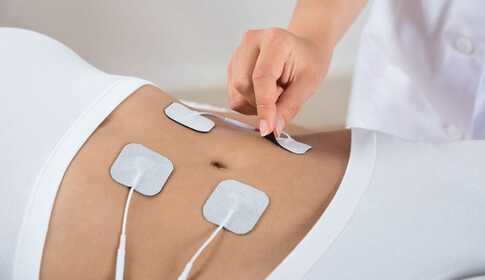

Certain health conditions, anatomical locations and life situations require omitting or modifying the treatment. In this article we discuss the general contraindications that apply to all electrotherapy methods, as well as method-specific considerations related to particular technologies.
 Key idea
Contraindications are divided into absolute (never to be used) and relative (may be considered after medical consultation with careful parameter adjustments). For people with pacemakers, pregnant patients and those with active cancer, absolute prohibition usually applies; however, in many other situations (e.g. medication use, hypertension, older age) an individualized protocol can be developed based on the treating physician’s opinion.
 Absolute and relative contraindications
Contraindications are classified into two groups according to clinical severity. With absolute contraindications, electrotherapy should not be used in any form. For relative contraindications, treatment may be considered under certain conditions, with medical supervision and individualized parameter settings.
- Implanted pacemaker, ICD (defibrillator), active neurostimulator
- Pregnancy (abdomen, lower abdomen, lower back, pelvis)
- Active cancer in or over the area to be treated
- Acute deep vein thrombosis
- Application over the carotid sinus / anterior triangle of the neck
- Cardiac arrhythmia, severe cardiovascular instability
- Active epileptic seizure, status epilepticus
- Controlled epilepsy (stabilized with medication)
- High blood pressure, controlled arrhythmias
- Diabetes (due to sensory disturbances)
- Skin sensitivity, prior allergic reaction to electrode material
- Acute fever, infection (may be permitted after fever subsides)
- Prior deep vein thrombosis (after 3 months, with anticoagulation and medical clearance)
- Older age (over 75 — individual sensitivity, lower intensity)
- Childhood (not for home use, only under pediatric supervision)
 Detailed contraindications
The accordion list below details the most common contraindications along with the scientific background and practical safety rules.
Implanted active electronic devices: pacemaker, ICD (implantable cardioverter-defibrillator), DBS (deep brain stimulator), spinal cord stimulator, cochlear implant, insulin pump.
Recent (post-2022) clinical guidelines suggest a more nuanced approach than blanket prohibition: consultation with the treating physician and maintaining at least 10–15 cm distance from the implant can reduce risk. Electrodes should never be placed directly over the chest or in the immediate vicinity of an implanted device. Nonetheless, for home users complete avoidance is still recommended unless their physician gives specific instructions to the contrary.
Forbidden zones: abdomen, lower abdomen, pelvis, lower back, lumbar spine — for the entire pregnancy.
Although electrotherapy is an evidence-based option for pain relief during labor (intrapartum TENS), that application is performed in a hospital setting under midwife/obstetric supervision. Home electrotherapy during pregnancy — for any method and any body area — is generally not recommended.
Exception: short, targeted TENS application on the limbs (e.g. wrist or foot pain) may be considered after consultation with the treating physician.
Electrotherapy must not be applied over, directly adjacent to, or on regions affecting regional lymph nodes of an active tumor.
The concern is that electrical current may increase blood flow and cellular activity, which could theoretically be unfavorable in cancerous tissues. After primary tumor treatment, treatment performed away from the affected area may be considered with oncologist approval. Details: Electrical treatment in cancer
Active, medication-uncontrolled epilepsy: particularly applications near the skull (e.g. CES, vagus stimulation) should be avoided.
In patients with controlled epilepsy, limb TENS/EMS may be considered with neurologist approval. Skull- and neck-area treatments (CES, tVNS) are never recommended for home use in individuals with a history of epilepsy.
Acute DVT (within 3 months): absolute contraindication. The mechanical effects of electrotherapy could potentially mobilize a clot and cause life-threatening complications such as pulmonary embolism.
In patients with a history of DVT older than 3 months, treatment may be cautiously resumed under appropriate anticoagulation and with clearance from a vascular specialist. For varicose veins or chronic venous insufficiency, low-intensity microcurrent and EMS combined with compression may be considered after vascular consultation.
Never place electrodes on: open wounds, fresh burns, inflamed or infected skin areas, or irritated dermatitis patches.
Treatment may be resumed after the injury has healed. Certain microcurrent protocols (MENS) are specifically designed to support wound healing — these use specialized electrodes and protocols and should be applied only as treatments developed for that purpose.
Never apply: the anterior chest surface (over the heart), the anterior triangle of the neck (carotid sinus), or close to the airway.
Stimulation of the carotid sinus in the neck can cause dangerous drops in blood pressure, fainting or, in severe cases, cardiac arrest. For safe electrode placement in the treatment of neck pain see the home neck pain treatment article.
During acute fever or viral/bacterial infection: treatment should be temporarily suspended because the immune response increases the risk of stimulation-induced stress reactions.
Treatment can be restarted after the fever subsides and the general condition improves.
Possible side effects
In clinical practice electrotherapy is generally well tolerated, but certain side effects can occur. Most are mild and transient and can often be managed by adjusting parameters.
| Side effect | Frequency | What can you do? |
|---|---|---|
| Redness, tingling under the electrode | Common, usually normal | Resolves within a few hours. Reduce intensity for persistent red spots. |
| Allergic reaction (to electrode material, gel) | Rare | Switch to hypoallergenic electrodes. See: electrode selection. |
| Muscle cramp or unpleasant contraction (EMS) | Common at high intensity | Reduce intensity, change frequency/program. |
| Temporary dizziness (CES, vagus stim) | Rare | Stop treatment, restart gradually at lower intensity. |
| Rhabdomyolysis (WB-EMS extreme intensity) | Rare, specifically with WB-EMS | Emergency medical care. Prevention: only on trained muscles, increase intensity gradually. |
| Electric shock sensation, painful “stabbing” | Rare, often due to poor electrode placement | Replace electrode, ensure skin hydration, check polarity. |
When should you stop the treatment immediately?
- Severe, increasing pain
- Uncontrollable muscle contractions
- Chest tightness, shortness of breath, dizziness
- Skin discoloration, blistering at the electrode site
- Extreme exhaustion after treatment (especially after WB-EMS)
 Method-specific safety considerations
Beyond the general contraindications listed above, certain methods require additional, specific considerations.
| Method | Specific consideration | Details |
|---|---|---|
| TENS | Prolonged continuous use can lead to habituation (parameter variation recommended) | TENS pillar |
| EMS / NMES | After surgery only with medical clearance; risk of muscle cramp at excessive intensity | Muscle stimulation after surgery |
| WB-EMS (whole body) | Max 1–2× per week, at least 4 days rest. Risk of rhabdomyolysis; only for trained muscles. | WB-EMS vs NMES |
| Microcurrent (MENS) | Polarity-sensitive; incorrect polarity can cause skin irritation | Polarity article |
| Iontophoresis | Active substance sensitivity; risk of chemical skin effects from acids/bases | Iontophoresis pillar |
| CES (cranial stimulation) | Never in epilepsy; may cause dizziness, headache | Only under medical supervision |
| Vagus stim (tVNS) | Avoid in ear infections or acute otitis media | tVNS article |
Age-group specific considerations
Children (under 18)
Home electrotherapy is not recommended for children except for specific indications (e.g. peroneal palsy, multiple sclerosis) and only under the supervision of a pediatrician or pediatric neurologist. The skin surface is smaller and the autonomic system more sensitive, so lower intensity and shorter treatment durations are required.
Older adults (over 75)
Older users require extra caution due to skin sensitivity, sensory impairment and comorbidities (diabetes, vascular problems). Lower intensity, shorter session times and more frequent skin checks are recommended. Treatment should always start after consultation with the treating physician.
Athletes and intensive users
For athletes, WB-EMS (whole-body electrostimulation) poses particular risk if poorly dosed: rhabdomyolysis and renal failure are possible. Limit to 1–2 sessions per week with at least 4 days rest and gradually increasing intensity. For detailed EMS parameterization for athletes see the sports EMS article.
 When should you consult your treating physician?
 Always consult your physician before starting treatment if:
- You have a chronic disease (cardiac, vascular, diabetes, neurological)
- You take regular medications (especially anticoagulants, antiarrhythmics, hormone therapy)
- You have an implanted medical device (not only pacemaker but also joint prosthesis, metal plates, etc.)
- You had surgery in the past 6 months
- You are pregnant or planning pregnancy
- You have unexplained chronic pain (the pain may be a symptom of an underlying condition that should be diagnosed before attempting symptomatic relief)
Frequently asked questions
Home electrotherapy (TENS, EMS, MENS, IF, iontophoresis etc.) is generally not recommended for users with a pacemaker. Although newer clinical guidelines allow exceptions under certain distances and conditions, these are only to be applied under medical supervision and with physician approval. For home self-treatment complete avoidance is advised. Details in the implant article.
Electrotherapy is not permitted over, directly adjacent to, or on areas related to lymphatic drainage of an active tumor. After treatment of the primary tumor, therapy applied away from the affected area — for example if the tumor was in the abdomen and the issue is knee pain — may be considered with oncologist approval. Always consult your oncologist. Details in the cancer and electrotherapy article.
Varicose veins alone are not a contraindication, but acute DVT is. In chronic varicose veins or chronic venous insufficiency, low-intensity microcurrent and EMS protocols combined with compression may be considered after consultation with a vascular specialist or vascular surgeon. If you had DVT within the last 3 months, no electrotherapy is recommended.
The most common causes are sensitivity to the electrode adhesive (latex, acrylate), insufficient skin hydration, or old, dried electrodes. Solutions: use hypoallergenic (latex-free) electrodes, hydrate the skin before treatment (see hydration article), and replace electrodes after 30–40 uses. If irritation persists, consult your physician.
Well-controlled, medication-stabilized hypertension is not an absolute contraindication, but requires extra caution: lower intensity, shorter sessions, and avoid programs that trigger stress responses. For uncontrolled, severe blood pressure, stabilization and cardiologist approval are required before starting treatment. Neck and chest region treatment is prohibited in all hypertensive patients.
Risk depends on the forbidden area and current intensity. On the chest or anterior neck, electrical current can cause arrhythmia, fainting or blood pressure drop. If you notice abnormal symptoms during treatment (chest tightness, dizziness, shortness of breath), stop immediately, switch off the device, and if symptoms do not resolve quickly seek medical help. To prevent this, always read the user manual and follow recommended electrode placements for each method.
 Summary
A collection of general safety rules and contraindications for electrotherapy (TENS, EMS, microcurrent, IF, iontophoresis, vagus stim, CES, Kotz, FES).
Anyone planning or using home electrotherapy. Particularly important for people with chronic disease, pregnant patients, older users and athletes.
With absolute contraindications the treatment must never be used. For relative contraindications, medical consultation and individualized protocols are necessary. With appropriate use, electrotherapy carries low safety risk.
Review the overview of electrotherapy methods, choose the technology suited to your complaint with the "Which electrotherapy is good for what?" article, or browse the electrotherapy product category.
Scientific references
- Arain SR, et al. Safety of transcutaneous electrical nerve stimulation in cardiovascular implantable electronic device recipients – Europace, 2023. PubMed: 37487241
- Kemmler W, et al. Recommended contraindications for the use of non-medical WB-electromyostimulation – Frontiers in Physiology, 2023. PubMed: 37035684
- Gibson W, et al. Transcutaneous electrical nerve stimulation (TENS) for chronic pain in adults – Cochrane Database of Systematic Reviews, 2019. PubMed: 30941745