 The hospital isn't for what you think
This article belongs in the opinion section of my blog. As a doctor and someone who has observed healthcare from both inside and outside for decades, I explain why the hospital is not the place for managing chronic diseases, why the healthcare system itself is also ill — and what we can do about it: the healthcare system, society and you personally. This won't be a complaints book; by the end, the practical steps will also become clear.
 Key point
Hospitals are designed for acute care: diagnosis, surgery and dealing with life-threatening situations — and they can be world-class at this. Chronic disease, however, develops over months or years and can be managed over months or years: its setting is not the hospital ward, but your home, your kitchen and your everyday life. Until patients, doctors and decision-makers all understand this division of roles, patients will be disappointed, hospitals will be overloaded and the system will become increasingly ill. The key to change is to give greater value to outpatient and home care — and to your active participation in managing your own health.
 Why can't it work differently? Three connections
Click the tabs:
The hospital is the stronghold of acute medicine: heart attack, stroke, fracture, infection and surgery — fast, concentrated, high-tech interventions that require beds, operating theatres, laboratories and on-call staff. That is what hospitals were designed for, and in this role they are indispensable. What they are not structurally able to do is hold your hand for months. Rebuilding muscle takes at least 3-4 months. Disc regeneration and rehabilitation after a stroke take months, sometimes several years. The first measurable results of lifestyle change appear after 3-6 months. If we kept every person with a chronic disease in hospital until they “recovered”, even many times more hospitals would not be enough — it would be mathematically and financially impossible. The hospital therefore starts the treatment, adjusts the medication and performs the operation — the continuation then takes place at home by definition. This is not neglect, but a division of labour. The problem is simply that this is rarely explained thoroughly to the patient.
Chronic disease — defined by the WHO as a long-lasting, generally slowly progressive disease — is not an event but a process. It develops over years or decades, largely on the basis of lifestyle factors, and it does not simply “go away”; it requires ongoing management. Its treatment is therefore not intervention-based but process-based: daily medication, diet, exercise, self-monitoring and periodic check-ups. The main actor in this process cannot be anyone other than the person living their everyday life: you — the doctor is the coach, not the player. This is the subject of my related pillar article: Chronic disease: lifestyle is the key to recovery →
Chronic (non-communicable) diseases are now the world's leading group of causes of death. According to WHO data, they account for almost three quarters of all deaths, led by cardiovascular diseases and cancer.1 In Hungary, roughly half of the adult population lives with at least one chronic disease. The number of people with high blood pressure is in the millions, while the number of people with diabetes is close to one million. And disease never affects only the person concerned: they may be unable to work, draw healthy family members into a caring role and pull the household into a downward spiral — chronic disease is therefore simultaneously a medical, economic and family issue. A system that responds to this scale with acute-hospital logic is inevitably overloaded, however much money we pour into it.
Our chronic patient: the healthcare system itself
And here comes the bitter twist: our healthcare system is itself chronically ill — with the same symptoms we see in its patients. A long-standing problem, slow deterioration and a succession of symptomatic treatments instead of addressing the causes.
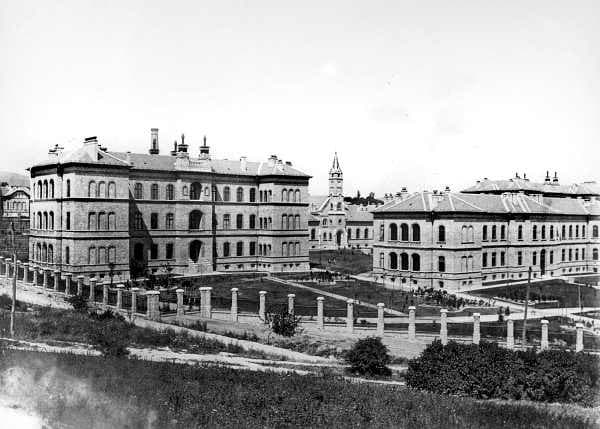
The diagnosis in brief: the structure of our hospital network preserves the logic of a bygone age. The dense network of hospitals with many sites was created at a time when patients travelled to the doctor by horse-drawn carriage — with a daily range of 30-40 kilometres — so every region needed its own hospital. Much of the building stock is still from the last century. A 19th-century hospital was often more dangerous than the disease in its own time (mortality in hospitals in contemporary London reached astonishing levels) — today's successor buildings are safe, but their structure, maintenance and layout were not designed for modern medicine. Meanwhile, medical technology becomes obsolete every 8-10 years, equipment replacement is delayed, most of the budget goes on operations and wages, and maintenance is left to suffer from whatever remains — the shortfall is recreated year after year. And the most painful symptom of all is the migration of nurses and doctors towards several times higher Western salaries.
Symptomatic treatment — putting more money into the same structure — does not cure the system any more than a painkiller cures a knee. The causal treatment is to reorganise the structure: fewer, but well-equipped and well-organised centres; strong patient transport and an emergency-care chain (“we don't take the hospital to the patient; we take the patient to the right hospital” — with today's roads and ambulance services, this already works); and above all, giving greater value to outpatient and home care, where chronic care actually belongs. The world's better systems have moved in this direction:

The emphasis is important: this is not a criticism of healthcare workers. They are prisoners of the same structure and work heroically within it every day. At system level, however, we must say it clearly: the flood of people with chronic diseases cannot be managed with acute-hospital logic. I wrote a separate article about the care pathway — from hospital to home treatment: The healthcare care pathway →
 So what should we do about people with chronic diseases? The answer at three levels
Hippocrates is said to have greeted his patients with these words: “If you do not change your life, nothing can help you.” Two and a half thousand years later, this statement is more accurate than ever — although today we also know that society and the healthcare system must do their part to make change possible. The practical steps fall into three levels:
| Level | What is its role? |
|---|---|
| The healthcare system | Acute care in centres, chronic care in outpatient and primary care; patient education (“what awaits me at home and what do I need to do?”) as a compulsory part of the discharge summary; incorporating home monitoring and rehabilitation equipment into ongoing care |
| Society | Prevention from childhood: healthy food that people can access, safe places for exercise (parks, pavements and swimming pools), and support for mental activity and communities — because loneliness and lack of exercise are risk factors just like sugar |
| You | Daily implementation: diet, exercise, sleep, medication and self-monitoring. 90% of chronic disease management takes place outside the doctor's office, and only you can do it |
 Where does home medical technology fit in?
There are now tools for continuing at home the treatment started in hospital: from blood pressure and blood glucose monitors to physiotherapy devices (TENS, muscle stimulation, soft laser and magnetotherapy), which make rehabilitation and symptom management possible at home. These do not replace the hospital or make the doctor or therapist unnecessary. They fill the gap that yawns between discharge and the next check-up. What they are and are not for: What is home medical technology for? → and Which technology is useful for what? →
Frequently asked questions
On the contrary — it was the foundation. The hospital made the diagnosis, dealt with the acute danger, adjusted your medication or operated on you. Without these, there would be nothing to build on. Your disappointment comes from the unspoken expectation that the hospital will “finish the job”. It won't — because it is not structurally able to. The hospital stage is the first leg of the relay; the longer leg — rehabilitation, lifestyle and ongoing management — is yours. Anyone who understands this when they are sent home is not disappointed, but prepared.
Five questions, at the very least:
What exactly is my diagnosis, and what can be expected in the long term?
What do I need to do at home every day (medication, exercises, diet and self-monitoring) — and what must I avoid?
When is my check-up, and with whom?
What signs mean that I need to see a doctor immediately?
And who can I turn to if I get stuck at home (GP, carer or physiotherapist)?
If you receive a written or at least clear verbal answer to these questions, the value of your hospital treatment multiplies — because there will be a plan for what happens next.
It is if they provide no support alongside it — if they do not explain exactly what you need to do and you receive no help. That is why I always mention the healthcare system's duty to educate and provide ongoing care, as well as society's responsibility to create the conditions for prevention.
But the opposite is also wrong. It is a mistaken expectation that chronic disease will be “solved for you”. Stating your responsibility is not about blaming you. It is about encouraging action and giving you back the ability to act. This is the subject of the complete guide: lifestyle is the key to recovery →
In the short term, many things: wages, equipment and renovations — and all of them are urgently needed. But money alone would not help with the flood of people with chronic diseases, because it would flow through the existing structure. Acute-hospital logic would remain acute-hospital logic even with more money.
For lasting improvement, money must be accompanied by structural change — shifting the centre of care towards prevention, outpatient care and home treatment. Just as in the patient: medication (money) treats symptoms, while lifestyle change (structure) addresses the cause.
 Summary – Quick overview