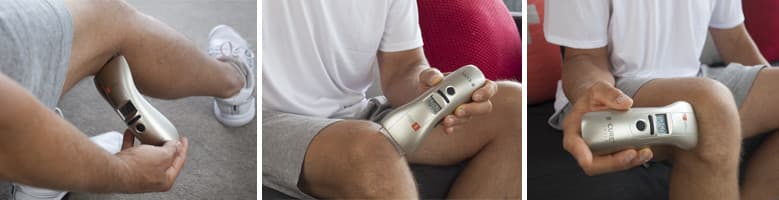
B-Cure softlaser device in practice
The B-Cure softlaser is one of the simplest and safest devices to use. This is due to its careful design and workmanship. I will show you how to use the B-Cure Laser for treating various complaints.
The B-Cure softlaser is one of the simplest and safest devices to use. This is due to its careful design and workmanship. I will show you how to use the B-Cure Laser for treating various complaints.
The Israeli manufacturer Good-Energies' B-Cure Laser family includes several devices whose operation is identical, but they differ in output. Currently three models are available: Classic, Sport Pro and Pro.
Each emits an 808 nm infrared, invisible beam, so their biological effects are almost identical. The only meaningful difference between the devices is the amount of energy emitted per minute. The Classic has the lowest output: 3.75 Joule, while the Sport Pro and Pro emit 5.0 Joule.
This mainly affects the treatment time. Higher power means shorter treatment. Of course the effect is somewhat stronger, but not by an order of magnitude.
To achieve effect you must hold the device on a given point longer than with competing SafeLaser, Personal-Laser and Energy-Laser devices.
B-Cure devices belong to Class I laser devices, which means the emitted laser beam is completely harmless to the eyes even without protective goggles. B-Cure uses a pulsed laser, so the treatment does not generate heat and therefore cannot harm (cause burn injuries to) the skin.
If you do not yet have a softlaser device, you can buy one here.
Performing a B-Cure softlaser treatment
1. Turn on the device and set the treatment time
- On the B-Cure Laser Classic device: 6 minutes
- B-Cure Sport Pro and B-Cure Pro devices: 5 minutes
2. Place the device on the painful area, directly on the skin. The laser light does not pass through clothing or bandages, so treatment will be ineffective if used that way!
3. Keep the device motionless there until the set time elapses. When the treatment time has elapsed, the device will stop.
Warning: softlaser treatment is effective only at the specified dose! A shorter treatment will not trigger biostimulation.
Lengthening the treatment time may be considered if you want to treat a structure located deep in the body. The necessary treatment time in such cases will be specified by your treating physician or physiotherapist.
B-Cure devices treat an area of 4.5 cm2 at a time. If the area to be treated is larger than the head, you must treat (i.e., move) the device to as many points as needed to cover the entire area and treat each point.
Treat a given problem from multiple directions as well, longitudinally and transversely, or from both sides. (For example, treat the wrist from the palm side, the back of the hand and both sides.)
During a B-Cure softlaser treatment you usually feel nothing. The softlaser does not produce noticeable warming or redness on the treated area.
The treatment can rarely reduce pain already on the first occasion.
However, real effects develop slowly; this requires at least 10-14 days or even longer.
The treatment is biostimulatory, meaning it stimulates and enhances your body's anti-inflammatory and pain-relieving processes. As a result the healing process starts and that will create the effect and produce results. This does not happen in minutes!
Therefore continue softlaser treatment until the symptoms completely disappear.
In fresh injuries and acute inflammation you can treat even hourly. For chronic complaints, one treatment per day or every other day is sufficient.
Softlaser treatment points
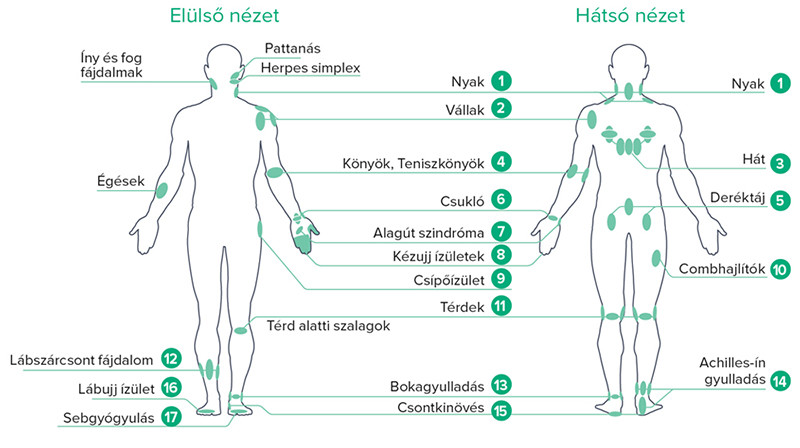
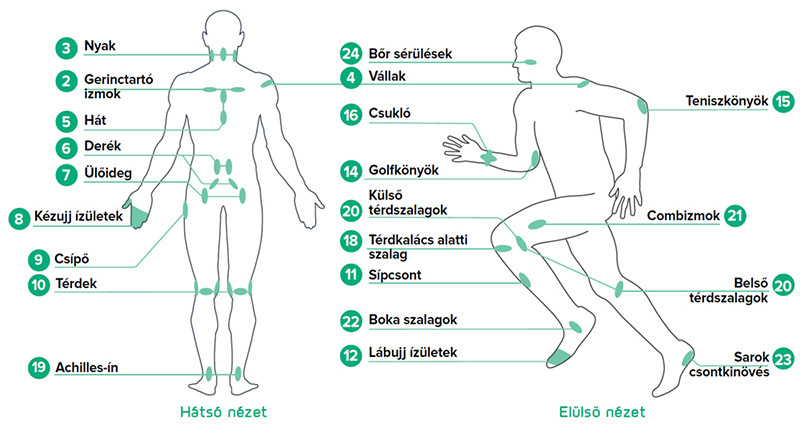
Practical execution of the treatment
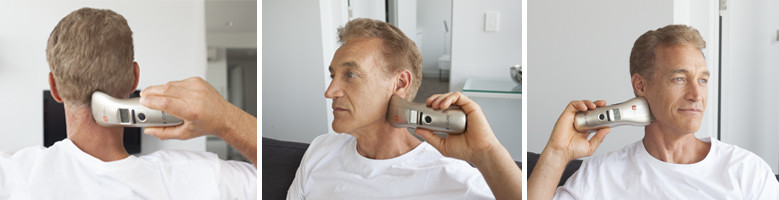
Neck pain
3 treatment points: beside the vertebrae, both sides of the neck (below the earlobes) and the hollow behind the jaw.
Back and lumbar pain, lumbago, herniated disc, sciatica
The basic principle is to treat the painful area both longitudinally and transversely. Wherever pain occurs along your spine, follow this approach — whether on the neck, back or lower back/lumbar region.
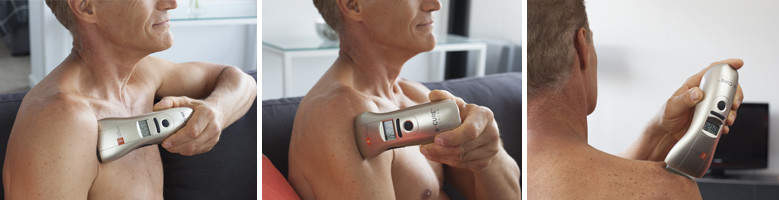
Shoulder pain
Treat in 3-4 points around the shoulder joint and on the outer part of the upper arm.
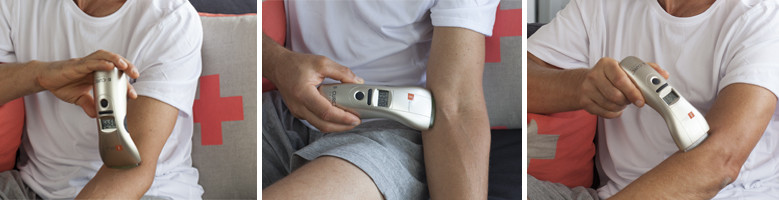
Tennis elbow (epicondylitis, golfer's elbow)
Treat at 3 points: elbow crease, and the right and left sides of the elbow.
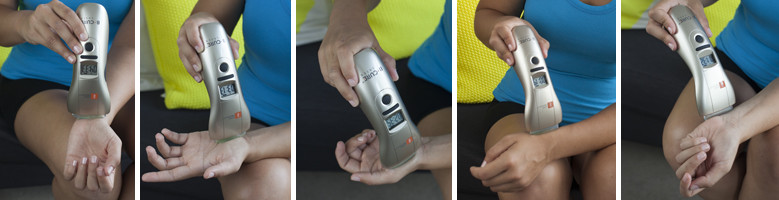
Wrist pain (so-called carpal tunnel syndrome)
The inner side of the wrist in the skin fold, the inner wrist perpendicular to the skin fold, above the base of the thumb (on the palmar pad), the side of the wrist, under the thumb and under the little finger as well.
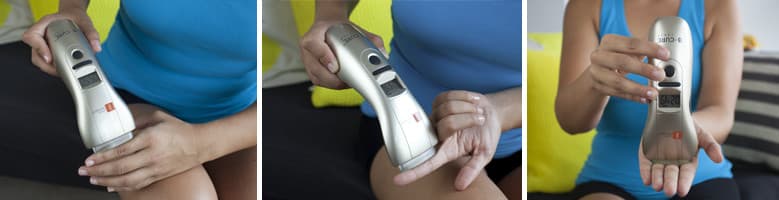
Finger joint pain (rheumatoid small joint inflammation)
The right and left sides of each finger, individually. Also the fold between the palm and the fingers.
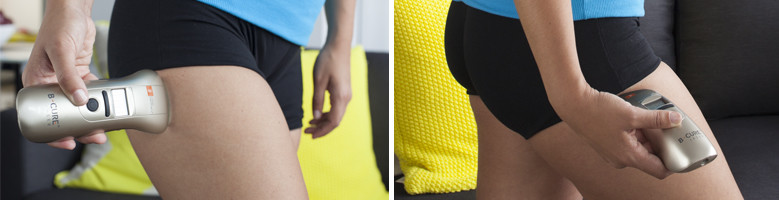
Hip joint pain
Treat above the joint both longitudinally and transversely (if sensitive, also the area above the knee).
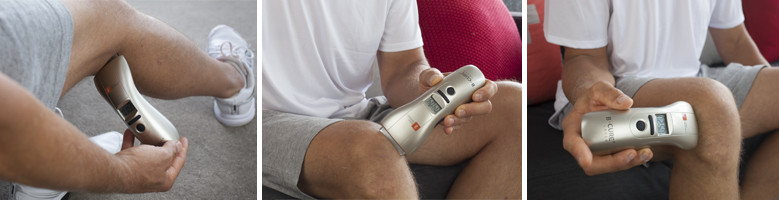
Knee pain, knee injury, after knee surgery
The back of the knee, the popliteal fossa, the right and left sides of the knee (possibly under the kneecap).
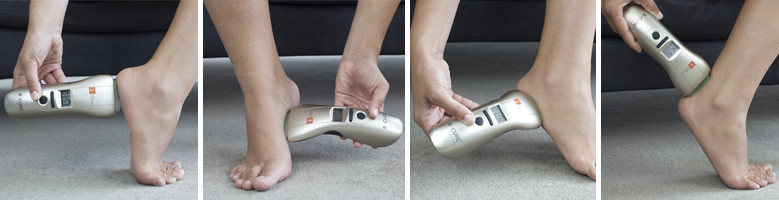
Bony outgrowth (heel spur)
The plantar surface of the heel, the inner edge of the foot, both edges of the heel bone, the back of the heel.
Achilles tendon inflammation or injury, after surgery
The back of the heel and the point above it, the right and left sides of the heel bone.
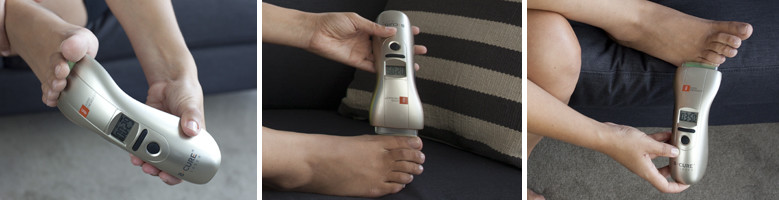
Toe joint pain
The line where the toes meet the sole, above the big toe and the little toe.
Slow-healing wounds, pressure sores and ulcers
- Fresh, open wound: on the first treatment treat the entire area for 5–8 minutes, then take a 5-minute break and repeat the treatment-break cycles for at least one hour. Afterwards treat each area twice daily for 5–8 minutes until the wound is completely healed. When treating an open wound do not touch the wound with the laser device, but hold it as close as possible.
- Acute condition (lesion formed within 1–2 days): in the first 10 days treat once or twice daily, then switch to every-other-day treatment until fully healed.
- Chronic, slow-healing conditions: every-other-day B-Cure softlaser treatment is recommended. This should be performed persistently, in the case of an ulcer even for 3–4 months.