What complaints can it be used as an adjunct treatment for?
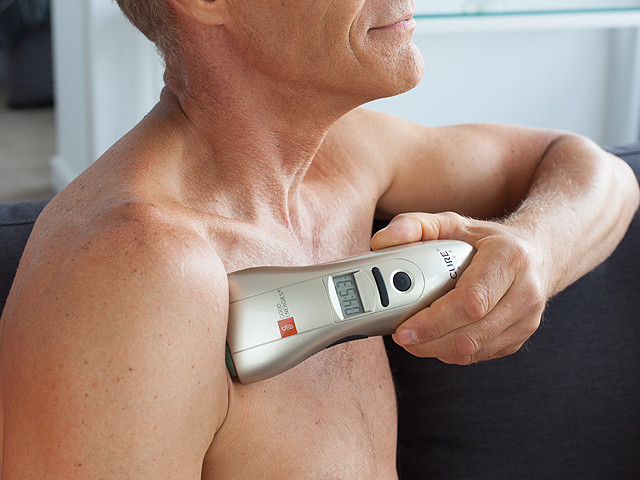
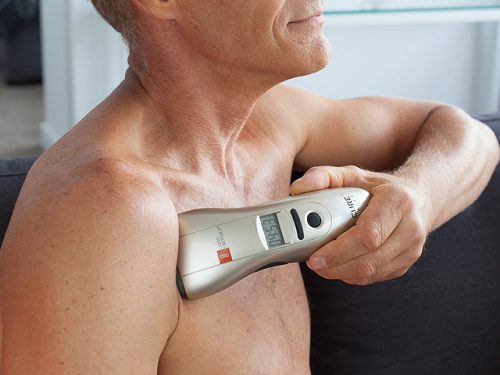
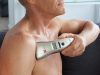
Low-level laser therapy is often used as an adjunct for osteoarthritis, overload injuries and soft-tissue pain around joints. The B-Cure's elongated treatment strip covers a larger area at once, making it well suited for the knee joint space or surrounding shoulder areas.
The device does not restore worn cartilage and does not replace physiotherapy. The aim is to provide adjunctive pain and function management as part of a therapy plan tailored to the cause of the complaint.
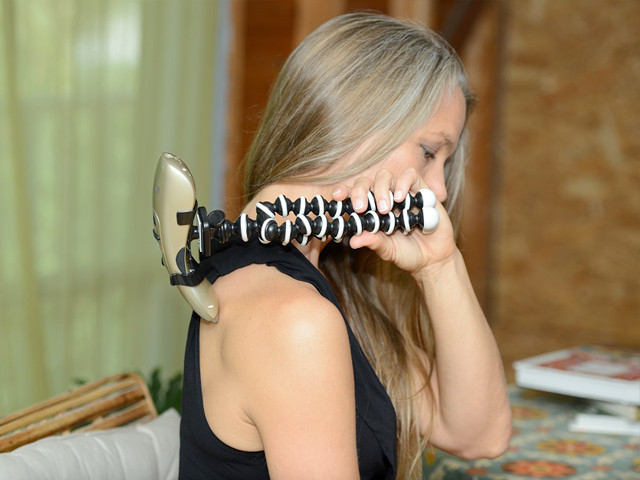
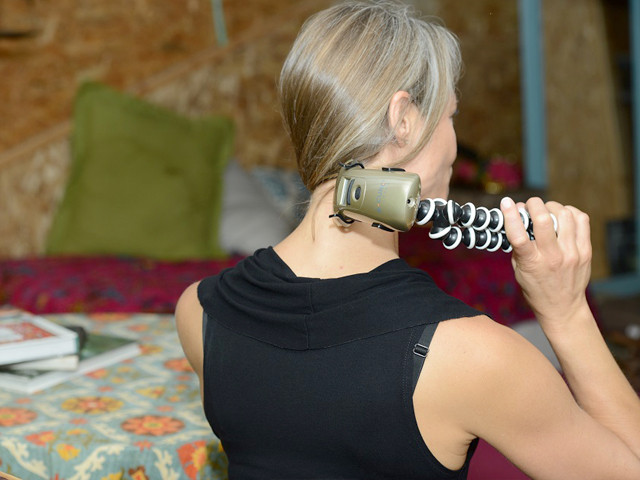
Muscle and joint overload, disc-related changes, nerve involvement and other causes can underlie back and neck pain. Persistent, worsening or radiating pain requires diagnostic assessment first.
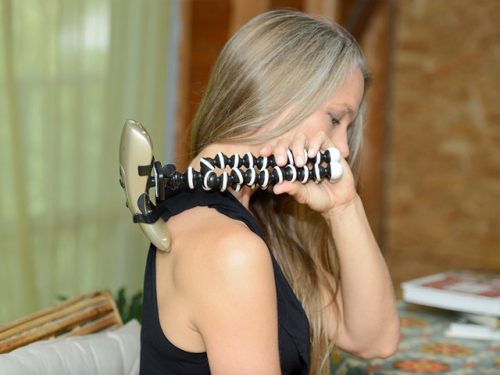
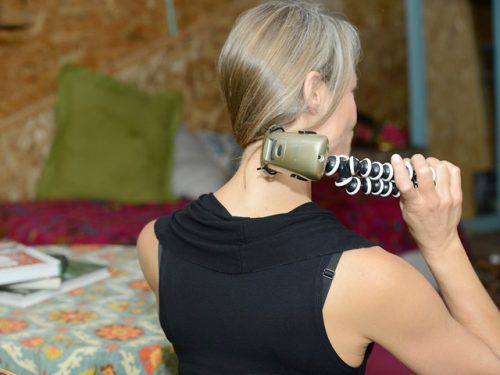
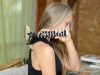
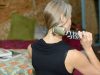
With an appropriate diagnosis, the B-Cure Classic can be used to treat paraspinal muscles and other painful soft-tissue areas. The elongated treatment surface fits the course of muscle fibers and the areas beside the spine.
Tennis elbow, Achilles tendon overload, shoulder tendon complaints and other enthesis pains often affect longer tendon segments. The B-Cure's 4.5 cm long treatment strip can be more convenient for these than a small point head.
Laser treatment should be combined with offloading, gradual return to load and appropriate strengthening exercises.
Morning first-step heel pain is often related to plantar fascia overload. The B-Cure's treatment strip can be positioned along the heel and plantar fascia.
The low-level laser does not remove a bony heel spur. The treatment aims to complementally address pain and irritation of the surrounding soft tissues.
For muscle strains, tendon or ligament complaints, photobiomodulation can be part of rehabilitation. The B-Cure Classic is lightweight, cordless and easy to use while traveling.
For fresh injuries, fractures, complete ruptures and other urgent conditions must be excluded first. The laser does not replace diagnosis and graded rehabilitation.
Photobiomodulation has been studied as an adjunct for tissue regeneration and scar management. Closed, clean surgical scars or other small superficial areas can be treated according to the user manual.
Infected, oozing, deep or hard-to-heal wounds should be managed under the guidance of a wound-care professional or physician. Diabetic foot and leg ulcers are not simple conditions for unsupervised home treatment.
Why choose the B-Cure Laser Classic device?

No need for protective goggles when used as intended
The Class 1 design makes home use more comfortable. However, the device should not be intentionally directed into the eye.

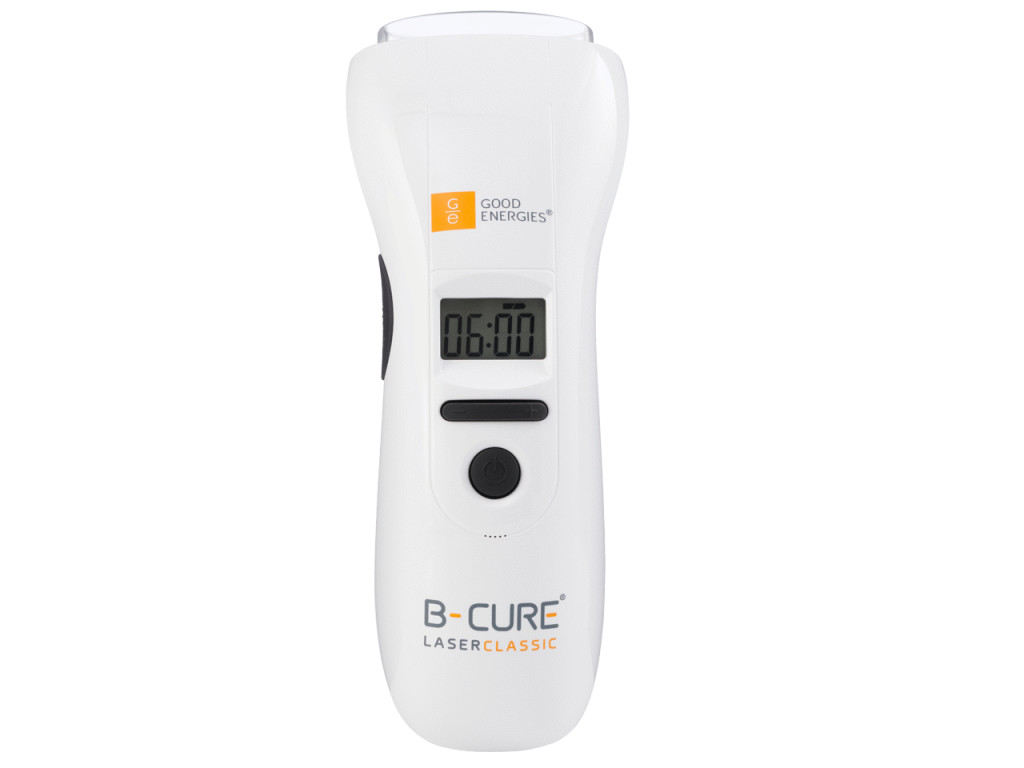
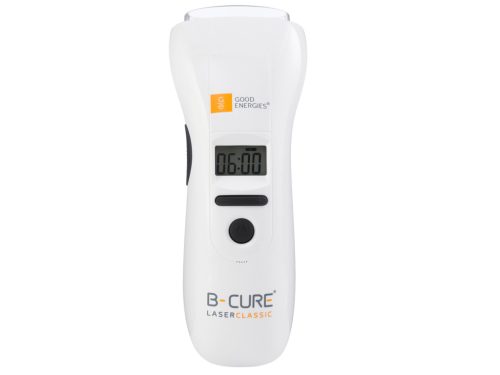
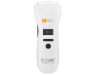
4.5 × 1 cm treatment strip
The elongated treatment surface covers several adjacent points at once. It fits well along joint spaces, tendons, scars or longer painful areas.

Simple timing without complicated programs
Set the treatment time on the LCD, place the device on the skin, and hold it steady until the timer beeps. No app, no menu system.

808 nm infrared laser
The 808 nm wavelength is widely used in musculoskeletal photobiomodulation. The therapeutic light is not visible to the naked eye.

Lightweight, cordless device
The 175 g device can be used at home, at work or while traveling. The included rechargeable AAA batteries can be replaced with standard types.

Medical device marked CE 0197
The B-Cure Classic is a device with documented technical parameters and medical conformity marking — not a simple cosmetic LED lamp.
Is the B-Cure Laser Classic right for you?
Good choice if
you are buying your first home low-level laser and value simple, goggle-free operation.
Especially practical if
you want to treat a tendon, joint space, longer scar or another narrow but multi-centimetre area.
Also suitable for older users,
because there is no smartphone app, no power settings and no complicated treatment menu.
Not recommended if
you want to cover many treatment points in the shortest possible time. The B-Cure's energy delivery is gentler, so sessions may take several minutes.
Also not ideal if
you need very precise ~1 cm² point treatment or a high-power therapist device.
Watch it in action
B-Cure Laser Classic demonstration
The video shows device handling, timer use and correct placement. Always choose the specific treatment time based on the guidance for the particular complaint.
 What does photobiomodulation mean?
During low-level laser treatment, tissues are exposed to light of a specific wavelength and dose. This process is called photobiomodulation, or PBM for short.
Light interacts with cellular light-absorbing molecules and can influence multiple biological processes. Research examines effects on cellular energy metabolism, local inflammatory signaling and regenerative processes.
The B-Cure Classic operates in pulsed mode. The 250 mW figure is the maximum instantaneous pulse power, while the manufacturer's energy data indicates the device delivers approximately 4.2 Joules per minute. Therefore, when choosing treatment time you should consider both energy delivery and the manufacturer's guidance.
The device's strength is not extremely fast dose delivery but comfortable, wider-strip treatment that can be performed without goggles.
How to use it in four simple steps
1
Select the treatment area and time
Determine the device position and required treatment time according to the guidance for the specific complaint. The timer can be set in 30-second increments.
2
Place it directly on the skin
Perform treatment on clean, dry skin. Clothing, dressings and other coverings reduce the amount of light reaching the skin.
3
Hold it steady until the set time elapses
Align the 4.5 × 1 cm treatment surface with the area to be treated and keep it motionless. The timer signals the end of the session with an audible beep.
4
Repeat according to the treatment plan
Required frequency and course length depend on the complaint. Do not automatically apply multiple daily sessions or longer times for every problem. Follow the manufacturer's and the condition-specific guidance.
Frequently asked questions
The B-Cure Classic is a pulsed laser. The 250 mW is the maximum pulse power, not the continuous average power. According to the manufacturer, the device delivers roughly 4.2 Joules per minute, so treating a single position typically requires several minutes.
Not when used as intended. The device is Class 1. Nevertheless, you should not deliberately point the emission aperture at the eye or look into it from close range.
Required time depends on the condition, treatment area and prescribed energy dose. The device delivers about 4.2 Joules per minute, so treating a single position typically takes several minutes. Choose the exact time based on the user manual.
Individual response varies considerably. Acute and chronic conditions require different treatment schedules. Persistent problems may need weeks of regular treatment. If symptoms worsen, new problems appear or there is no meaningful improvement, medical review is indicated.
This is not the recommended application. Textiles and dressings can absorb or scatter the light, so treatment should be performed directly on the skin. Treat open or infected wounds only under professional guidance.
No. Photobiomodulation is dose-dependent, so both too little and too much energy can be unfavorable. Set treatment time according to the manufacturer's and condition-specific guidance, not by feel.
Yes, it can be used as an adjunct alongside physiotherapy, appropriate loading programs and other physical therapies. The sequence and frequency of individual treatments should be adjusted to the underlying condition.
What's in the package?
The device is supplied with accessories needed for cordless operation and transport.
- 1 pc B-Cure Laser Classic device
- 1 pc carrying case
- 1 pc power adapter
- 3 pcs AAA NiMH rechargeable batteries, 1.2 V / 850 mAh
- 1 pc user manual
The included three AAA NiMH batteries provide roughly 2 hours of continuous operation. Recharging takes about 5–7 hours. Batteries can later be replaced with identical-type AAA NiMH cells of appropriate capacity.
Which low-level laser design suits you?
B-Cure Laser Classic
– recommended if you want a simple device usable without goggles and accept multi-minute treatment times.
Energy-Laser L500 Pro
– more practical if you need precise small-area point treatment and substantially faster energy delivery.
Energy-Laser L2000 Pro
– for larger joints and broader soft-tissue areas with more advanced configuration options.
Technical specifications
| Laser type | GaAlAs solid-state laser diode |
| Wavelength | 808 nm, infrared |
| Maximum pulse power | 250 mW |
| Operating mode | Pulsed, PW |
| Pulse frequency | 11.7 kHz |
| Laser pulse duration | 24.5 µs |
| Energy delivery | Approximately 4.2 Joules per minute |
| Treatment surface | 4.5 × 1 cm, i.e. 45 × 10 mm |
| Laser class | Class 1 |
| Medical marking | CE 0197 |
| Expected diode lifetime | Approximately 1000 operating hours |
| Timer | 00:00–99:30 minutes, in 30-second steps |
| LCD display | 26 × 15 mm |
| Power supply | 3 pcs AAA NiMH rechargeable batteries |
| Battery life | Approximately 2 hours on full charge |
| Charging time | Approximately 5–7 hours |
| Operating temperature | Between 0 °C and 40 °C |
| Permitted humidity | 15–90%, non-condensing |
| Dimensions | 200 × 70 × 40 mm |
| Weight | Approximately 175 grams |
| Manufacturer | Good Energies Ltd., Israel |
 When should you NOT use the device?
- Do not intentionally point the emission aperture at the eye.
- Do not apply to the abdomen or pelvic area during pregnancy.
- Only use on or near malignant tumours with the explicit permission of the treating physician.
- Do not treat the thyroid area directly.
- If you have epilepsy or photosensitivity, seek medical advice before use.
- For unknown, worsening or feverish complaints, obtain medical evaluation first.
Always read the user manual, and do not begin random treatments if the diagnosis is uncertain. Detailed contraindications and safety information →
 Important information
The B-Cure Laser Classic is intended as an adjunct treatment. It does not replace medical examination, diagnosis, physician-prescribed treatment, physiotherapy or appropriate rehabilitation.
Regular application is more important than arbitrarily long or too frequent sessions. Do not increase treatment time simply because photobiomodulation typically does not produce strong sensations during use.
The product description is for informational purposes and is not personalised medical advice. Referenced studies examine the general applications of photobiomodulation; individual results may vary.
Scientific background
The effects of photobiomodulation have been studied in various musculoskeletal conditions. Publications discuss the general therapeutic possibilities of the method and should not be interpreted as device-specific evidence for every listed application of the B-Cure Laser Classic.
-
Stausholm MB et al.
(2019):
Efficacy of low-level laser therapy on pain and disability in knee osteoarthritis: systematic review and meta-analysis of randomised placebo-controlled trials.
BMJ Open
, 9(10):e031142.
PubMed
Meta-analysis of randomized trials in knee osteoarthritis. -
Clijsen R et al.
(2017):
Effects of low-level laser therapy on pain in patients with musculoskeletal disorders: a systematic review and meta-analysis.
European Journal of Physical and Rehabilitation Medicine
, 53(4):603–610.
PubMed
Systematic review of low-level laser treatment for musculoskeletal pain. -
Glazov G et al.
(2016):
Low-level laser therapy for chronic non-specific low back pain: a meta-analysis of randomised controlled trials.
Acupuncture in Medicine
.
PubMed
Meta-analysis of randomized trials in chronic non-specific low back pain. -
Naterstad IF et al.
(2022):
Efficacy of low-level laser therapy in patients with lower extremity tendinopathy or plantar fasciitis: systematic review and meta-analysis of randomised controlled trials.
BMJ Open
, 12(9):e059479.
PubMed
Summary of studies on lower limb tendinopathies and plantar fascia inflammation. -
Chow RT, Barnsley L
(2005):
Systematic review of the literature of low-level laser therapy in the management of neck pain.
Lasers in Surgery and Medicine
.
PubMed
Systematic review of low-level laser treatment for neck pain.
Treatment guides and further information
-
 Low-level laser therapy – comprehensive guide for home use →
-
 Low-level laser for knee pain and osteoarthritis →
-
 Low-level laser for herniated disc and back pain →
-
 Low-level laser for tendinitis →
-
 Low-level laser treatment for herpes →
-
 Low-level laser contraindications and safety information →
-
Low-level laser devices – all models →
Are you looking for a simple, goggle-free home low-level laser?
The main strengths of the B-Cure Laser Classic are comfortable regular home treatments: 808 nm laser, 4.5 × 1 cm treatment strip and Class 1 design.