


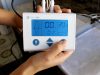

When is it recommended?
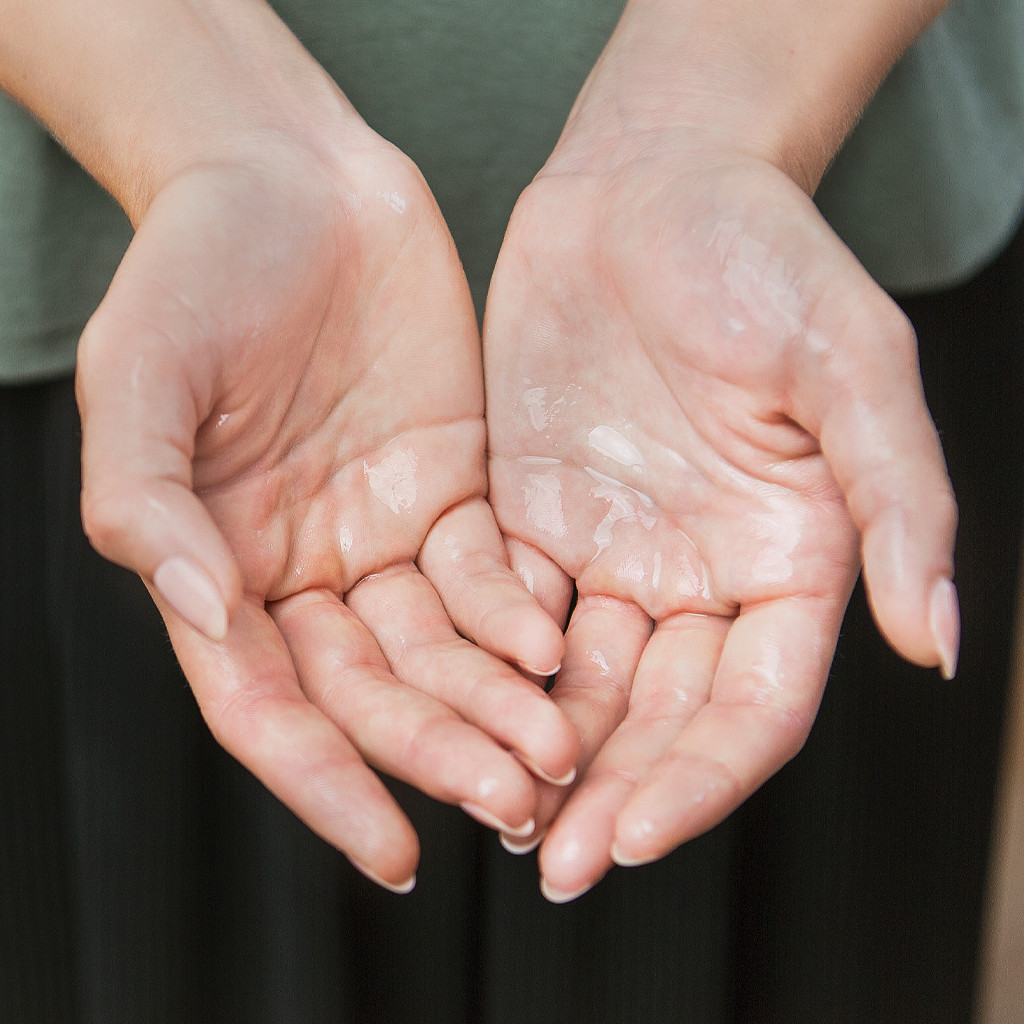
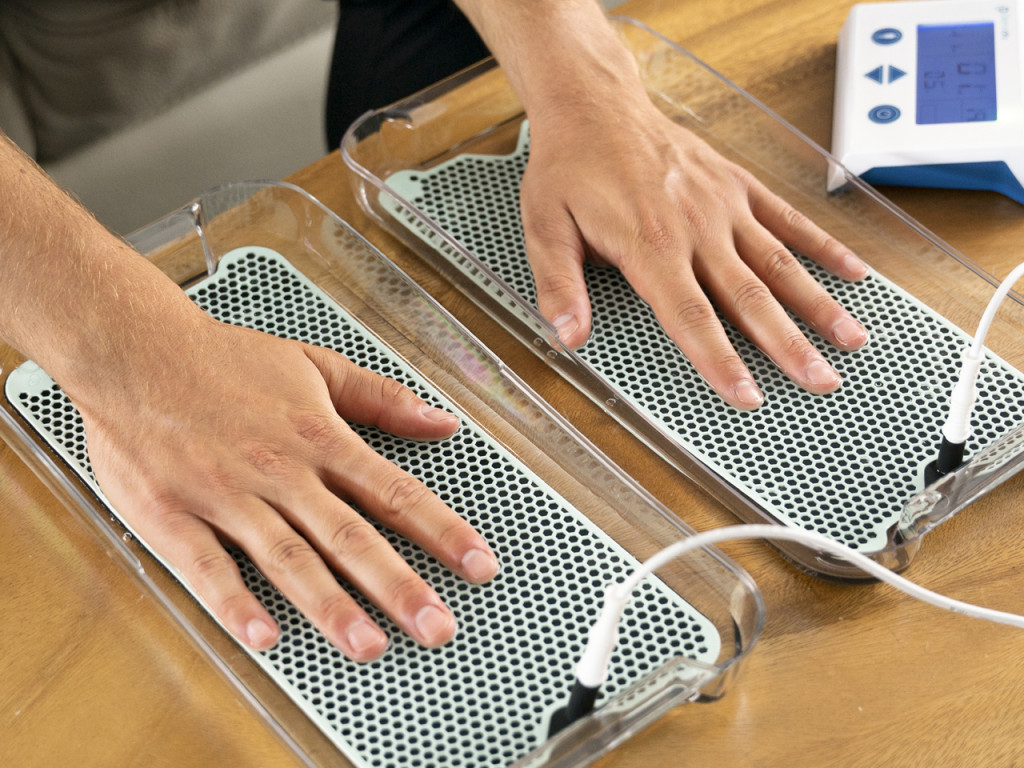
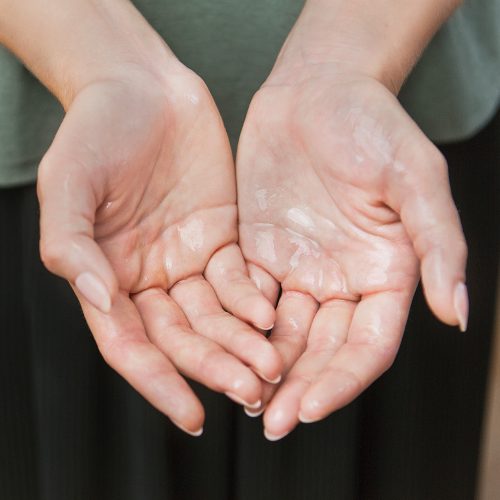
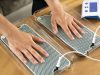
Severe palmar sweating can be embarrassing during handshakes, when holding paper, or when using sensitive electronic devices. For many people, palmar hyperhidrosis significantly limits daily activities. Iontophoresis is a method specifically developed and scientifically validated for palmar hyperhidrosis – significant improvement is generally observed after 1–3 weeks of regular treatment.
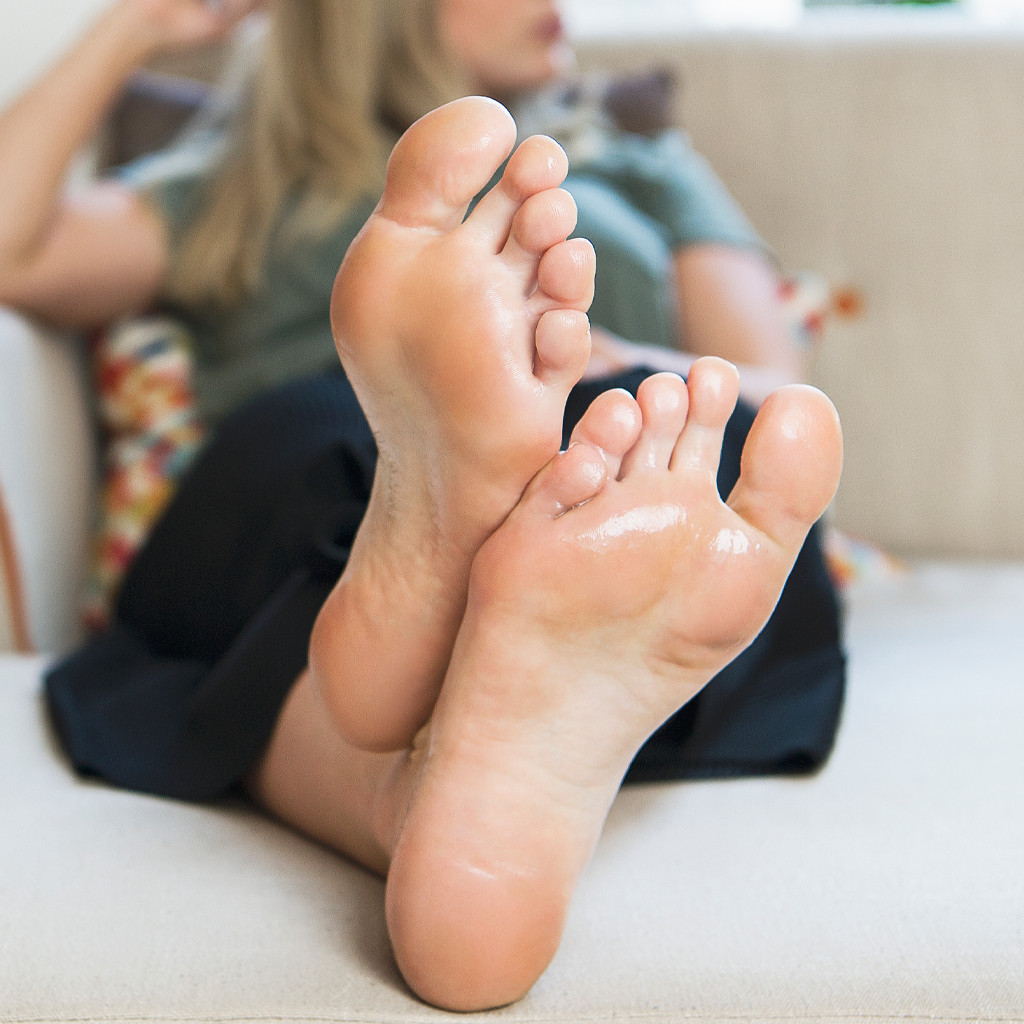
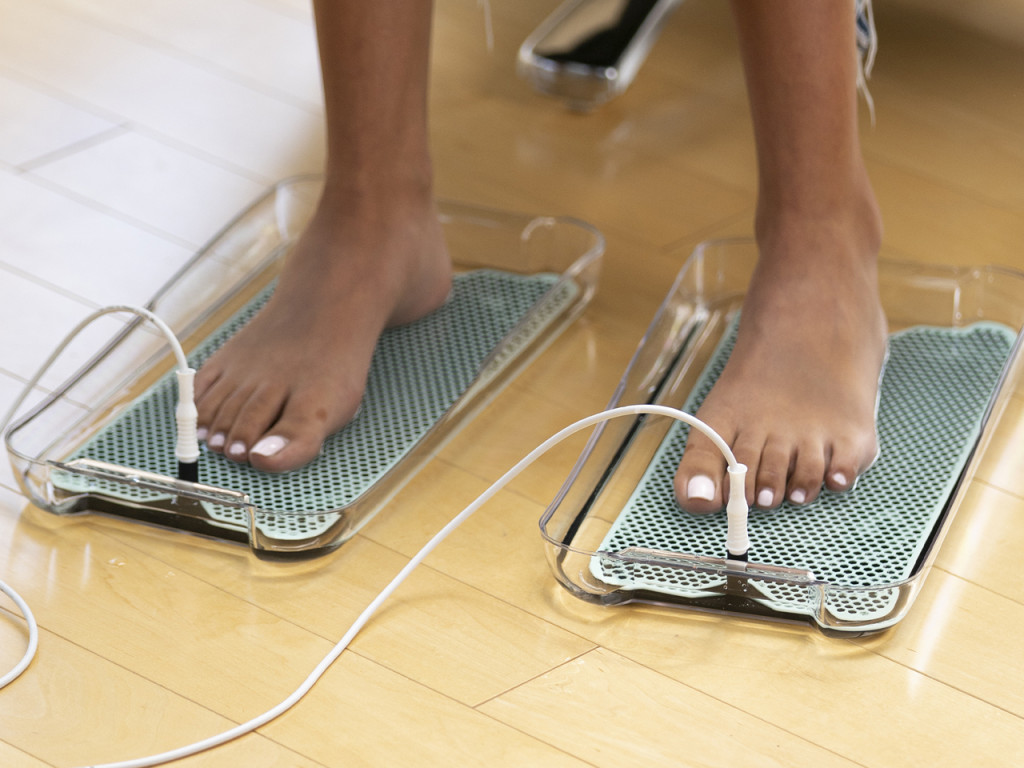
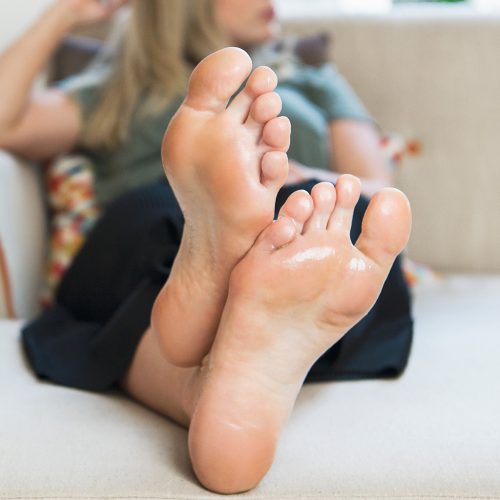
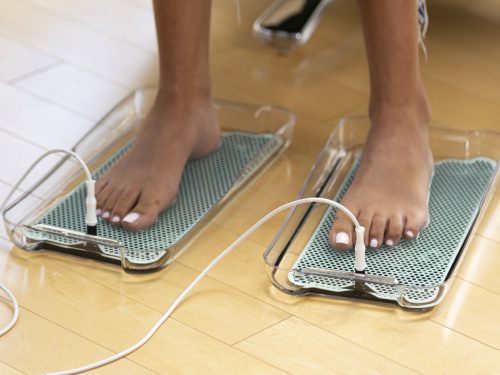
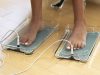
Heavy foot sweating can cause unpleasant odor and increase susceptibility to fungal infections. Sweating can be so intense that your foot slides in the slipper. The DermaDry Total works with a maximum current of 25 mA for foot treatment – reliably reducing moisture. Nightly maintenance sessions can be particularly effective.
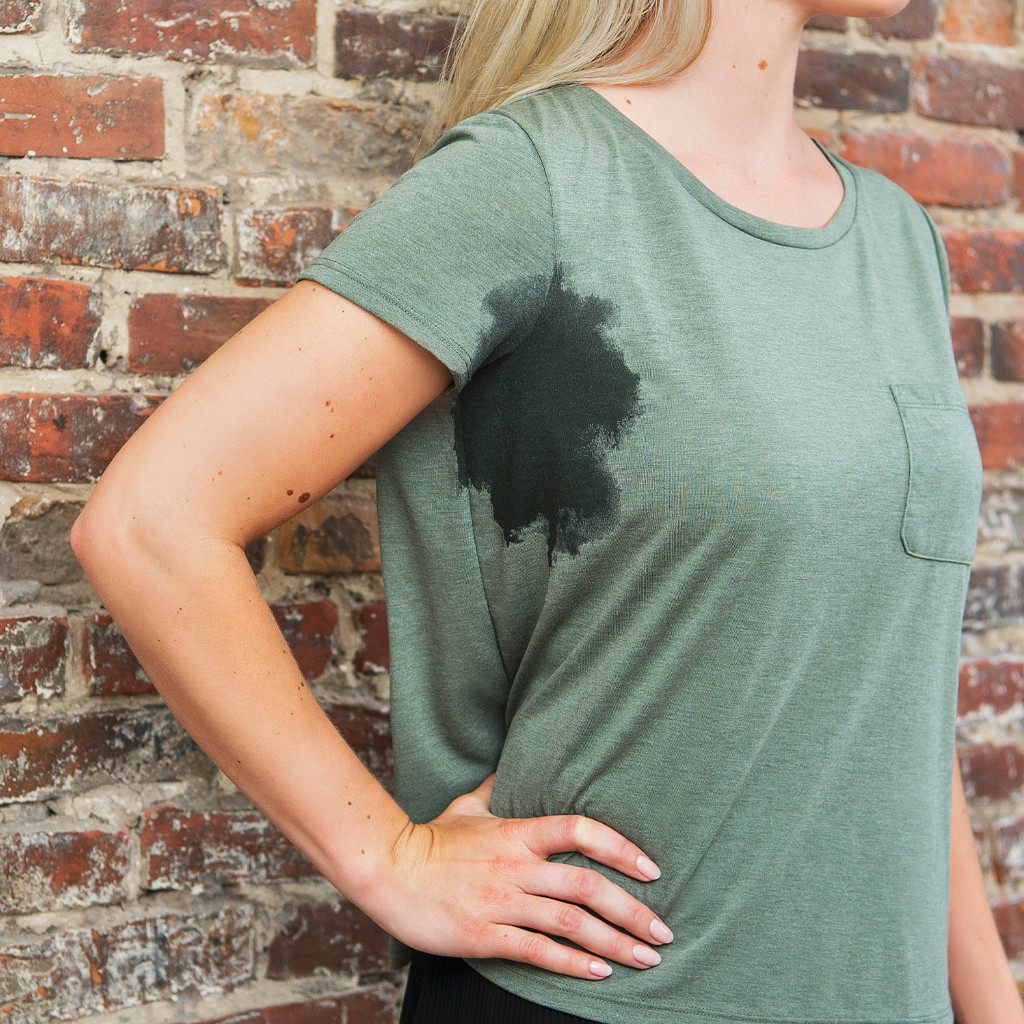
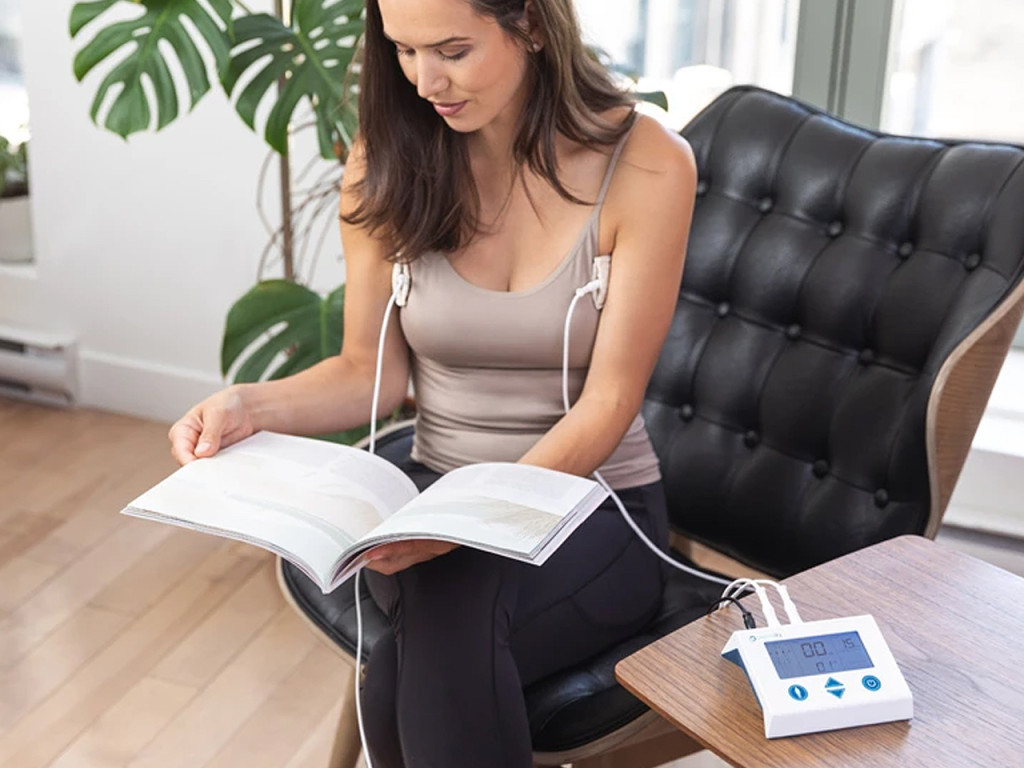
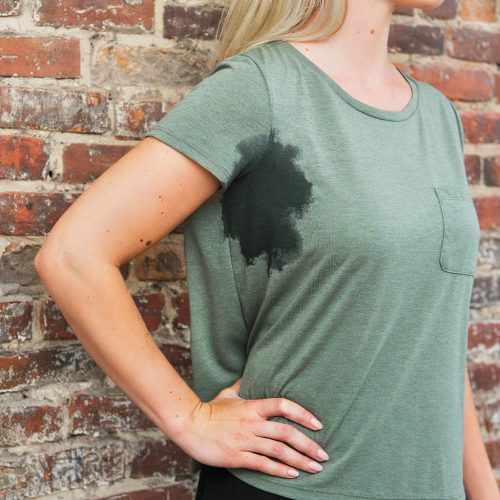
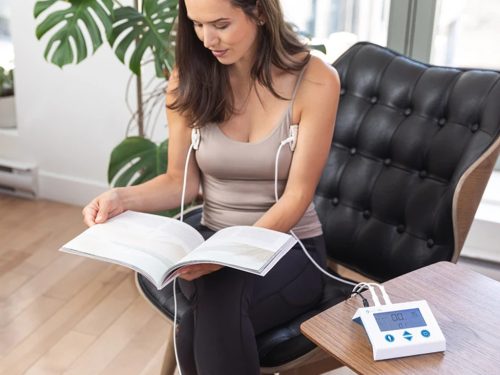
Axillary hyperhidrosis causes heavy soaking of clothing, which can be socially uncomfortable and lead to low self-confidence and social difficulties. The DermaDry Total operates at a lower current (8 mA) for underarm treatment – the device's specific electrodes ensure precise treatment. Although axillary treatment can take a bit longer, persistent users report positive results.
If cosmetics or powders don't help (they rarely do), physicians should first recommend iontophoresis instead of more invasive and substantially more expensive treatments (botox or surgery). The DermaDry Total offers a non-invasive home alternative – and is cost-effective. Botulinum toxin injections need repeating every 4–6 months; surgery can have permanent side effects – iontophoresis, however, can be used long-term with minimal risk.
Iontophoresis effects are not permanent – sweating may increase again after two to three months. After a course, switching to maintenance treatment is recommended: treat once or twice weekly. The DermaDry Total is ideal for long-term maintenance because it can be used anytime at home and treatments are not time-consuming.
The manufacturer recommends the device from age 13. Simple reason: the treatment should be performed by someone who understands and cooperates with the process. For small children, medical consultation is required and a parent must be present during treatment. Iontophoresis can be effective for adolescents and adults alike, especially when hyperhidrosis causes psychological burden. Consult your physician about age suitability and a personalized protocol.
How does iontophoresis work?
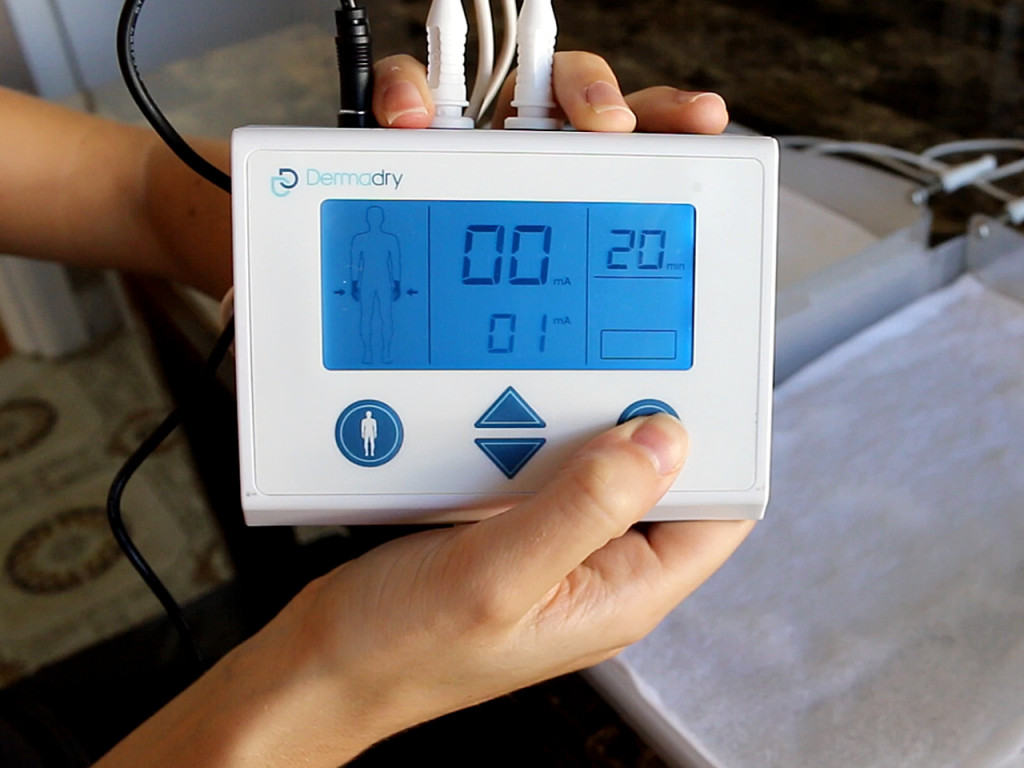
Iontophoresis is a long-known, non-invasive procedure. During treatment the device conducts a mild electric current through tap water to the skin surface. This current influences the activity of the sweat glands.
The exact mechanism is still under research, but scientific literature suggests several processes may play a role: temporary blockage of sweat gland ducts and raising the threshold for sweat-triggering stimuli.
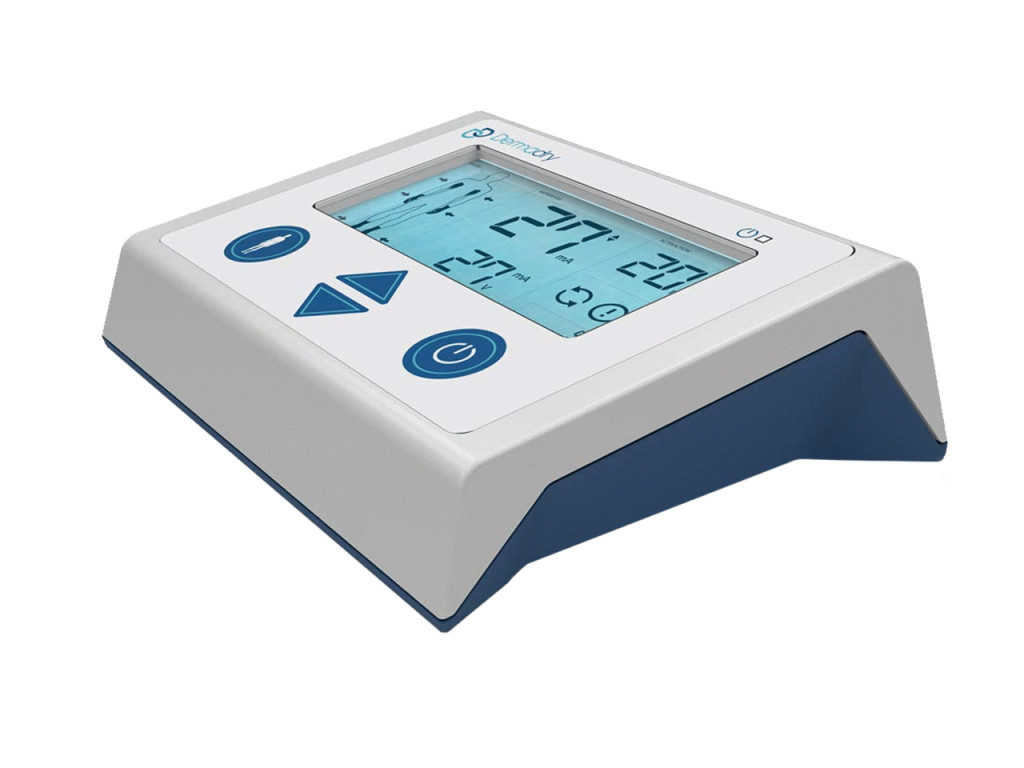
Automatic device functions:
- Polarity switching during treatment (no manual switching required)
- Safety current limiting
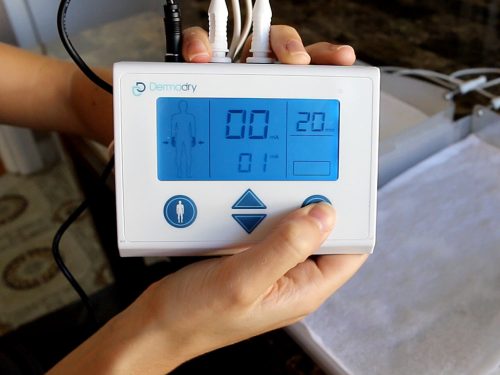
- Child lock function (3-second start)
What can users expect?
Iontophoresis effectiveness depends on individual factors and treatment regularity. Based on clinical studies:
- Mild tingling may be felt during initial treatments – this is normal
- With regular, protocol-based use, a large proportion of users experience significant improvement
- Randomized, controlled trials indicate that tap water iontophoresis can effectively reduce palmar sweating
- According to a systematic review, after 1–4 weeks of regular treatment a 30–90% reduction in sweating can be observed, which may persist for weeks–months with maintenance treatments
Important: Results vary. Degree of improvement depends on sweat severity, treatment regularity and individual responsiveness. Iontophoresis does not replace medical consultation.
Frequently asked questions
The manufacturer recommends the device from age 13. For younger users medical consultation is advised.
A mild tingling is felt during treatment. If uncomfortable, reduce the current. The device supports gradual current adjustment.
The detailed protocol is in the included manual. Generally, once daily for 2–3 weeks, then as maintenance once or twice weekly is recommended. If sweating increases, start a new intensive course.
Yes, the device is compact and portable. For travel regulations, check the current airline rules regarding electronic devices.
The device does not evaporate the water, so it won't "run out" during a 15–20 minute session. Treatment cannot proceed without water because the device has circuit detection. Without water it will not detect the proper circuit and will not start.
Results vary and depend on sweat severity. Clinical studies report many users notice significant improvement after 2–3 weeks. Some see results sooner (1–2 weeks), others later (4+ weeks).
The effect of an iontophoresis course is not permanent. Generally sweating may increase again after a few weeks–months. The intensive course should then be repeated. Maintenance treatment is recommended: after a 2–3 week course, do not stop treatments completely but reduce frequency to 1–2 times weekly to maintain results longer.
Overview of sweat treatment options
There are several methods to treat hyperhidrosis. Consult your doctor to find the best solution for you.
| Method | Characteristics |
|---|---|
| Topical antiperspirants | Can be creams, gels, powders, sprays. Easily accessible, require continuous use, may cause skin irritation |
| Botulinum toxin injections | Medical procedure, requires periodic repetition (usually every 4–6 months), fairly expensive |
| Iontophoresis (DermaDry Total) | Home-use, non-invasive, CE/FDA certified, requires maintenance treatments |
| Anticholinergic medications | Under medical supervision, may have side effects (dry mouth, vision disturbances) |
| Surgical solutions (ETS) | For severe cases, on medical advice; irreversible procedure. High risk of compensatory sweating. |
Video guide for using the DermaDry Total
Watch videos about using the DermaDry iontophoresis device:
User guide – in short
1
Preparation
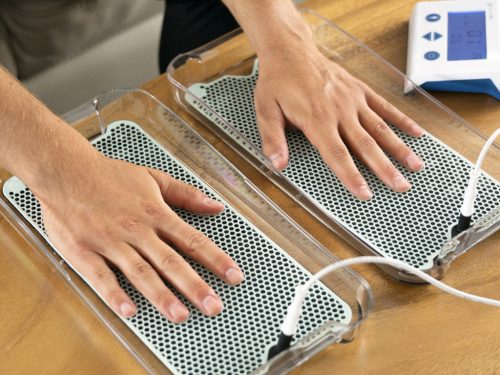
Fill the trays with lukewarm tap water (20–40°C). Check that there are no open wounds on the skin. Apply a thin layer of petroleum jelly to small abrasions.
2
Settings
Select the treatment profile (palm/sole/underarm). Start at low current and gradually increase to a comfortable level.
3
Treatment
Place your hands or feet in the trays. The device will automatically run the treatment with polarity switching in 15–20 minutes.
4
Finish
Dry the skin and apply a moisturizing cream.
Technical specifications
| Parameter | Value |
|---|---|
| Current type | Pulsed direct current (PC) |
| Frequency | 10 kHz square wave |
| Duty cycle | 90% (fixed) |
| Max current – palm | 15 mA |
| Max current – sole | 25 mA |
| Max current – underarm | 8 mA |
| Treatment time | 15–20 minutes |
| Power supply | Mains adapter (100–240V) |
| Certifications | CE (EU MDR), FDA 510(k), Health Canada |
| Manufacturer | DermaDry Laboratories Inc. (Canada) |
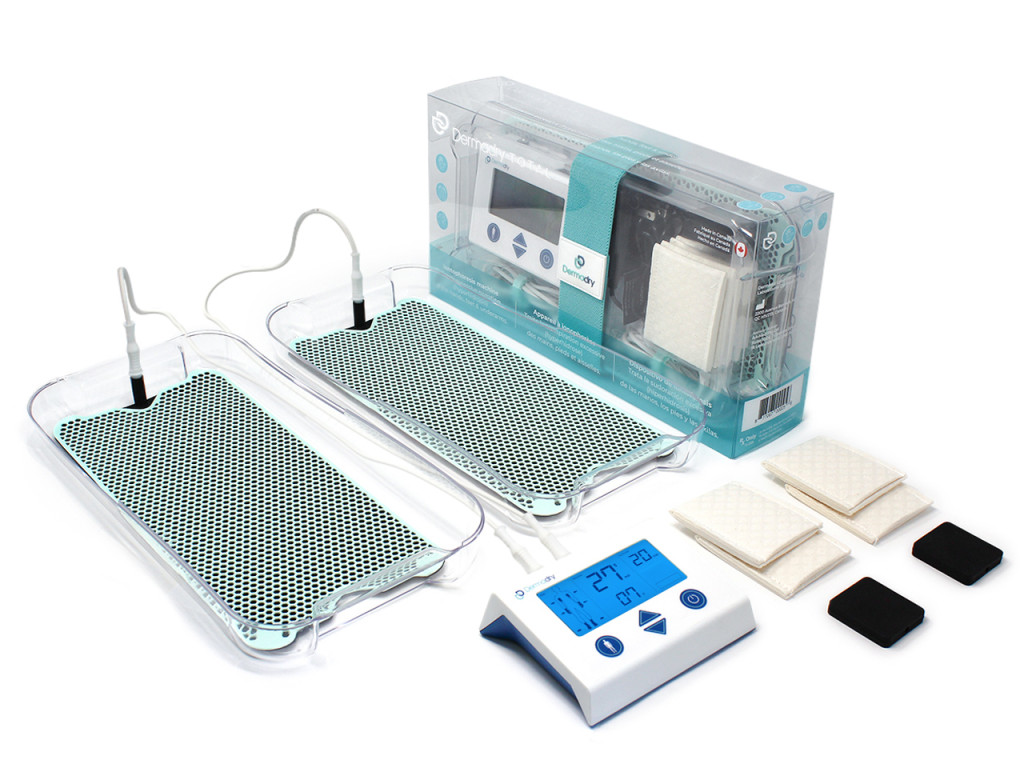
Package contents
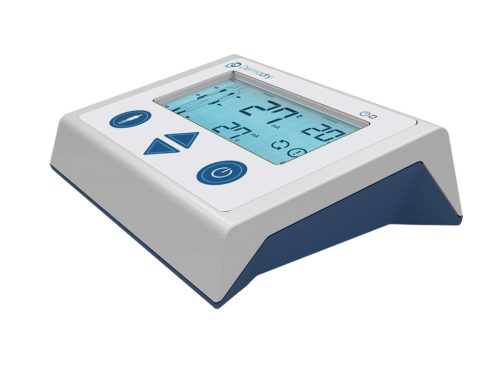
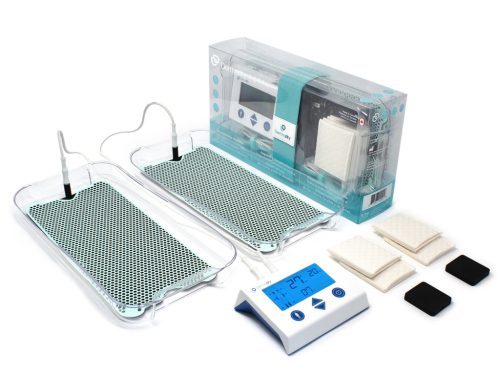
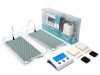
- DermaDry Total device
- Mains adapter
- 2 treatment trays (hand/foot)
- 2 cables
- 2–2 large/small rubber electrodes
- 2 silicone meshes
- 2 sponge cases
- Hungarian user manual
 Important information before use
When NOT to use the device?
Do NOT use the device if:
- You have an implanted pacemaker or defibrillator
- You are pregnant
- There is a metallic implant in the treatment area
- You have an arrhythmia
- You have epilepsy
- There is an open wound or infection in the treatment area
If in doubt, consult your treating physician!
Possible side effects
During treatment the following may occur:
- Mild tingling sensation (this is normal)
- Transient redness of the treated area
- Rarely: small blisters (if current is set too high)
- Dry skin (moisturize after treatment)
If this is uncomfortable, reduce the current. For persistent or unusual symptoms stop treatment and consult your doctor.
About water quality
The device operates with tap water. Mineral content of water may vary by location. If your tap water is too soft (low conductivity), try the following:
- Add 1 teaspoon of baking soda or table salt
- Use bottled mineral water

Important: Never use softened or distilled water!
Scientific background and sources
The scientific literature and related research on iontophoresis are presented in detail in the Treating hyperhidrosis with iontophoresis blog article.
Sources:
- Stolman LP. (1987). Treatment of excess sweating of the palms by iontophoresis. Arch Dermatol, 123(7):893–896. PubMed
- Reinauer S, et al. (1993). Iontophoresis with alternating current and direct current offset (AC/DC iontophoresis). Br J Dermatol, 129(2):166–169. PubMed
- Kim DH, et al. (2017). Treatment of Palmar Hyperhidrosis with Tap Water Iontophoresis: A Randomized, Sham-Controlled Clinical Trial. Ann Dermatol, 29(6):728–734. PubMed
- Nawrocki S, Cha J. (2020). A systematic evidence-based review of treatments for primary hyperhidrosis. J Drugs Dermatol, 19(12):1141–1147. PubMed
- Pariser DM, Ballard A. (2014). Iontophoresis for palmar and plantar hyperhidrosis. Dermatol Clin, 32(4):491–494. PubMed
Learn more
 Important note
This product description is for informational purposes and does not replace medical advice. The DermaDry iontophoresis device is intended as an adjunct to medical treatment. If you have complaints, always consult a doctor for proper diagnosis and treatment planning. Individual results may vary.
This product is a medical device with CE (EU MDR) and FDA 510(k) certification.