
 What is iontophoresis, and what is it used for?
Iontophoresis (iontophoresis) is a form of electrotherapy that uses direct current. Under the influence of the current, the electrically charged particles (ions) of dissolved active substances migrate toward the opposite pole — hence the term "ion migration." This way the active ingredient can be delivered directly through the skin, targeting the treated area while bypassing the digestive system.
There are two clearly distinct applications: traditional iontophoresis (delivery of active ingredients for joint and pain complaints), and tap-water iontophoresis, which is used symptomatically for pathological sweating (hyperhidrosis) of the palms, soles, and underarms.
 Which one are you interested in?
The first question is: sweating or joint/pain treatment? A dedicated tap-water iontophoresis device is suitable for pathological sweating; for delivery of active ingredients choose a multifunctional device offering an iontophoresis program. We help you choose in the detailed guide under the products.
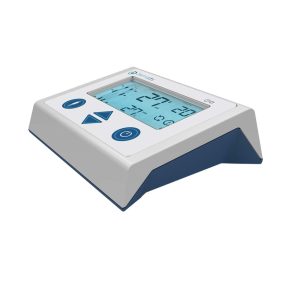


DermaDry Total home-use tap water iontophoresis device to support treatment of palmar, plantar and axillary hyperhidrosis. CE and FDA certified.
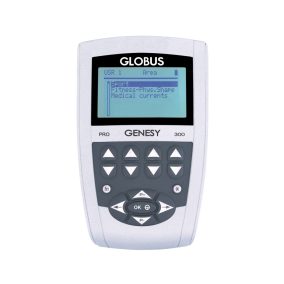


Genesy 300 Pro multifunctional electrotherapy device. TENS / EMS / MCR-MENS / FES / iontophoresis. 4 channels, battery-powered.
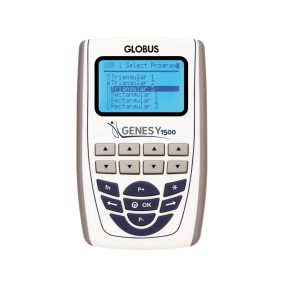


The Globus Genesy 1500 — one device for hundreds of complaints.



Triathlon Pro: multifunctional electrotherapy device. TENS / EMS / MCR-MENS / FES / iontophoresis. Special sport: triathlon. 4 channels, battery powered.
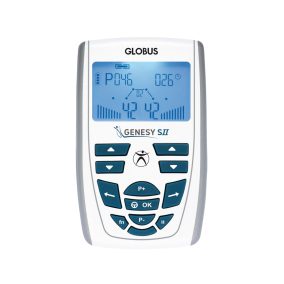


2-channel TENS | EMS | iontophoresis device. 60 types of pain-relief, rehabilitation, iontophoresis and incontinence programs.



Genesy 600 multifunctional electrotherapy device. TENS / EMS / MCR-MENS / FES / iontophoresis / denervated. 4 channels, battery-powered.



A Globus Genesy 3000 is a single device for hundreds of complaints.



The Champion multifunctional electrotherapy device, with a multisport-optimised program package. TENS /EMS /MCR‑MENS /FES /iontophoresis.



Runner Pro multifunctional electrotherapy device, with a program package optimised for running enthusiasts. TENS / EMS / MCR-MENS / FES / iontophoresis.
Which device should you choose?
| If you are looking for… | Check this first |
|---|---|
| Exclusively hyperhidrosis (palms/soles/underarms sweating) | DermaDry Total |
| Hyperhidrosis AND joint treatment in one device (dual) | IontoBravo |
| Delivery of active ingredients for joints/pain in a multifunctional device | Genesy SII, Genesy 300 Pro, Genesy 600, Genesy 1500, Genesy 3000 |
| Sport – iontophoresis and full electrotherapy | Cycling Pro, Runner Pro, Soccer Pro, Triathlon Pro |
 How does it work?
Medications in solution dissociate into positively charged (cations) and negatively charged (anions) ions. Under direct current, these ions migrate toward the pole opposite to their own charge: positive ions move toward the negative electrode, and negative ions toward the positive electrode. In this way the active ingredient can be transported through the skin to the treated area, where it forms a "depot" and exerts a concentrated and lasting effect. The mild stimulation produced by the direct current can also enhance local blood circulation.
The two main uses
| Use | Purpose | What device is needed? |
|---|---|---|
| Tap-water iontophoresis | Symptomatic treatment of pathological sweating (palms, soles, underarms) | Dedicated tap-water iontophoresis device (with treatment tray) |
| Traditional iontophoresis | Targeted delivery of active ingredients for joint and pain complaints | Multifunctional electrotherapy device offering an iontophoresis program |
You can find a detailed guide on hyperhidrosis and tap-water iontophoresis in our iontophoresis and abnormal sweating article.
Recommended treatment protocol
- Iontophoresis is typically recommended daily.
- A course usually consists of 10–15 sessions (up to 20 in more severe cases).
- Start with a low-frequency program — it causes less skin redness, although it delivers less active ingredient.
- Set the intensity to produce a mild "tickling" sensation: too high can be painful, too low may be ineffective.
 Skin redness is normal
Mild redness of the treated area is natural, as the treatment increases local blood flow — it subsides shortly after. If redness persists, it may indicate sensitivity to the drug: inform your treating physician in that case.
Active ingredients commonly used in iontophoresis
The table below is for informational purposes. Some of the listed agents require a prescription; consult your treating physician or pharmacist about their use and the correct polarity. If the active ingredient is not listed, determine its polarity from the packaging or ask the prescribing doctor.
| Active ingredient | Polarity | Treatment purpose | Typical use |
|---|---|---|---|
| Calcium chloride (1–2%) | Positive | Soothing, replenishing | Osteoporosis, spasmophilia, algodystrophic syndrome (avoid in atherosclerosis) |
| Magnesium chloride (10%) | Positive | Pain relief, soothing, fibrolytic | Alternative to calcium chloride in atherosclerosis |
| Potassium iodide | Negative | Softening, sclerolytic | Injuries, adhesions, scars, Dupuytren's contracture |
| Lysine acetylsalicylate | Negative | Anti-inflammatory, pain relief | Osteoarthritis |
| Local anesthetics (e.g. lidocaine) | Negative | Local anesthesia | Trigeminal neuralgia |
| Benzydamine | Positive | Anti-inflammatory, pain relief | Rheumatoid arthritis |
| Diclofenac sodium | Positive/Negative | Anti-inflammatory, pain relief | Hematoma, bruise treatment |
| Sodium salicylate (1–3%) | Negative | Pain relief | Joint rheumatism, acute mucous membrane inflammation, myalgia |
| Ketoprofen (lysine salt) | Positive/Negative | Anti-inflammatory | Osteoarthritis, arthritis |
| Piroxicam | Positive | Anti-inflammatory, pain relief | Sprains |
| Thiomucase | Negative | Anti-edema | Treatment of edema after trauma and/or surgery of venous origin |
 When NOT to use it?
Iontophoresis can be helpful for many complaints, but it is not recommended in the following cases, or should be used only with medical approval:
- Pacemaker or other implanted electronic device
- Heart disease or arrhythmia
- Pregnancy
- Epilepsy
- Acute viral infection, fever
- Dermatitis, fungal infection (mycosis) on the treated area
- Known drug allergy to the substance to be administered
The active ingredient is always a medical/pharmaceutical matter
In traditional iontophoresis the choice of the administered agent and the polarity setting are medical or pharmaceutical tasks. Before using a new agent, make sure it does not cause an allergic reaction.

