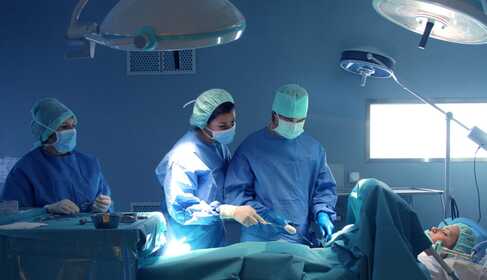

 Knee and Hip Replacement Surgery – why is one a success and another only a partial success?
Let’s take a simple analogy: you take your car to the tire shop because the tires are worn. You get a new set. But whose responsibility is it how long the new tires remain usable? Least of all the mechanic’s. If the suspension is worn, even new tires will wear out quickly. If you go to drag races and burn rubber on the asphalt, it’s pointless to complain to the service.
Now compare this to your surgery. In the hospital they can replace the worn joint in a few hours, the wound heals and you are discharged. “That was the service” – from that point on, your recovery is NO LONGER solely the responsibility of the surgical team, nor is how usable your leg will be. These depend on the condition you came into surgery in (preparation), and on how diligently you perform the rehabilitation tasks (post-op rehab).
 Key idea
The 2022 Gränicher meta-analysis (TKA prehab) and the 2022 Widmer SR (THA prehab) show that a 2–12 week preoperative preparation (prehab) measurably improves preoperative and 3-month postoperative knee function, the 6-minute walk test, ability to stand up and stair climbing.1, 2 Adding muscle stimulation to exercises in postoperative rehab has strong evidence for preserving quadriceps strength and muscle tissue.4, 5 So success does NOT depend only on the surgeon – to a large extent it depends on your preparation and persistence.
 The three pillars of surgical success
The full success of a knee or hip surgery depends on three factors – and surgical performance is only one of them:
Preparation – the 2–3 months BEFORE surgery
Due to joint complaints you move less and less for years. Your thigh muscles waste away and joint mobility becomes limited. By the time of surgery your knee may be collapsing and you barely get out of your armchair. If you arrive at surgery with wasted muscles, they will not support you afterwards – you may have the prosthesis, but movement remains similarly limited.
The 2022 Gränicher meta-analysis shows that prehab before TKA results in significantly better knee function and faster recovery in the preoperative phase and at 3 months post-op.1 The 2022 Widmer SR shows that prehab longer than 8 weeks before THA gives the greatest postoperative benefit.2 The evidence is clear: preoperative preparation provides a measurable advantage.
Surgery – “they work with what you bring in”
The surgical team works with the “material” you bring. The worse the condition you arrive in – weak muscles, excess weight, stiff joints, untrained heart and lungs – the higher the surgical risk and the lower the chance of full recovery.
Differences in modern surgical approaches (minimally invasive techniques, robotics, etc.) can significantly reduce invasiveness and speed recovery. Surgeries performed with higher expertise and modern equipment are generally more expensive. The 2023 ERAS systematic review (Enhanced Recovery After Surgery) found that comprehensive protocols (early mobilization, multidisciplinary approach) significantly shorten hospital stay, reduce complications and speed functional recovery.6
Rehabilitation – months to years of work
After surgery you are usually mobilized the same day (sitting up, walking with a walker). Full rehab, however, takes weeks to months – here it is decided whether the surgical success turns into long-term improvement.
Clinical trials show that rapid loss of quadriceps strength (up to 50% in the first month after surgery) is one of the biggest challenges of knee rehab. Muscle stimulation can measurably reduce this. A 2023 clinical trial (Cheuy et al.) found that NMES added to standard exercise preserves quadriceps strength and muscle fiber size in the first weeks after TKA.5 A 2022 systematic review (Labanca) found that early-start, high-intensity NMES gives clinically significant quadriceps strength recovery compared with conventional rehab.4
 The secret of joint stability: muscle strength
Joint stability is provided by the strength of the muscles around them. For the knee this is mainly the thigh and calf muscles; for the hip the thigh, gluteal and partly the abdominal muscles surround the joint from the sides, above and below. If these muscles are strong, they hold the joint stably. If they are weak, even a technically sound prosthesis will leave your gait uncertain, the joint unstable and pain may return.
The 4-phase EMS protocol for TKA / THA
The protocol below covers the entire perioperative period. Always consult your treating physician, physiotherapist or physical therapy specialist – this is a general framework; individual parameters must be determined by a professional.
| Phase | When | Goal | What to do |
|---|---|---|---|
| 1. Prehab | 2–12 weeks before surgery | Build muscle strength and endurance | 3–4× weekly NMES (quadriceps, gluteal, core stabilization) + physiotherapy |
| 2. The week before surgery | 7 days pre-op | Gentle maintenance, avoid overexertion | Gentle NMES (low intensity only), recovery programs |
| 3. Early post-op | 1–6 weeks post-op | Preserve quadriceps strength, protect muscle tissue | NMES on the operated thigh (with medical approval, gently from the next day) + in-hospital physiotherapy |
| 4. Recovery and return | 6–26 weeks post-op | Functional strength, gait stability, muscle development | NMES + volitional exercise (possibly ActionNOW superimposed) + gradual loading |
 Strict rule for postoperative use
The basic rule for postoperative EMS treatment: stimulate the muscle, DO NOT move the joint. EMS is safe from the day after surgery because it contracts the muscle without moving the joint. Exact timing, intensity and electrode placement must always be determined by your treating physician or the hospital physiotherapist! Placing electrodes directly over wounds, sutures or freshly closed areas is FORBIDDEN.
 Device selection for TKA / THA
In joint replacement surgery the musculature has intact innervation – therefore classic NMES (biphasic square waveform) is effective. Four-channel devices allow treatment of multiple muscle groups at once (thigh + glute or both thighs):
Globus Genesy 300 Pro
Multifunctional NMES + TENS + MCR device with Hungarian menu. A complete foundation for TKA/THA prehab and post-op rehab – strength-building, recovery and pain-relief programs. An affordable choice for planned joint surgery.
Globus Premium 400
4-channel Globus device with built-in Sport and rehab program groups. If you plan a more active recovery and are interested in sporty rehab (movement coordination, endurance) after surgery, this is a good choice.
MyoBravo
If you have budget constraints, this TENS + EMS + FES device can be suitable.
Globus Genesy 600 / Genesy 1500
Versatile high-end devices with many programs – including the ActionNOW superimposed protocol. If you plan complex, long-term rehab (or have additional joint problems), this is a clinical-level solution.
 My timing advice
If you know the expected surgery date, it is worth acquiring the device at least 4 months before the operation. The first 1–2 weeks are adaptation (gentle intensity, learning your response), then 2–3 months of active prehab before surgery. That way at the time of surgery you will already be an experienced user – in the post-op phase you’ll focus on preserving muscle rather than learning the device.
 What does the research say about TKA/THA prehab and rehab outcomes?
“Does preoperative preparation really matter?”
Yes, measurably. The 2022 Gränicher meta-analysis found that prehab before TKA results in significantly better knee function before surgery and at 3 months post-op compared with surgery alone (without prehab).1 The 2022 Widmer THA systematic review also showed that prehab longer than 8 weeks provides the greatest postoperative benefit in the 6-minute walk test, sit-to-stand ability and stair climbing.2
“Does EMS after surgery really help against quadriceps weakness?”
Yes. A 2022 systematic review (Labanca et al.) found that adding NMES to standard rehab results in clinically significant increases in quadriceps strength after TKA when started early (in the days following surgery) and applied at maximally tolerated intensity.4 A 2023 clinical trial (Cheuy et al.) found NMES preserves muscle strength and fiber size in the first weeks after TKA.5
“Is home-based prehab effective?”
Yes, and it is particularly practical. A 2023 large meta-analysis (De Klerk et al., 22 RCTs, 1,601 patients) found home-based prehab improves preoperative pain, function and quality of life, and gives a smaller but significant postoperative functional improvement.7 So home work alongside hospital supervision really matters.
“Is early getting-up and rapid mobilization really good?”
Yes. The 2023 ERAS systematic review found that ERAS protocols after TKA/THA – including daily mobilization after surgery – significantly shorten hospital stay, reduce blood transfusions and complications, and speed functional recovery.6 This is therefore an international standard, not only local practice.
“Do education and preparation platforms contribute to outcomes?”
Yes. A 2021 clinical trial (Holte et al.) found that TKA/THA patients who joined a web-based patient education and preparation platform achieved higher post-op HOOS/KOOS-JR scores than those who did not prepare.8 The “engaged patient” thus receives measurably better recovery.
The summary in brief
Modern literature is unanimous: success in TKA/THA does NOT depend only on the surgeon. Key elements with strong evidence: 2–12 weeks of prehab, early post-op mobilization, NMES + exercise for quadriceps recovery, home exercises, and active patient preparation. The “engaged patient” achieves measurably better recovery than the passive patient who relies solely on the surgeon.
 Before you start home EMS treatment around TKA / THA
EMS is contraindicated or requires specialist consultation in the following situations:
- Implanted pacemaker, ICD or other active implant – currents can interfere with the device.
- Pregnancy – abdominal and lumbar treatment is forbidden in any stage of pregnancy.
- Directly over a freshly operated area – electrodes must NOT be placed directly on a wound, suture or freshly closed area. With medical approval, electrodes may be applied gently to intact skin on other parts of the operated limb (e.g. anterior thigh 5–10 cm away from the wound).
- Suspected active deep vein thrombosis (DVT) – urgent medical care is required; muscle pumping could displace part of the thrombus.
- Acute fever, infection or inflammatory complication – wait for recovery before starting EMS.
- Epilepsy or other seizure disorders – stimulation may be a trigger.
- Active malignant tumor in the treatment area – avoid the affected region.
- Skin disease, injury or severe sensory loss – the skin should be intact and sensate.
- Severe cardiovascular disease – in cases of arrhythmia or heart failure, request cardiology approval.
- Anticoagulant therapy around the time of surgery – always coordinate EMS use with your treating physician when on blood thinners.
Further reading
For the full contraindication list and technology-specific information, read our electrical treatment contraindications article.
Frequently Asked Questions
Evidence suggests prehab longer than 8 weeks provides the greatest postoperative benefit.2 Ideally, start 2–3 months before the planned surgery. If you have less time (e.g. an out-of-schedule operation), it is still worth starting – even 2–3 weeks of prehab brings measurable improvement, though smaller.
Because EMS does not move the joint (it only contracts the muscle), it can in principle be used from the day after surgery – BUT exact timing, intensity and electrode placement must always be determined by your treating physician or the hospital physiotherapist. Electrodes MUST NOT be placed over the operated area (wound, suture). Electrodes may be placed on the thigh on intact skin 5–10 cm away from the wound.
No. Physiotherapy is the foundation of rehab, while EMS helps rapidly preserve muscle strength during the perioperative passive phase and serves as an adjunctive strength-enhancing tool during recovery. Clinical studies show that NMES + exercise yields better measurable results than exercise alone.4, 5
With ERAS protocols hospital stay is often 1–3 days.6 After the early (1–6 week) intensive rehab phase most patients walk independently without aids by 6–12 weeks. Full functional recovery (sports-level load, long walks, stairs) generally takes 4–6 months. Individual variation is significant – preparedness, age and comorbidities all matter.
Partly. The 2023 De Klerk meta-analysis found home-based prehab provides measurable benefits – for pre-op pain, function, quality of life and post-op function.7 However, a physiotherapist/physical therapy specialist helps you learn correct technique at the start (movement patterns, electrode placement, intensity). Home “self-directed” work works after proper initial instruction.
Yes, and it is advisable. The non-operated leg often receives extra load during the postoperative period because you rely on it more while walking. Gentle strengthening NMES on that side helps overall lower-limb stability and reduces injury risk. Once-weekly to twice-weekly sessions for the quadriceps and gluteals are sufficient.
Doctor or patient? Whose role is more important?
Most patients believe the success of the surgery depends almost entirely on the operating surgeon. The medical team’s role is indeed very important and visible – but it represents only a slice of the whole task. The remainder depends on the quality of your preparation and the rehabilitation work.
If the patient expects the doctor to solve all their problems, they reduce the chance of success. If the patient actively participates in preparation and rehabilitation, they significantly increase that chance – the 2021 Holte trial confirmed this: the “engaged patient” attains measurably better HOOS/KOOS-JR scores.8
What this means in practice
Start preparing months before surgery:
- Consult a physiotherapist about a preoperative exercise plan
- Acquire a muscle stimulator 4–12 weeks before surgery and start using it daily
- If overweight, start weight loss – every 1 kg reduction reduces knee load by about 4 kg
- Train your cardiovascular system (walking, cycling as much as pain allows)
- If an educational platform or online video course is available, join – the “engaged patient” effect is measurable
 Summary – Quick overview
Sources
- Gränicher P, Mulder L, Lenssen T, Scherr J, Swanenburg J. (2022). Prehabilitation Improves Knee Functioning Before and Within the First Year After Total Knee Arthroplasty: A Systematic Review With Meta-analysis. Journal of Orthopaedic & Sports Physical Therapy 52(11):709-725. PubMed: 36125444
- Widmer P, Oesch P, Bachmann S. (2022). Effect of Prehabilitation in Form of Exercise and/or Education in Patients Undergoing Total Hip Arthroplasty on Postoperative Outcomes — A Systematic Review. Medicina (Kaunas) 58(6):742. PubMed: 35744005
- Konnyu KJ, Thoma LM, Cao W, Aaron RK, Panagiotou OA, et al. (2023). Prehabilitation for Total Knee or Total Hip Arthroplasty: A Systematic Review. American Journal of Physical Medicine & Rehabilitation 102(1):1-10. PubMed: 35302954
- Labanca L, Bonsanto F, Raffa D, Orlandi Magli A, Benedetti MG. (2022). Does adding neuromuscular electrical stimulation to rehabilitation following total knee arthroplasty lead to a better quadriceps muscle strength recovery? A systematic review. International Journal of Rehabilitation Research 45(2):118-125. PubMed: 35256573
- Cheuy VA, Dayton MR, Hogan CA, Graber J, Anair BM, et al. (2023). Neuromuscular electrical stimulation preserves muscle strength early after total knee arthroplasty: Effects on muscle fiber size. Journal of Orthopaedic Research 41(4):787-792. PubMed: 35856287
- Changjun C, Jingkun L, Yun Y, Yingguang W, Yanjun R, et al. (2023). Enhanced Recovery after Total Joint Arthroplasty (TJA): A Contemporary Systematic Review of Clinical Outcomes and Usage of Key Elements. Orthopaedic Surgery 15(5):1228-1240. PubMed: 36971112
- De Klerk TC, Dounavi DM, Hamilton DF, Clement ND, Kaliarntas KT. (2023). Effects of home-based prehabilitation on pre- and postoperative outcomes following total hip and knee arthroplasty: a systematic review and meta-analysis. Bone & Joint Open 4(5):315-328. PubMed: 37142259
- Holte AJ, Molloy IB, Werth PM, Jevsevar DS. (2021). Do Patient Engagement Platforms in Total Joint Arthroplasty Improve Patient-Reported Outcomes?. Journal of Arthroplasty 36(12):3850-3858. PubMed: 34481693