What is softlaser, and what is it used for?
The softlaser (LLLT, photobiomodulation) works with low-energy laser light that penetrates the skin into the tissues. The method can support the body's natural regenerative processes, so it is used as an adjunct treatment for musculoskeletal pain, inflammatory complaints, and to assist regeneration of the skin and superficial tissues (wounds, scars). There are also devices designed for specific purposes, for example to improve the appearance of fungal nails.
When choosing, don't start from the wattage. It is far more important what you want to treat, how deep the complaint is, and what laser class (how powerful) device you need. A laser is not good because it is expensive, but because it matches your complaint.
 Can't decide which laser to choose?
Three things decide: (1) the treatment goal and depth (surface skin/wound or deep muscle/joint), (2) the wavelength (660 nm red for surface, 808 nm infrared for deeper tissue), and (3) the power / laser class (simple devices usable without protective goggles or stronger, more effective devices that require goggles). In the detailed selection guide under the products we go through all of this.
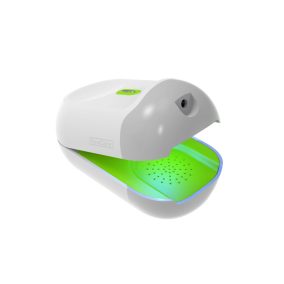


Dual light therapy device with a 905 nm infrared laser and 470 nm blue light that may help improve the appearance of fungal nails – reaching areas topical creams cannot. Painless, drug-free, only 7 minutes per nail daily.
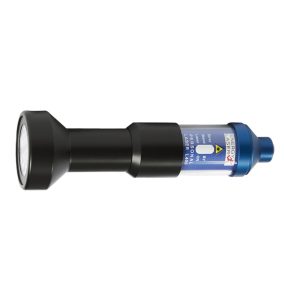


Personal-Laser L400 infrared soft-laser for point treatments. 400 mW continuous output, 808 nm laser beam. Delivers 4 Joules of energy in 10 seconds. Laser diode lifetime 10,000+ hours.

Easy-to-use 808 nm, 250 mW soft laser device. Simultaneous treatment area 4.5 cm2. 5 J/min per treatment point. Prism technology, safe to use without protective goggles.
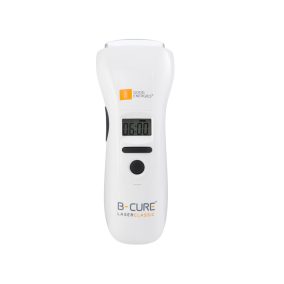


Easy-to-use 808 nm, 250 mW low-level laser device. Treats a 4.5 × 1 cm area at once. About 6 minutes per treatment point. Prism technology — safe to use without protective goggles when used as intended.
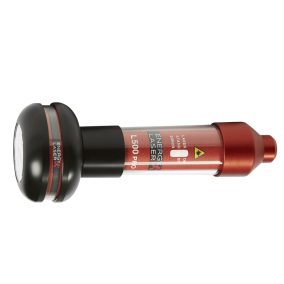


Energy-Laser L500 Pro infrared soft laser for point treatments. 500 mW continuous output, 808 nm laser beam. Delivers 5 Joules in 10 seconds. Laser diode lifetime 10,000+ hours.
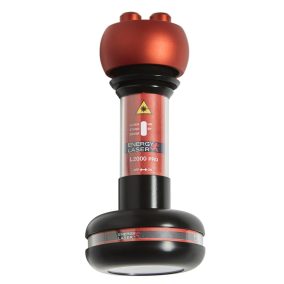


Energy-Laser L2000 Pro infrared soft laser for large-area treatments. Continuous output 4×500 mW, 808 nm laser beam. Delivers 20 Joules of energy in 10 seconds. Laser diodes with 10,000+ hours lifetime.
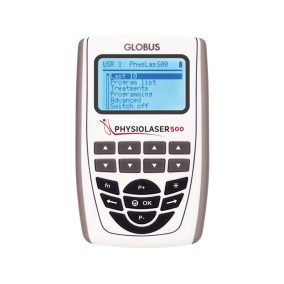


PhysioLaser 500 soft-laser device. 808 nm treatment head. 500 mW power. 9 programs for joint pain, back pain and tendonitis, 11 beauty programs for wrinkle treatment, skin rejuvenation and cellulite.
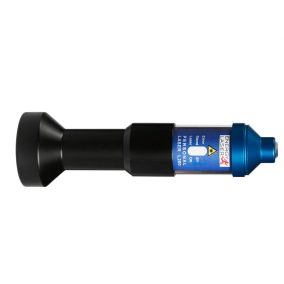
Do you have a non-healing wound, scar, skin problem or tinnitus? The Personal Laser L200 medical soft laser with a 660 nm red beam can help support the natural regeneration of skin and superficial tissues at home, pain-free. Class 3B, CE IIa certified medical device. 200 mW continuous power, 12 Joule/min energy output. Protective goggles and an aluminium carry case are included.
How to choose a softlaser device?
All softlaser devices emit laser light, but they are not all for the same purposes. Different wavelengths and power are needed for surface skin problems and for deep muscle or joint complaints. A good choice is not the most expensive or the most powerful device, but the one that fits your goal and the depth of the complaint.
 How does softlaser work?
The basis of softlaser is photobiomodulation: the light energy entering the tissue is absorbed by cells, which research suggests can positively influence local metabolism and regenerative processes. This can contribute to pain relief and support tissue healing – as a complement to medical treatment.
 Adjunct method
Softlaser is an adjunct treatment that can be used alongside medical therapy – it does not replace diagnosis or specialist care. Consider regular, course-like use; effects typically do not appear after a single session.
Step 1: purpose and depth – which wavelength?
Wavelength largely determines how deep the light penetrates. Broadly: red (660 nm) for the surface, infrared (808 nm) for deeper tissues. Power also affects penetration depth.
| Target | Recommended wavelength | Typical use |
|---|---|---|
| Surface: skin, wound, scar, skin problem | 660 nm (red) | Hard-to-heal wounds, scars, supporting regeneration of superficial tissues. |
| Deep: muscle, joint, tendon, ligament | 808 nm (infrared) | Musculoskeletal pain, joint and tendon inflammations, adjunct treatment for sports injuries. |
| Improving fungal nail appearance | Specialized (e.g. infrared + blue light) | Targeted device for the nail – light can reach areas where ointments have difficulty. Useful as an adjunct to medical therapy. |
Step 2: power and laser class – eye safety!
Power (mW) and laser class determine not only penetration but also the safety requirements. This is not the point to decide superficially.
| Laser class | What does it mean? | Eye protection |
|---|---|---|
| Class 1 (e.g. prism-based, diffused light) | Lower power, simple, safe for home use. | Diffused light is considered safe without protective goggles – still avoid directing the beam into the eye. |
| Class 3R / 3B | Higher power, deeper effect, suitable for more serious home treatments. | Wearing the supplied protective goggles is mandatory; never point the beam at the eye. |
| Class 4 | The highest power, for deep tissue treatments. | Take extra precautions, protective goggles are mandatory; professional guidance is recommended. |
Roughly by power: entry-level devices operate around 200–250 mW, mid-level around 400–500 mW, and high-power / professional devices exceed 800 mW (up to 2000 mW).
Step 3: targeted and specialized devices
Improving fungal nail appearance
There is a specialized device (Nailit) designed for this purpose; light therapy can help improve the appearance of fungal nails – reaching places where ointments struggle. Use it as a complementary treatment alongside medical therapy.
Skin rejuvenation and musculoskeletal treatment in one
There are multifunctional softlasers (PhysioLaser 500) that offer beauty programs (wrinkle treatment, skin renewal, cellulite) in addition to musculoskeletal programs. If you need a device for multiple goals, this can be a good option.
Quick decision guide
| If you want this… | Then check this first |
|---|---|
| Simple, safe home start for musculoskeletal complaints (no goggles) | B-Cure Laser Classic |
| For sport, active lifestyle, a portable device | B-Cure Laser SPORT Pro |
| Stronger, deeper effect for musculoskeletal complaints (808 nm, mid power) | Personal-Laser L400, Energy-Laser L500 Pro |
| Deep tissue, professional-level treatment | Energy-Laser L2000 Pro |
| Surface skin, wound, scar, skin problem (660 nm) | Personal-Laser L200 |
| Improving fungal nail appearance | Nailit |
| Musculoskeletal + beauty programs in one device | PhysioLaser 500 |
 Dr. Zátrok's advice
For musculoskeletal pain, joint or tendon inflammatory complaints, choose an 808 nm infrared laser. For a start, the Class 1 prism B-Cure is simple and safe – it can be used without protective goggles.
If you have deep, chronic complaints, a higher-power device (over 500 mW) may be justified – but in that case wearing protective goggles is mandatory.
If you want to treat skin, wounds or scars, a 660 nm red laser is suitable for superficial tissues.
Don't decide by wattage first; decide by the goal and depth. And remember: softlaser is an adjunct method – always clarify the cause of your complaint with a physician.
 Important safety information
Always use the softlaser according to the device manual. Avoid treatment or use only with medical approval in the following cases:
- Directing the laser beam into the eye – for 3R/3B/4 class devices wearing protective goggles is mandatory
- Malignant lesion or suspected malignancy in the treated area
- Pregnancy – treatment of the abdomen and pelvic area should be avoided
- Direct irradiation of the thyroid
- Photosensitivity or taking photosensitizing medication
- Active bleeding or a fresh bleeding wound in the treated area
- Unexplained pain or skin lesion – medical evaluation is required first
 Eye protection
Laser light can be hazardous to the eyes. For Class 3R/3B and Class 4 devices, wearing the supplied protective goggles is mandatory, and never look directly into the beam or direct it at someone else's eyes. Class 1 (prism-based, diffused light) devices are considered safe without goggles, but still avoid directing the beam at the eye.