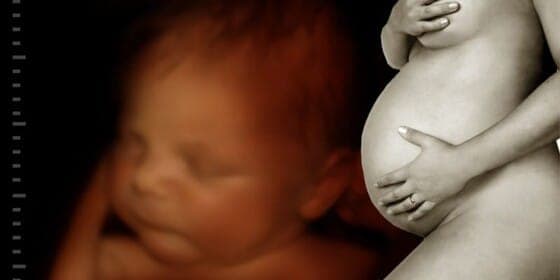

 What are pregnancy varicose veins?
Pregnancy varicose veins are the pathological dilation of veins during pregnancy, which impairs blood circulation and, in severe cases, can even lead to thrombosis. Beyond the dilated vein itself, the clinical significance is therefore serious: although the dilation does not pose a direct danger to the mother or the fetus, quality of life can deteriorate significantly (pain, tightness, cosmetic concern), and the background risk of thrombosis also increases.
The appearance of varicose veins is influenced by female sex hormones – which is why the condition is more common in women. During pregnancy, additional specific factors also play a role.
 Key point
Two main mechanisms underlie pregnancy varicose veins: hormonal (progesterone softens the venous wall) and mechanical (the growing uterus exerts pressure on the pelvic veins). At home you can support venous return with compression stockings, leg elevation, regular exercise and – with your physician's approval – a lymphatic drainage device. Muscle stimulators (EMS, TENS) are contraindicated during pregnancy. Pregnancy itself increases the risk of thrombosis 4–5-fold, so any sudden, one-sided leg swelling requires immediate medical examination.
 How do pregnancy varicose veins develop?
During pregnancy more blood is produced than usual to nourish the mother and the fetus, which also means greater pressure on the blood vessels. In addition, the enlarging uterus exerts extra pressure on the pelvic veins, hindering venous blood return to the heart. Put differently: the growing fetus "lies on" the mother's pelvic veins, making it harder for blood to leave the legs.
The process is further amplified by the progesterone hormone: this hormone, essential for maintaining pregnancy, relaxes smooth muscles, including the smooth muscle in the venous wall. The vein wall softens, the vessel dilates more easily – and the venous valves that previously closed perfectly can begin to function less effectively.
It is therefore not surprising that pregnant women have a higher chance of developing varicose veins. Estimates suggest that 30–40% of expectant mothers experience some degree of venous symptoms during pregnancy.
How does pregnancy varicose veins differ from classic varicose veins?
| Feature | Classic venous disease | Pregnancy varicose veins |
|---|---|---|
| Underlying cause | Venous valve insufficiency, family predisposition, lifestyle | Hormonal (progesterone) + mechanical (uterine pressure) |
| Appearance | Twisted, bluish-purple veins | Tighter, more distended, larger in extent, more reddish |
| Localization | Primarily lower leg, thigh | Lower limbs + vulvar and pelvic vein dilations |
| Reversibility | Not reversible | Often regresses after delivery (but residuals can remain) |
| Thrombosis risk | Moderately increased | 4–5× increased (pregnancy itself is a risk factor) |
Read more about classic venous insufficiency in the venous insufficiency article.
Typical symptoms of pregnancy varicose veins
Symptoms generally appear gradually as pregnancy progresses, most often from the 2nd trimester. Recognize the signs in time:
Visible, dilated veins – tense, wide, larger in extent and reddish in hue, often easily palpable.
Heavy-leg sensation, tightness – particularly uncomfortable by the end of the day, especially after standing or sitting work.
Leg swelling, oedema – especially at the ankle and foot; worse in the evening. The differential diagnosis of leg swelling is discussed in the leg swelling triage article.
Vulvar vein dilations – an uncomfortable, often distressing symptom specifically characteristic of pregnancy varicose veins.
Nocturnal muscle cramps, itching – further manifestations of impaired venous circulation.
When is medical evaluation URGENT?
Pregnancy itself increases the risk of venous thromboembolism (deep vein thrombosis and pulmonary embolism) 4–5-fold compared with the general population. Therefore expectant mothers must be particularly vigilant for red flags.
 URGENT – call a doctor / ambulance immediately (call: 104 / 112)!
- Sudden, significant, one-sided swelling of the leg, calf or ankle developing within half a day;
- warmth, redness over a localized area, with increasing pain on touch;
- chest pain, shortness of breath, sudden coughing (possibly with blood-tinged sputum) – suspected pulmonary embolism: IMMEDIATE AMBULANCE;
- fainting, rapid pulse, paleness – suspicion of an acute circulatory event.
Detailed clinical presentation of thrombosis, home measures and post-thrombotic syndrome treatment can be found in the thrombosis article. Expectant mothers planning long flights or car journeys should read the travel-related thrombosis section.
Prevention and reduction – what can you do at home?
The basis of prevention and symptomatic relief during pregnancy is attention to lifestyle. The following practices are worth following daily:
- Elevate your legs whenever possible – sitting or lying down – to allow freer blood circulation;
- Do regular, gentle exercise: 30–40 minutes brisk walking daily, pregnancy-tailored exercises, swimming (to the extent approved by your prenatal care physician);
- Do not wear tight garments, especially around the waist and thighs – these can compress the veins;
- Keep weight gain under control – with a balanced, high-fiber diet, avoiding excess salt;
- Avoid heavy lifting or straining – lifting heavy weights increases pelvic pressure;
- Do not sit with legs crossed for long, get up hourly and move your calves;
- Increase fluid intake: 2–2.5 liters of water daily to maintain hydration;
- Compression stockings: in consultation with your prenatal care physician, generally 15–20 mmHg is recommended for prevention; for symptomatic varicose veins 20–30 mmHg.
 My advice – a simple daily routine
Put on compression stockings before getting up in the morning (while still lying down!), elevate your legs for 15–20 minutes at the end of the day, and use a cooling gel or moisturising cream on your legs after evening showering. These small steps can make a significant difference.
 Home medical devices for expectant mothers
CRITICAL – you must know this
During pregnancy muscle stimulators (EMS), TENS and FES devices are contraindicated (especially on the abdomen and lower back, but as a precaution avoid using them anywhere). For supporting varicose symptoms at home, expectant mothers may use only a lymphatic drainage device (pneumatic compression), and even then only with compensated cardiac status, with the treating physician's approval, and using a protocol that does not involve the pelvic area (lower-limb-only).
The lymphatic drainage device, with precise pressure-controlled, wave-like massage, supports venous and lymphatic flow and can favorably influence tight pain and swelling.
Power Q-1000 Plus lymphatic drainage device
An entry-level home device for leg treatment. Recommended for expectant mothers because it operates with a simple, compression-controlled protocol and does not require an abdominal/trunk cuff. Use should be agreed with your treating physician.
Power Q-2200 lymphatic drainage device
A mid-range 2-chamber device with several treatment programs. In pronounced symptoms (significant leg swelling, pain) it can be used for expectant mothers with the treating physician's approval and exclusively with a leg-only treatment protocol.
More information on the full range of lymphatic drainage devices: lymphatic drainage device category page.
 Before you start treatment – contraindications in pregnancy
For safe use, know the contraindications. Always consult your prenatal care physician or treating physician before using any home device.
When NOT to use a home device during pregnancy?
- Muscle stimulators (EMS, TENS, FES) – throughout the entire pregnancy
- Acute deep vein thrombosis or suspicion of it – lymphatic drainage device PROHIBITED
- Suspected acute pulmonary embolism – urgent ambulance, no home device may be used
- Severe pregnancy complications (preeclampsia, HELLP syndrome, decompensated heart failure)
- Acute skin infection or open wound on the treatment area
- Lymphatic drainage device cuffs that affect the pelvic area – never use during pregnancy
 Important information
Lower-limb (calf-thigh) treatment with a lymphatic drainage device during pregnancy is generally safe with compensated cardiac status, but only according to a protocol agreed with the treating physician. Never treat the abdominal area or the pelvis while pregnant.
What happens after delivery?
After delivery, as hormone levels (especially progesterone) normalize and uterine pressure resolves, pregnancy-related varicose veins often gradually regress. This process can take weeks to months and is not entirely predictable.
Some important points for the postpartum period:
- Residual veins may persist – not every dilated vein always regresses;
- See a vascular surgeon after 3–6 months if varicose veins do not regress adequately;
- During breastfeeding certain treatments (e.g. sclerotherapy, laser surgery) may be contraindicated or should be postponed;
- The thrombosis risk remains during the 6-week postpartum puerperium and is highest in the first 1–2 weeks;
- Early mobilization after delivery supports restoration of venous circulation.
Detailed classic varicose vein disease treatment: venous disease article.
 Scientific background
Varicose veins and leg oedema in pregnancy – Cochrane (Smyth 2015)
Smyth and colleagues' Cochrane review (2015) found that graduated compression stockings during pregnancy may favorably influence venous symptoms (pain, oedema) – among interventions, the evidence for compression is the strongest.1
Risk of venous thromboembolism in pregnancy (Heit 2005)
Heit and colleagues' population study (2005) found that pregnancy and the puerperium increase the risk of venous thromboembolism (DVT and pulmonary embolism) 4–5-fold compared with the general population – the highest risk is in the first weeks after delivery.2
Pneumatic compression in the treatment of venous stasis
Kakkos and colleagues' clinical study (2001) found that intermittent pneumatic compression favorably affects venous circulation and relieves symptoms of chronic venous insufficiency – relevant evidence for home protocols for expectant mothers.3
ESVS 2022 European clinical guidelines
De Maeseneer and colleagues edited the European Society for Vascular Surgery 2022 clinical practice guidelines on the management of chronic venous disease of the lower limbs, which also include treatment algorithms for pregnancy-related varicose veins.4
Frequently asked questions
In most cases, as hormone levels normalize and uterine pressure resolves, varicose veins gradually regress in the weeks to months after delivery. However, some may persist as residual dilations – therefore it is worth seeking a vascular surgery consultation after 3–6 months if the veins have not regressed.
No. Muscle stimulators (EMS, TENS, FES) are contraindicated for the entire duration of pregnancy, especially on the abdomen and lower back, and as a precaution should be avoided elsewhere. For expectant mothers, the lymphatic drainage device (pneumatic compression) may be used at home only with a leg-only protocol and the treating physician's approval.
With compensated cardiac status, and only for the treatment of the lower limbs (calf, thigh) under a protocol agreed with the treating physician, a lymphatic drainage device is generally safe during pregnancy. Never use abdominal or pelvic cuffs. It is contraindicated in suspected acute deep vein thrombosis or severe pregnancy complications (preeclampsia, HELLP).
If sudden, one-sided significant swelling of the leg or calf occurs within half a day, with pain, warmth and redness – urgent medical evaluation is required (suspected DVT). If chest pain or shortness of breath occur, suspect pulmonary embolism: CALL AMBULANCE IMMEDIATELY (104 / 112). Pregnancy increases the risk of venous thromboembolism 4–5-fold, so expectant mothers must be particularly alert.
For prevention (if asymptomatic) 15–20 mmHg stockings are appropriate; for symptomatic varicose veins (CEAP C2 and above) 20–30 mmHg is recommended – have this determined in consultation with your prenatal care physician. Put the stockings on in the morning while still lying down, before getting up, so blood does not pool in the legs. Special 15–20 mmHg maternity stockings are easier to put on if they include an abdominal section.
Generally yes, but with increased thrombosis risk. For flights over 4 hours, compression stockings are strongly recommended, along with abundant fluid intake, hourly standing/movement, and consultation with your prenatal care physician before flying. For long flights (8+ hours) some doctors may even consider heparin prophylaxis. Detailed travel-related DVT prevention: thrombosis travel section.
 Summary – quick overview
Sources
- Smyth RM, Aflaifel N, Bamigboye AA (2015). Interventions for varicose veins and leg oedema in pregnancy. Cochrane Database of Systematic Reviews. PubMed: 26477632
- Heit JA, Kobbervig CE, James AH, et al. (2005). Trends in the incidence of venous thromboembolism during pregnancy or postpartum: a 30-year population-based study. Annals of Internal Medicine. PubMed: 16287790
- Kakkos SK et al. (2001). Improved hemodynamic effectiveness of a new intermittent pneumatic compression system in patients with chronic venous insufficiency. Journal of Vascular Surgery. PubMed: 11700495
- De Maeseneer MG et al. (2022). European Society for Vascular Surgery (ESVS) 2022 Clinical Practice Guidelines on the Management of Chronic Venous Disease of the Lower Limbs. European Journal of Vascular and Endovascular Surgery. PubMed: 35027279