
Our range includes several types of lymphatic drainage device, together with leg, arm, trouser and trunk cuffs for them.
 What is a lymphatic drainage device used for?
A lymphatic drainage device (medically known as a pneumatic compression device) directs the movement of lymph and venous blood from the limb towards the trunk by inflating the air chambers in the treatment cuffs one after another. It is a medical device specifically developed to support venous and lymphatic circulation.
Its most common uses are: lymphoedema, lipoedema, varicose vein symptoms and chronic venous insufficiency, swelling after thrombosis, pregnancy-related varicose veins and sports recovery. Except for sport, current therapeutic guidance considers these conditions to require continuous, daily treatment, which cannot be managed by visiting a clinic. A home device for this purpose is not a “luxury”, but a basic tool needed to reduce oedema.
 Can't decide which device to choose?
If you're unsure which configuration is right for you, ask our colleagues for help. In addition, the detailed buying guide below the products will guide you through the decision step by step.
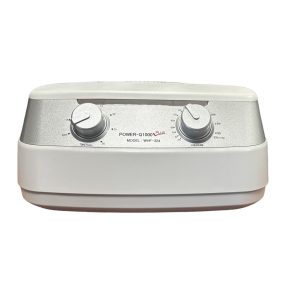


Power Q-1000 Plus lymphatic massage device. Basic feature set. 4-chamber leg, arm, hip/buttock and short-trouser cuffs sold separately, available in multiple sizes.
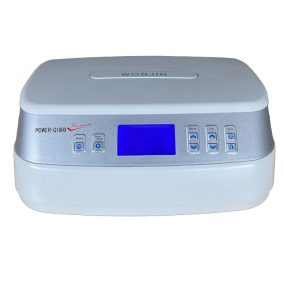


Power Q-1000 Premium lymphatic massage device. Advanced capability. 4-chamber leg, arm, trunk/hip and shorts cuffs are sold separately and are available in multiple sizes.
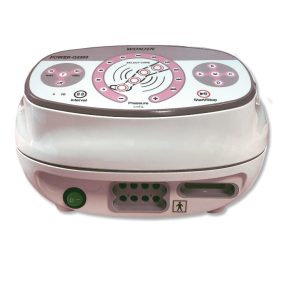


Power Q-2200 compression therapy unit. Mid-range level. 4 air-chamber leg, arm, hip/buttock and shorts cuffs are sold separately and available in multiple sizes.
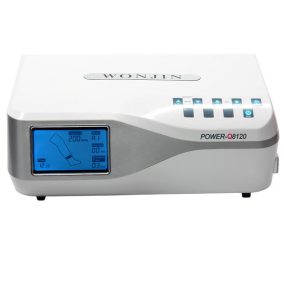


Power Q-8120 lymphatic massage device. Operator-level. 12 air-chamber leg, arm, hip/buttock and long pant cuffs are sold separately.
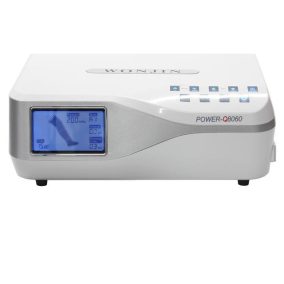


Power Q-8060 lymphatic massage device. Operator skill level. 6-chamber leg, arm and hip/buttock cuffs must be ordered separately.
 How to choose a lymphatic drainage device?
Every lymphatic drainage device works with cuffs containing air chambers, but that does not mean they are all suitable for the same purpose. The right choice for an evening feeling of heavy legs is different from the right choice for stage 3, firm lymphoedema, and different again from the choice for a clinic treating many patients every day.
So don't start your choice with the price or the number of air chambers. The right device is not the one that “does the most”, but the one that suits your condition – with the right cuff.
Tip for choosing a device
When choosing a device, you should first consider what condition you are treating, how severe it is (what stage it is at), and which part of the body it affects. This determines whether a simpler (and cheaper) device is sufficient or whether you need more precise treatment – and also which cuff you need.
The table below will help you get started. The recommendations always begin with the simpler and cheaper devices and progress towards those with more features (and a higher price).
| Symptom or aim | Recommended devices |
|---|---|
| Mild leg swelling, evening feeling of heavy legs | Power Q-1000 Plus, Power Q-2200 |
| Varicose vein symptoms, chronic venous insufficiency, swelling after thrombosis | Power Q-1000 Plus, Power Q-2200, Power Q-1000 Premium |
| Mild lymphoedema (stage 1–2, no skin changes or ulcer) | Power Q-2200, Power Q-1000 Premium |
| Advanced lymphoedema (stage 3–4, longstanding firm oedema, keratosis, ulcer) | Power Q-1000 Premium, Power Q-8060, Power Q-8120 |
| Arm lymphoedema (after breast surgery or radiotherapy) | Power Q-2200, Power Q-1000 Premium – with an arm cuff |
| Lipoedema | Power Q-1000 Premium, Power Q-8060, Power Q-8120 |
| Pregnancy-related varicose veins | Power Q-2200 – at low pressure, after consulting a doctor |
| Sports recovery | Power Q-2200, Power Q-1000 Premium, Power Q-8060, Power Q-8120 |
| Clinic, therapist, several treatments per day | Power Q-8060, Power Q-8120 |
 The main areas of use in brief
Lymphoedema
Lymphoedema is a disease of the lymphatic system that may cause persistent swelling, increasing firmness and skin changes. Pneumatic compression is an important part of complex treatment (compression stockings, exercise, skin care and professional drainage), and at home it can be a cornerstone of long-term maintenance treatment.
For mild, stage 1–2 oedema, devices with 4 air chambers are sufficient. In cases of longstanding, firm, stage 3–4 oedema, keratosis or ulceration, the more precise treatment provided by the programmable Power Q-1000 Premium or the professional multi-chamber models is appropriate. Even a simpler device is far better than leaving the condition untreated!
Lymphoedema guide → Lymphoedema stages →
Arm lymphoedema – after breast surgery
For arm swelling after breast surgery, radiotherapy or lymph node removal, you need a correctly sized arm cuff, not a leg cuff. A cautious start, lower pressure and use agreed with a doctor or therapist are particularly important.
Lipoedema
Lipoedema is a chronic, symmetrical accumulation of subcutaneous fatty tissue that affects almost exclusively women. A lymphatic drainage device does not “remove” fatty tissue. Instead, it complements compression, movement and lifestyle measures, and may help reduce tightness, the feeling of heavy legs and the oedematous component.
The trouser cuff available for the Power Q-8120 can be used for a hip and abdominal circumference of up to 160 cm.
Lipoedema guide → Lipoedema stages →
Varicose veins, venous insufficiency and post-thrombotic conditions
Chronic venous insufficiency, post-thrombotic syndrome and venous ulcers have persistent impaired venous circulation and fluid stagnation in common. Device-based treatment complements compression stockings: it moves venous blood and interstitial fluid upwards in stages. For these conditions, devices with a typically lower pressure range and simple operation are sufficient.
Pregnancy-related varicose veins
Pneumatic compression may be used for venous stagnation during pregnancy, but with extra care: at low pressure (15–30 mmHg), in a side-lying position, with short (15–20-minute) treatments, and always after prior consultation with your doctor or obstetrician.
Pregnancy-related varicose veins guide →
Sports recovery
After intensive training or competition, intermittent compression may ease the symptoms of delayed-onset muscle soreness and support recovery. The sports protocol differs from oedema treatment: higher pressure (60–100 mmHg), a shorter (15–30-minute) treatment, directly after exertion. Multi-chamber models are particularly popular among runners, cyclists and triathletes.
Compression for athletes → Pneumatic compression and muscle recovery →
4, 6 or 12 air chambers?
The number of air chambers shows how many sections the cuff uses to roll the pressure along the limb. This is not just a technical specification, but a practical difference: more chambers mean finer, more continuous treatment that is more similar to manual lymphatic drainage.
| Number of air chambers | What is it suitable for? | Who is it recommended for? |
|---|---|---|
| 4 chambers (Q-1000 Plus, Q-2200, Q-1000 Premium) | An affordable device intended for conditions requiring daily home treatment. | Home users – in most cases, this is the practical and sufficient choice. |
| 6 chambers (Q-8060) | Finer, more segmented and more effective treatment. Designed for heavier use. | Primarily for therapists, but also for demanding home users. |
| 12 chambers (Q-8120) | The most detailed pressure wave, which is particularly important for short institutional treatments. The extra-large trouser cuff provides treatment for a trunk circumference of up to 160 cm. |
Primarily for therapists and perfectionist home users. |
Cuffs and accessories
The device alone is not enough: treatment also requires the appropriate leg, arm, trouser or trunk cuff and air hose for your symptoms and body size. A leg cuff is suitable for leg oedema, an arm cuff for arm swelling after breast surgery, and a trouser cuff for lipoedema affecting the thigh, hip and abdominal area. Measure the circumference of the limb before buying. The cuff should fit comfortably around it without gaps.
What should you consider before buying?
- Condition and stage: mild heavy-leg symptoms or advanced, firm oedema? This determines the required device level.
- Body part being treated: leg, arm, thigh-hip-abdomen or trunk? The cuff type must be chosen accordingly.
- Body size: choose the cuff size according to limb circumference and height; the extra-large trouser cuff for the Q-8120 can be used up to a circumference of 160 cm.
- Frequency of use: 4-chamber devices are suitable for 1–2 home treatments per day; the Q-8060 / Q-8120 are intended for clinics and many treatments per day.
- Pressure range and programmability: oedema treatment requires lower, gradual pressure; sport requires higher pressure. The Premium and professional models offer programme saving and more precise adjustment.
- Special condition: suspected thrombosis, heart failure, cancer, pregnancy or an open wound requires medical consultation first (see below).
 Important safety note
Pneumatic compression is a safe procedure, but in the following cases you should seek medical advice before buying and using a device:
- Acute deep vein thrombosis or suspected deep vein thrombosis – treatment only with medical approval and monitoring
- Severe heart failure – increased venous return may worsen the condition
- Active skin infection or an open wound in the treatment area – not recommended until healing is complete
- Severe peripheral arterial disease – individual assessment and low pressure are required
- Untreated high blood pressure – after stabilisation and on medical advice
- Active malignant tumour in the treatment area – only with the approval of an oncologist
- First trimester of pregnancy and complicated pregnancy – only after consultation with an obstetrician
 The device does not replace medical assessment
Pneumatic compression is one element of complex treatment. It does not replace medical or physiotherapy care. If you have a new symptom, increasing swelling, pain or skin changes, the cause of the symptom must first be clarified. Good treatment is based on a diagnosis, not guesswork.
In international medical terminology, a lymphatic drainage device is called a pneumatic compression device, and the treatment is known as intermittent pneumatic compression (IPC). The term “lymphatic drainage device” is used only in our country.

