
What to use it for?
Does your knee hurt on the stairs, or does your shoulder or hip ache? The doctor diagnosed joint wear (osteoarthritis) or joint inflammation (arthritis). In the mornings it can take minutes for your joints to “wake up,” and some days even your usual walk feels burdensome.
1 MHz therapeutic ultrasound penetrates deeply, so it can reach larger joints – knee, shoulder, hip – and deeper muscles. Systematic reviews suggest therapeutic ultrasound can positively influence joint pain, especially in the knee. With SonicRelief you can perform the treatment at home when it suits you.
By the afternoon your neck locks up and you can only turn by rotating your whole torso? Long sitting, slouching at a screen or a bad sleeping position tightens the neck muscles – and the pain often radiates into the head and shoulder.
Did a sudden movement “throw out” your back? Does sharp pain restrict movement? Do you have a herniated disc with frequent back pain or pain radiating into the buttock or thigh?
Therapeutic ultrasound can reduce pain intensity in spine-related complaints. Treatments take only 5–10 minutes – with SonicRelief you can even perform them daily without visiting a clinic.
Is your back tight with palpable, painful knots (trigger points) around the shoulder? After training or physical work your overworked muscles ache for days, or recurring muscle cramps trouble you? Doctors call this myofascial pain.
The deep-heating effect of ultrasound can help relax tight muscles and loosen knotted, cramping areas. With SonicRelief you can target the painful spot directly – using slow, circular motions right over the affected area.
Does lifting a cup send a jolt through your elbow (tennis elbow)? Does your Achilles throb after running, or do you feel a pulling pain under the kneecap when squatting? Tendinitis and degenerative tendon changes (tendinopathy) can be insidious: without treatment they may persist for months and recur with every load.
Physiotherapists have used therapeutic ultrasound for decades to treat tendon problems. Ultrasound's microvibrations and deep-heating effect may support tendon regeneration and pain relief. SonicRelief is compact – it even fits into your gym bag.
After surgery, a cast or injury does your joint no longer bend as before? Scar tissue has hardened, tissues have adhered, range of motion is reduced – and progress in physiotherapy is slow because stretching stiff tissues is painful?
Ultrasound's deep-heating effect can soften scar tissue and help release adhesions that limit movement – warmed connective tissue becomes more pliable, making stretching exercises more effective. Apply treatment directly before physiotherapy! Ultrasound can also be used to reduce post-injury swelling (edema) – consult your treating physician beforehand in such cases.
Are the first steps in the morning the worst, as if you stepped on a nail, with stabbing pain in the heel? It eases as you move but returns after prolonged standing or walking. These are typical signs of plantar fasciitis, often associated with a heel spur visible on X-ray.
Therapeutic ultrasound has long been used in physiotherapy to treat heel pain. Ultrasound's deep-heating effect can help loosen the thickened, inflamed plantar fascia, while microvibrations may support tissue regeneration and pain relief. With SonicRelief you can target your heel at home – it's advisable to combine treatment with plantar fascia stretching exercises.
Frequently asked questions
The device may be used on the same area once daily for a maximum of 15 minutes per session. The device automatically stops after the set time. Multiple adjacent areas can be treated consecutively. For longer-lasting results it is recommended to use it regularly for 2, up to 4 weeks.
NO. Therapeutic ultrasound must not be used near an implanted cardiac pacemaker because it may interfere with its function.
At locations distant from the chest — for example at the ankle, knee, or lumbar spine — this risk does not apply and your physician may permit use on those distant sites.
Most users feel mild warmth or slight tingling. The device does not vibrate and is not a massager – therapeutic ultrasound works at a microscopic level in the tissues. If you feel a burning sensation, it may mean you are holding the device in one spot too long or the intensity is too high. Stop the treatment or move the device faster or reduce the intensity.
Air does not conduct ultrasound — without gel the device cannot deliver energy into the tissues. Ultrasound gel ensures uninterrupted energy transfer, and without it the treatment is ineffective or will not start due to lack of contact. Always use gel specifically made for ultrasound treatments!
SonicRelief uses the same 1 MHz therapeutic ultrasound technology as physiotherapy clinics. The difference is in the safe, preset parameters: the home-use device prevents excessively high intensity and automatically stops after a maximum of 15 minutes.
Individual responses vary. Some users notice changes after only a few treatments, but for more durable results regular use for about 10–15 days is usually needed. If there is no noticeable improvement after 20–25 treatments, ultrasound is probably not the appropriate method for that complaint.
Watch it in action
In his 17-part video series, Dr. Zátrok Zsolt demonstrates step-by-step how to use therapeutic ultrasound, the correct settings and safe application.
How to use it? It's that simple:
1
Apply ultrasound gel
Clean the area of skin to be treated, then apply a generous amount of ultrasound gel.
The gel is essential for energy transmission — without it the device may not turn on and the treatment effect may be lacking!
2
Turn on the device
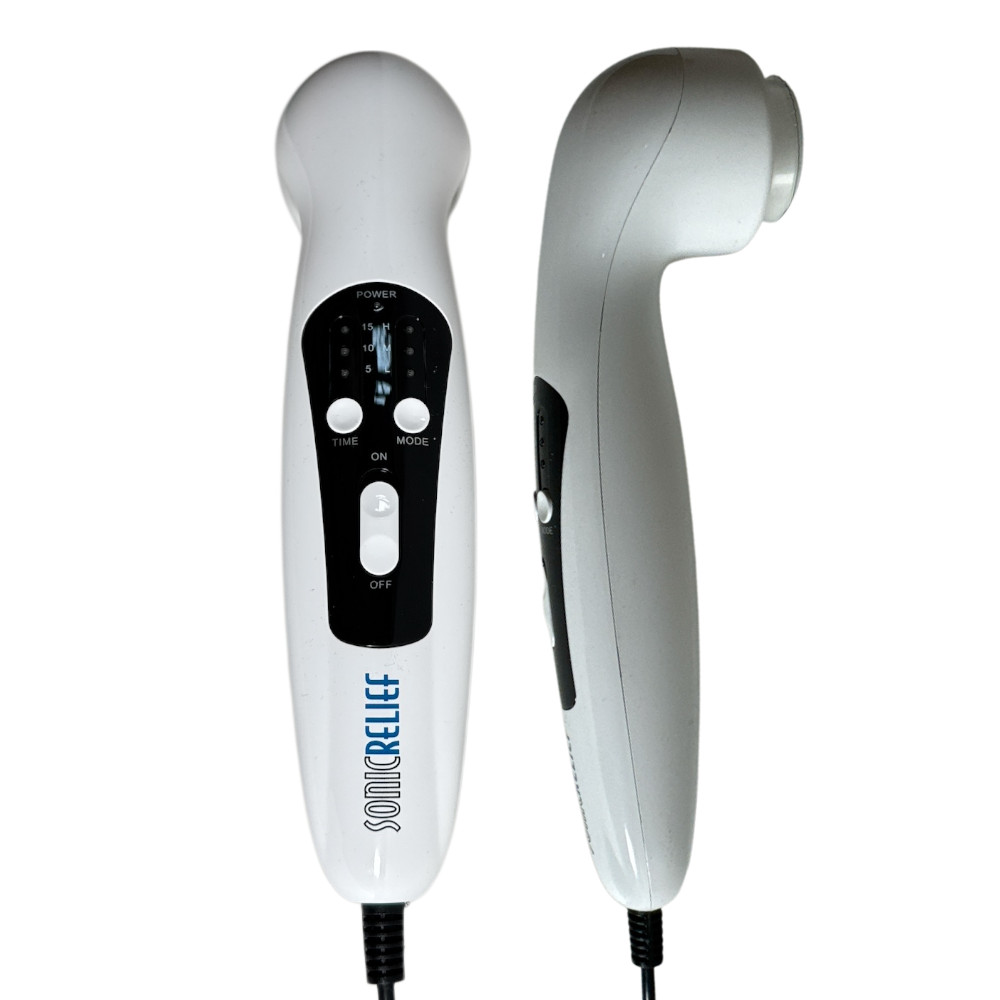
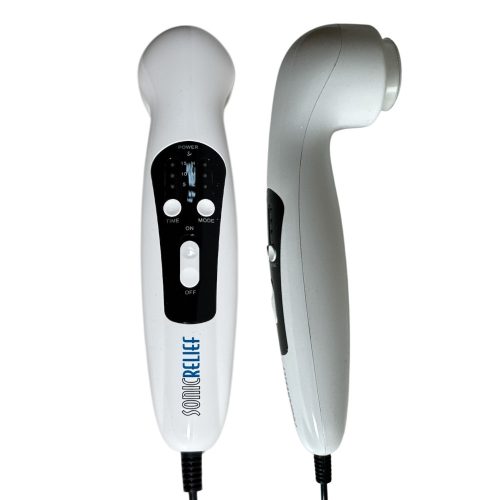
Press the power (ON) button.
SonicRelief operates with safe, preset parameters — no complicated settings required.
3
Set the treatment time
Use the Time button to select the treatment duration.
5, 10 and 15 minutes are available — choose 5 minutes for areas smaller than your palm, 10 minutes for palm-sized areas and 15 minutes for larger areas.
4
Set the treatment intensity
Use the Mode (treatment intensity) button to set the ultrasound intensity.
Choose L (low), M (medium) or H (high). For very recent injuries select low intensity. For persistent, multi-week or chronic complaints you may choose H (high) intensity.
5
Keep it moving
Place the device head on the skin and move it slowly in circular motions over the treatment area.
Never hold it in one spot! You may feel a mild warming sensation during treatment.
Attention! The device has a contact sensor! If there isn't enough gel or the device-skin contact is poor, ultrasound emission will stop and the LEDs will blink green.
6
Done in minutes
The device automatically stops after the set time. Turn the main switch to OFF.
Wipe remaining gel off the device and your skin. Rest the treated area. One treatment per day is recommended.
What's in the package?
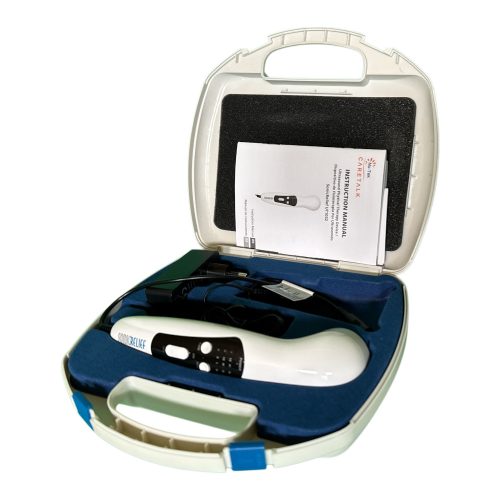
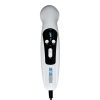
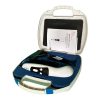
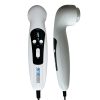
- SonicRelief therapeutic ultrasound device
- Power adapter
- Aquaultra ultrasound gel, 1 tube
- Online user manual (Hungarian)
The price includes everything needed to start using the device immediately.
With regular use, however, ultrasound gel will need to be replenished because the gel is essential for ultrasound. Without gel ultrasound waves cannot enter the tissues — air does not conduct ultrasound. We recommend ordering at least one bottle of ultrasound gel together with the device.
Click here to replenish accessories anytime: Ultrasound accessories →
 When NOT to use the device?
- In patients with an implanted cardiac pacemaker (in areas close to the pacemaker)
- In active deep vein thrombosis (on the affected limb)
- Malignant tumor at the treatment site (use on distant areas may be considered)
- During pregnancy over the abdomen and pelvic area (joints distant from the abdomen may be treated)
- Open wound or active infection at the treatment site
- Severe osteoporosis directly under the treatment area
- The eye, skull, thyroid or heart regions
- Over the growth cartilage areas of children
Unsure? Consult your treating physician before use!
Important information
Therapeutic ultrasound is a complementary method – it does not replace medical treatment or prescribed medications.
The device is intended to complement medical treatment. It does not replace specialist care. Effects described may vary between individuals. CE medical device certification.
Technical specifications
| Ultrasound frequency | 1 MHz |
| Treatment area | 4 cm² |
| Power density | 1.6 W/cm² |
| Max. power | 6.4 W (continuous mode) |
| Output power | L:0.32W; M:3.2W; H:6.4W |
| Mode | Continuous and Pulsed |
| Treatment time | 5-10-15 minutes (automatic shut-off) |
| Power supply | Mains |
| Design | Ergonomic handle |
| Penetration depth | 2-10 cm (to reach deeper tissues) |
| Certification | CE medical device |
| Warranty | 2 years |
Scientific background
Therapeutic ultrasound has been used in physiotherapy since the 1940s. The following studies support the effectiveness of the technology:
- (2020). Therapeutic Ultrasound for Chronic Pain Management in Joints: A Systematic Review. Pain Med. PubMed
- (2021). Effect of Therapeutic Ultrasound for Neck Pain: A Systematic Review and Meta-Analysis. Arch Phys Med Rehabil. PubMed
- (2012). Overview of therapeutic ultrasound applications and safety considerations. J Ultrasound Med. PubMed
- (2020). Therapeutic ultrasound for chronic low back pain. Cochrane Database Syst Rev. PubMed
 Therapeutic ultrasound treatment: comprehensive guide for home use →
 Ultrasound dosing — guide to treatment settings →
 Therapeutic ultrasound devices →
 Ultrasound accessories (gels, spare parts) →
 MediSound 3000 – professional dual-frequency 1–3 MHz device →