
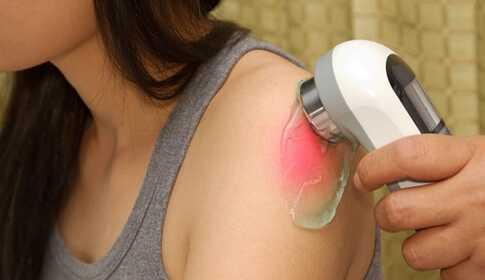
Therapeutic Ultrasound Treatment: A Comprehensive Guide for Home Use
Have you been experiencing long-term pain in your joints or muscles? Tired of taking medications and endless clinic visits? There is a method used for decades in physiotherapy — and now you can use it at home: therapeutic ultrasound treatment.
This article explains everything you need to know about this natural, drug-free pain relief method. You will understand how it works, what it’s for, what results to expect — and learn how to use your home device correctly.

What is therapeutic ultrasound?
Therapeutic ultrasound is a physiotherapy procedure that uses high-frequency sound waves to treat tissues. These sound waves are inaudible to the human ear — their frequency is 1–3 MHz (megahertz), while the upper limit of human hearing is only 20,000 Hz (hertz).
An ultrasound device converts an electrical signal into mechanical vibration using a special crystal — this is called the piezoelectric effect. When you place the device head on your skin (with ultrasound gel), these vibrations penetrate the tissues and produce various beneficial effects.
It is important to understand: therapeutic ultrasound is not the same as diagnostic ultrasound used in pregnancy scans or abdominal ultrasound. The therapeutic version operates with different settings and serves a different purpose.
How does it work?
Therapeutic ultrasound acts on tissues through two main mechanisms:
Thermal effect (heating)
Part of the ultrasound energy is converted into heat in the tissues. This warming effect:
- Increases local blood circulation
- Relaxes tense muscles
- Increases tissue elasticity
- Reduces muscle spasms
- May aid healing processes
The degree of heating depends on the intensity and treatment mode. Continuous mode produces stronger heating, while pulsed mode produces less.
Non-thermal (mechanical) effects
The ultrasound vibrations cause microscopic movements in cells and tissues. Scientific research suggests this mechanical stimulation can beneficially influence cellular activity and inflammatory processes.1
Non-thermal effects include:
- Micro-massage – the vibrations produce a gentle massaging effect on tissues
- Acoustic streaming – movement of fluids within and around cells
- Cavitation – formation and collapse of tiny gas bubbles (at low intensities, within a safe range)
What complaints can it help with?
Therapeutic ultrasound has been used for decades in rehabilitation and pain relief. Based on scientific studies and clinical experience, it can be used for the following conditions:
Musculoskeletal pain
- Joint problems: knee, shoulder and hip pain. A systematic review indicates therapeutic ultrasound may positively influence joint pain, especially in the knee.2
- Neck pain: meta-analyses suggest therapeutic ultrasound can reduce pain intensity in neck conditions.3
- Muscle pain: myofascial pain, muscle cramps, discomfort after overuse
- Tendon issues: tendinitis, tendinopathy (for example tennis elbow, Achilles tendon complaints)
Rehabilitation and regeneration
- Supporting recovery after injuries
- Softening scar tissue
- Releasing adhesions that limit range of motion
- Reducing edema (after medical consultation)
Cosmetic applications
3 MHz ultrasound acts near the skin surface, so it is popular in cosmetic applications as well:
- Improving skin tone
- Facial care (supporting lifting effects)
- Enhancing penetration of cosmetic active ingredients (phonophoresis/sonophoresis)
Choosing the frequency: 1 MHz or 3 MHz?
The two most common therapeutic ultrasound frequencies are 1 MHz and 3 MHz. The correct choice depends on the depth of the area to be treated.
| Characteristic | 1 MHz | 3 MHz |
|---|---|---|
| Penetration depth | 2–5 cm (deeper tissues) | 0.5–2 cm (superficial tissues) |
| Application area | Large muscles, deep joints | Superficial tendons, hand, face, ankle |
| Typical use | Knee, hip, shoulder, back | Wrist, elbow, ankle, face |
Tip: If you are unsure, most home device manuals indicate which frequency to use for specific situations. General rule: if the complaint is superficial (well localized by touch), choose 3 MHz; if you feel the pain deeper, choose 1 MHz.
Setting treatment parameters
Intensity (W/cm²)
Intensity determines how much energy reaches the tissues. Home devices typically operate in the 0.1–2.0 W/cm² range.
| Intensity | When to use? |
|---|---|
| 0.1–0.5 W/cm² | Acute conditions, fresh injuries, sensitive areas |
| 0.5–1.0 W/cm² | Subacute conditions (1–2 week complaints) |
| 1.0–2.0 W/cm² | Chronic complaints, treatment of deeper tissues |
Important: Always start at a lower intensity and gradually increase if necessary. The treatment should not cause pain!
Pulse ratio (Duty Cycle)
The pulse ratio determines whether ultrasound energy is delivered continuously or intermittently:
- Continuous (100%) – stronger thermal effect, for chronic conditions
- Pulsed 50% (1:1) – moderate thermal effect
- Pulsed 20% (1:4) – minimal thermal effect, for acute inflammations
For acute, inflamed conditions choose pulsed mode (20–50%) because it reduces heat generation and thus avoids aggravating the inflammation.
Treatment time
Recommended treatment time depends on the size of the treated area:
- Small area (5–10 cm²): 3–5 minutes
- Medium area (10–20 cm²): 5–8 minutes
- Large area (20–30 cm²): 8–10 minutes
Rule of thumb: approximately 1–2 minutes of treatment per 5 cm² of area. Move the device head continuously in slow, circular motions — never hold it in one place!
You can find a detailed guide to treatment parameters — for acute/subacute/chronic conditions with tables and research results — in our article Ultrasound dosing – the guide to treatment settings.
How to perform the treatment — step by step
1. Preparations
- Clean the skin area to be treated
- Remove jewelry from the treatment area
- Prepare the ultrasound gel — never use the device without gel!
2. Setting up the device
- Select the appropriate frequency (1 MHz for deeper, 3 MHz for superficial treatment)
- Set the intensity (start low!)
- Choose the mode (continuous or pulsed)
- Set the duration
3. Performing the treatment
- Apply a generous amount of ultrasound gel to the area to be treated
- Place the device head on the skin — full contact is required
- Move the head continuously in slow, circular motions (approx. 4 cm/second)
- Hold the device at a 90-degree angle to the skin
- If the gel dries, reapply!
4. After the treatment
- Wipe off remaining gel
- Clean the device head with a soft cloth
- Rest the treated area for 15–30 minutes
Before you start
For safe use, it is important to know the contraindications. If any of the conditions below apply to you, DO NOT use therapeutic ultrasound on that area, or consult your treating physician!
Contraindications for ultrasound treatment
Do not use an ultrasound device if:
- You have an implanted pacemaker — ultrasound may interfere with its function
- You have active thrombosis — due to risk of dislodging a blood clot
- There is a malignant tumor in the treatment area
- You are pregnant — do not treat the abdomen or pelvic area
- There is an open wound, infection, or purulent inflammation in the area
- Severe osteoporosis — directly over bone
- There is a metal implant in the area — consult a physician
- Over the spine — after laminectomy (spine surgery)
- Never treat over the eye, brain, or heart!
- The testicular area
- You have sensory impairment — you cannot feel excessive heating
Important warnings
- Avoid growing bone areas (in children) — avoid the growth plate regions
- Do not treat directly over dental fillings
- Over joint prostheses — consult a physician
- For acute inflammation choose pulsed mode and low intensity
Possible side effects
With correct use, therapeutic ultrasound is generally safe. Possible effects include:
- Mild, temporary redness of the treated area
- Pleasant warming sensation
- Rarely: temporary increase in pain after treatment (this can be a normal reaction, but if it persists, reduce the intensity)
If you experience a burning sensation or pain during treatment, stop immediately! This indicates the intensity is too high or the device head is not being moved quickly enough.
What to expect — realistic expectations
It is important to begin treatment with realistic expectations:
- Ultrasound therapy is not a miracle cure, but the scientific evidence is encouraging regarding its effectiveness
- Some studies suggest it can reduce pain, especially when combined with other treatments2,3
- Results are individual — what works for one person may be less effective for another
- Regular use is necessary — typically daily or every other day treatments for 2–4 weeks
- Ultrasound treatment complements but does not replace medical treatment, physiotherapy, or medication
You will achieve the best results if you use ultrasound therapy as part of a comprehensive program: combined with physiotherapy, stretching, and lifestyle changes.
Device buying guide
If you want to buy a home therapeutic ultrasound device, pay attention to the following:
| Aspect | What to look for? |
|---|---|
| Frequency | 1 MHz and/or 3 MHz — dual-frequency devices are more versatile but more expensive |
| Adjustable intensity | 0.1–2.0 W/cm² range with gradual adjustment |
| Modes | Both continuous and pulsed modes |
| Timer | Automatic shut-off |
| Treatment head size | Smaller head (1–5 cm²) is better for small areas |
| Certification | CE mark, medical device certification |
Our recommended devices
In the Medimarket range you can choose between two therapeutic ultrasound devices:
- SonicRelief – a compact 1 MHz device. Ideal if you mainly need to treat deeper tissues (knee, hip, shoulder, lower back).
- MediSound 3000 – a professional dual-frequency 1 MHz and 3 MHz device. Choose this if you want to use it for both therapeutic and cosmetic purposes.
You can view all our therapeutic ultrasound devices here.
Summary — Quick overview
What is this article? A comprehensive guide to therapeutic ultrasound treatment, from basics to practical use.
Who is it for? Anyone considering buying a home ultrasound device or wanting to better understand correct use of an existing device.
Main message: Therapeutic ultrasound is a physiotherapy method used for decades that can help as an adjunct therapy in treating musculoskeletal pain. Correct use, proper settings, and knowledge of contraindications are key to safe and effective application.
Key takeaways:
- 1 MHz — for deeper tissues (knee, hip, shoulder)
- 3 MHz — for superficial treatments (wrist, ankle, face)
- Always use ultrasound gel
- Move the device head continuously
- Know and respect contraindications
- Ultrasound complements but does not replace medical treatment
Videos about therapeutic ultrasound
If you prefer a visual explanation of how ultrasound treatment works and how to use it, watch my instructional video series! The 17-part playlist demonstrates every important aspect of ultrasound therapy step by step.
What you’ll find in the videos:
- How ultrasound affects tissues
- Correct frequency and intensity settings
- The difference between continuous and pulsed modes
- Contraindications and safety information
- Practical execution of the treatment
- Device demonstrations (M-Sonic 950, M-Sonic 901)
→ View the full playlist on YouTube
Frequently asked questions
How often can I use ultrasound?
Generally once daily, for a maximum of 10 minutes on a given area. Multiple areas can be treated in succession.
How long until I feel improvement?
Individual responses vary. Many people notice changes after a few treatments, but lasting results usually require regular use for 2–4 weeks.
Can I use it together with other treatments?
Yes, ultrasound combines well with TENS, heat therapy, stretching, and physiotherapy. Consult your physiotherapist for the optimal combination.
What happens if I hold it in one place too long?
Overheating can cause tissue damage. That’s why it’s important to keep moving the device head continuously!
Why is gel necessary?
Air does not conduct ultrasound — the gel ensures uninterrupted energy transfer from the device to the skin. Without gel the treatment is ineffective and the device can be damaged.
Can I use any gel?
Use gel specifically designed for ultrasound treatment. Regular creams and oils are not suitable because they do not conduct ultrasound properly.
Sources
- Johns LD. (2002). Nonthermal effects of therapeutic ultrasound: the frequency resonance hypothesis. J Athl Train. PubMed: 16558674
- Aiyer R, et al. (2020). Therapeutic Ultrasound for Chronic Pain Management in Joints: A Systematic Review. Pain Med. PubMed: 31095336
- Lee BH, et al. (2021). Effect of Therapeutic Ultrasound for Neck Pain: A Systematic Review and Meta-Analysis. Arch Phys Med Rehabil. PubMed: 33722564
- Ebadi S, et al. (2020). Therapeutic ultrasound for chronic low back pain. Cochrane Database Syst Rev. PubMed: 32623724
- Rutjes AW, et al. (2010). Therapeutic ultrasound for osteoarthritis of the knee or hip. Cochrane Database Syst Rev. PubMed: 20091539
- Miller DL, et al. (2012). Overview of therapeutic ultrasound applications and safety considerations. J Ultrasound Med. PubMed: 22441920
- Draper DO, et al. (1995). Rate of temperature increase in human muscle during 1 MHz and 3 MHz continuous ultrasound. J Orthop Sports Phys Ther. PubMed: 8535471
The information in this article is for guidance only. Home therapeutic devices are intended to complement medical treatment and do not replace specialist examination and care. If you have complaints, consult your physician for proper diagnosis and a treatment plan.
Last updated: January 2025

