
 What is a steroid — and why is it so divisive?
First, let’s clear up a common misunderstanding. What we are talking about here is a corticosteroid: a synthetic, medicinal version of your own hormone called cortisol, produced in the adrenal cortex. It powerfully reduces inflammation and suppresses the immune system. It has nothing to do with the anabolic steroids used to build muscle and notorious for misuse — the two are related in name only.
 Key idea
In an acute situation, a steroid is one of medicine’s most valuable tools — in some cases, it saves lives. The problem is not the steroid itself, but long-term, routine use: when taken for a long time, the risk of side effects keeps rising, while — especially with joint problems — the beneficial effect becomes shorter and smaller. The aim is therefore not to reject steroids, but to use them wisely and sparingly.
When is it a friend? When it may even save a life
This is important to say, because some people reject necessary treatment after reading horror stories online — and put themselves at risk as a result. There are situations in which a steroid is not an option, but a necessary, potentially life-saving tool.
In a severe allergic reaction (anaphylaxis) — for example after a wasp sting or peanut allergy — a steroid may be part of rapidly administered medical treatment and can help stabilise the condition. In autoimmune diseases — lupus, vasculitis and severe rheumatoid arthritis — a flare-up can damage vital organs such as the kidneys, lungs and blood vessels; in these cases, a steroid buys the time needed to establish long-term treatment. It may also play a key role in severe worsening of asthma and COPD. In these situations, the balance is clear: the benefit of the steroid often far outweighs its risk.
There is also a middle ground: short, targeted courses. A steroid treatment lasting a few days or weeks and supervised by a doctor does not cause lasting problems in most people. The real setting for side effects is continuous use over months or years.
 How does it work, and what forms can you take?
Inflammation is not an enemy in itself: it is the body’s natural defence and repair process, reflected in redness, warmth, swelling and pain. In some diseases, however, the immune system becomes overactive or even attacks your own tissues. A steroid turns down the inflammation and immune response — quickly and powerfully. This is both its strength and its danger: it is not selective. Along with harmful, excessive inflammation, it also dampens useful defence and repair processes.
You can receive it locally (cream, ointment, eye drops), by mouth (tablet), by injection (into a vein, muscle, or directly into a joint or beside a tendon), or by inhalation (for asthma and COPD). The form is not a minor detail, but a key factor in the risk: broadly speaking, the smaller the area targeted and the lower the amount of active ingredient, the fewer whole-body side effects there are. I have written about joint injections in detail in a separate article: Steroid injection (cortisol shot) — what should you know? →
A cream applied to the skin or an inhaled spray works mainly where you apply or deliver it — only a small amount enters the bloodstream. A tablet or infusion, on the other hand, “bathes” the whole body in the active ingredient. This is why the side effects listed in the next section occur most often with systemic (whole-body) treatment. A joint injection lies between the two: it is targeted, but some of the active ingredient slowly enters the circulation from the depot — and the joint itself is also affected by how often it receives the injection (more on this below, in the research section).
When does it become a foe? The price of long-term use
According to research, the overwhelming majority of people who take steroids regularly for a longer period — up to 90% in some surveys — develop some kind of side effect. Not all are serious, but it is worth knowing about them because most are initially unnoticed:
| Area | What can happen? | What should you watch for? |
|---|---|---|
| Bones | Osteoporosis — a significant proportion of long-term users, up to 40%, develop bone loss, which may begin within the first 6-12 months1 | Bone-density measurement, calcium and vitamin D supplementation on medical advice |
| Metabolism | Raised blood sugar (development or worsening of diabetes), weight gain, characteristic changes in fat distribution (moon face) | Regular blood-sugar checks, monitoring your weight |
| Cardiovascular system | Raised blood pressure, fluid retention (oedema) | Regular blood-pressure measurement, including at home |
| Mental health | Insomnia, restlessness, mood swings, less often depression | Tell your doctor — it is not “imagined”, but a known effect |
| Immune system | Increased susceptibility to infections, slower wound healing | Seek medical advice sooner if you have a fever or inflammation |
| Eyes | Increased risk of cataracts and glaucoma | Annual ophthalmology check-up during long-term use |
| Muscles, skin | Muscle weakness, thinning of the skin, easy bruising | Include strengthening exercise (see the next section) |
| Gastrointestinal tract | Stomach problems, risk of ulcers — especially when taken together with anti-inflammatory medicines | Never combine it with an NSAID painkiller on your own initiative |
 The most important rule: never stop suddenly
During long-term steroid use, your adrenal glands “get out of the habit” of producing their own cortisol. If you stop the medicine from one day to the next, your body is left without the hormone. This can lead to feeling unwell, a drop in blood pressure and, in severe cases, a life-threatening condition. Tapering is always gradual and always directed by your doctor.
 Joint or musculoskeletal problem? Don’t rely on steroids alone
Now we come to the most important part of the article — the part that people living with musculoskeletal problems need to read right through. Steroid injections are still widely given for knee osteoarthritis, shoulder pain, tennis elbow and spinal problems — and they do work in the short term: the pain eases within days. That is precisely the trap.
Research consistently shows that with joint and tendon problems, the effect of steroids reverses over time: the first injection helps a lot, the next one helps less and for a shorter time, while regular repetition not only fails to improve the long-term outcome but may worsen it — at the expense of cartilage and tendon tissue.2,4 A steroid switches off the pain, but it does not treat the cause of the problem — weak muscles, an overloaded tendon or worn cartilage. What is more, during the pain-free weeks many people continue to load the joint in the same way, so the underlying problem quietly worsens.
What do I suggest instead? A two-pronged strategy — and keep the steroid for what it is: occasional firefighting.
The first pillar is strengthening the muscles and tendons. Your joint’s main protector is the strong muscle around it: it takes over part of the load, stabilises the joint and nourishes the cartilage — cartilage is nourished by movement. A strengthening programme prepared by a physiotherapist and regular, gentle exercise (walking, cycling, swimming, water exercise) do not merely treat the symptoms; they address the cause. Research shows that in knee osteoarthritis, consistent physiotherapy produced better results after one year than a steroid injection3 — it works more slowly, but its effects last longer.
The second pillar is complementary physiotherapy using natural forms of energy. These methods work not with chemical substances but with physical stimuli — light, sound, electrical impulses and magnetic fields — so they do not burden the stomach, bones or blood sugar. Therapeutic ultrasound and soft laser may support local blood circulation and cellular regeneration in the treated area; magnetotherapy (PEMF) may support tissue repair; TENS can help dampen pain signals; microcurrent may support energy production in damaged tissues; and EMS can help rebuild weak muscles — serving precisely the first pillar. The aim is not to “replace” steroids overnight, but to gradually reduce the need for them: if pain can be kept under control with physiotherapy and exercise, you need to call in the fire brigade less often.
 My advice: make a “steroid-sparing plan”
Discuss this openly with your treating doctor: your aim is to manage your problem with as little steroid as possible. Ask for a physiotherapy referral or a set of exercises to do at home, build daily movement and home physiotherapy into your routine — and keep a pain diary. If the diary shows improvement at your next check-up, your doctor will also be happy to space out the injections. The steroid stays on the shelf for emergencies — and that is exactly where it belongs.
Home physiotherapy options
The following groups of devices support the second pillar of a steroid-sparing strategy. You do not need to buy them all at once — the nature of your problem determines which one is worth starting with, and the technology guide above or your treating doctor can help you decide.
B-Cure Laser Classic soft laser
 A home soft laser device for joint and soft-tissue problems: the light may support the metabolism and regeneration of cells in the treated area. Its large treatment surface also makes it practical for larger joints such as the knee and shoulder, and use is painless.
SonicRelief therapeutic ultrasound
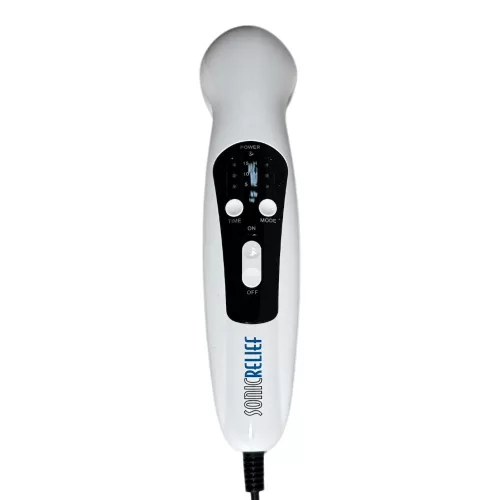 Micromassage of deeper tissues — tendons and joint capsules: ultrasound may improve local blood circulation and tissue regeneration. It is a useful complement for chronic tendon and joint problems; treatment rhythm: one treatment every other day, for up to 20-30 consecutive sessions.
Premium 400 electrotherapy device
 A four-channel device serving both pillars of the strategy at the same time: TENS to ease pain, microcurrent to support tissue regeneration, and EMS to rebuild weak muscles. If you are starting with one device, this is the most versatile choice.
Magnum 2500 magnetotherapy device
 A pulsed magnetotherapy (PEMF) device that may support tissue regeneration and bone metabolism — the latter may be a separate consideration for people taking steroids long term. You can read or watch television during treatment: the magnetic field passes through clothing.
 Steroid treatment: when is extra caution needed?
In the following conditions, steroid treatment may be continued only after careful medical assessment and with closer monitoring — if any of these apply to you, be sure to tell your doctor:
- Diabetes – steroids raise blood sugar; more frequent monitoring and, where appropriate, medication adjustment may be needed during treatment.
- Osteoporosis – steroids may accelerate bone loss further; bone-protective treatment should be considered.
- High blood pressure, heart disease – closer monitoring is needed because of fluid retention and raised blood pressure.
- Active infection – steroids weaken the immune response, so the infection may flare up or last longer.
- Stomach or duodenal ulcer – symptoms may worsen, especially when combined with anti-inflammatory medicines.
- Glaucoma – eye pressure may rise further; ophthalmological monitoring is needed.
- Pregnancy, breastfeeding – only on the basis of a clear medical indication and individual assessment.
- Oedematous condition, lymphoedema – steroids increase water retention, which may also worsen oedema.
 Important information
Starting, changing or tapering steroid treatment is always a medical decision. This article is not telling you to stop your prescribed medicine — it is encouraging you to discuss with your doctor the lowest effective dose and medically supported complementary options.
 What does the research say?
“What happens if I regularly receive steroid injections in my knee?”
A carefully designed two-year study gave a thought-provoking answer to this question. One half of the participants with knee osteoarthritis received a steroid injection into the joint every three months, while the other half received an injection given in the same way but without the active ingredient — after two years, the knee cartilage of those receiving steroids had become measurably thinner, while their pain was no better than that of the other group.2 In other words, regular, routine repetition came at the expense of the cartilage, without lasting benefit. An occasional, justified injection remains a valid tool — but the practice of “going for my usual injection every three months” deserves reconsideration based on these findings.
“Can exercise really make my knee better than an injection?”
A study published in a leading journal compared exactly this in people with knee osteoarthritis: one group received a steroid injection, while the other received treatment led by a physiotherapist. After one year, members of the physiotherapy group reported less pain and better mobility than those who received the injection.3 Exercise brought improvement more slowly — but the improvement lasted. This is the key difference: the injection treats the symptom, while exercise addresses the cause.
“Why do people say that rapid improvement can be misleading?”
Research into tennis elbow provided the clearest answer. In one study, people who received a steroid injection improved visibly faster during the first few weeks than those who received an injection without the active ingredient — but after one year, the picture had reversed: fewer people in the steroid group had fully recovered, and more than four times as many had relapsed.4 Rapid pain relief is therefore not always a sign of healing — sometimes it only masks the fact that the tissue has not recovered and that returning to full load too early causes further damage.
“Does long-term use really put so much strain on the bones?”
Unfortunately, yes — this is one of the most thoroughly documented side effects. Large review analyses show that long-term oral steroid use measurably increases the risk of bone loss and fractures even at low doses, and the process begins within the first months of treatment.1 The good news is that the risk can be managed with bone-density measurement, calcium and vitamin D supplementation, bone-protective medicine where necessary, and, importantly, regular weight-bearing exercise, which also builds bone. Discuss it with your doctor if you are facing a steroid course lasting longer than 3 months.
Practical advice for people taking steroids
The lowest dose, for the shortest possible time. This is the golden rule of steroid treatment — and you have the right to ask your doctor whether your dose follows it and when it may be time to try reducing it.
Prefer local forms where appropriate. If your problem is local — skin, one joint or the airways — local treatment (cream, injection or inhaler) generally causes fewer whole-body side effects than tablets. This is also a medical decision — but you are allowed to ask.
Attend check-ups. During long-term use, regular monitoring of blood pressure, blood sugar, the eyes and bone density is not excessive caution, but part of the treatment. Most side effects can be managed well when detected early.
Keep moving — especially because of the steroid. Long-term use may cause muscle weakness and bone loss; regular strengthening and weight-bearing exercise work against both. For someone taking steroids, exercise is not optional but vital.
Frequently asked questions
It depends on the preparation: short-acting medicines such as hydrocortisone have an effect measured in hours, while long-acting ones such as dexamethasone last 1-2 days. Depot injections given into a joint work for weeks — for example, the fast-acting component of Diprophos takes effect within hours, while its depot component is released over weeks, and most of the active ingredient leaves the body within 2-3 weeks.
No. With short, low-dose courses supervised by a doctor, side effects are uncommon and usually temporary. The risk increases with the dose and, above all, with the duration — continuous use over months is when the listed side effects really become common. That is why this article is not against steroids, but against long-term, routine use.
It depends on what you are taking them for. In autoimmune disease or severe allergy, steroids cannot be replaced — they are the basis of treatment there. For musculoskeletal problems, however, research suggests that exercise and physiotherapy may produce better long-term results, and combining the two can significantly reduce the need for steroids. Always decide about switching or reducing treatment with your doctor — never on your own.
Usually yes, and in fact it is specifically recommended — exercise counteracts muscle and bone loss. Follow two sensible rules: after a joint injection, rest the treated joint for a few days (your doctor will tell you how long), and do not let the absence of pain tempt you to return immediately to full load — relief of symptoms is not the same as healing of the tissue.
Do not throw away the prescription, but do not take the medicine silently while feeling anxious either — talk to your doctor. Ask: what happens if I do not take it? How long do I need to take it? What is the plan for reducing it? What complementary options could shorten the course? A good doctor will be happy to answer these questions. The worst decision is to stop treatment secretly — that brings the disadvantages of both worlds.
 Summary – Quick overview
Sources
- van Staa TP, Leufkens HG, Cooper C. (2002). The epidemiology of corticosteroid-induced osteoporosis: a meta-analysis. Osteoporosis International. PubMed: 12378366
- McAlindon TE, LaValley MP, Harvey WF, et al. (2017). Effect of intra-articular triamcinolone vs saline on knee cartilage volume and pain in patients with knee osteoarthritis: a randomized clinical trial. JAMA. PubMed: 28510679
- Deyle GD, Allen CS, Allison SC, et al. (2020). Physical therapy versus glucocorticoid injection for osteoarthritis of the knee. New England Journal of Medicine. PubMed: 32268027
- Coombes BK, Bisset L, Brooks P, et al. (2013). Effect of corticosteroid injection, physiotherapy, or both on clinical outcomes in patients with unilateral lateral epicondylalgia: a randomized controlled trial. JAMA. PubMed: 23385272