

When might it be a good choice?
The device includes fourteen bone pathology programs: for fractures at various sites, fractures in plaster, delayed consolidation, osteonecrosis, osteoporosis and bone edema.
The magnetic field can be applied through plaster and non-ferromagnetic fixation materials. Placement, intensity and treatment duration must be adjusted to the fracture location and medical supervision.
The osteoporosis program's factory treatment time is several hours. For large surface areas, a separately purchased Mat 100 or Total Body mattress may give more comfortable and even coverage than the flexible applicators included in the package.
The Magnum 2500 is essentially a mains-powered device. With the optional battery it can run briefly off-grid, but for long overnight programs stable mains supply is the safer option.
The eight arthrosis and arthritis programs provide specific factory settings for knee, hip, shoulder, hand and spine joint complaints among others.
The two channels allow, for example, simultaneous treatment of both knees. This reduces total treatment time, but the two-channel field intensity does not add up on a single joint.
Four orthopedic programs are available for adjunct rehabilitation after ACL surgery, cartilage lesions, knee prosthesis and hip prosthesis.
After surgery, coordinate treatment start and applicator placement with the operating physician. Not every metal implant is ferromagnetic; check implant material before treatment.
In 1+1 mode, one channel can run a knee arthrosis program while the other runs a back pain program. Duration and intensity can be adjusted separately for each channel.
This is one of the key differences of the Magnum 2500 compared with simpler two-channel models: you can run two distinct protocols, not just power two applicators.
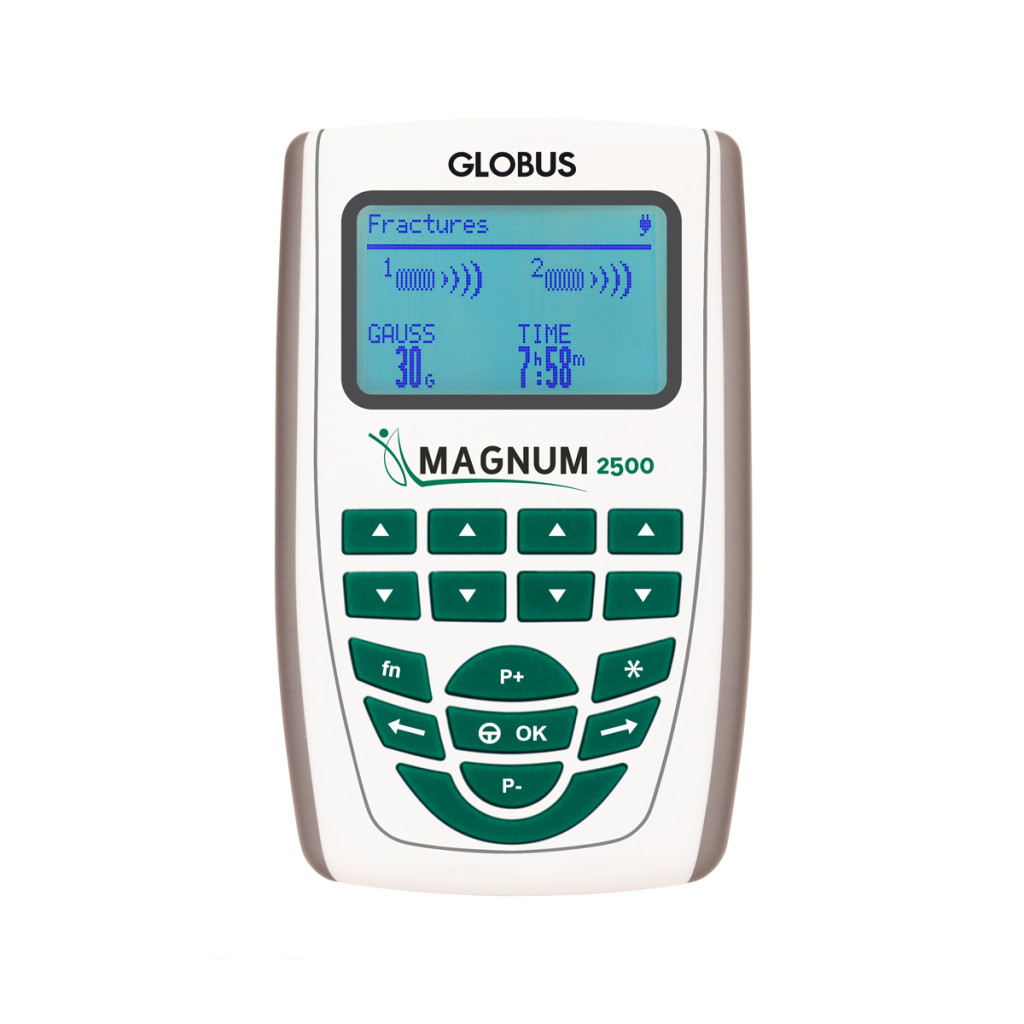
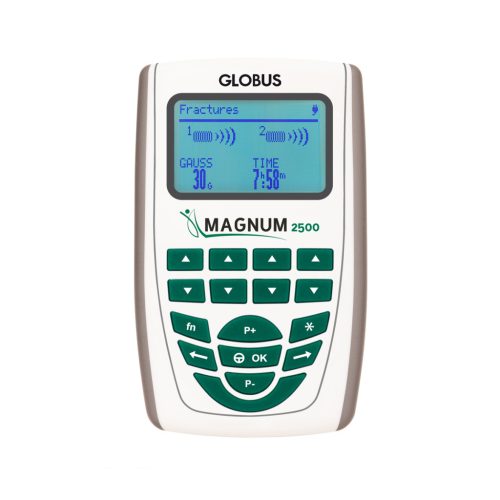
In the Programming menu you can create up to five custom programs. Easy Program makes a frequently used setting quick to start, and Last 10 stores the last ten treatments.
Do not change factory protocols on your own just because you want higher Gauss or longer treatment. Modifications should be part of a professional treatment plan.
Is the Magnum 2500 right for you?
Good choice if
you want to treat two body areas and need the option to run different programs simultaneously.
Particularly practical if
you are interested only in health and rehabilitation uses and do not need beauty programs.
Preferable when a professional sets the protocol,
because Easy Program, Last 10 and the five custom slots are useful for repeat protocols.
Not for you if
you routinely need long treatments away from mains power. The optional battery is intended for short off-grid use only.
For single small-area treatment
a cheaper single-channel model may suffice.
What are the two factory flexible applicators for?
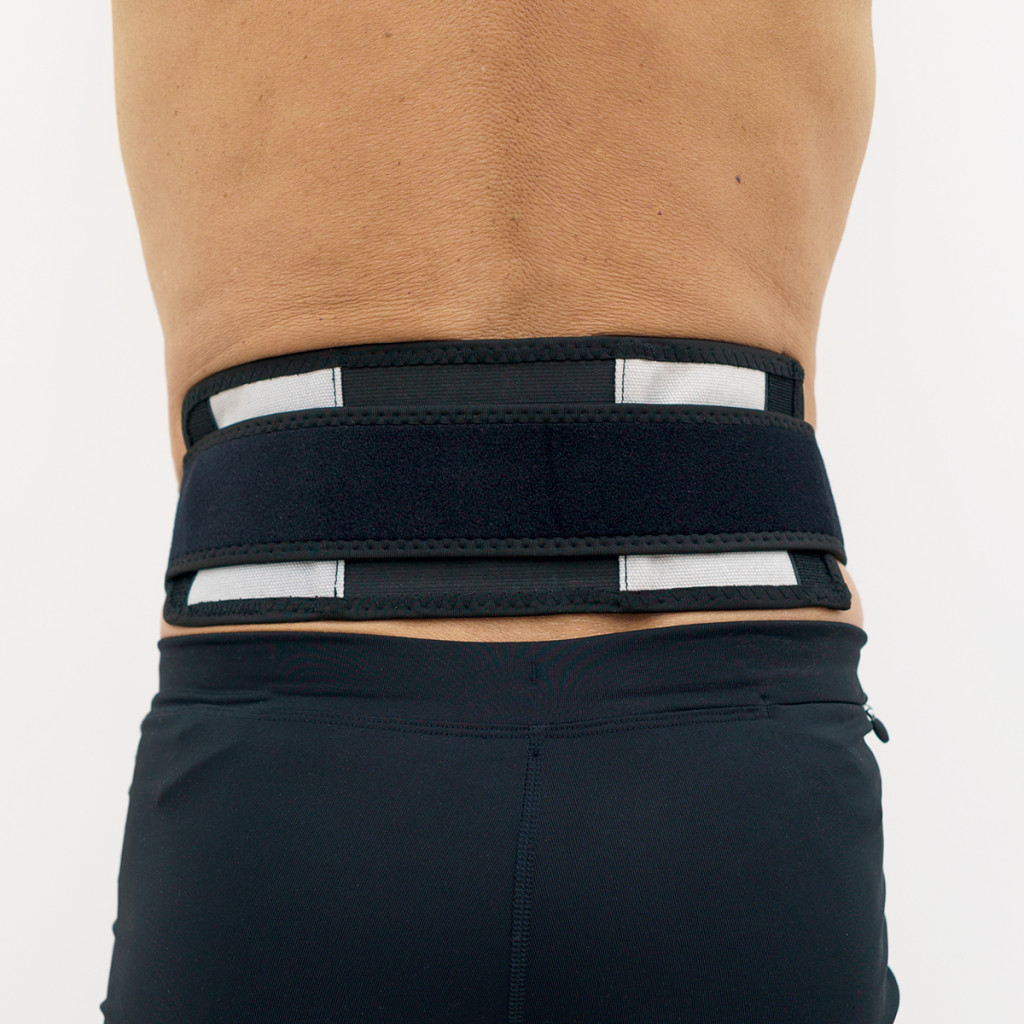
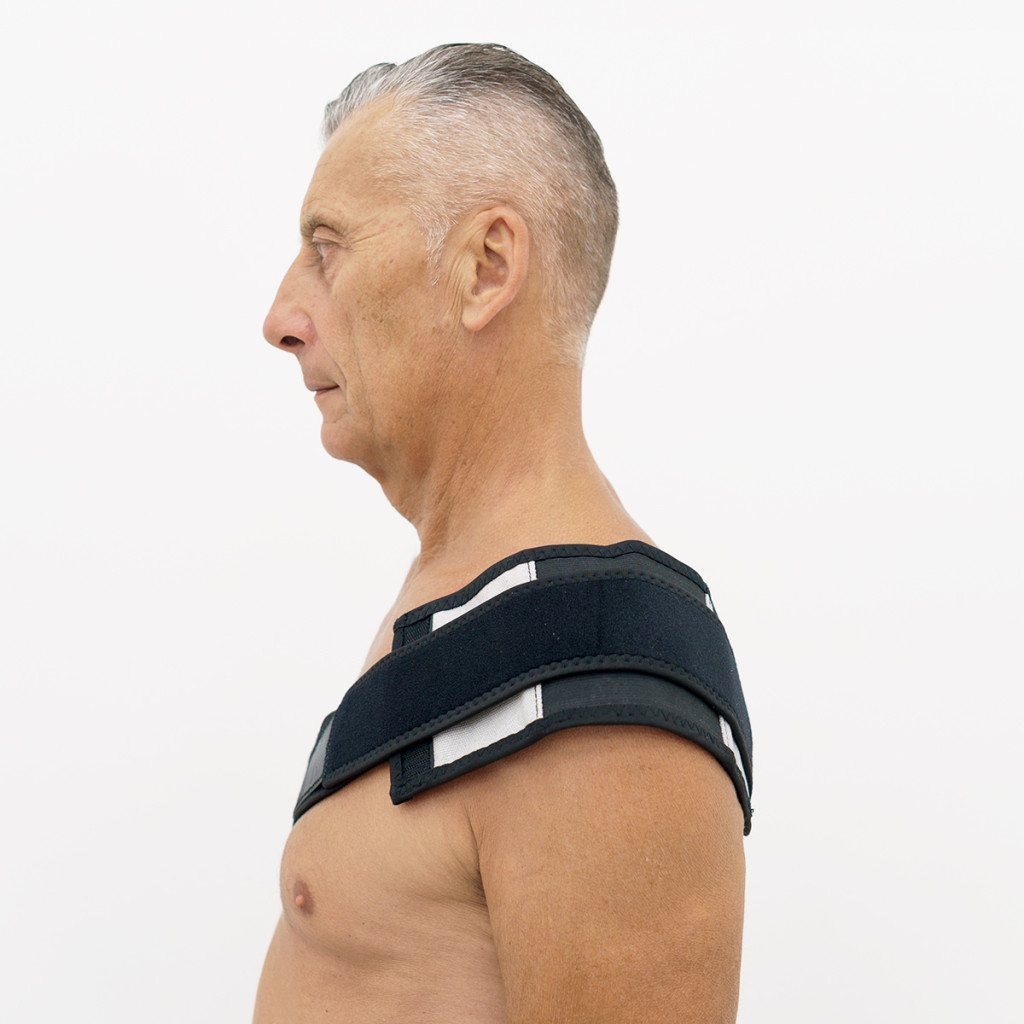
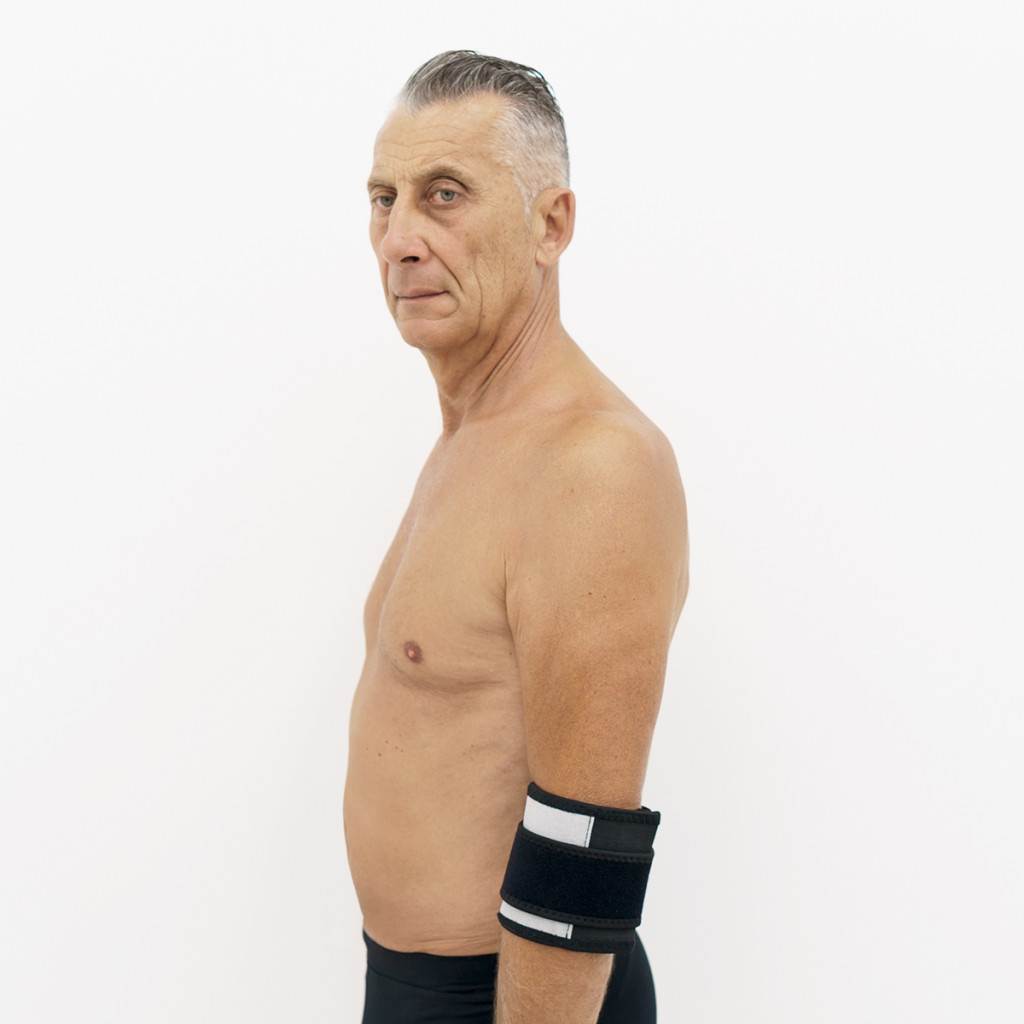
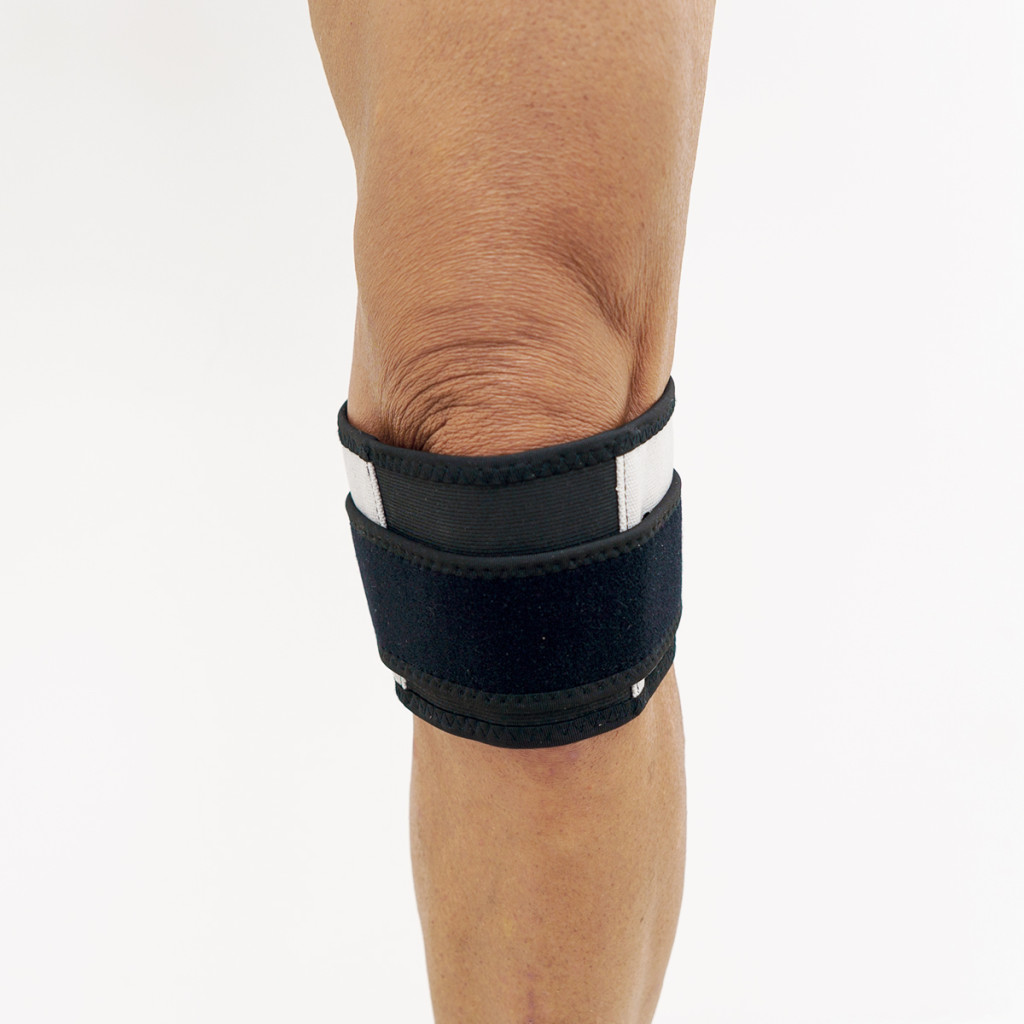
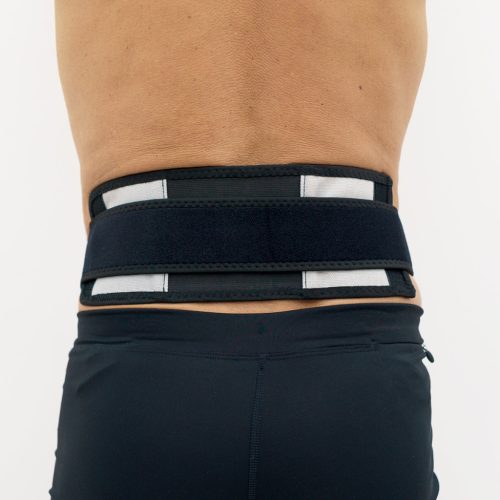
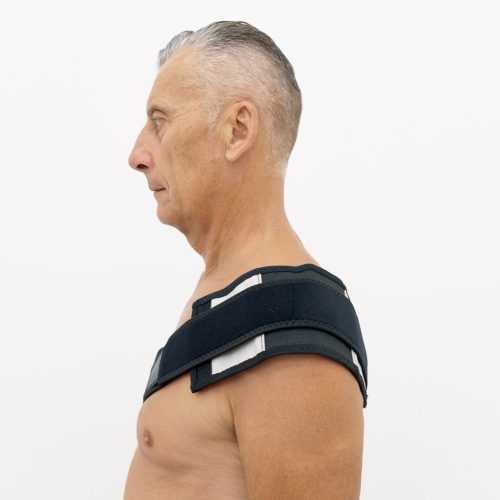
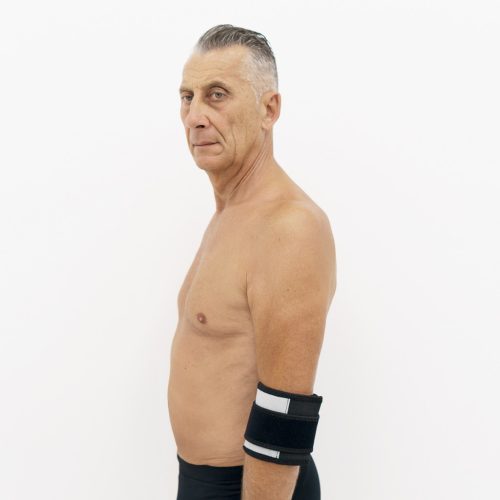
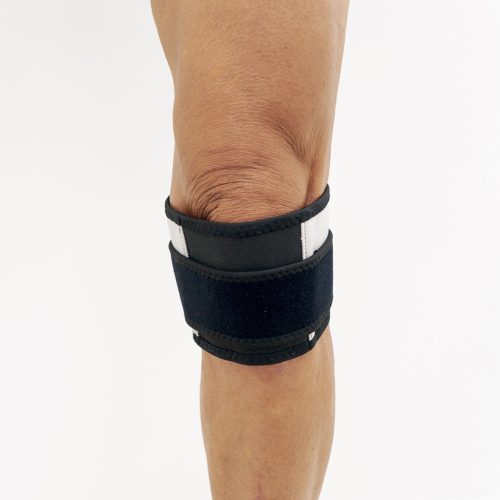
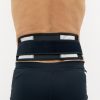
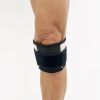
Each applicator can be bent around a knee, ankle, wrist, elbow, shoulder or smaller bone segment. The two inner coils are factory-polarised so they can be positioned facing each other when wrapping the applicator.
You can use the two applicators on separate channels for two body areas, or place them on either side of a larger bone to increase coverage.
For long treatments of the lower back, hip, femur, spine or other large areas, the Soft 4, Mat 100 or Total Body mattress gives more even and comfortable coverage.
The controller's program number alone does not solve large-area treatment: the right applicator size and coil arrangement matter just as much.
The Y-cable lets you connect two identical applicators to one channel. The channel's power is shared between the two applicators; the Y-cable does not increase the device's total output.
The Magnum 2500's 52 factory programs
The 52 programs are split into two groups: 36 medical programs and 16 open-frequency programs. The two groups differ legally and in intended use.
| Program | Field intensity (G) | Treatment time |
|---|---|---|
| Knee arthrosis Knee arthrosis |
25 G | 30 minutes, 3–4× weekly |
| Cervical arthrosis Cervical spine arthrosis |
25 G | 30 minutes, 3–4× weekly |
| Arthritis Joint inflammation |
20 G | 30 minutes, 3–4× weekly |
| Arthrosis General joint wear |
20 G | 30 minutes, 3–4× weekly |
| Hand arthrosis Small joint hand arthrosis |
40 G | 30 minutes, 3–4× weekly |
| Hip arthrosis Hip arthrosis |
20 G | 30 minutes, 3–4× weekly |
| Shoulder arthrosis Shoulder arthrosis |
20 G | 30 minutes, 3–4× weekly |
| Column arthrosis Spine small-joint arthrosis |
20 G | 30 minutes, 3–4× weekly |
| Program | Field intensity (G) | Treatment time |
|---|---|---|
| Algodystrophy – Sudeck disease Algodystrophy / Sudeck syndrome |
50 G | 4–6 hours daily |
| Back pain Back and lumbar pain |
15 G | 20–45 minutes daily |
| Joint pain Joint pain |
80 G | 15–40 minutes daily |
| Program | Field intensity (G) | Treatment time |
|---|---|---|
| Anti-inflammatory General anti-inflammatory program |
15 G | 3 hours daily |
| Epicondylitis Tennis elbow |
60 G | 30 minutes, 5× weekly |
| Epitrochleitis Golfer's elbow |
60 G | 30 minutes, 5× weekly |
| Carpal tunnel Carpal tunnel syndrome |
3–10 G | 30 minutes, twice daily |
| Shoulder tendinitis Tendon issues around the shoulder |
15 G | 30 minutes, 3–4× weekly |
| Program | Field intensity (G) | Treatment time |
|---|---|---|
| After ACL surgery After anterior cruciate ligament surgery |
15 G | 4 hours daily |
| Cartilage lesion Cartilage injury |
15 G | 6 hours daily |
| Knee prosthesis After knee prosthesis |
15 G | 4 hours daily |
| Hip prosthesis After hip prosthesis |
50 G | At least 3 hours daily |
| Program | Field intensity (G) | Treatment time |
|---|---|---|
| Fractures General fracture program |
30 G | 8 hours daily |
| Scaphoid fracture Scaphoid fracture |
30 G | 8–10 hours daily |
| Wrist fracture Wrist fracture |
30 G | 8 hours daily |
| Shoulder fracture Shoulder girdle fracture |
30 G | 8 hours daily |
| Collarbone fracture Clavicle fracture |
30 G | 8 hours daily |
| Forearm fracture Forearm fracture |
30 G | 8 hours daily |
| Pelvic fracture Pelvic fracture |
30 G | 8 hours daily |
| Tibial fracture Tibial fracture |
30 G | 8 hours daily |
| Femoral fracture Femoral fracture |
30 G | 8 hours daily |
| Delayed fracture consolidation Delayed consolidation |
20 G | 3–8 hours daily |
| Fracture with plaster Fracture in plaster |
60 G | 30 minutes daily |
| Osteonecrosis Osteonecrosis |
15 G | 8 hours daily |
| Osteoporosis Osteoporosis |
50 G | 8–10 hours daily |
| Bone edemas Bone edema |
20 G | 8 hours daily |
| Program | Field intensity (G) | Treatment time |
|---|---|---|
| Ankle sprain Ankle sprain |
2–10 G | 30 minutes daily |
| Edemas – contusions Traumatic edema and bruising |
20 G | 10 minutes, 2–3× daily |
| Program | Frequency |
|---|---|
| Multifrequency | 5–200 Hz automatic frequency change, 80-second cycle |
| Prog 10 Hz | 10 Hz |
| Prog 20 Hz | 20 Hz |
| Prog 30 Hz | 30 Hz |
| Prog 40 Hz | 40 Hz |
| Prog 50 Hz | 50 Hz |
| Prog 60 Hz | 60 Hz |
| Prog 70 Hz | 70 Hz |
| Prog 80 Hz | 80 Hz |
| Prog 90 Hz | 90 Hz |
| Prog 100 Hz | 100 Hz |
| Prog 120 Hz | 120 Hz |
| Prog 140 Hz | 140 Hz |
| Prog 160 Hz | 160 Hz |
| Prog 180 Hz | 180 Hz |
| Prog 200 Hz | 200 Hz |
Custom programming: in the Programming menu you can create up to five custom programs. The manufacturer does not recommend independent modification of factory settings without professional oversight.
 How does PEMF magnetic therapy work?
The applicator coils create a time-varying magnetic field. This reaches the treated area through clothing, dressings and plaster because these materials only minimally affect the magnetic field.
Actual exposure is determined by more than a single number. Field intensity, frequency, duty cycle, treatment time, number of coils, polarity, distance and placement all matter together.
The manufacturer specifies an average 160 Gauss per channel with the flexible applicator. “320 Gauss total” refers to the device's combined capacity with two active channels, not to a single treated area receiving 320 Gauss.
The Gauss value shown on the device display is intended per channel and per coil according to the manual. For a dual-coil flexible applicator, coil count and placement must be considered when interpreting total system exposure.
Frequently asked questions
One channel can run one program while the other runs a different program simultaneously. For example, a knee arthrosis program on one knee and a back pain program on the lumbar region.
Yes. You can create up to five fully custom programs. In addition, factory program intensity, time, frequency and duty cycle can be adjusted within the limits described in the manual.
The 36 medical programs are factory protocols assembled for specific clinical goals. The 16 open programs run fixed frequencies and are intended mainly for professional use. They should not be treated as having the same evidence level as the medical programs by default.
An optional Ni-MH 7.2 V / 1.8 Ah battery is available. The manufacturer indicates it for short off-grid use; for long programs mains power is recommended.
No. The manufacturer specifies an average of 160 G per channel with the flexible applicator. The 320 G is the summed capacity of two active channels.
Not all implants are ferromagnetic. The manufacturer forbids treatment near ferromagnetic, magnetisable implants. For prostheses, screws or plates check the material and the treatment plan with the operating surgeon.
There is no guaranteed 4–8 week window for all indications. Results depend on diagnosis, parameters, applicator placement, treatment consistency and concurrent therapy.
A clinician can limit the borrowed device to specific treatments and treatment counts. This is useful for clinic-supported home use rentals.
How to use it — five steps
1
Choose the correct magnetic applicator
Applicator size, coil count and fixation should match the treated body area. Do not try to replace a large applicator with a small one by increasing Gauss.
2
Connect applicators before switching on
You can use one or both channels. The device enables intensity settings based on connected applicators.
3
Place and secure the coils accurately
You can place the applicator over thin clothing. Around a joint, the two inner coils should ideally sit parallel and facing each other.
4
Select a factory program or a supervised custom setting
Check program name, channel, field intensity and time. In 1+1 mode verify both channels' programs.
5
Carry out the session resting
Place the central unit on a stable, ventilated surface. Do not wrap cables around the neck or limbs and do not cover the operating device.
What's included in the factory package?
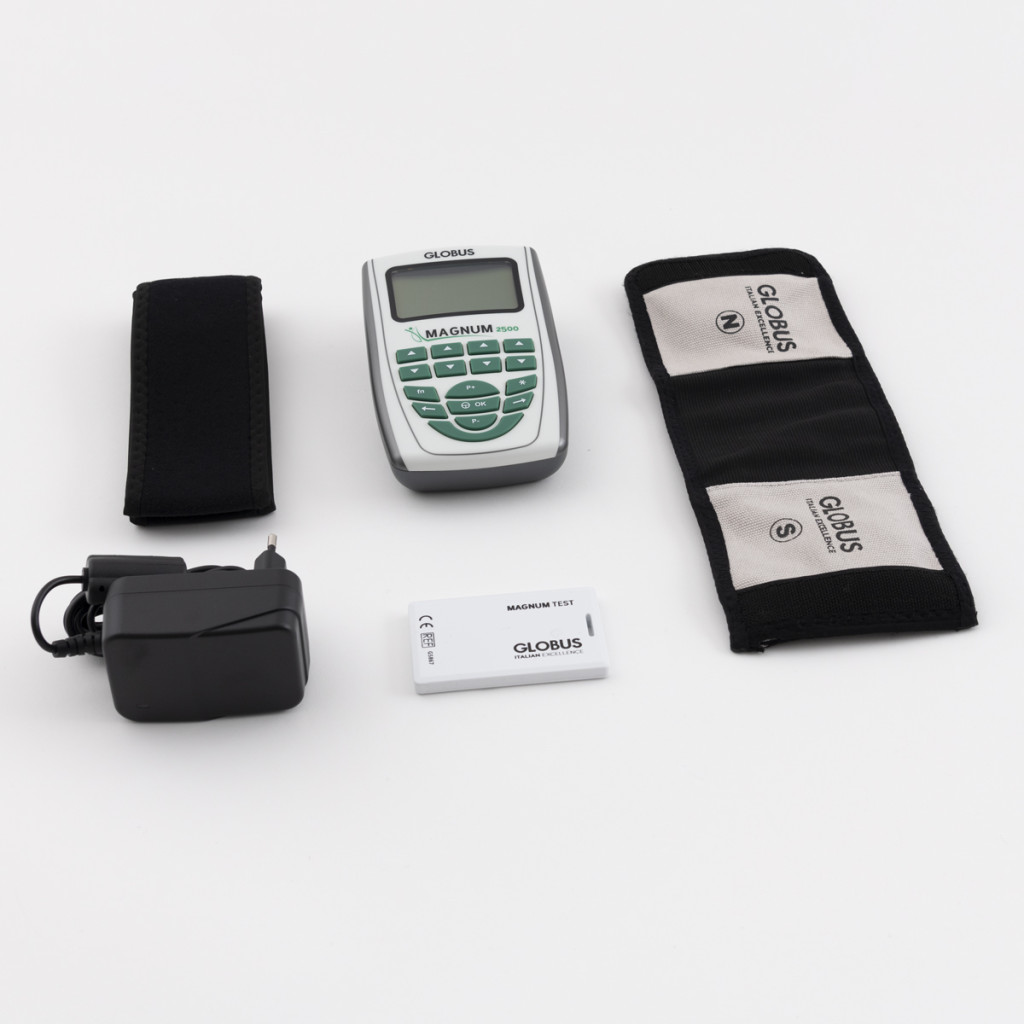
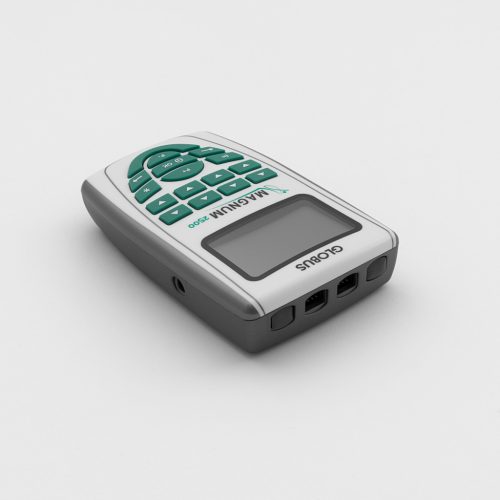
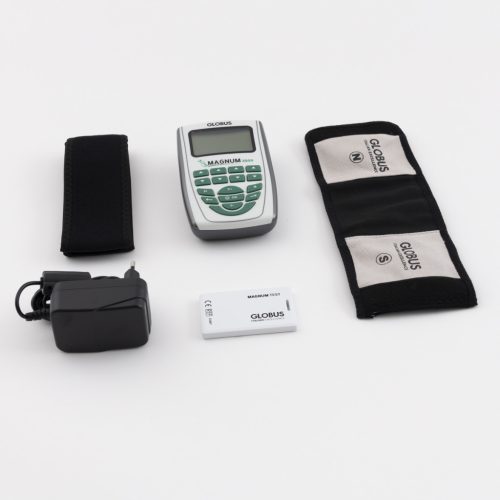
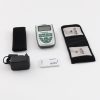
- 1 pc Magnum 2500 control unit
- 2 pcs 30 × 10 cm flexible magnetic applicators
- 2 pcs 80 × 8 cm velcro fastening straps
- 1 pc Magnum Test coil checker
- 1 pc mains adapter
- 1 pc carrying bag
- 1 pc user manual
Package check: Medimarket's current commercial package may differ from the manufacturer's standard. Always refer to the package contents shown on the product page before ordering.
When to pick this model?
Magnum 2500
– a good choice if you want to run two different programs, need custom programs and mains operation is acceptable.
Simpler Magnum model
– might be enough if you treat a single body area and do not need 1+1 mode or custom programming.
Magnum 2 Pro Drive
– preferable if built-in battery, higher per-channel field intensity and a factory package including the Soft 4 mattress are important.
Higher clinic model
– indicated when you need a larger program library, desktop design or four outputs.
Technical specifications
| Output channels | 2 independent channels |
| 1+1 function | Two different programs running simultaneously, one program per channel |
| Average field intensity with flexible applicator | 160 Gauss per channel; 320 Gauss total with two active channels |
| Frequency range | 5–200 Hz |
| Duty cycle | 5–50% depending on mode; during factory programs 10–50% in 5% steps |
| Medical programs | 36 programs |
| Open frequency programs | 16 programs |
| Custom programs | Up to 5 custom programs |
| Treatment memory | Last 10 – recalls the last ten programs |
| Easy Program | Quick start for frequently used setting |
| Rental function | Limits treatments and treatment counts for rented devices |
| Maximum timer | 9 hours 59 minutes |
| Power supply | Mains adapter; optional rechargeable battery |
| Mains adapter output | 12 V DC, 2.0 A, 24 W |
| Optional battery | Ni-MH 7.2 V / 1.8 Ah; for short off-grid operation |
| Display | 2.6 inch visible area |
| Dimensions | 160 × 100 × 35 mm |
| Weight | Approximately 280 g |
| Protection | IP20 + IP02 |
 When not to use, or when medical consultation is required?
Absolute manufacturer contraindication:
- Pacemaker or any other permanent electrical stimulator.
Situations requiring medical consultation or to be avoided:
- Cardiac arrhythmia.
- Pregnancy.
- Cancer – consult an oncologist.
- Ferromagnetic, magnetisable implant at the treatment site.
- Electrical or acoustic prosthesis, or an intrauterine device.
- Age under 15 years.
- Fever, tuberculosis, severe ischaemic condition or significant blood pressure fluctuations.
- Bleeding disorders or particularly heavy menstrual bleeding.
- Dermatitis or fungal infection at the treatment area.
- Direct treatment of the head, heart, ovaries or other sensitive organs.
- Concurrent use with TENS therapy or Holter monitoring.
 Important information
The Magnum 2500 is intended as an adjunctive treatment. It does not replace medical examination, fracture or post-op follow-up, medication, physiotherapy, compression or other necessary therapies.
The device's factory programs contain manufacturer-defined parameters. Higher Gauss, longer treatment time or higher frequency is not automatically more effective.
This description is based on the manufacturer's manual and the available scientific summaries. PEMF results are indication- and protocol-dependent; a setting shown effective in one study cannot be automatically transferred to another device or condition.
Scientific background
The evidence for PEMF treatment varies by indication. In osteoarthritis several systematic reviews found short-term pain or function improvement; there are encouraging clinical data in bone healing and bone edema. This does not mean every factory or open program of the Magnum 2500 has device-specific trials.
- Yang X et al. (2020): Effects of Pulsed Electromagnetic Field Therapy on Pain, Stiffness, Physical Function, and Quality of Life in Patients With Osteoarthritis. Physical Therapy. PubMed
- Wu Z et al. (2018): Efficacy and safety of the pulsed electromagnetic field in osteoarthritis: a meta-analysis. BMJ Open. PubMed
- Cianni L et al. (2024): Current Evidence Using Pulsed Electromagnetic Fields in Osteoarthritis: A Systematic Review. Journal of Clinical Medicine. PubMed
- Peng L et al. (2020): Effectiveness of Pulsed Electromagnetic Fields on Bone Healing: A Systematic Review and Meta-Analysis of Randomized Controlled Trials. PubMed
- Marcheggiani Muccioli GM et al. (2020): Pulsed electromagnetic fields in the treatment of bone marrow edema syndrome of the knee. International Orthopaedics. PubMed
 Magnetic therapy – guide to home use →
 Supporting fracture healing →
 Osteoporosis and home PEMF treatment →
 Knee pain treatment with magnetic therapy →
 Compare Magnum devices and applicators →