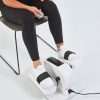
Who is the ElliptiStep for?
For chronic knee osteoarthritis (gonarthrosis), hip osteoarthritis (coxarthrosis), mild to moderate joint wear or long-term post-sports injury conditions, the elliptical movement pattern is usually well tolerated. The foot remains in contact with the pedal (no impact), the knee does not extend to a hard stop, and the range of motion cyclically and gently loads the joint – which can favor cartilage nourishment and synovial fluid flow. Exact load tolerance is always individual, so consult your physician or physiotherapist before use.
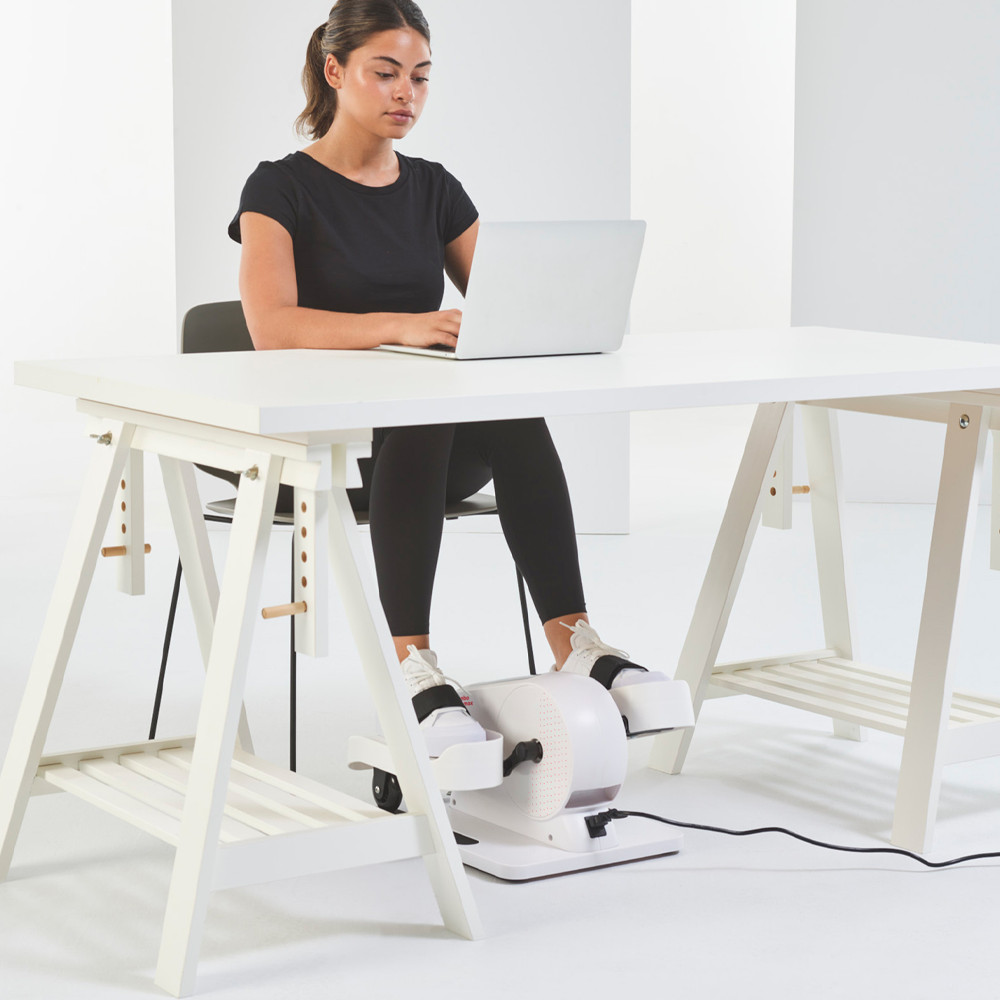
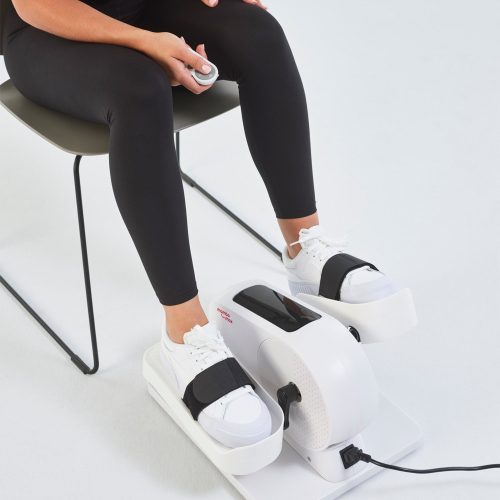
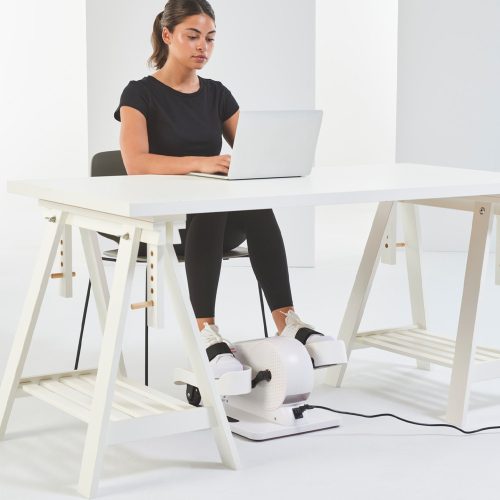
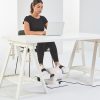
Sitting eight to ten hours a day carries cardiometabolic risk: circulation in the legs decreases, lower-body muscles weaken and glucose metabolism worsens. The ElliptiStep’s low height (28 cm) allows you to place it under your desk and keep your feet moving while typing, on calls or in meetings. The passive mode advantage is that you don't have to focus on training – the device drives the movement while you rest on it, so your concentration stays on work.
Age-related deconditioning (sarcopenia, muscle mass loss, cardiovascular decline) accelerates with time spent in a chair. Outdoor walking can be limited by balance or weather – the ElliptiStep can be used seated without fall risk. In passive mode the motor still moves the limb when the person can no longer do so actively – this gives gentle mobilisation for joints and circulation. Older users should consult their physician before use, especially with chronic heart or vascular conditions.
For post-training recovery or a morning ‘wake-up’ movement, low-intensity elliptical pedalling can support circulation and the clearance of metabolic waste from muscles. Passive mode can be especially useful after a hard training day when active work is unwanted, but gentle mobilisation aids recovery. The compact size means it can even be used beside the bed while you have your morning coffee.
After knee or hip replacement, long hospital stays or orthopaedic injury, gradual mobilisation is key. The ElliptiStep’s passive mode can help in the early phase (maintaining joint range, stimulating circulation), then active mode with increased resistance supports recovery. Timing of starting use must always be decided by the treating physician or physiotherapist – the immediate postoperative period often requires hospital physiotherapist–led protocols.
How is elliptical movement different from pedalling?
The three movement patterns – running, circular pedalling and elliptical movement – all work the leg muscles but load the joints differently:
Running: high joint impact
Each step involves ground impact, and forces many times body weight reach the joints. The knee, hip and ankle are exposed to strong cyclic impact. For healthy athletes this is training, but for people with osteoarthritis or obesity it is often uncomfortable.
Circular pedalling: gentle but more angular movement
The pedal moves in a circular path; the knee and hip flex and extend along the circle. There is no impact, but the knee can approach a hard stop and hip angle changes markedly. It is very gentle, but for some knee complaints (e.g. forward-seated position) it is not ideal.
Elliptical movement: an oval path, “like walking”
The pedal describes an oval (elliptical) path closer to natural walking or cross-country skiing. The foot stays in contact with the pedal throughout, and knee flexion remains within a moderate range – it neither extends to a hard stop nor flexes beyond about 90°. Clinical studies place elliptical training in the low-impact category, and it is often included in non-pharmacological recommendations for knee osteoarthritis.
The beneficial effect of cyclic compression on the joint
The gentle alternation of load and release can favour cartilage nutrition: during compression synovial fluid is extruded from the cartilage, while during decompression oxygen- and nutrient-rich fluid flows back in. This pumping mechanism plays an important role in cartilage metabolism – and low-intensity elliptical movement provides this pattern.
Electromagnetic brake: quiet and precise
The ElliptiStep’s electromagnetic brake (inductive principle) provides resistance without contact, without friction. There is no wear, no noise, and resistance is adjustable with high precision in both modes. This makes it a quiet, low-maintenance choice for daily home or office use.
Frequently asked questions about the ElliptiStep
All three devices can be used seated and are suitable for home rehabilitation/conditioning, but their movement patterns and target users differ:
| ElliptiStep | OxyCycle 1 | OxyCycle 3 | |
|---|---|---|---|
| Movement pattern | Elliptical (walking-like, oval) | Circular pedal | Circular pedal |
| Active mode | 9 resistance levels | magnetic resistance | adjustable resistance |
| Passive mode (motor) | 12 speed settings | none | 80 W motor |
| Joint friendliness | Especially gentle (knee, hip, ankle) | Gentle (circular) | Gentle (circular) |
| Can it be used for the arms too? | legs only | arms and legs | arms and legs |
| Size | 42×41×28 cm – most compact | 50×46×38 cm | 50×46×38 cm |
| Weight | ~7 kg – lightest | 9 kg | 8.5 kg |
| Ideal if… | Knee/hip osteoarthritis, desk use, gentle movement | Active older user, desk-worker, need for arm rehab | Post-stroke rehab, severe muscle weakness |
Choose the ElliptiStep if: you have joint complaints (mainly knee, hip), need a compact, ultra-quiet device, and only leg movement is required. If you want something to fit under a desk, this is the best option.
Choose the OxyCycle 1 if: you can pedal independently and arm movement is also important (e.g. shoulder girdle strengthening, daily activity to counteract inactivity).
Choose the OxyCycle 3 if: the user (or their caregiver) is in the early post-stroke phase, experiences severe hemiparesis and passive assistance is required, and arm rehabilitation is also important.
For most desks, yes. The ElliptiStep height is 28 cm, which fits comfortably under an average desk bottom (approx. 60–70 cm from floor), leaving enough room for knee movement. Measure ahead: subtract 28 cm from the distance between your desk underside and the floor and check whether the remainder allows your knee to move up and down (during the full cycle the knee rises about 5–10 cm). The low height is one of the ElliptiStep’s advantages over the OxyCycle models (38 cm).
Clinical guidelines recommend low-impact aerobic exercise for patients with knee osteoarthritis – and elliptical training belongs to this category. The ElliptiStep’s elliptical pattern gives cyclic, impact-free loading to the knee joint, which can benefit synovial fluid flow and cartilage metabolism. However, every osteoarthritis case is individual: during active inflammatory flares (swollen, warm knee) use is NOT recommended, and gradual progression is important. Consult an orthopaedic specialist or rheumatologist before starting to determine suitable intensity.
General recommendations for rehabilitation/fitness ergometers apply here as well: 1–2 hours per day, with sessions of 15–30 minutes. Beginners should start with 5–10 minute sessions and increase gradually. People with joint complaints (osteoarthritis, previous injury) should begin with shorter, more frequent sessions (e.g. 2×10 minutes/day) and monitor joint reaction: if increased swelling, warmth or pain occurs after exercise, reduce duration or resistance. The exact daily duration must be set individually – consult your physician or physiotherapist.
No, the ElliptiStep is specifically designed for leg movement only. The pedals’ elliptical path is intended for the feet. If you want to move your arms and shoulder girdle while seated, consider the OxyCycle 1 or the OxyCycle 3 circular-pedal models – those can be used on a table for arm cranking or on the floor for leg pedalling, with interchangeable handled hand pedals.
Stop the exercise immediately. Remove your feet from the pedals, sit calmly and see if the symptom resolves within minutes. If the joint is swollen, warm or the pain persists at rest, do not continue in the following days and consult your treating physician or physiotherapist. These may be signs of a flared joint inflammation or overload. Before restarting, reassess the appropriate intensity, resistance level and daily duration. If you experience chest pain, breathlessness or dizziness during exercise, these may be signs of a cardiovascular event – call for help or emergency services immediately.
How to use it – step by step
1
Position on a stable surface
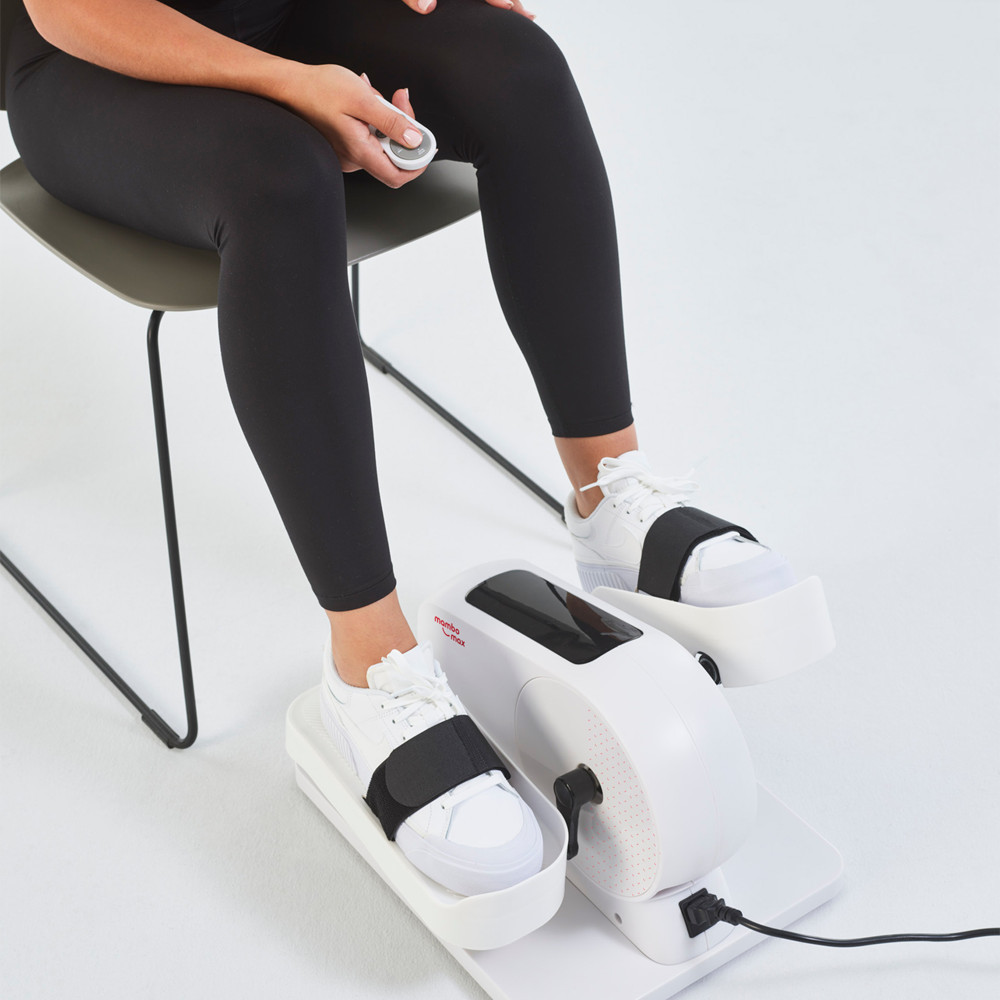
Place the device on a flat, horizontal surface – the floor, in front of a chair. Because of the low height (28 cm) it will fit under many desks; measure the clearance between your knee and the desk underside in advance. Sit comfortably with an upright back and your feet slightly forward. The distance between the pedal and your knee should allow the knee to avoid full extension during the elliptical cycle.
2
Select mode: passive or active
In passive mode the motor drives the pedals – choose a low speed (of the 12), rest on it and let the device do the work. This is ideal for starting, gentle mobilisation or tired days. In active mode the motor stops and you pedal against the chosen resistance (1–9).
3
Set speed / resistance
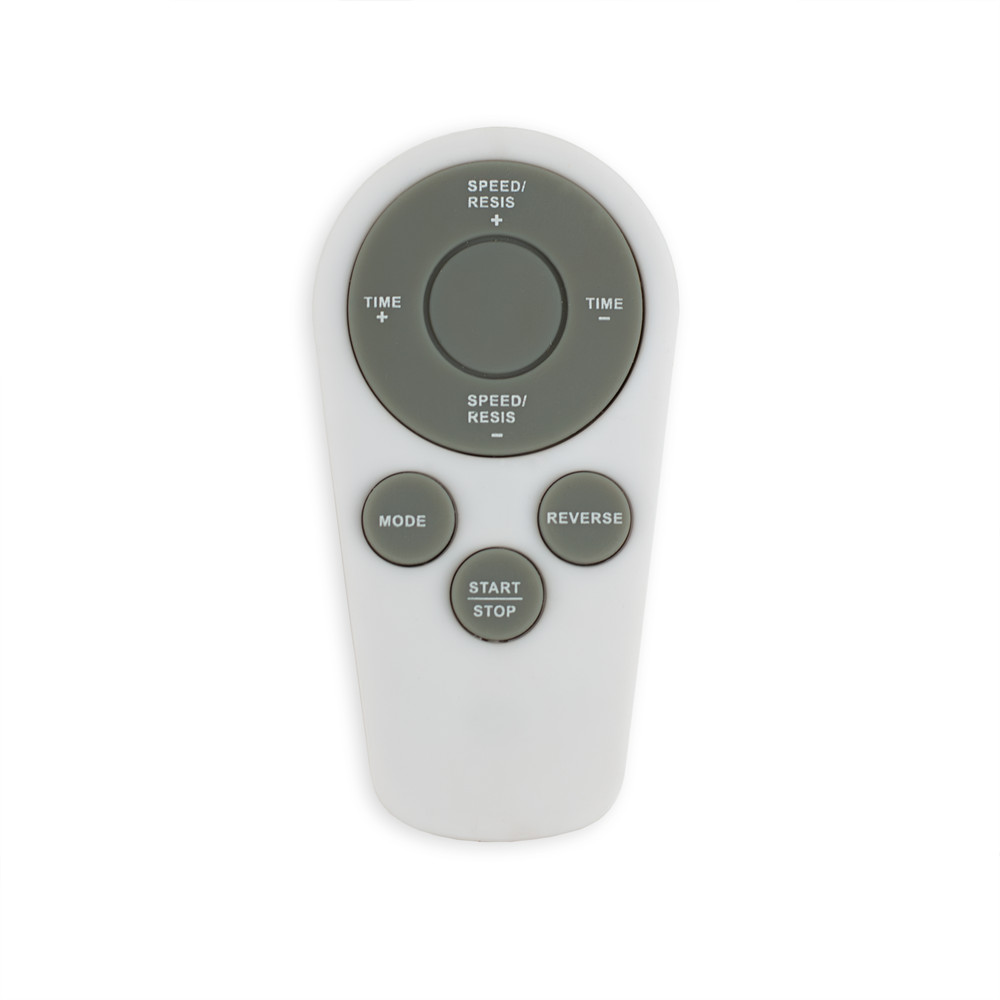
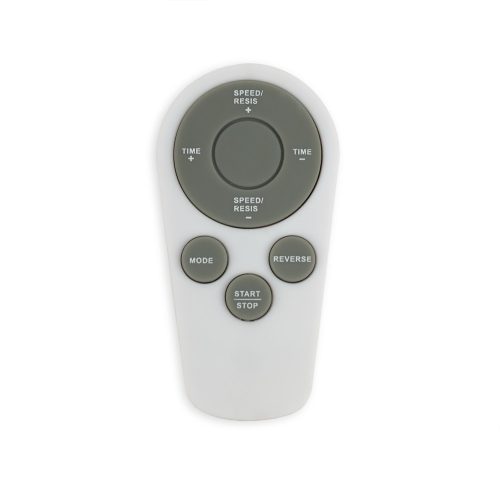
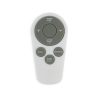
Use the control panel to adjust speed (passive mode) or resistance (active mode). Always start at the lowest setting and observe how your joints and muscles respond. If tolerated, increase gradually – typically 1–2 levels per week.
4
Alternate direction
The ElliptiStep can move forwards and backwards (motor in passive mode, you determine direction in active mode). During a session alternate direction: forward emphasises the quadriceps and hip flexors, backward targets the hamstrings and glutes. Variety gives more balanced muscle work.
5
Session duration
Beginners should start with 5–10 minute blocks, gradually increasing to 20–30 minutes. The HD display shows elapsed time, speed, virtual distance and calories. Exact daily duration is individual – for chronic patients and older users follow your physician’s or physiotherapist’s advice.
6
Cool-down at the end
In the last 2–3 minutes reduce speed or resistance so the muscles receive a gentle tapering load – this may help reduce next-day soreness. Wipe the pedals dry after use. The device can be stored without batteries; plug in to mains power before use.
What is in the box?
The box contents to get the device ready for immediate use:
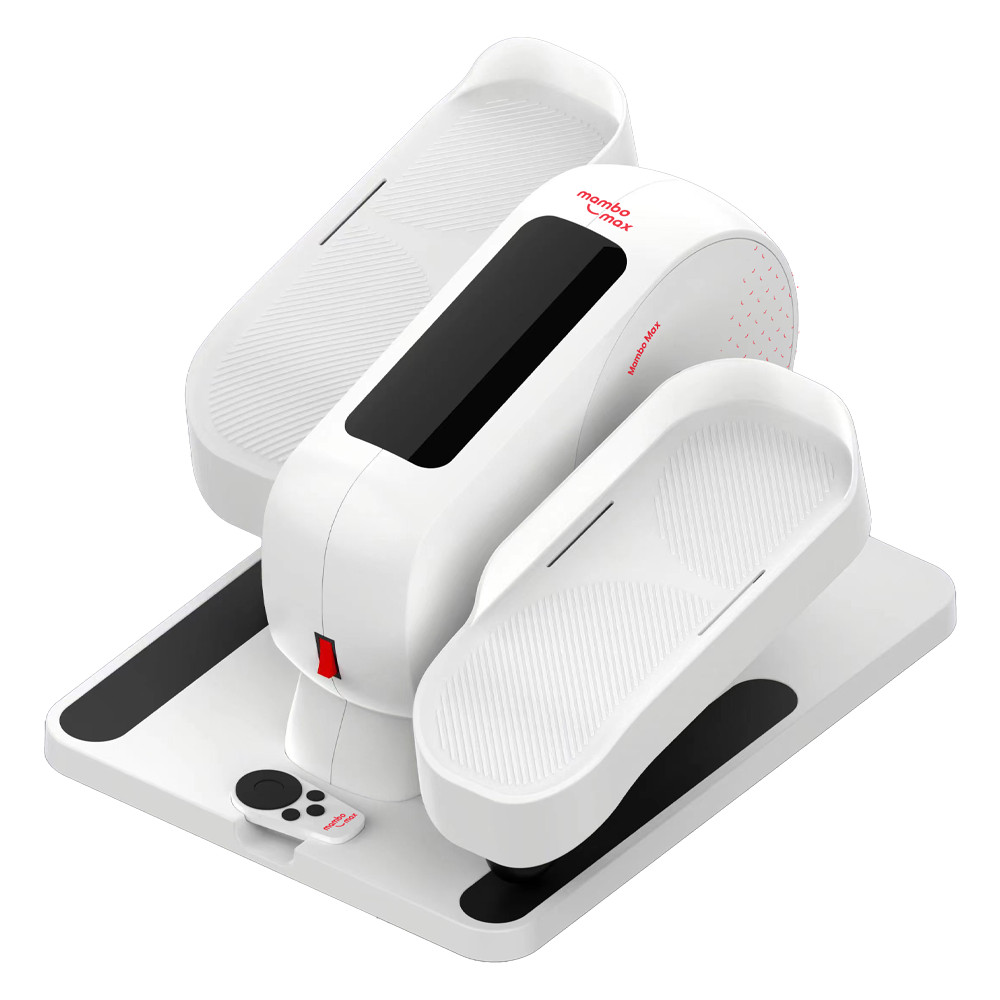
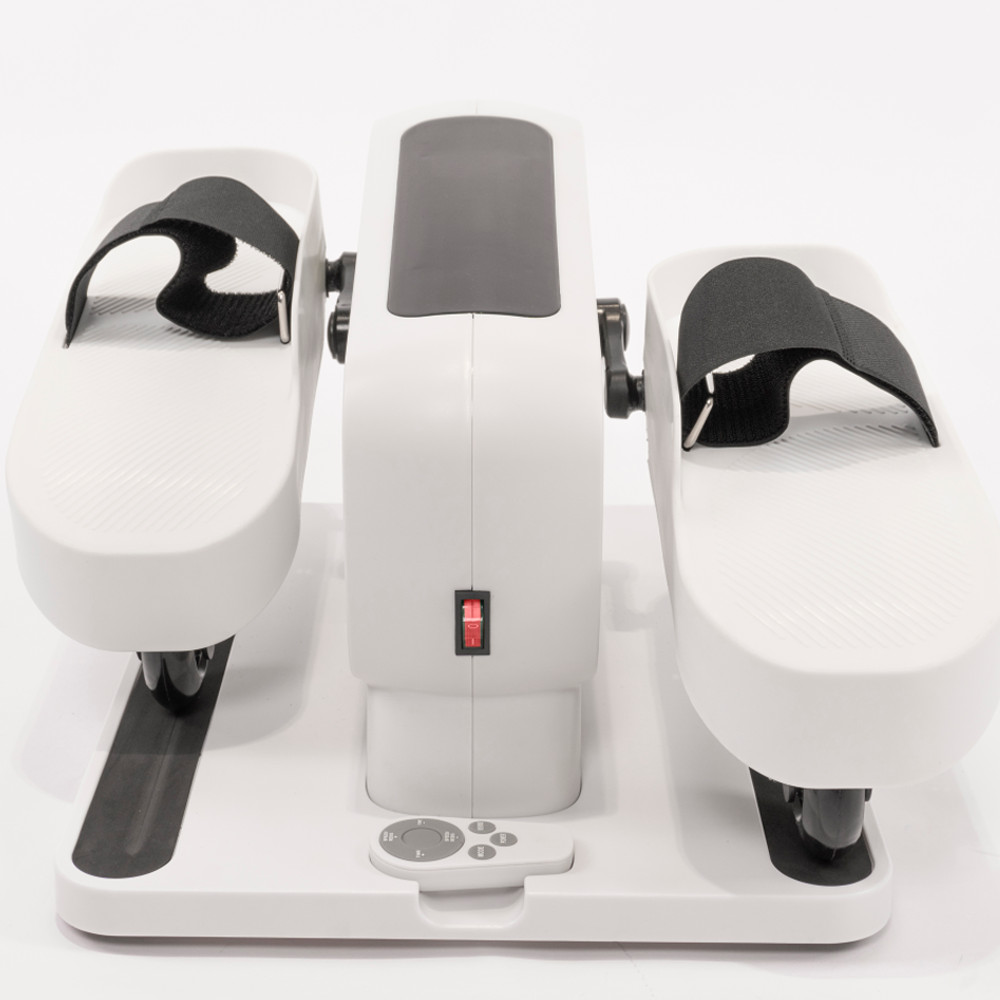
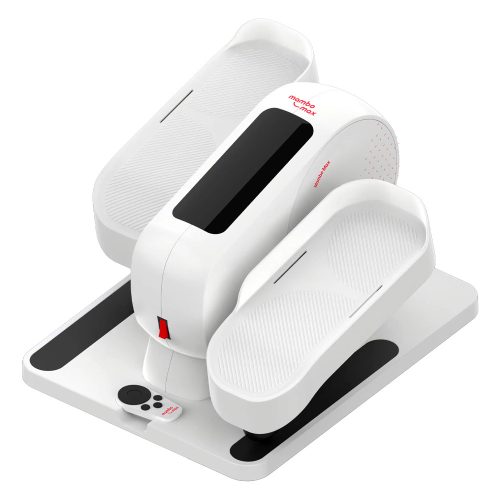
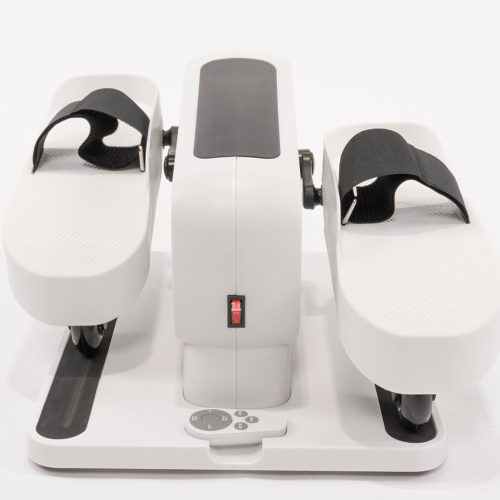
- 1 pc Mambo Max ElliptiStep seated elliptical trainer (electromagnetic brake, motor, HD display)
- 1 pc mains power cable (EU plug)
After use wipe the pedal surfaces and the display area dry. You can clean the pedals and control panel with mild soapy water; for disinfection use 70% alcohol wipes – only on surfaces, not on connectors or into the mains socket! Never open the motor housing and do not pour water over it. Unplug the mains cable for long-term storage. The electromagnetic brake system requires no maintenance.
Technical specifications
| Product type | Seated, compact elliptical trainer – passive and active modes |
| Manufacturer / Brand | MVS in Motion / Mambo Max |
| SKU | 03-070150 |
| EAN / Barcode | 5420063007153 |
| Size (W × D × H) | 42 × 41 × 28 cm |
| Weight | approx. 7 kg |
| Movement pattern | Elliptical (oval, walking-like, low-impact) |
| Modes | Passive (motor-driven) / Active (self-powered) |
| Speed settings (passive) | 12 |
| Resistance levels (active) | 9 |
| Direction | Forwards and backwards |
| Brake system | Electromagnetic (inductive, contactless) |
| Display | HD: time, speed, distance, calories |
| Power supply | Mains power (EU plug) |
| User load | 1 person at a time, legs only |
| Recommended daily use | 1–2 hours/day, 15–30 min/session |
| Intended use category | Home, office or rehabilitation use |
| Certification | CE marking (Fitness/rehabilitation equipment, MDR-compliant) |
 When NOT to use the device?
The following conditions make using the ElliptiStep strictly contraindicated without medical consultation:
- A fresh surgical wound on the affected limb, or orthopaedic surgery (knee, hip) within the last 4–6 weeks – do not use without the operating surgeon’s permission.
- Acute, flared joint inflammation (swollen, warm, painful knee or hip), active gout attack.
- Acute, confirmed deep vein thrombosis (DVT) or embolic risk.
- Fresh bone fracture, non-united fracture, unstable joint prosthesis on the used limb.
- Severe cardiovascular instability: untreated arrhythmia, unstable angina, recent myocardial infarction, uncontrolled high blood pressure – cardiologist approval required.
- Fever, acute infection or systemic inflammatory condition.
- Severe osteoporosis – only with medical recommendation.
- Severe balance disorder if the user cannot sit safely during the session – only under supervision.
- Pregnancy – only with permission from the treating obstetrician.
- Children under 14 years – only under the guidance of a paediatrician or paediatric rehabilitation specialist.
Not sure? With chronic joint complaints (osteoarthritis, rheumatoid arthritis), prior knee/hip surgery, cardiovascular disease or any medication use, always consult your treating physician or physiotherapist before use – the appropriate mode, speed, resistance and daily duration must be individualized.
 Important information
The Mambo Max ElliptiStep is classified as a fitness/rehabilitation category device for home, office or rehabilitation use. The information here is general and does not replace medical or physiotherapy advice. A precise rehabilitation or exercise program (mode, speed, resistance, direction, daily duration) should always be based on an individual assessment carried out by the treating physician, orthopaedic specialist, rheumatologist or physiotherapist – especially for people with chronic joint complaints, older users and those recovering from surgery.
Long-term improvement is achieved gradually with regular use – do not expect immediate effects and do not exceed the recommended daily duration. If any unusual symptoms occur (severe joint pain, swelling, warmth, chest pain, breathlessness, dizziness) stop exercising immediately and seek medical advice.
The scientific references cited support the general rehabilitative and conditioning use of elliptical training and its role in managing joint complaints; specific use must always follow individual medical assessment.
Scientific references
Low-impact elliptical training’s rehabilitative application is supported by peer-reviewed studies and clinical trials. The following sources provide an overview:
- Bricca, A. et al. (2019). Impact of exercise on articular cartilage in people at risk of, or with established, knee osteoarthritis: a systematic review of randomised controlled trials. British Journal of Sports Medicine, 53(15):940-7. PubMed
- Lu, Y.-C. et al. (2015). Effects of Off-Axis Elliptical Training on Reducing Pain and Improving Knee Function in Individuals With Patellofemoral Pain. Clinical Journal of Sport Medicine. PubMed
- Ren, Y. et al. (2014). Real-time knee adduction moment feedback training using an elliptical trainer. IEEE Transactions on Neural Systems and Rehabilitation Engineering. PubMed
- ClinicalTrials.gov (2023). Effects of Low Impact Elliptical Training on Knee Osteoarthritis Outcomes – randomized controlled trial, NCT05977374. PubMed
- Owen, N. et al. (2010). Too much sitting: the population-health science of sedentary behavior. Exercise and Sport Sciences Reviews. (On cardiometabolic risks of sedentary lifestyle and the role of interrupted sitting). PubMed
 OxyCycle 1 active circular pedal trainer (arms and legs) →
 OxyCycle 3 active–passive model (motorised, for post-stroke rehab) →
 More rehabilitation ergometers →
 Rehabilitation devices category →
 Ergometer in home rehabilitation – guide →