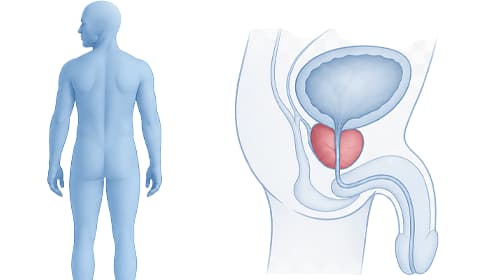

 What is penile rehabilitation and why is it important?
Penile rehabilitation is a structured therapeutic strategy carried out according to a medical protocol, aiming to preserve the structural integrity of erectile tissue during the postoperative nerve recovery period. Nerve regeneration can take months — in some cases 1–2 years. During this time, sustained hypoxia (lack of oxygen) acting on the tissue can cause structural damage that early intervention may help mitigate.
The vacuum erection device (VED) is one of the most studied non-invasive methods for this indication. The European Association of Urology (EAU) guidelines on sexual and reproductive health list it as a conservative treatment option for both erectile dysfunction and Peyronie’s disease.11
 Key idea
Erectile problems after prostatectomy are primarily of neural and tissue origin — they are not a sign of psychological weakness. The essence of penile rehabilitation is to actively maintain cavernosal tissue oxygenation and structural elasticity during nerve recovery so that when the nerves heal, the tissue is ready.
If you would like to read about the general complications of prostate surgery first, I recommend my overview article on prostatectomy complications and treatment options.
What happens in the penis after surgery?
To understand why early intervention is important, it is worth examining what happens at the tissue level if the penis does not receive regular mechanical stimulation in the months after surgery.
Loss of spontaneous and nocturnal erections reduces regular blood supply to the corpora cavernosa. This leads to chronic cavernosal hypoxia — the tissue does not receive sufficient oxygen on a regular basis.
Experimental studies have shown that chronic hypoxia can trigger the following changes:8,9
- Smooth muscle cell apoptosis — the erectile tissue loses elastic muscle cells
- Collagen deposition — pliable tissue is replaced by stiff connective tissue
- Development of cavernosal fibrosis
- Penile shortening — due to loss of tissue elasticity
These changes may contribute to persistent erectile dysfunction even after nerve injury heals.4,5
The vacuum erection device (VED) creates negative pressure around the penis, which initiates arterial inflow and cavernosal engorgement. This mechanism can help increase intracavernosal oxygenation.3,9
Intermittent (repeated) oxygenation provided by VED therapy may counteract the structural changes associated with hypoxia — this is supported by animal studies.8,9
In preclinical studies, repeated mechanical engorgement reduced smooth muscle loss and veno-occlusive dysfunction in an animal model of cavernosal nerve injury.8,9 Clinical rehabilitation protocols aim to achieve this effect through short daily sessions.1,2
Repeated erection cycles provide tunica albuginea stretching and mechanical conditioning, which have been associated with preservation of penile length during active therapy.2,5
Controlled trials and meta-analyses indicate that early daily VED therapy is associated with reduced postoperative penile shortening and improved IIEF (International Index of Erectile Function) erectile scores during active treatment.2,4,5
It is important to note, however, that while VED can help with erectile rigidity during active therapy, the return of spontaneous erectile function primarily depends on natural nerve regeneration — long-term spontaneous effects beyond the treatment period are less well established.3,4,10
VED-based penile rehabilitation protocol — what does the literature show?
Based on published clinical trials, the following rehabilitation parameters have been documented in the scientific literature. These are not strict rules but ranges used in studies — the specific protocol should always be determined by the treating physician.
| Parameter | Typical range reported | Main references |
|---|---|---|
| Start of therapy | 4–8 weeks after surgery | Raina 2006, Köhler 2007 |
| Frequency | 5–7 sessions per week | Yuan 2010, Köhler 2007 |
| Session duration | ~5–15 minutes | Raina 2006, Köhler 2007 |
| Program length | ~3–9 months | Liu 2017, Qin 2018 |
| Applied pressure | Gradually increased negative pressure — to full but painless engorgement (per IFU) | Köhler 2007 |
| Constriction ring | Generally not used during the rehabilitation phase | Raina 2006, Raheem 2010 |
 Important
The above parameters reflect ranges documented in the scientific literature. The actual rehabilitation strategy should always be defined by the treating physician — urologist or andrologist — taking individual factors and EAU guidelines into account. The device manufacturer’s instructions for use (IFU) are mandatory regarding technical limits.
In which conditions is VED-based penile rehabilitation appropriate?
After radical prostatectomy, the cavernosal nerves that regulate erection may suffer temporary or permanent injury. Erectile dysfunction is one of the most common long-term complications. VED-based rehabilitation is the best-documented application in this indication.
Raina and colleagues (2006) reported in a prospective study of 109 patients that daily ~10-minute VED therapy facilitated early return to sexual activity. Liu et al.’s (2017) systematic review and meta-analysis documented improvements across several structured daily protocols during active treatment.1,4
You can read in detail about drug-free treatment options for erectile dysfunction in this article.
In Peyronie’s disease, a fibrotic plaque forms in the penis, causing curvature and, in more advanced cases, pain. VED-based mechanical conditioning is also a researched method in this indication.
Raheem et al. (2010) in a study of 31 patients documented penile-straightening effects and curvature reduction with daily ~10-minute vacuum pump therapy.6 Mortensen et al. (2021) ran a randomized trial in which both groups performed daily 10–15 minute, 6-month vacuum pump manipulation (the study tested an add-on shockwave therapy) — this also indicates that vacuum pump conditioning may be part of Peyronie treatment plans.7
You can read more about Peyronie’s disease in this detailed article.
VED-based rehabilitation protocols were primarily developed for post-prostatectomy states, but their use may be considered for cavernosal nerve injury from other causes (e.g., pelvic trauma, other pelvic surgeries) — under the guidance of and after individual assessment by the treating physician.
You can read more about the general consequences of nerve injury and the chances of recovery in this article.
 Home device for penile rehabilitation
The Rehabi-PVT vacuum penis trainer available on Medimarket is specifically designed to support penile rehabilitation after prostatectomy and the treatment of Peyronie’s disease.
Rehabi-PVT vacuum penis trainer
Manually operated vacuum pump for rehabilitation of erectile dysfunction after prostate surgery and for the treatment of Peyronie’s disease.
- Rehabilitation device to be used with medical indication
- Non-invasive, drug-free approach
- Application area consistent with EAU guidelines
- Designed for VED-based rehabilitation protocols
Requires medical decision
The rehabilitative use of vacuum erection devices should be based on medical indication, ideally involving a urologist or andrologist. The device does not replace medical treatment and regular specialist follow-up — it is a complement.
 Before you start — who should not use it?
According to the EAU guidelines and clinical practice, VED therapy should be used with caution or only under medical supervision in the following cases:11
- Anticoagulant therapy or bleeding disorder — due to increased risk of bruising and hematoma
- Severe cardiovascular disease — where sexual activity itself is contraindicated
- Conditions at risk of priapism — for example sickle cell anemia, leukemia
- Reduced penile sensation — decreased pain perception may prevent warning signals to excessive vacuum
- Active genital infection, inflammation or open wound — until the treatment area is fully healed
Always consult a physician
Before starting VED-based penile rehabilitation, discuss it with your treating physician, urologist or andrologist. Follow the device manufacturer’s instructions for use (IFU) regarding technical parameters. Stop treatment immediately if you experience significant pain or discoloration.
VED as part of a multimodal rehabilitation approach
VED-based penile rehabilitation may be more effective when combined with other treatment methods — only on the decision of the treating physician. Current EAU guidelines list the following combinations as possible options:11
| Complementary treatment | Role in rehabilitation |
|---|---|
| PDE5 inhibitors (e.g., sildenafil, tadalafil) | May increase cavernosal blood flow and help restore nocturnal erections |
| Intracavernosal injection therapy | Pharmacologically induces erections if VED alone is insufficient |
| Pelvic floor physiotherapy | Strengthening pelvic muscles, important for both incontinence and erection |
| Psychosexual counseling | Addresses psychological factors affecting sexual function and relationship aspects |
The “fourth therapeutic pillar"
Penile rehabilitation is a good example of what I call the “fourth therapeutic pillar": the active, regular, protocol-based use of a home medical device to support recovery — alongside, not instead of, medication, medical procedures and lifestyle changes.
 Scientific evidence
VED-based penile rehabilitation is supported by preclinical studies, prospective clinical studies, randomized trials and systematic meta-analyses.
Raina et al. (2006) — Prospective study (n=109)
After prostatectomy, early daily VED therapy facilitated early return to sexual activity and proved more favorable than late initiation.1
Köhler et al. (2007) — Pilot study (n=28)
Daily early postoperative VED therapy contributed to preservation of penile length after prostatectomy, supporting the importance of early intervention.2
Liu et al. (2017) — Systematic review and meta-analysis
A meta-analysis reviewing several structured daily protocols documented erectile improvement during active VED therapy in post-prostatectomy rehabilitation.4
Qin et al. (2018) — Systematic review and meta-analysis
Early vacuum therapy improved IIEF scores and supported preservation of penile length after prostatectomy.5
Raheem et al. (2010) — Peyronie’s disease (n=31)
Daily ~10-minute vacuum pump therapy produced penile-straightening effects and reduced curvature in Peyronie’s disease.6
Preclinical evidence — anti-hypoxia mechanism
In animal models of cavernosal nerve injury, vacuum therapy prevented veno-occlusive dysfunction and penile shortening, an effect linked to improved cavernosal oxygenation (anti-hypoxia).8,9
Zhang et al. (2025) — Meta-analysis, refractory ED
A meta-analysis examined VED efficacy in difficult-to-treat erectile dysfunction — demonstrating a favorable safety profile with structured parameters.10
The EAU guideline position
The EAU guidelines on sexual and reproductive health list VED therapy as a conservative treatment option for both erectile dysfunction and Peyronie’s disease.11
Practical tips for correct use
The following techniques are regularly included in published clinical protocols — these were also used by study groups:1,2
Correct technique step by step
- Use a water-based lubricant to ensure an airtight seal
- Make sure the cylinder size is appropriate — the rim should seal securely
- Increase negative pressure gradually — never abruptly
- Goal: achieve full but painless erection
- Use short inflation–release cycles instead of one long period
- Avoid excessive vacuum levels — stay within recommended limits
- Stop treatment immediately if you experience significant pain, discoloration or numbness
Rehabilitation vs. erection-maintaining use
In rehabilitative applications, the constriction ring is not used in most protocols. The goal is tissue oxygenation and conditioning, not maintaining an erection. The constriction ring is intended to sustain an erection for sexual activity — which is a different indication.1,6
Frequently asked questions
Most published protocols recommend starting 4–8 weeks after surgery — once the acute postoperative period has ended and the treating physician has approved it. Early intervention is important because tissue hypoxia can begin within the first days after loss of erections. The exact timing should always be determined by your urologist.1,2
The goal of penile rehabilitation is to preserve tissue structure and condition erectile tissue during the regeneration period — not to "restore" erections by itself. Return of spontaneous erectile function primarily depends on the extent of nerve injury and its recovery, which varies widely between individuals. VED can help with rigidity during active therapy, but long-term spontaneous effects are less well established in studies.3,4,10 Discuss realistic expectations openly with your urologist.
The majority of rehabilitation protocols do not use a constriction ring. The rehabilitation goal is intermittent oxygenation and tissue conditioning — retaining blood in the penis is not necessary for this. The constriction ring is intended to maintain an erection for sexual activity, which is a different indication.1,6
Yes, VED is a researched method in Peyronie’s disease. Raheem et al. (2010) documented penile-straightening effects and curvature reduction with daily ~10-minute vacuum pump therapy.6 The EAU guidelines include VED therapy as a conservative option for Peyronie’s disease as well.11
Published protocols report program lengths between ~3–9 months, depending on the indication and patient responsiveness. Longer programs (6+ months) generally show more consistent results. The specific duration should be determined by the treating physician — guided by the process of nerve regeneration.4,5
Clinical studies and systematic reviews report a favorable safety profile with structured parameters.4,5,10 The most common side effects are petechiae (small skin bruises) and transient discomfort, which can be minimized with correct technique. Consultation is mandatory before starting treatment in the presence of the contraindications listed above.
 Summary — Quick overview
Sources
- Raina R, Agarwal A, Ausmundson S, et al. (2006). Early use of vacuum constriction device following radical prostatectomy facilitates early sexual activity and potentially earlier return of erectile function. Int J Impot Res. 18(1):77–81. PubMed: 16107868
- Köhler TS, Pedro R, Hendlin K, et al. (2007). A pilot study on the early use of the vacuum erection device after radical retropubic prostatectomy. BJU Int. 100(4):858–862. PubMed: 17822466
- Yuan J, Hoang AN, Romero CA, et al. (2010). Vacuum therapy in erectile dysfunction—science and clinical evidence. Int J Impot Res. 22(4):211–219. PubMed: 20410903
- Liu C, Lopez DS, Chen M, Wang R. (2017). Penile Rehabilitation Therapy Following Radical Prostatectomy: A Meta-Analysis. J Sex Med. 14(12):1496–1503. PubMed: 29122494
- Qin F, Wang S, Li J, Wu C, Yuan J. (2018). The Early Use of Vacuum Therapy for Penile Rehabilitation After Radical Prostatectomy: Systematic Review and Meta-Analysis. Am J Mens Health. 12(6):2136–2143. PMC6199422
- Raheem AA, Garaffa G, Raheem TA, et al. (2010). The role of vacuum pump therapy to mechanically straighten the penis in Peyronie's disease. BJU Int. 106(8):1178–1180. PubMed: 20438558
- Mortensen J, Storgaard M, Kroyer Nielsen T, et al. (2021). A Randomized, Single-Blinded Clinical Trial Evaluating the Effect of Extracorporeal Shockwave Treatment as Add-On Therapy to Vacuum Erectile Device on Peyronie's Disease. Res Rep Urol. 13:715–722. PubMed: 34557454
- Yuan J, Lin H, Li P, et al. (2019). Vacuum therapy prevents corporeal veno-occlusive dysfunction and penile shrinkage in a cavernosal nerve injured rat model. Asian J Androl. PubMed: 31249269
- Welliver RC, Mechlin C, Goodwin B, et al. (2013). Penile rehabilitation with a vacuum erectile device in an animal model is related to an antihypoxic mechanism: blood gas evidence. PubMed: 23564044
- Zhang F, Luo Z, Xue Q, et al. (2025). Efficacy of vacuum erectile device in refractory erectile dysfunction: a systematic review and meta-analysis. Int J Impot Res. PubMed: 40542251
- European Association of Urology. EAU Guidelines on Sexual and Reproductive Health. uroweb.org