

 What can you expect after prostate surgery?
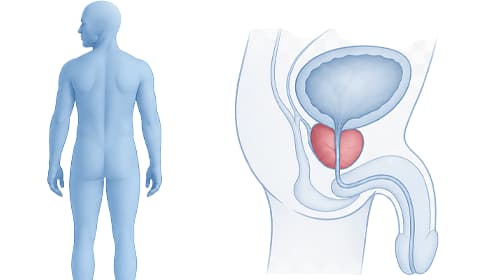
Complete removal of the prostate (radical prostatectomy) is one of the most common, life-saving treatments for localised prostate cancer. After surgery, however, two problems may occur that are often only briefly discussed in hospital, even though they can affect everyday life for months: urinary incontinence and erectile dysfunction. I wrote this article so that you can clearly understand what happens in your body, what may resolve on its own, what you need to work on — and how.
The logic is the same as with other types of rehabilitation: the surgeon has done their job, you return home quickly from hospital, but most of the recovery takes place afterwards, with your daily participation and effort — and timing matters. With both complications, there is a “window” when rehabilitation can provide the greatest benefit.
 Key point
Incontinence and erectile dysfunction after surgery are not permanent in most men — but improvement comes not from passive waiting, but from targeted rehabilitation. Pelvic floor exercises improve urinary control, while vacuum “training” started after surgery can support the return of erectile function. Recovery from the nerve injury that commonly occurs during surgery may take 1-2 years. Rehabilitation programmes give you a better chance — don’t simply wait and hope that it will “go away”.
 Why do these complications develop?
Two sphincters are responsible for urinary continence. The internal, involuntary sphincter is removed together with the prostate — after surgery, only the external, voluntary sphincter and the pelvic floor muscles hold back the urine. These muscles were previously a “reserve team”; now they become the main players — but they are weak, and the nerve fibres supplying them may also have been damaged around the time of surgery. This is why urine leaks when you cough, sneeze or lift something (stress incontinence). The good news is that the muscle can be trained, and most men experience significant improvement within 3-12 months.
The nerves responsible for erections run directly alongside the prostate. Despite nerve-sparing technique, they are exposed to pressure, pulling and heat during surgery, and their function may “switch off” for months — regeneration may take 1-2 years. During this time, the penis has no spontaneous (night-time) erections, the corpora cavernosa do not receive oxygen-rich blood, and persistent oxygen deprivation (cavernous hypoxia) slowly replaces the flexible smooth muscle with connective tissue: scarring and shrinkage develop. This is the real target of rehabilitation: you cannot speed up nerve healing, but you can protect the tissue until the nerve returns.
With both complications, the first few months are the most valuable. Pelvic floor exercises can begin immediately after the catheter is removed — ideally, you will have learned them before surgery. According to research, vacuum penile rehabilitation should begin in the 4-8th week after surgery: those who started early preserved penile length better and recovered function earlier than those who waited six months.3,4 The final return of erections depends on the extent of nerve injury — nobody can guarantee this — but the condition of the tissue that the returning nerve “finds waiting for it” depends largely on you.
Overview of the complications — what resolves on its own and what requires effort?
The complications of the acute hospital phase (bleeding, infection, urinary retention, blood clots and anastomotic leakage) are managed by the hospital team — at home, you need to know their warning signs (see the warning below). Long-term complications are the ones you work on:
| Complication | How common is it, and how long does it last? | What should you do? |
|---|---|---|
| Urinary incontinence | Initially affects most men; improves significantly in the great majority within 3-12 months, but persists in a small proportion | Pelvic floor exercises every day, with biofeedback/stimulation if needed; a continence aid temporarily |
| Erectile dysfunction | Affects almost everyone during the first few months; recovery depends on nerve sparing, age and preoperative function, and may continue for 1-2 years | Early vacuum rehabilitation (from weeks 4-8), medication as recommended by a doctor, and pelvic floor exercises |
| Urethral stricture | Less common; may develop because of scarring along the suture line, even months after surgery | If the urine stream weakens or straining is needed, have a urological check-up — it can be treated with dilation |
| Pelvic pain, bowel dysfunction | Temporary; usually settles over weeks to months | Gradual movement, regular bowel function, and investigation if symptoms persist |
| Loss of fertility | Permanent — removal of the prostate and seminal vesicles means there is no ejaculation | If you plan to have children, freeze sperm BEFORE surgery |
 When should you contact a doctor immediately?
Fever, chills; severe or worsening abdominal or pelvic pain; sudden swelling or pain in one leg (suspected blood clot); chest pain or shortness of breath (suspected pulmonary embolism — call an ambulance); complete inability to pass urine; bloody urine with clots; pus from the wound. These require urgent care in the weeks after returning home — do not wait for your follow-up appointment.
Programme 1: regaining urinary control
Pelvic floor exercises (Kegel exercises) are the most thoroughly supported treatment for incontinence after surgery — research shows that they meaningfully speed up the return of urinary control.1 The key is not the quantity, but using the correct muscle and exercising regularly.
Find the muscle. It is the muscle you would use to stop the urine stream or hold back wind — keep your abdomen, buttocks and thighs relaxed, and breathe continuously. (Only use stopping the urine stream to identify the muscle, not as an exercise.)
The exercise. Tighten and lift the pelvic floor “inwards and upwards”, hold for 5 seconds, then relax for 5-10 seconds. One set consists of 10 repetitions; do 3 sets a day in different positions (lying down, sitting and standing). Over time, you can extend the hold to 10 seconds, and add quick, 1-second “lightning contractions” — these train the reflex that protects against coughing and sneezing. Use the muscle consciously as well: tighten your pelvic floor BEFORE lifting, standing up or coughing (“the trick”).
If you cannot do it alone: biofeedback and stimulation. Many men cannot find or feel the muscle — in this case, research shows that biofeedback (a device that measures muscle activity and provides feedback) adds real benefit to the exercises.1,2 Electrical stimulation — impulses delivered through a rectal probe to make the muscle contract — may be considered as an addition to exercises and biofeedback during the first 3 months, especially if the muscle cannot be activated at all on its own; in the long term, however, the evidence is unclear, so treat your own exercises, not the stimulator, as the foundation.1,2
Temporary support. While the muscle is recovering, a strap that gently compresses the urethra (Prosecca) may reduce leakage during the day and while moving — this is a symptomatic aid, not a cure, and it does not replace the exercises. I have a separate guide to general treatment options for urinary incontinence (pads, lifestyle and other devices): Treating incontinence at home →
Programme 2: penile rehabilitation with a vacuum device (VED protocol)
Penile rehabilitation is not aimed at restoring your sex life immediately. Its purpose is to maintain the erectile tissue during the months of nerve healing. The principle of a vacuum erection device (VED) is simple: negative pressure in the cylinder draws blood into the corpora cavernosa — this supplies the tissue with oxygen, moves the smooth muscle and may counteract scarring and shrinkage. It does not require nerves or desire: it is mechanical “training”.
| Parameter | Protocol used in research |
|---|---|
| Start | Weeks 4-8 after surgery, with the surgeon’s approval (after catheter removal and wound healing) |
| Frequency | Once a day, 5-7 days a week |
| Duration | 5-15 minutes per session: short, 1-2-minute erection–relaxation cycles |
| Pressure | Increase gradually, until fully but painlessly swollen — never suddenly |
| Constriction ring | NOT needed for rehabilitation use — the ring is for intercourse, not for exercising the tissue |
| Programme length | 3-9 months under medical supervision; continue until spontaneous erections return |
Technique. Use water-based lubricant to create a seal around the cylinder, build up the pressure slowly, hold for 1-2 minutes, release, and repeat. If you experience pain, blueness or numbness, stop immediately and reduce the pressure next time. The treatment is not an erotic experience — it is more like physiotherapy; many people do it while watching a film on television.
After erections return. When spontaneous erections start to return, the role of the VED changes: it becomes an as-needed aid rather than rehabilitation maintenance — now with a constriction ring for intercourse. I have written a separate article about drug-free treatment options for erectile dysfunction, including options unrelated to prostate surgery: Drug-free treatment of erectile dysfunction →
 My advice: talk about it — with your doctor and your partner
Most men feel embarrassed talking about erectile dysfunction, so rehabilitation never gets started — even though it is a routine question for a urologist, and in most places medication (a PDE5 inhibitor) is also recommended alongside the vacuum. Involving your partner is not a sign of weakness: doing the programme together also protects your relationship during the months when sex is on hold. You are running two separate programmes — the exercises and the vacuum — and putting both in your calendar makes it easier to keep going.
 Home devices for the two programmes
The backbone of rehabilitation is your own effort — devices make it more precise and easier to maintain. You do not need everything at once: for the urinary control programme, exercises are enough for many people, while for penile rehabilitation the vacuum device itself is the programme.
Rehabi-PVT vacuum penile trainer
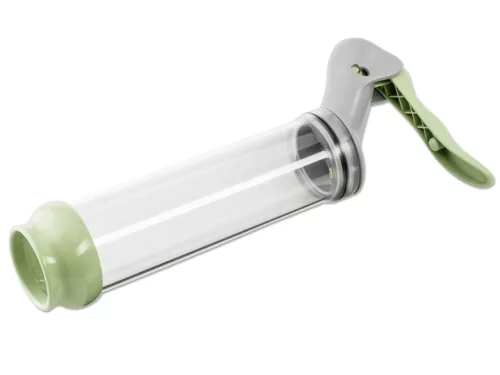 A hand-operated vacuum pump designed specifically for rehabilitation: gradually adjustable pressure, a safety pressure limit, and sized for the daily 5-15-minute protocol. It was developed for penile rehabilitation after prostate surgery and for Peyronie’s disease — for use according to the table above. After erections return, it can also be used with a constriction ring for intercourse.
TensCare Perfect PFE Men pelvic floor stimulator
 A pelvic floor stimulator developed for men, with a rectal probe: considered when you cannot activate the sphincter independently at all — stimulation “shows” you where the muscle is and complements exercises during the first few months. It does not replace your own practice: the aim is for you to be able to do independently as soon as possible what the device is doing.
Prosecca incontinence strap
 A temporary continence aid for the months of rehabilitation: by gently compressing the urethra, it reduces leakage during movement, walking and sport — instead of or alongside pads. It is discreet and invisible under clothing. Symptomatic support, not a cure: use it alongside, not instead of, the exercises.
 Before starting vacuum rehabilitation
A vacuum device is safe when used according to the protocol — but in some conditions it is prohibited or may only be used with medical approval:
- Anticoagulant treatment, bleeding disorder – vacuum may cause bleeding or bruising; use only after medical consultation.
- Conditions predisposing to priapism – sickle cell disease and certain blood disorders: avoid because of the risk of prolonged erection.
- Reduced sensation in the penis – the protective pain signal is absent, so excessive pressure may cause unnoticed injury.
- Active genital infection, open wound, unhealed surgical site – healing first, rehabilitation afterwards.
- Severe, unstable cardiovascular disease – medical assessment is required.
 Important information
The operating surgeon must always approve when rehabilitation can begin. The rectal probe of a pelvic floor stimulator must not be used on a fresh surgical site, in the presence of rectal disease or with a pacemaker. Home devices complement urological care — nothing replaces follow-up examinations (including PSA monitoring!).
 What does the research say?
“Do pelvic floor exercises really help, or would it resolve on its own?”
They help. According to an overview of reviews on the subject — based on data from nearly 30,000 patients — pelvic floor exercises meaningfully improve urinary control after surgery, while biofeedback (feedback on muscle activity) provides an additional benefit, particularly in the short and medium term.1 The same analysis states honestly that the independent benefit of electrical stimulation has not been convincingly demonstrated — it has a place as an adjunct, to help find the muscle, during the first few months.1,2 In other words, the order is: exercises as the foundation, biofeedback if you cannot feel the muscle, stimulation if you cannot activate it at all — not the other way round.
“When should I start using the vacuum? Do I not need to wait until I have healed?”
The earlier, the better — after the wound has healed. In one study, one group of men began a daily 10-minute vacuum programme as early as the first month after surgery, while the other group waited six months: the early starters had significantly better erection scores at 3 and 6 months and also preserved penile length, while the waiting group developed an average shortening of 2 cm.4 In a larger study, 80% of those who used the vacuum daily for 9 months were able to have sex during the programme, and more of them also regained natural erections than among those who did not receive treatment.3 Waiting is therefore not “safer”, but means tissue loss — which is why starting at 4-8 weeks is recommended.
“How long can incontinence continue to improve?”
For longer than many people think. According to a recent analysis comparing different treatment combinations, therapist-led exercises plus biofeedback provide the fastest improvement during the first 1-6 months; around month 3, a programme supplemented with stimulation also performs well; and over one year, treatment combining several methods produced the most favourable results, including in persistent cases.2 The practical message is this: exercises are not “past their use-by date” after 3 months — if you are still leaking after six months, reviewing and combining the programme is the next step, not giving up.
Frequently asked questions
Not for the great majority: urinary control improves significantly within 3-12 months and resolves completely in many men. A smaller proportion — particularly at an older age or after more extensive surgery — may have mild, persistent leakage; there are solutions for this too (aids and surgical correction), which are worth discussing with your urologist. Consistent exercise is the most important thing you can do to improve your chances.
In research studies, programmes started 4-8 weeks after surgery — after catheter removal and wound healing, with the operating surgeon’s approval. The surgeon should always tell you the exact timing; the important thing is not to let months pass without taking action.
This mainly depends on how successfully the nerves were spared, your age and how well things worked before surgery — rehabilitation cannot change these factors. What rehabilitation provides is this: the tissue remains healthy while the nerves regenerate (which may take 1-2 years), so if function returns, there is healthy tissue ready for it. And if function does not return completely, the vacuum device — now with a ring — remains a way to maintain your sex life.
No. The ring is used to maintain an erection during intercourse; rehabilitation is intended to move and oxygenate the tissue in short cycles — no ring is needed for this, and prolonged constriction should be avoided. The ring is used when sexual activity starts again.
Yes — in research and international recommendations, combining the vacuum with medication is the basis of “multimodal” rehabilitation: medication widens the blood vessels, while the vacuum provides mechanical movement. Your urologist prescribes and adjusts the medication; you can continue the vacuum alongside it. Pelvic floor exercises are also part of this programme.
 Summary – Quick overview
Sources
- Yang JM, Ye H, Long Y, et al. (2023). Effect of pelvic floor muscle training on urinary incontinence after radical prostatectomy: an umbrella review of meta-analysis and systematic review. Clinical Rehabilitation. PubMed: 36305082
- Yu K, Bu F, Jian T, et al. (2024). Urinary incontinence rehabilitation after radical prostatectomy: a systematic review and network meta-analysis. Frontiers in Oncology. PubMed: 38584666
- Raina R, Agarwal A, Ausmundson S, et al. (2006). Early use of vacuum constriction device following radical prostatectomy facilitates early sexual activity and potentially earlier return of erectile function. International Journal of Impotence Research. PubMed: 16107868
- Köhler TS, Pedro R, Hendlin K, et al. (2007). A pilot study on the early use of the vacuum erection device after radical retropubic prostatectomy. BJU International. PubMed: 17822466