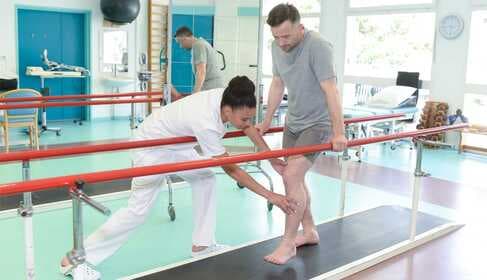

 What happens when a nerve is damaged?
Nerves are the body's communication cables: they carry commands from the brain to the muscles and bring sensations — touch, heat, pain — back the other way. When a nerve is injured — due to an accident, bone fracture, surgical complication, prolonged pressure or illness — this connection is interrupted: the affected area becomes numb, weak or completely paralysed.
I wrote this article to provide useful information not only for the person affected, but also for their family. The months after a nerve injury are not about rapid recovery. A very slow but real process needs to be followed and supported. It is therefore important to know what needs to be done and when, and what cannot wait.
 Key point
The nerve is our slowest-healing tissue: even in ideal circumstances, regeneration progresses by around 1 millimetre per day — so recovery is measured not in weeks but in months, often 1–2 years. The good news is that the process can be supported. The bad news is that there is also a time limit after the injury, and therapy should be started as early as possible — a muscle left without nerve impulses for too long eventually permanently loses its ability to be activated. This is why the period after nerve injury is not passive waiting but active protection: the muscle and joints must be kept in condition while nerve growth is “in progress”.
 How does a nerve heal?
The most important question for the chances of recovery is whether the nerve has remained continuous. If the nerve sheath is intact and “only” the fibres running inside it have been damaged (bruising, prolonged pressure), the fibres can grow back through their own tunnel — this is the more favourable situation, and improvement typically starts within 2–3 months. If the nerve has ruptured or been cut, the ends must be joined surgically: without this, the growing fibres cannot find their way, and a painful, pressure-sensitive lump — known as a neuroma — may form at the end. This is why the first and most important step is always an accurate diagnosis: what was damaged, how severely, and whether surgery is needed.
After the injury, nerve fibres spend about a month “getting organised”, then begin to grow — at a rate of around 1 millimetre per day, or roughly 3 centimetres per month. This explains the long recovery time: if the injury occurred at the elbow and the nerve has to grow back to the hand, that takes many months. Calculate it for your own case: the distance in centimetres between the injury site and the area to be reinnervated ≈ the number of months. This calculation provides realistic expectations — and protects you from giving up after two months when the process is actually progressing normally.
Time matters! The meeting point of the motor nerve and muscle — the motor end plate — does not wait indefinitely: if no nerve impulse arrives for 18–24 months, it atrophies, and the muscle can no longer be activated even if the nerve grows back later. This is why electrical stimulation of the denervated muscle is critical during the waiting months: it replaces the stimulus from outside and “keeps alive” the muscle and end plate until the nerve arrives. Sensory nerves are more patient — they can regenerate months or even years after the injury — so there is hope for improvement in sensory disturbance for longer. Electrical stimulation should be started as soon as possible after nerve injury.
What can cause nerve damage, and how can you recognise it?
The causes can be divided into two broad groups. Traumatic causes include accidents, bone fractures, cuts, prolonged pressure or compression — including surgical complications, for example when nearby nerves are damaged during prostate surgery. Disease-related causes include diabetes (the most common — I wrote about this in a separate article: peripheral neuropathy), alcohol and other neurotoxins, vitamin B deficiency, infections (shingles, Lyme disease), autoimmune diseases, inherited conditions and tumour pressure. You can also find a separate guide to compression forms — carpal and tarsal tunnel syndrome: Treatment options for tunnel syndrome →
| Which fibres are damaged? | What do you experience? | What does it mean? |
|---|---|---|
| Sensory nerves | Numbness, tingling, burning or sharp pain, hypersensitivity, dull touch, impaired temperature sensation | The “report” travelling back is disrupted — protective sensation is also impaired, so the skin must be protected |
| Motor nerves | Muscle weakness, clumsiness, muscle twitching, loss of muscle mass (atrophy), paralysis in severe cases | The command does not reach the muscle — the end-plate time limit is ticking here, so this is more urgent |
| Autonomic fibres | Dry skin or abnormal sweating, circulatory changes, bladder and sexual dysfunction | Automatic regulation is affected — tell the doctor; it can be treated |
The nerve conduction study and EMG (electromyography) provide the exact diagnosis: they show which nerve was injured, how severely and at what level — and every further decision is based on these findings.
The recovery timeline — what needs to be done and when?
The period after nerve injury can be divided into stages, and each has its own task. This table is the backbone of the article — it is worth reviewing together with the family:
| Stage | What happens? | What is your task? |
|---|---|---|
| 1. Diagnosis (first days–weeks) | Assessment: EMG, nerve conduction; decision about surgery | Do not delay: with a cut nerve, early surgical repair can materially improve the chances. Ask for and keep the reports |
| 2. The quiet months (waiting — actively) | The nerve “gets organised”, then grows ~1 mm per day; the muscle would atrophy without impulses | Electrical stimulation of the denervated muscle, daily passive mobilisation of the joints (a stiff joint can also paralyse the returning nerve), swelling management, skin protection in the insensitive area |
| 3. The first signs (months later) | Tingling, “electric-shock-like” sensations travel downwards; the first voluntary movements appear | This is a celebration — and the moment to change approach: introduce EMG-guided (ETS) stimulation and active practice with the therapist |
| 4. Relearning (from signals to function) | The restored connection is weak and inaccurate — the brain has to learn how to use it again | Many repetitions every day: gradual strengthening, fine motor skills, sensory retraining (touching different surfaces and objects), consciously using the limb in everyday life |
 The two most costly mistakes
The first is passive waiting — “it will grow back by itself”. Muscle wasting and joint stiffness progress quietly, without pain, and by the time the nerve returns, it finds no functioning muscle. The second is neglecting to protect the insensitive area — scalding from hot water and pressure sores caused by tight shoes go unnoticed because there is nothing to signal them. Both mistakes can be prevented — that is exactly what the daily routine in stage 2 is for.
What can you do in different situations?
Click the one that fits your situation.
The peroneal nerve, which runs along the outside of the knee, is the most commonly injured nerve in the lower limb — it can be damaged after plaster immobilisation, crossing the legs, weight loss or surgery. The result is that the foot cannot be lifted and slaps during walking. What to do: use a peroneal brace to prevent tripping and falls, apply selective electrical stimulation to the denervated muscle, then gradually strengthen the returning function. I have written a detailed guide: Peroneal palsy rehabilitation →
The same logic applies to nerve injuries of the upper limb (radial, ulnar and median nerves, brachial plexus): while there is no voluntary movement, denervated stimulation and passive joint mobilisation keep the muscles alive — the finger, wrist and shoulder joints must be moved through their full range every day, otherwise they become fixed. When the first returning movements appear, EMG-guided (ETS) stimulation comes in, reinforcing your own still-weak attempts. In the hand, relearning fine motor skills takes the longest: gripping, pinching and touching objects every day, often, in short sets.
If sensation is mainly affected, there are two fronts. Protection: inspect the insensitive skin area every day and protect it from heat, pressure and injury — what cannot be felt is not signalled by anything. And retraining: when sensation is returning, regularly and consciously touching different materials and surfaces helps the brain reinterpret the signals. I have written in detail about treatment of burning, neuropathic-type pain — medication and home options, TENS, microcurrent — in the neuropathy article; the burning feet guide helps identify the causes.
During pelvic surgery — most commonly prostate removal — the nerves responsible for erection may suffer pressure injury or be damaged. Recovery is measured in months here too, and the principle of “use it to keep it” also applies: vacuum therapy was developed to maintain the blood supply and elasticity of the tissues, keeping penile tissues in condition during recovery — this is what the Rehabi-PVT vacuum trainer is for. It is a sensitive subject, but it is rehabilitation just like any other: the earlier it is started (with the surgeon’s approval), the better the chances.
More than you might think — nerve injury is a long-distance run, and the family is both the support team and service crew. Specifically: help keep to the daily routine (stimulation and mobilisation should happen even when they do not feel like it); take over daily inspection of insensitive areas (sole, heel, toes — places they cannot see properly); keep a shared diary of changes, because nobody notices improvement occurring month by month from one day to the next — but the diary shows it; and protect their patience during the low points: most people become uncertain during the quiet months of stage 2, even though the connection is being rebuilt in the background, millimetre by millimetre. Those with family beside them are more likely to see it through.
 Home-use devices to support regeneration
There is an important difference that most people do not know: everyday muscle stimulators (TENS/EMS) are for normally innervated muscles — a muscle that has lost its nerve supply (a denervated muscle) does not respond to these, as it needs a special, long-pulse, selective electrical current. This is why it matters which device you buy. And you do not need all of them at once: your stage determines which one is worth starting with — your EMG report and therapist will guide you.
ss="bp-article-body"> What happens when a nerve is damaged?
Nerves are the body's communication cables: they carry commands from the brain to the muscles and bring sensations — touch, heat, pain — back the other way. When a nerve is injured — due to an accident, bone fracture, surgical complication, prolonged pressure or illness — this connection is interrupted: the affected area becomes numb, weak or completely paralysed.
I wrote this article to provide useful information not only for the person affected, but also for their family. The months after a nerve injury are not about rapid recovery. A very slow but real process needs to be followed and supported. It is therefore important to know what needs to be done and when, and what cannot wait.
Key point
The nerve is our slowest-healing tissue: even in ideal circumstances, regeneration progresses by around 1 millimetre per day — so recovery is measured not in weeks but in months, often 1–2 years. The good news is that the process can be supported. The bad news is that there is also a time limit after the injury, and therapy should be started as early as possible — a muscle left without nerve impulses for too long eventually permanently loses its ability to be activated. This is why the period after nerve injury is not passive waiting but active protection: the muscle and joints must be kept in condition while nerve growth is “in progress”.
How does a nerve heal?
The most important question for the chances of recovery is whether the nerve has remained continuous. If the nerve sheath is intact and “only” the fibres running inside it have been damaged (bruising, prolonged pressure), the fibres can grow back through their own tunnel — this is the more favourable situation, and improvement typically starts within 2–3 months. If the nerve has ruptured or been cut, the ends must be joined surgically: without this, the growing fibres cannot find their way, and a painful, pressure-sensitive lump — known as a neuroma — may form at the end. This is why the first and most important step is always an accurate diagnosis: what was damaged, how severely, and whether surgery is needed.
After the injury, nerve fibres spend about a month “getting organised”, then begin to grow — at a rate of around 1 millimetre per day, or roughly 3 centimetres per month. This explains the long recovery time: if the injury occurred at the elbow and the nerve has to grow back to the hand, that takes many months. Calculate it for your own case: the distance in centimetres between the injury site and the area to be reinnervated ≈ the number of months. This calculation provides realistic expectations — and protects you from giving up after two months when the process is actually progressing normally.
Time matters! The meeting point of the motor nerve and muscle — the motor end plate — does not wait indefinitely: if no nerve impulse arrives for 18–24 months, it atrophies, and the muscle can no longer be activated even if the nerve grows back later. This is why electrical stimulation of the denervated muscle is critical during the waiting months: it replaces the stimulus from outside and “keeps alive” the muscle and end plate until the nerve arrives. Sensory nerves are more patient — they can regenerate months or even years after the injury — so there is hope for improvement in sensory disturbance for longer. Electrical stimulation should be started as soon as possible after nerve injury.
What can cause nerve damage, and how can you recognise it?
The causes can be divided into two broad groups. Traumatic causes include accidents, bone fractures, cuts, prolonged pressure or compression — including surgical complications, for example when nearby nerves are damaged during prostate surgery. Disease-related causes include diabetes (the most common — I wrote about this in a separate article: peripheral neuropathy), alcohol and other neurotoxins, vitamin B deficiency, infections (shingles, Lyme disease), autoimmune diseases, inherited conditions and tumour pressure. You can also find a separate guide to compression forms — carpal and tarsal tunnel syndrome: Treatment options for tunnel syndrome →
| Which fibres are damaged? | What do you experience? | What does it mean? |
|---|---|---|
| Sensory nerves | Numbness, tingling, burning or sharp pain, hypersensitivity, dull touch, impaired temperature sensation | The “report” travelling back is disrupted — protective sensation is also impaired, so the skin must be protected |
| Motor nerves | Muscle weakness, clumsiness, muscle twitching, loss of muscle mass (atrophy), paralysis in severe cases | The command does not reach the muscle — the end-plate time limit is ticking here, so this is more urgent |
| Autonomic fibres | Dry skin or abnormal sweating, circulatory changes, bladder and sexual dysfunction | Automatic regulation is affected — tell the doctor; it can be treated |
The nerve conduction study and EMG (electromyography) provide the exact diagnosis: they show which nerve was injured, how severely and at what level — and every further decision is based on these findings.
The recovery timeline — what needs to be done and when?
The period after nerve injury can be divided into stages, and each has its own task. This table is the backbone of the article — it is worth reviewing together with the family:
| Stage | What happens? | What is your task? |
|---|---|---|
| 1. Diagnosis (first days–weeks) | Assessment: EMG, nerve conduction; decision about surgery | Do not delay: with a cut nerve, early surgical repair can materially improve the chances. Ask for and keep the reports |
| 2. The quiet months (waiting — actively) | The nerve “gets organised”, then grows ~1 mm per day; the muscle would atrophy without impulses | Electrical stimulation of the denervated muscle, daily passive mobilisation of the joints (a stiff joint can also paralyse the returning nerve), swelling management, skin protection in the insensitive area |
| 3. The first signs (months later) | Tingling, “electric-shock-like” sensations travel downwards; the first voluntary movements appear | This is a celebration — and the moment to change approach: introduce EMG-guided (ETS) stimulation and active practice with the therapist |
| 4. Relearning (from signals to function) | The restored connection is weak and inaccurate — the brain has to learn how to use it again | Many repetitions every day: gradual strengthening, fine motor skills, sensory retraining (touching different surfaces and objects), consciously using the limb in everyday life |
The two most costly mistakes
The first is passive waiting — “it will grow back by itself”. Muscle wasting and joint stiffness progress quietly, without pain, and by the time the nerve returns, it finds no functioning muscle. The second is neglecting to protect the insensitive area — scalding from hot water and pressure sores caused by tight shoes go unnoticed because there is nothing to signal them. Both mistakes can be prevented — that is exactly what the daily routine in stage 2 is for.
What can you do in different situations?
Click the one that fits your situation.
The peroneal nerve, which runs along the outside of the knee, is the most commonly injured nerve in the lower limb — it can be damaged after plaster immobilisation, crossing the legs, weight loss or surgery. The result is that the foot cannot be lifted and slaps during walking. What to do: use a peroneal brace to prevent tripping and falls, apply selective electrical stimulation to the denervated muscle, then gradually strengthen the returning function. I have written a detailed guide: Peroneal palsy rehabilitation →
The same logic applies to nerve injuries of the upper limb (radial, ulnar and median nerves, brachial plexus): while there is no voluntary movement, denervated stimulation and passive joint mobilisation keep the muscles alive — the finger, wrist and shoulder joints must be moved through their full range every day, otherwise they become fixed. When the first returning movements appear, EMG-guided (ETS) stimulation comes in, reinforcing your own still-weak attempts. In the hand, relearning fine motor skills takes the longest: gripping, pinching and touching objects every day, often, in short sets.
If sensation is mainly affected, there are two fronts. Protection: inspect the insensitive skin area every day and protect it from heat, pressure and injury — what cannot be felt is not signalled by anything. And retraining: when sensation is returning, regularly and consciously touching different materials and surfaces helps the brain reinterpret the signals. I have written in detail about treatment of burning, neuropathic-type pain — medication and home options, TENS, microcurrent — in the neuropathy article; the burning feet guide helps identify the causes.
During pelvic surgery — most commonly prostate removal — the nerves responsible for erection may suffer pressure injury or be damaged. Recovery is measured in months here too, and the principle of “use it to keep it” also applies: vacuum therapy was developed to maintain the blood supply and elasticity of the tissues, keeping penile tissues in condition during recovery — this is what the Rehabi-PVT vacuum trainer is for. It is a sensitive subject, but it is rehabilitation just like any other: the earlier it is started (with the surgeon’s approval), the better the chances.
More than you might think — nerve injury is a long-distance run, and the family is both the support team and service crew. Specifically: help keep to the daily routine (stimulation and mobilisation should happen even when they do not feel like it); take over daily inspection of insensitive areas (sole, heel, toes — places they cannot see properly); keep a shared diary of changes, because nobody notices improvement occurring month by month from one day to the next — but the diary shows it; and protect their patience during the low points: most people become uncertain during the quiet months of stage 2, even though the connection is being rebuilt in the background, millimetre by millimetre. Those with family beside them are more likely to see it through.
Home-use devices to support regeneration
There is an important difference that most people do not know: everyday muscle stimulators (TENS/EMS) are for normally innervated muscles — a muscle that has lost its nerve supply (a denervated muscle) does not respond to these, as it needs a special, long-pulse, selective electrical current. This is why it matters which device you buy. And you do not need all of them at once: your stage determines which one is worth starting with — your EMG report and therapist will guide you.
PeroBravo selective electrical current (denervated) device
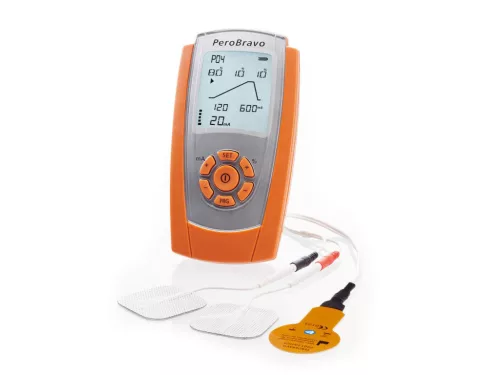 The key device for stage 2 — the quiet months — developed specifically to stimulate muscles that have lost their nerve supply. The long, exponential impulses can also make denervated muscle fibres contract, so the muscle and motor end plate remain “alive” while the nerve grows back. Set it up with a professional, based on the EMG report.
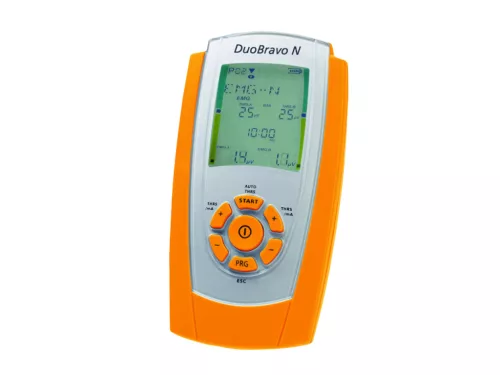 The device for stages 3–4: it detects returning, still-weak muscle activity using EMG measurement and reinforces your own attempt to move (ETS). During relearning, it connects intention with movement — it becomes appropriate when the first voluntary movements have appeared.
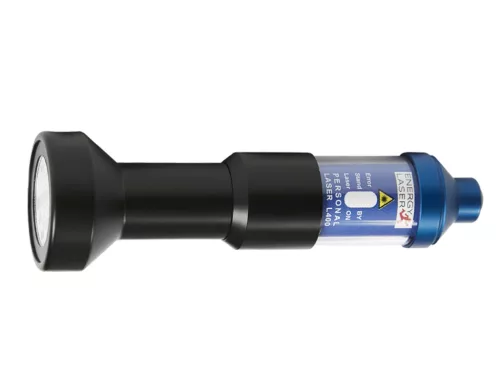 When used over the injury and surgical area, soft laser may support nerve regeneration and the return of motor function according to research, and may also have a favourable effect on scar quality. It can be used daily as an adjunct throughout the recovery period. (Clinical, higher-power version:
  Before you begin home treatment
 Important information
 What does the research say?
 Honest words about the chances of recovery
 Summary – Quick overview