
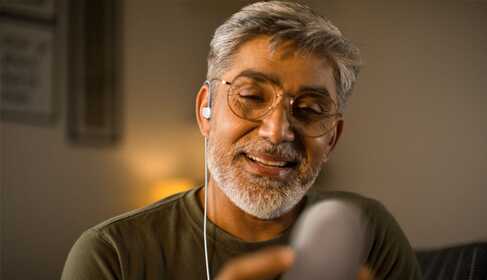

 Non-invasive vagus stimulation (tVNS) – which device is for what?
I cover the basics of the autonomic nervous system in the autonomic nervous system and vagus stimulation: main pillars. The relationship between parasympathetic tone and chronic disease is analysed in the parasympathetic nervous system and chronic diseases article. This piece focuses on concrete device selection.
 Key idea
All three devices are non-invasive tVNS units that can be placed on the auricular region of the pinna. The Nurosym is the most extensively studied clinically — the 2020 TREAT-AF double-blind RCT [1] reported that tragus stimulation reduced atrial fibrillation (AF) burden by 85% over six months in paroxysmal AF patients (n=53). The Zenowell Vita is positioned primarily to support sleep, stress reduction and recovery; the Zenowell Luna is offered with a program package designed as an adjunct for chronic pain and inflammation. The precise choice depends on individual indication, prior medical consultation and intended use.
 How does non-invasive tVNS work?
Non-invasive tVNS is based on the same principle for all three devices: low-intensity electrical pulses applied through the skin of the auricle stimulate the auricular branch of the vagus nerve (Arnold's nerve). Devices differ in stimulation point, frequency profile and program structure.
Two main anatomical points on the auricular skin are relevant for vagus stimulation: the tragus (the small cartilaginous prominence in front of the ear canal) and the cymba conchae (the deeper, cup-shaped part of the auricle). Most clinical trials and research have used tragus stimulation — including the 2020 TREAT-AF [1] and the 2024 POTS RCT [2]. However, a 2022 study [3] found that cymba conchae stimulation produces a larger increase in HRV than tragus stimulation, likely due to denser vagal afferent fibers there. Modern tVNS devices are typically ear-clip shaped, and exact positioning is regulated in each manufacturer's instructions for use.
tVNS typically aims to increase parasympathetic tone, measurable as an increase in heart rate variability (HRV). According to the 2020 review by Burger et al. [4], HRV is one of the most commonly studied biomarkers for tVNS efficacy, although on its own it does not provide a clear, definitive indicator of vagal activation — this remains an active research field. Improvement in autonomic balance is indirectly associated with symptomatic relief in many chronic conditions (sleep disturbance, anxiety, fatigue, atrial fibrillation).
Activation of vagal efferent fibers mediates the cholinergic anti-inflammatory pathway (CAP), which reduces the release of pro-inflammatory cytokines (TNF-α, IL-6). In the 2020 TREAT-AF RCT [1], a six-month tVNS protocol produced a 23% reduction in serum TNF-α, concurrent with an 85% reduction in AF burden. This mechanism provides a biological explanation for observed symptomatic changes in inflammation-regulated chronic conditions (autoimmune disease, chronic pain, long COVID).
 What does the recent clinical evidence say about tVNS?
Controlled clinical trials since 2019 have demonstrated measurable contributions in the following areas. In all cases tVNS is presented as an adjunct modality, used alongside medical consultation:
The 2020 Stavrakis TREAT-AF RCT [1] (n=53 paroxysmal AF patients) was a double-blind, sham-controlled study of daily 1-hour (20 Hz, 1 mA below discomfort threshold) tragus stimulation over six months. Results: the active group had an 85% lower AF burden (median ratio 0.15; 95% CI 0.03–0.65; p=0.011), a 23% reduction in TNF-α (p=0.0093), and improved HRV. No device-related adverse events occurred. Important: AF management is the remit of cardiology specialists; tVNS is an adjunct modality and does not replace antiarrhythmic medication or ablation.
The 2024 Stavrakis RCT [2] (n=26) found that a two-month daily 1-hour tVNS protocol significantly reduced orthostatic heart rate increase in POTS patients (17.6 vs 31.7 bpm; p=0.01), and lowered anti-adrenergic autoantibodies and inflammatory cytokines. This is an adjunct modality to be used under autonomic/neurology specialist supervision.
The 2024 Zheng pilot study [7] enrolled 24 women with long COVID (mean age 45.8 years; mean 20.2 months after infection) and used a 10-day at-home tVNS protocol (twice daily 30 minutes). Significant improvements were observed in cognitive function, anxiety, depression and sleep. Fatigue improvement reached significance at the one-month follow-up. Important: pilot study without a control group; larger RCTs are needed.
The 2023 Bottari pilot study [5] in 13 veterans with PTSD showed that a 1-hour evening tVNS increased deep sleep (N3), reduced REM and improved sleep stability. Important: small pilot; PTSD treatment requires psychiatric specialist care.
The 2025 TARGET-NT1 RCT [6] (n=60) reported that a 12-week tVNS program (twice daily 30 minutes) significantly reduced daytime sleepiness (ESS −3.03 points, p<0.0001). Important: narcolepsy requires neurologist supervision and specific pharmacotherapy.
Detailed presentation of the three tVNS devices
Nurosym – the most widely researched clinical tVNS
Nurosym is a CE-certified transcutaneous auricular vagus stimulator in an ear-clip format designed to be placed on the tragus. It has been the primary device in several major clinical trials in recent years:
- 2020 TREAT-AF RCT [1] – paroxysmal atrial fibrillation (n=53), 85% AF burden reduction over 6 months
- 2024 POTS RCT [2] – postural tachycardia syndrome (n=26)
- 2024 long COVID pilot [7] – cognitive and emotional symptom improvement (n=24)
- 2023 PTSD-sleep pilot [5] – increase in deep sleep in veterans (n=13)
Typical user profile: autonomic dysfunction (POTS), cardiology adjunct therapy (AF control under indication), autonomic restoration after long COVID, chronic fatigue support. The 1-hour daily protocol is the most commonly used duration.
Zenowell Vita – for sleep, stress and recovery support
Zenowell Vita is a compact, portable auricular tVNS device developed to support daily autonomic balancing, improve sleep quality, reduce stress and aid recovery. Its program package and parameter profile are optimized to increase parasympathetic tone.
Typical user profile:
- Chronic stress, high workplace load
- Supplementary modality for improving sleep quality
- Part of an evening recovery routine
- General autonomic balance maintenance (HRV-conscious users)
Recommended use is before bedtime or in the morning in a calm environment, typically in 30–60 minute sessions.
Zenowell Luna – adjunct treatment for chronic pain and inflammation
Zenowell Luna is an auricular tVNS device specifically designed as an adjunct for chronic pain and inflammatory complaints. The cholinergic anti-inflammatory pathway (CAP) mediated by vagus stimulation — which the TREAT-AF [1] trial linked to TNF-α reduction — provides the theoretical basis for pain- and inflammation-focused use.
Typical user profile:
- Chronic somatic pain (as an adjunct, under specialist supervision)
- Symptomatic relief for migraine and cluster-type headache
- Adjunct treatment for menstrual pain
- Support for autonomic balancing in the context of joint complaints
Important: evaluation and treatment planning for chronic pain should always be performed by specialists (pain clinic, rheumatologist, neurologist); Luna does not replace primary medical care.
Detailed comparison table
| Feature | Nurosym | Zenowell Vita | Zenowell Luna |
|---|---|---|---|
| Primary positioning | most clinically researched, general tVNS | sleep / stress / recovery | chronic pain / inflammation |
| Anatomical point | tragus (used in most clinical trials) | auricular region | auricular region |
| CE certification | ✓ yes | ✓ yes | ✓ yes |
| Clinical evidence | multiple RCTs (TREAT-AF [1], POTS [2], PTSD-sleep [5], long COVID [7]) | autonomic balance focus | pain and inflammation focus |
| Typical protocol | 1 hour/day, long-term (6 months cardiology) | 30–60 minutes evening, daily | 30–60 minutes/day, for chronic symptoms |
| Main target groups | cardiology, autonomic dysfunction, long COVID | stress- and sleep-sensitive users, HRV-conscious users | chronic pain patients (adjunct) |
| Home use | ✓ yes | ✓ yes | ✓ yes |
Which one to choose? – decision guide
Before choosing a device, it is advisable to consult your treating physician, especially if you have a chronic disease or take medications. The following orientation guidelines are based on the most common user profiles:
- Atrial fibrillation (paroxysmal AF), POTS, long COVID, chronic fatigue or autonomic dysfunction: Nurosym is recommended — this device has appeared in most clinical trials for these areas.
- Chronic stress, sleep disturbance, recovery support, general autonomic balancing: Zenowell Vita — as part of a daily evening routine.
- Chronic pain, migraine, joint complaints, inflammation-focused use: Zenowell Luna — as an adjunct to baseline analgesic / anti-inflammatory therapy.
Key idea – choose a goal
The differences between tVNS devices lie not in "quality" but in intended use and program structure. If you are uncertain, define your primary health goal (sleep, pain, autonomic dysfunction or general balance) and match the device to that goal. tVNS does not replace specialist diagnosis or pharmacotherapy — it is an adjunct modality that is best combined with a comprehensive lifestyle approach (exercise, sleep hygiene, nutrition, meditation).
General tVNS protocol parameters
Devices come with built-in programs — factory settings are generally optimized. The table below is an informative guide to parameters used in clinical trials:
| Parameter | Range | Note |
|---|---|---|
| Frequency | 20–25 Hz | TREAT-AF [1] and POTS [2]: 20 Hz |
| Intensity | 1 mA below discomfort threshold | perceptible but NOT painful |
| Anatomical point | tragus or cymba conchae | most clinical trials used tragus; cymba conchae [3] may be more effective for HRV increase |
| Session duration | 30–60 minutes/session | for cardiology indications [1][2] 1 hour daily |
| Frequency | 1–2 times daily | some indications may be satisfied with a few sessions per week |
| Program period | 4 weeks – 6 months | longer use required for chronic conditions |
| Timing | before bedtime or in the morning, in a calm environment | NOT during acute stress |
 When is tVNS NOT recommended?
General electrotherapy contraindications also apply here (see: electrical treatment contraindications and electrical treatment and implants). The following tVNS-specific contraindications apply to all three devices:
- Pacemaker, ICD, implanted neurostimulator – only with cardiologist/arrhythmologist approval.
- Severe cardiac rhythm disorders (significant bradycardia, high-grade AV block, sick sinus syndrome) – vagus stimulation may further slow heart rate.
- Severe hypotension (low blood pressure) – vagus stimulation may further lower blood pressure.
- Active malignant tumour in the head-neck region – avoid treating over the tumour area.
- Pregnancy – not recommended for general safety reasons.
- Implanted cochlear implant – risk of electrical interference.
- Fresh wound, inflammation, skin infection on the auricle.
- Acute, undiagnosed psychiatric or neurological symptoms – specialist evaluation first.
- Epilepsy with poorly controlled medication – individual specialist assessment required.
Users with any chronic disease should obtain medical consultation before starting tVNS treatment. Any withdrawal or modification of prescribed medications may only be performed by the treating physician.
Frequently asked questions about tVNS devices
All three devices are non-invasive auricular tVNS stimulators with CE certification. The difference lies in clinical positioning and program structure: Nurosym = most clinically researched, cardiology (atrial fibrillation [1]) and general autonomic dysfunction (POTS [2], long COVID [7]); Zenowell Vita = sleep, stress and recovery support; Zenowell Luna = adjunct treatment for chronic pain and inflammation. Choose the device according to your individual goal.
It depends on the indication. HRV increases [3] may be measurable after a single 10-minute treatment. Acute symptomatic relief (stress, anxiety) can appear within hours. For chronic indications (atrial fibrillation [1], POTS [2], narcolepsy [6], long COVID [7]) regular application for weeks to months is required. The TREAT-AF RCT [1] studied six months; the POTS RCT [2] two months; the narcolepsy RCT [6] 12 weeks.
No, it does not replace medication. Clinical trials position tVNS as an adjunct modality. Treatment of chronic conditions (AF, POTS, depression, chronic pain, etc.) is a specialist task. Any withdrawal, reduction or change of prescribed medications (antiarrhythmics, antidepressants, analgesics, etc.) may only be done by the treating physician.
Most clinical trials (TREAT-AF [1], POTS [2]) used tragus stimulation — the small cartilaginous prominence in front of the ear canal. A 2022 study [3] indicates that cymba conchae stimulation (the deeper, cup-shaped part of the auricle) elicits a stronger HRV response. Modern devices are supplied in an ear-clip format — always follow the user manual for exact positioning.
Clinical trials and practical experience suggest tVNS is most effective when performed in a calm environment, before bedtime or in the morning. Ideal conditions: seated or lying down in a quiet room, possibly during meditation or deep breathing. Do not use during acute stress, physical activity, or while using phone/screens.
Generally NO — only with cardiologist/arrhythmologist approval. Vagus stimulation can affect heart rate (slow it); there is a risk of interference with pacemakers, ICDs, neurostimulators or other implants. See details in the electrical treatment and implants article.
 Summary – choosing a tVNS device
What every user should know
- All three devices (Nurosym, Zenowell Vita, Zenowell Luna) are CE-certified, non-invasive auricular tVNS devices — stimulating through the skin of the auricle.
- Nurosym = the most widely researched clinically (TREAT-AF RCT [1] paroxysmal AF 85% AF burden reduction; POTS [2], long COVID [7], PTSD-sleep [5]).
- Zenowell Vita = supports sleep, stress reduction and daily recovery.
- Zenowell Luna = adjunct treatment for chronic pain and inflammation.
- Selection criterion: primary health goal (cardiology / stress-sleep / pain-inflammation) determines the device.
- Typical protocol: 20–25 Hz, 30–60 minutes/day, evening or morning use, 4 weeks – 6 months program period.
- tVNS is an adjunct modality: it does not replace specialist diagnosis, medications or a multidisciplinary treatment package.
- Contraindications (pacemaker, severe bradycardia, low blood pressure, pregnancy, cochlear implant) must be respected.
Scientific sources (2020+)
References [1]–[7] in the article refer to the following studies (number = list order):
- Stavrakis S, Stoner JA, Humphrey MB, Morris L, Filiberti A, Reynolds JC, Elkholey K, Javed I, Twidale N, Riha P, Varahan S, Scherlag BJ, Jackman WM, Dasari TW, Po SS. TREAT AF (Transcutaneous Electrical Vagus Nerve Stimulation to Suppress Atrial Fibrillation): A Randomized Clinical Trial. JACC: Clinical Electrophysiology. 2020;6(3):282-291. PMID: 32192678.
- Stavrakis S, Chakraborty P, Farhat K, Whyte S, Morris L, Abideen Asad ZU, Karfonta B, Anjum J, Matlock HG, Cai X, Yu X. Noninvasive Vagus Nerve Stimulation in Postural Tachycardia Syndrome: A Randomized Clinical Trial. JACC: Clinical Electrophysiology. 2024;10(2):346-355. PMID: 37999672.
- Forte G, Favieri F, Leemhuis E, De Martino ML, Giannini AM, De Gennaro L, Casagrande M, Pazzaglia M. Ear your heart: transcutaneous auricular vagus nerve stimulation on heart rate variability in healthy young participants. PeerJ. 2022;10:e14447. PMID: 36438582.
- Burger AM, D'Agostini M, Verkuil B, Van Diest I. Moving beyond belief: A narrative review of potential biomarkers for transcutaneous vagus nerve stimulation. Psychophysiology. 2020;57(6):e13571. PMID: 32202671.
- Bottari SA, Lamb DG, Porges EC, Murphy AJ, Tran AB, Ferri R, Jaffee MS, Davila MI, Hartmann S, Baumert M, Williamson JB. Preliminary evidence of transcutaneous vagus nerve stimulation effects on sleep in veterans with post-traumatic stress disorder. Journal of Sleep Research. 2024;33(1):e13891. PMID: 37039398.
- Pan Y, Zhang Y, Xu Z, Wei Z, Pan R, Hu G, Wang X, Yang L, Wu D, Zhang X, Wen X, Qu S, Li C, Zhu Z, Gao Y, Shi X, Zhu Y, Wu K, Wang D, Liu Y. Transcutaneous auricular vagus nerve stimulation to treat narcolepsy type 1 (TARGET-NT1): A two-arm, randomised, sham-controlled trial. Neurotherapeutics. 2025;22(4):e00604. PMID: 40335432.
- Zheng ZS, Simonian N, Wang J, Rosario ER. Transcutaneous vagus nerve stimulation improves Long COVID symptoms in a female cohort: a pilot study. Frontiers in Neurology. 2024;15:1393371. PMID: 38756213.
This article is for general information only and does not replace personal medical consultation. The featured non-invasive tVNS devices (Nurosym, Zenowell Vita, Zenowell Luna) are medical devices; the cited clinical trials were conducted with different devices and protocols, and individual results may vary. tVNS is an adjunct modality and does not replace specialist diagnosis, prescribed medications or multidisciplinary treatment. Contraindications (pacemaker, severe bradycardia, low blood pressure, pregnancy, cochlear implant) must be strictly observed. For new, worsening or unexplained symptoms, contact your treating physician.

