



Who can Nurosym be used for, and for what?
One of the most studied indications for Nurosym is paroxysmal (episodic) atrial fibrillation. Vagus stimulation influences cardiac autonomic regulation – clinical trials suggest it can improve HRV and reduce AFib episode frequency. IMPORTANT: this DOES NOT replace cardiological treatment (antiarrhythmic drugs, anticoagulants, ablation). Consultation with a cardiologist is mandatory, and Nurosym must NOT be used in the presence of bradycardia (heart rate below 50/min), severe coronary artery disease, or recent myocardial infarction.
Dysautonomia is a major mechanism in long-COVID – supported by much research. The vagus nerve’s anti-inflammatory effect can reduce chronic inflammatory state, fatigue, brain fog, and autonomic symptoms (palpitations, orthostatic intolerance). Clinical evidence is positive, but further studies are ongoing. An individual trial is recommended over a 6–8 week period.
Myalgic encephalomyelitis / chronic fatigue syndrome (ME/CFS) is a chronic, debilitating illness with no definitive causal treatment currently. One research avenue is dysfunctional vagus nerve activity – here tVNS may play a supportive role. Clinical evidence is limited, but vagus stimulation may help by restoring parasympathetic tone. Realistic expectation: a longer (3–6 month) trial combined with energy management.
Rheumatoid arthritis (RA), systemic lupus erythematosus (SLE), and other autoimmune inflammatory conditions share chronic systemic inflammation as a pathophysiological root. Activating the cholinergic anti-inflammatory pathway (CAP) via vagus stimulation can reduce inflammatory cytokines (TNF-α, IL-1, IL-6). SUPPLEMENTARY in nature: it does NOT replace existing rheumatological treatments (DMARDs, biologics) but may support them. Consult your rheumatologist!
Sympathetic dominance (chronic stress) and parasympathetic insufficiency are characteristic of anxiety disorders. Vagus stimulation, by boosting parasympathetic tone, may help restore autonomic balance. Customer feedback includes positive reports of anxiety reduction. For severe anxiety disorder or panic disorder, ALWAYS use under psychiatric supervision, and DO NOT discontinue prescribed anxiolytic or antidepressant medications.
Heart rate variability (HRV) is a key indicator of autonomic nervous system health. In athletes and health-conscious users, low HRV can signal overtraining, chronic stress, or poor sleep. Vagus stimulation has been shown to improve HRV – so Nurosym may be useful not only for disease indications but also for performance optimization and recovery support.
The vagus nerve is the main neural regulator of the digestive system. Vagal tone insufficiency is common in functional digestive disorders (IBS, functional dyspepsia, gastroparesis). tVNS may support digestive motility and reduce gut inflammation. SUPPLEMENTARY to gastroenterologist-prescribed therapy – never a replacement.
Customer feedback is mixed (3.7/5 average). Some feel effects immediately (better sleep, increased energy, reduced anxiety), while others experience little or no change. Vagus nerve sensitivity is individual. Realistic approach: 6–8 weeks of regular daily 30-minute use, HRV monitoring (smartwatch or app), and a symptom diary. Nurosym is a premium-priced device, but NOT a miracle cure – even with the right indication, improvement is not guaranteed. If there is no clear improvement after 6–8 weeks, consider alternative treatments.
How does Nurosym work?
Nurosym uses transcutaneous vagus nerve stimulation (tVNS) technology. It stimulates the auricular branch of the vagus nerve through the tragus of the ear – a non-invasive alternative to surgical vagus stimulators.
The vagus nerve (cranial nerve X) is the longest nerve in the body, running from the brainstem to the abdominal organs. It is the main pathway of the parasympathetic nervous system – the "rest-and-digest" system that regulates heart rhythm, breathing, digestion, immune functions, and mood.
Modern lifestyle (chronic stress, lack of exercise, insufficient sleep) can cause chronic sympathetic dominance (fight-or-flight) – a state known as dysautonomia. Vagus stimulation aims to restore parasympathetic tone and reestablish autonomic balance.
The vagus nerve’s ear branch (Auricular Branch of Vagus Nerve, ABVN) anatomically runs at the TRAGUS and CONCHA regions of the ear. This is the only surface point on the body where the vagus nerve is accessible through the skin.
Other ear-electrode devices (e.g., classic clip-on CES like Somnus) stimulate different ear areas (earlobe, helix) – reaching different nerve branches. Nurosym is specifically optimized for the ABVN target point. That is why it works DIFFERENTLY from classic CES devices.
The main mechanism confirmed in clinical studies is the Cholinergic Anti-Inflammatory Pathway (CAP). Vagus stimulation triggers release of acetylcholine (a neurotransmitter), which:
- Reduces production of inflammatory cytokines (TNF-α, IL-6, IL-8).
- Restores healthy nitric oxide production (improving endothelial function).
- Moderates excessive immune responses – reducing autoimmune-like activity.
This mechanism explains why Nurosym can be effective across a range of different conditions: AFib, long-COVID, RA, chronic fatigue – all share systemic inflammation and autonomic dysregulation at their roots.
Heart rate variability (HRV) refers to the variability in time intervals between consecutive heartbeats. High HRV = healthy autonomic nervous system, good parasympathetic tone. Low HRV = fatigued autonomic system, sympathetic dominance.
Nurosym use has been shown in clinical studies to increase HRV. This is a ROBUST, OBJECTIVE metric – much more reliable than the subjective "I feel better" sensation.
Tip: use an HRV-measuring smartwatch (Garmin, Apple Watch, Whoop, Polar) or a free app (Welltory, HRV4Training). Changes become noticeable after 2–4 weeks.
Nurosym is the most clinically studied at-home tVNS device, but it is NOT a miracle cure. Customer feedback is mixed – some experience immediate benefits, others little or none.
Realistic approach:
- 6–8 week minimum trial period.
- Daily 30-minute regular use.
- Moisten the tragus BEFORE EACH use (better conductivity).
- HRV monitoring for objective tracking.
- Keep a symptom diary (subjective changes).
- Consult your physician for appropriate indications.
If there is no clear improvement after 6–8 weeks, consider other treatment options. Given the premium price, be reasonably certain about the indication before purchase.
Frequently asked questions
No. Active implanted medical devices (pacemaker, ICD, hearing implant, neurostimulator) or any implanted metal/electronic device are an absolute contraindication. The risk of electrical interference is too high. If there is a metal implant specifically in the left ear, you can request an alternative earphone for right-ear use.
Limited. Nurosym MUST NOT be used in the following cardiovascular conditions:
- Severe coronary artery disease.
- Recent myocardial infarction (within 5 years).
- Advanced heart failure.
- Bradycardia (resting heart rate below 50/min).
- Carotid atherosclerosis (neck artery stenosis).
It may be used in atrial fibrillation (AFib), BUT only under mandatory cardiologist supervision and prior approval. If you have any doubts about your heart condition, DO NOT start Nurosym without consultation.
This is a CRUCIAL TIP based on user experience. Dry tragus skin is a very poor electrical conductor – therefore you may not feel the effect. Moist skin conducts better:
- The impulse reaches the auricular branch of the vagus nerve more accurately.
- It is effective at lower intensities.
- It also reduces the risk of skin irritation.
Before use, wipe the tragus with a wet fingertip. Some users also apply a thin layer of electrotherapy conductive gel (Conti-gel available separately) – this can further improve conductivity.
All three devices use electrotherapy applied to the ear or head area, but with different mechanisms and targeted neural structures:
- Nurosym (tVNS, tragus): stimulates the auricular branch of the vagus nerve. Aim: parasympathetic activation, inflammation reduction, HRV increase. Main indications: AFib, long-COVID, CFS, autoimmune conditions.
- Somnus (CES, ear clip): classic CES method, acts via an earlobe electrode. Aim: sleep support, anxiety and depression relief. Broader autonomic stimulation.
- Mynd (cTENS, forehead): a cranial TENS form specific for migraine. Stimulates the trigeminal forehead branches to relieve migraine pain.
If you have general insomnia → Somnus. If migraine → Mynd. If vagus-focused indication (AFib, long-COVID, autoimmune) → Nurosym.
Individual results vary:
- For some users: immediate perceived effects (better sleep, reduced anxiety within the first week).
- Typical timeframe: noticeable HRV improvement after 2–4 weeks (objective metric).
- Clinical assessment: a 6–8 week trial period with careful symptom diary is recommended.
If there is no clear improvement after 6–8 weeks, consider other treatment options. Vagus nerve sensitivity is individual – it does not work for everyone.
Nurosym is priced significantly higher than lower-mid-range CES/tVNS devices (Somnus, Mynd). Reasons:
- Clinical validation: 30+ published clinical studies – not present for many home tVNS devices.
- CE Class IIa certification: higher safety category.
- Anatomically precise targeting: the tragus electrode is designed specifically for the ABVN.
- Clinical indications: tested in AFib, long-COVID, RA – disease-specific clinical testing.
If you have an appropriate indication and realistic expectations, it can be worthwhile. If you are uncertain or only seek general wellness, the cheaper Somnus may be an option (different mechanism, broader autonomic stimulation).
HRV is one of the most reliable objective metrics of autonomic nervous system health. Nurosym’s effect has been measured as HRV increases in clinical trials. Measurement options:
- Smartwatch: Garmin, Apple Watch, Polar, Fitbit, Whoop – all can measure HRV.
- Free apps: Welltory, HRV4Training, Elite HRV (phone camera based).
- Professional measurement: cardiological EKG-Holter.
Measurement protocol: every morning after waking, sit for 5 minutes in the same position. Track weekly averages, NOT daily variability – HRV fluctuates strongly with fatigue, stress, and meals.
Realistic approach: even with the right indication, Nurosym may not yield clear improvement for everyone. If after 6–8 weeks of regular use you notice no change:
- Check: did you moisten the tragus BEFORE EACH session? Is electrode contact adequate?
- Intensity: did you reach a noticeable tingling? (NOT pain!)
- Duration: did you actually perform 30-minute daily regular sessions?
- HRV data: is there objectively no improvement? Or no subjective improvement despite HRV increase?
- Consultation: discuss alternatives (pharmacologic, psychotherapy, lifestyle changes) with your treating physician.
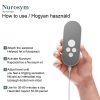
How to use it step by step
1
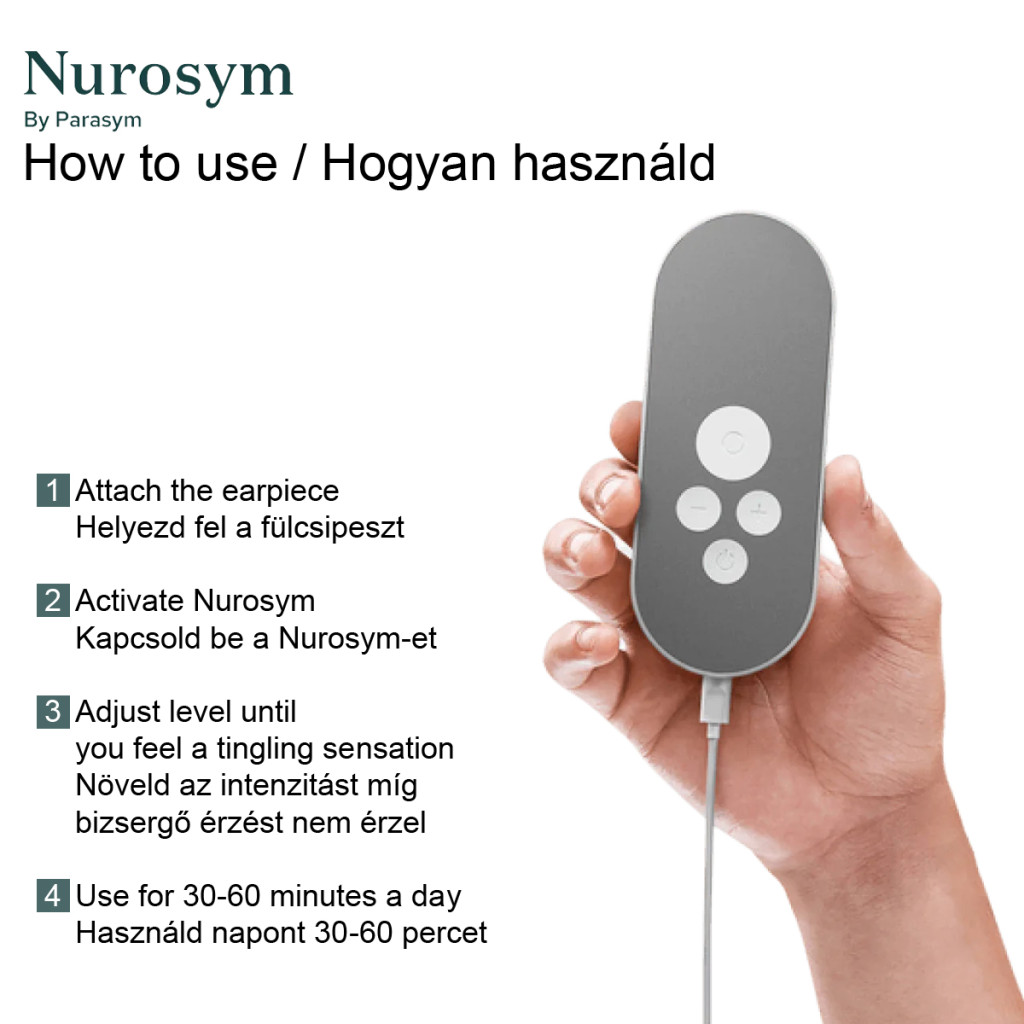
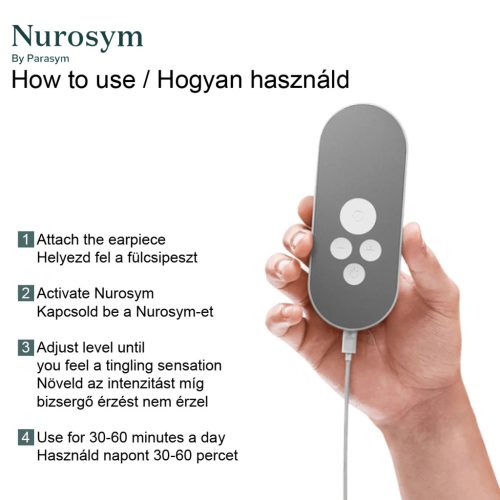
Charge the battery (with USB cable)
We recommend a full charge before first use. You can charge from any standard USB charger. The device’s lithium-ion battery allows multiple sessions on a single full charge.
2
Moisten the tragus (CRUCIAL TIP!)
Moisten the tragus (the small cartilage flap in front of the ear opening) before use. Customer feedback indicates this is crucial for good conductivity – electrical signals pass much less effectively through dry skin to the intended nerve target. Many initial users do not feel an effect because they do not moisten the tragus.
3
Place the ear electrode on the tragus
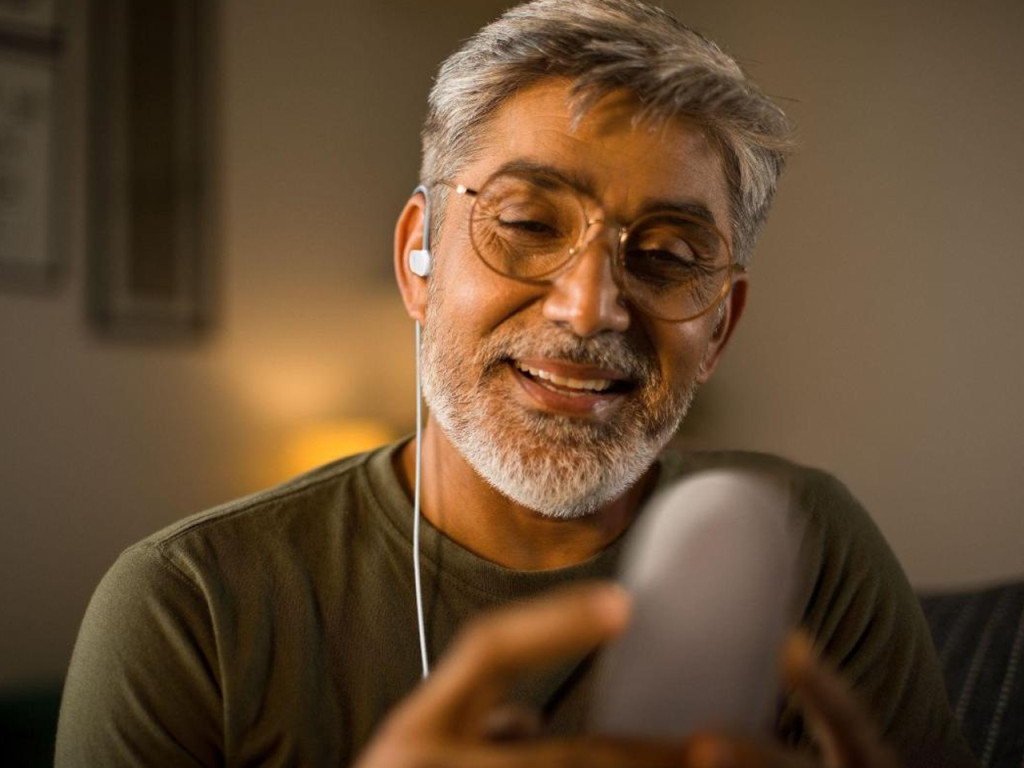
Place the special ear electrode included in the package on the LEFT ear tragus – this is the default side. If there is a metal implant on the left ear (e.g., from prior surgery), an alternative electrode for the right ear can be ordered. Contact must be firm and precise – direct contact with the tragus surface is required.
4
Gradually adjust intensity
Start at a very low intensity. The ideal level is a noticeable tingling on the tragus area, BUT NOT painful or pressing. If it is painful, reduce it – do not prioritize high intensity. A "comfortable tingling" is the goal. Individual thresholds vary greatly – do not overdo it!
5
Session length: 30 minutes daily (starter protocol)
The typical starter protocol is a daily 30-minute session. Some users tolerate 60 minutes, but 30 minutes is established. You can split it into two sessions (2×15 minutes morning and evening). Rest, read, or listen to music during the session – avoid physical work during treatment.
6
Long-term evaluation: 6–8 weeks + HRV measurement
The effects of vagus stimulation build gradually. Clinical trials recommend a minimum 6–8 week trial period for evaluation. Keep a symptom diary: fatigue level (1–10), anxiety, sleep quality, AFib episode frequency, etc. If possible, use an HRV-monitoring smartwatch or app to objectively track changes. Improvement often appears first in HRV, then subjectively in symptoms.
Nurosym tVNS demonstration video: Dr. Zátrok’s film about the device’s operation, the anatomy of tragus stimulation, and clinical trial results.
What’s in the package?
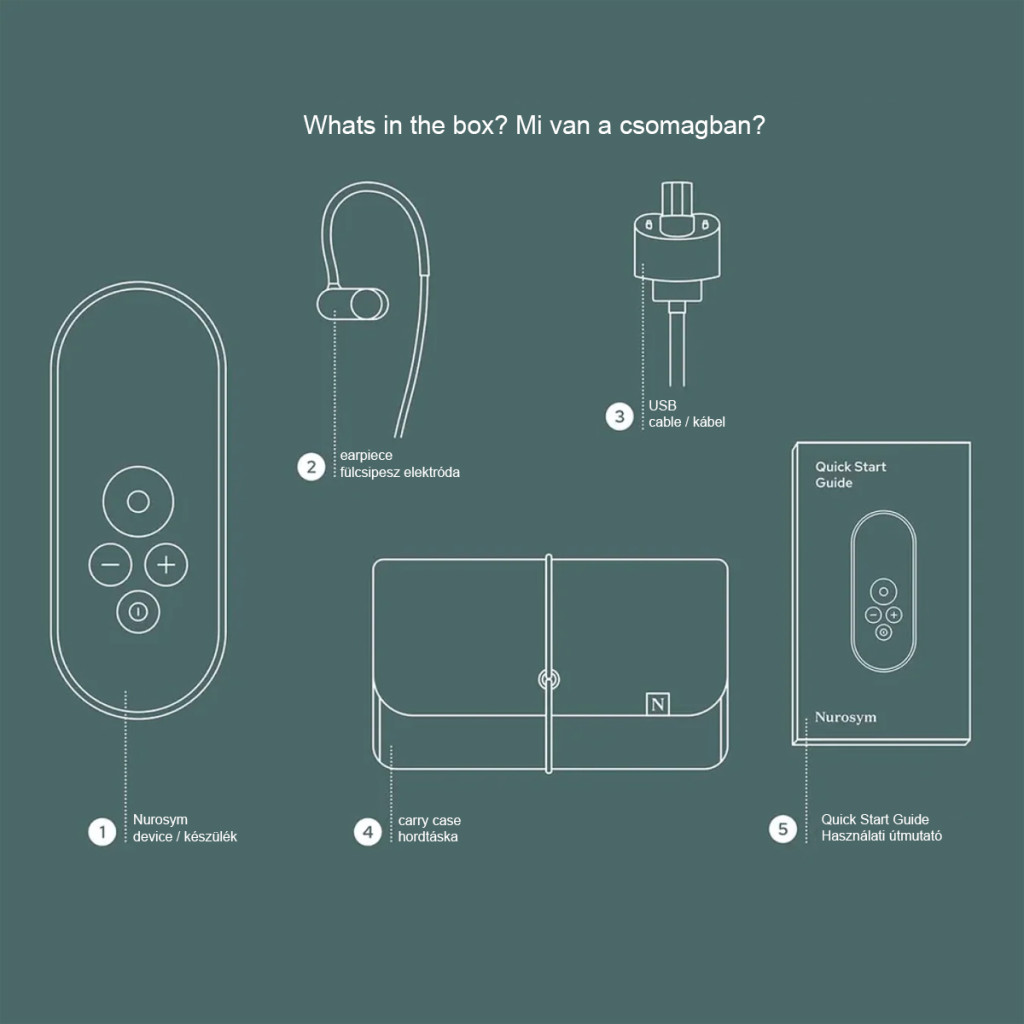
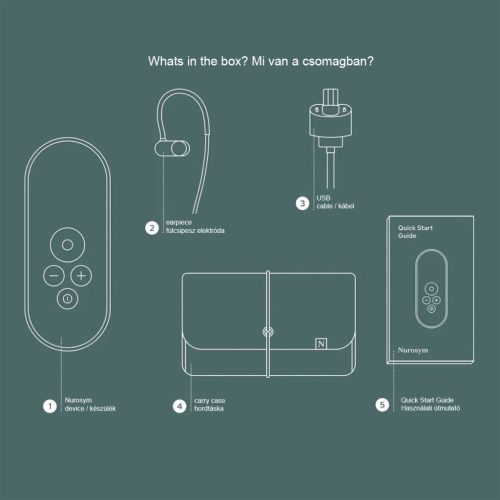
The Nurosym base package – with all accessories needed to start using it immediately.
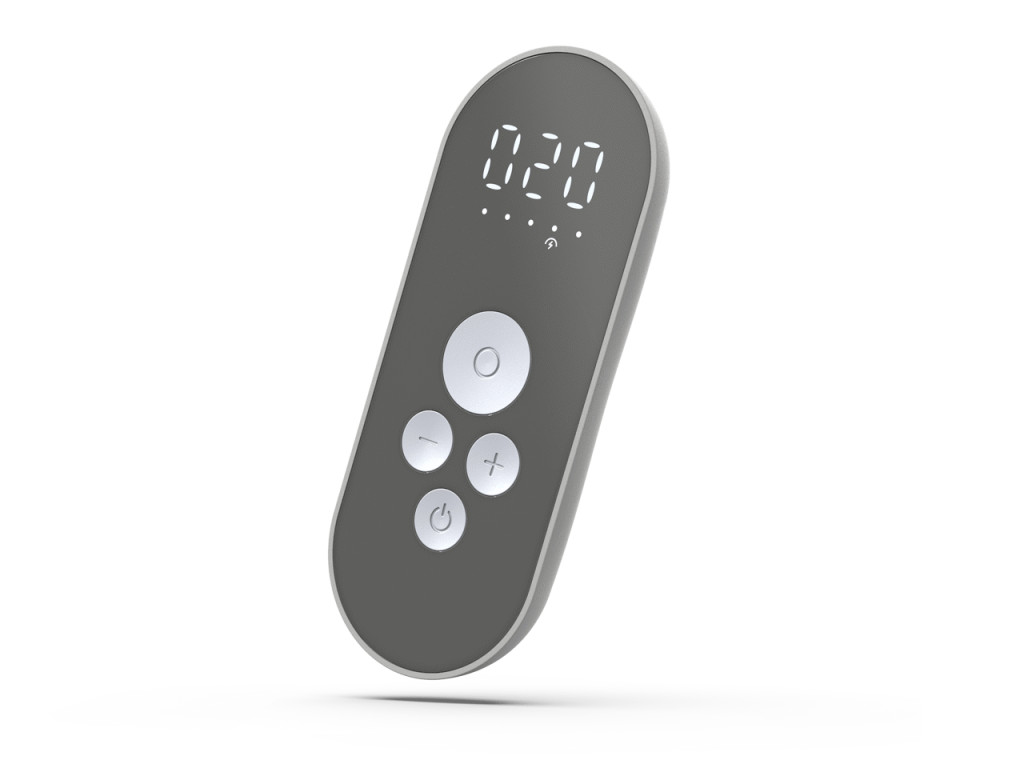
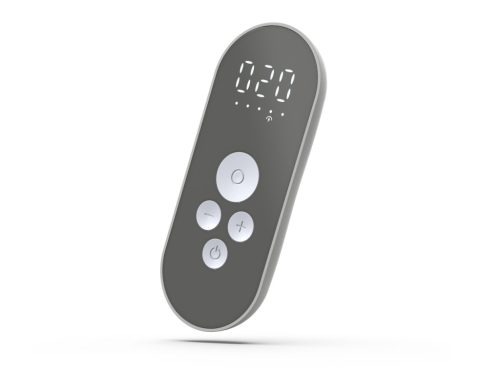
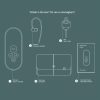
- 1 pc Nurosym tVNS device
- 1 pc ear electrode (tragus stimulation)
- 1 pc USB charging cable
- 1 pc carrying bag
- 1 pc Hungarian-language user manual
Maintenance of the ear electrode is key to effective use:
- Cleaning: wipe with a damp cloth or mild soapy water after each use. Do not boil or rub with alcohol.
- Lifetime: replace according to usage frequency. If you no longer feel impulses during treatment (even after tragus moistening), replacement is recommended.
- Spare electrode: available for separate purchase in the webshop.
- Replacement earphone: if you have a metal implant on the left ear, an alternative earphone for right-ear use can be obtained on request.
Nurosym can be complemented with additional accessories:
- Spare ear electrode: if the original wears out or is damaged.
- Replacement USB cable: if the original is damaged or lost.
- Alternative earphone for right ear: in case of left-ear implant.
Technical specifications – in detail
| Property | Value | What it means for you |
|---|---|---|
| Type | tVNS (transcutaneous vagus nerve stimulation) | The most studied non-invasive vagus stimulation method |
| Stimulation mode | Vagus stimulation (tragus electrode) | Anatomically precise target of the ABVN (auricular vagus branch) |
| Channel | 1 (ear electrode) | Single, targeted stimulation |
| Placement | Left ear tragus (default), right ear on request | Alternative right-ear earphone available if left-ear metal implant is present |
| Clinical validation | 30+ published clinical studies | The most validated home vagus stimulator on the market |
| Main proven effects | HRV increase, reduction of inflammatory cytokines | Objectively measurable physiological changes |
| Typical protocol | Daily 30 minutes (starter), 6–8 week trial period | Realistic expectation: not an immediate cure |
| Power supply | Lithium-ion battery, USB-rechargeable | No battery replacement, portable |
| Portability | Compact, with carrying case | Suitable for travel, office, hotel |
| Certification | CE certified; Class IIa neuromodulation device | European compliance, higher safety category |
| Manufacturer | Parasym Ltd. (United Kingdom) | Specialized neuromodulation manufacturer |
 When NOT to use Nurosym
Nurosym is a CE Class IIa neuromodulation device that can have significant autonomic nervous system effects via vagus stimulation. In certain conditions this may be dangerous – under the following circumstances use is prohibited or requires treating physician supervision.
- Active implanted medical device (pacemaker, defibrillator ICD, hearing implant, neurostimulator)
- Metal implant in the left ear electrode placement area (alternative right-ear earphone available on request)
- Severe cardiovascular disease (heart failure, severe coronary artery disease)
- Recent myocardial infarction (within 5 years)
- Bradycardia – resting heart rate below 50 beats/min
- History of cervical vagotomy (surgical transection of the vagus nerve)
- Carotid atherosclerosis (neck artery stenosis)
- Undiagnosed pain syndrome
- Pediatric patients (under 18 years old)
- Pregnancy (and planned pregnancy – consult treating physician)
- Epilepsy or other seizure disorders (relative; specialist consultation required)
- Acute skin inflammation, injury, or infection at the tragus site
- Severe psychiatric disorders (acute psychosis, bipolar manic phase)
Unsure? Always consult your treating physician before use – especially if you have any cardiovascular disease or want to try it for atrial fibrillation (AFib). AFib use REQUIRES cardiologist supervision. For detailed information see Dr. Zátrok Zsolt’s article on contraindications of electrotherapy.
 Important information
Nurosym is a CE-certified, Class IIa medical device designed for independent at-home use. Nevertheless, its use in no way replaces medical diagnosis, the treating physician’s specialist protocol, or prescribed medication. The device is intended as an adjunct to comprehensive therapy.
Individual results vary. Positive clinical trial results DO NOT mean identical effects in every patient. Customer feedback is mixed (3.7/5 average). Realistic expectation: a 6–8 week trial with HRV monitoring and symptom diary. If there is no clear improvement, consider alternative treatments.
In atrial fibrillation (AFib) and other heart diseases: Nurosym may be started ONLY under cardiologist supervision. DO NOT independently change the dosages of your cardiac medications (antiarrhythmics, anticoagulants, beta-blockers, etc.) – only your treating physician may do so. If new or worsening cardiac symptoms occur (palpitations, chest pain, shortness of breath, syncope), STOP treatment IMMEDIATELY and seek urgent medical attention.
In severe psychiatric conditions: vagus stimulation can influence mood. In severe depression, bipolar disorder, psychosis, or suicidal ideation, SPECIALIST SUPERVISION is mandatory. Do NOT stop prescribed psychiatric medications because of Nurosym use.
Side effects: the most common is skin irritation (tingling, itching) at the tragus area. Rarely, headache, dizziness, fatigue, shortness of breath, or arrhythmia may occur. If any side effects appear, stop treatment and consult your treating physician.
Use only original accessories. Keep the device out of reach of children at all times.
The information on this page is for general informational purposes and does not replace individual medical advice, diagnosis, or treatment. Always consult your treating physician regarding specific complaints.