 The modern therapeutic hierarchy for long-term conditions
If you live with chronic pain, musculoskeletal problems or a longer rehabilitation ahead, you probably know the feeling: your doctor can spare a few minutes for you each month, your physiotherapist sees you once a week, and you are left alone with your symptoms for the remaining 167 hours. This article is about why we need to think about this situation in a fundamentally different way.
 Key point
In chronic disease management, the doctor “only” diagnoses and creates a treatment plan – lasting results do not come from a monthly consultation, but from daily home-based work carried out under the therapist’s guidance. In this arrangement, the therapist and the actively involved patient are the most important pillars of long-term condition management, while home medical devices represent a new, independent therapeutic pillar – not a supporting role.
 A paradigm shift in healthcare
A hundred years ago, most people died from infectious diseases. Today, the situation has changed completely: chronic, long-lasting conditions – diabetes, cardiovascular problems and musculoskeletal complaints – have become the main healthcare challenge.
Yet the Hungarian healthcare system is still optimised for acute care: it is strongly doctor- and medicine-centred. A hospital is excellent for treating a heart attack or a fracture. But it cannot provide the continuous treatment every day, for weeks and months, that a chronic condition may require. A GP can spend an average of 6-8 minutes with you, and you may wait months for your next specialist appointment – while you are left alone with your symptoms.
But why is hospital care not the answer? I wrote about this in this article →
Related article: The healthcare chain: From hospital care to home treatment
Why is the traditional arrangement not enough?
Do not misunderstand me: modern medicine is impressive. Heart transplants are performed, oncology is advancing rapidly, and lives are saved every day. But in the management of long-term conditions, the traditional doctor- and medicine-centred arrangement has limitations.
Let us take a simple example. If you have chronic lower back pain, your doctor prescribes medicine and refers you for physiotherapy. Your physiotherapist sees you once a week for 20-30 minutes. What happens during the remaining 167 hours? In the old arrangement: nothing. The pain remains, your condition worsens, and you wait for the next appointment.
Research consistently shows that the effectiveness of rehabilitation depends greatly on intensity, regularity and the patient’s active participation. Treatment once a week rarely produces lasting improvement on its own.
This problem can be addressed with one structural change: the therapeutic hierarchy must be reorganised. The main player is not the doctor seen once a month, but the therapist who supports you week after week, your own daily work at home – and the medical devices that support it.
Related article: Why does your doctor not talk about home medical devices?
 The four equal participants in the modern hierarchy
Modern management of long-term conditions can only be effective when all four participants are in their proper place. Each is responsible for a different stage – and none replaces the others. Open each role to see what it contributes to the process:
The doctor’s role is clearly defined: establishing a diagnosis, ruling out dangerous conditions, determining indications and contraindications, and setting the therapeutic direction. The doctor decides whether home therapy can be considered at all and, if so, within what framework.
But what surprises many people is that the doctor has no active role in continuous therapy. The doctor writes the prescription and issues the referral, but does not carry out the daily work. This is not a shortcoming – it is how the system works. A medical consultation is focused decision-making, not daily care.
This is the most important change in the new hierarchy. The physiotherapist, physical therapist, manual therapist and respiratory therapist are not the doctor’s “service providers” or “supporting players” – they are central figures in long-term condition management.
The therapist’s role is wide-ranging: they lead the restoration, maintenance and development of function; educate the patient about movement and therapeutic device use; adapt treatment as the condition changes; and support the long-term care strategy. In practice, the individual treatment protocol is developed under their guidance, taking into account your diagnosis, coexisting conditions, daily routine and progress.
In Hungary, professionals working in physiotherapy and movement therapy are unfairly pushed into the background. This is not only unjust but professionally misguided: in long-term conditions, therapists’ work is the key.
In the old arrangement, the patient “receives” treatment. In the new arrangement, you do most of the work – under the therapist’s guidance and within the framework set by the doctor.
This is not a burden, but empowerment. Daily movement at home for 30-60 minutes, conscious posture, regular exercises and precise use of your home device – without these, lasting results are not realistic. Lasting results can only be expected with regular home-based work and cooperation.
Taking an active role does not mean that you are left on your own: your therapist teaches, monitors, corrects and motivates you. But the execution is yours.
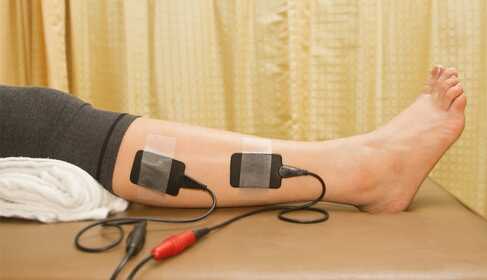
Home electrotherapy, muscle stimulation, soft laser, pulsed magnetic field therapy and pneumatic compression devices are not the same as devices used in clinical settings for a few days of intensive treatment. They are designed so that daily use at home is safe and meaningful.
In the new hierarchy, they are not “assistive devices”, but an independent therapeutic pillar: when appropriately indicated, they help continue at home the work started in the clinic, fill the empty days between weekly physiotherapy sessions and make daily treatment possible.
There is one condition: a device can only be used responsibly when it is linked to a therapeutic goal, the patient’s condition and proper education. The doctor authorises it, the therapist incorporates it into the protocol, and you use it – in that order.
 Why are therapists the main players in long-term conditions?
Let us be clear: the doctor is not “less important” – the doctor simply represents a different focus in the process. But the logic of long-term, chronic conditions is such that weekly and daily therapeutic work determines the outcome, and the doctor does not carry out this work.
The physiotherapist and physical therapist are the people who:
- teach you a safe and effective movement pattern,
- develop the exercise routine you perform independently at home,
- set up your home device protocol (programme, intensity, electrode placement, duration),
- adjust the programme every two weeks to one month as your condition progresses,
- educate you about posture, sitting, lifting and sleep,
- notice when you are doing something incorrectly and put you back on the right track.
No prescription can replace this. A 10-minute medical consultation cannot replace it. Long-term condition management is time-consuming, repetitive and regular professional work – and that is the therapist’s role.
Related article: Physiotherapy: Healing energy and its role in improvement
Your role: the engine without which there is no result
The central idea of the new hierarchy is that you are not the passive recipient of treatment, but the engine of lasting results. The doctor sets the route. The therapist gives you a map and a compass. But you take the steps.
This is not just a rhetorical phrase – research consistently shows this: home rehabilitation also produces measurable improvements in physical function in people after stroke when carried out regularly.3 I see the same in medical practice: the most noticeable improvements are achieved by people who become active participants in their own care, ask questions, monitor their progress and do not abandon their daily routine when a slightly more difficult week comes along.
Key point
Without your active participation, even the best-prepared doctor and the most experienced therapist cannot achieve lasting results in chronic conditions. The good news is that taking an active role is not a burden – this is where you have genuine influence over your own health.
I wrote more about the principles of healing – and why there is no single universal solution – here →
 Home medical technology as a new therapeutic pillar
Home medical devices have crossed a quality threshold over the past decade. Today, they are not only safe for independent use, but also have clinically grounded therapeutic value when used for appropriate indications and with proper education.
According to the latest comprehensive scientific review, the use of home healthcare technologies can have a favourable effect on chronic disease management: they support patients’ self-management and may improve quality of life.1 In other words, we are not talking about trendy “gadgets”, but about a new, independent range of therapeutic tools.
Better-known home medical technology modalities include:
- Electrotherapy devices (TENS, EMS, microcurrent, interferential therapy) – pain relief and muscle strengthening
- Soft laser devices – supporting tissue regeneration and reducing inflammation
- Magnetotherapy devices – improving circulation and relieving pain
- Compression (pneumatic) therapy devices – improving lymphatic and blood circulation and reducing oedema
- Therapeutic ultrasound – treating deeper tissues
These devices are not only intended for patients – the same technologies may also be useful for athletes, beauty care, pets and professionals. I write more about this in the article “One technology – five worlds” →
 An important clarification
Home devices do not replace medical or physiotherapy supervision. Their value appears precisely when you use them with the doctor’s approval, according to the therapist’s protocol and for an indication suited to your condition. Buying one independently and using it “just because” is not therapy – it is only a device.
Related: Medical devices – Full catalogue
Typical areas of use
Lower back pain, neck pain and joint problems make life difficult for millions of people. Physiotherapy – including electrotherapy, ultrasound and laser therapy – has been a well-established approach to managing these problems for decades. With home devices, you can carry out the same treatments in your own home as often as the protocol agreed with your therapist requires.
After surgery, stroke or injury, rehabilitation determines how much of the lost function you regain. Research indicates that home rehabilitation produces measurable improvements in physical function after stroke when it is regular and intensive.3 Your therapist determines what to do, when and in what form – you carry it out every day.
Related article: Rehabilitation: How to regain lost abilities
Varicose veins, swollen legs and lymphoedema are conditions in which daily treatment is fundamentally important. Pneumatic compression therapy devices may help reduce symptoms and improve quality of life, particularly when a physiotherapist or lymphatic exercise specialist sets the appropriate pressure protocol.
TENS (transcutaneous electrical nerve stimulation) is one of the most extensively researched home pain-relief methods. Reviews summarising hundreds of clinical studies indicate that TENS may measurably reduce pain intensity in both acute and chronic pain.2,4 However, the precise programme and electrode placement do not come “ready-made in the box” here either – your therapist can help you find what works for you.
 Before you start – when should you be cautious?
Before starting any home therapeutic device, it is important to discuss it with your treating doctor and therapist. Most electrotherapy devices must not be used, or require particular caution, in the following situations:
- Implanted cardiac pacemaker – electrotherapy devices are generally contraindicated.
- Pregnancy – avoid certain treatment areas, particularly the abdomen and lower back.
- Active cancer in the treatment area – electrotherapy, magnetotherapy and ultrasound therapy should be avoided.
- Acute thrombosis – compression therapy and electrotherapy are contraindicated.
- Recent surgical wound – placing electrodes directly over the scar should generally be avoided; your rehabilitation doctor will give you precise approval.
Important information
Home devices are intended to complement and continue medical and physiotherapy treatment on a daily basis – not to replace it. Improvement is gradual and requires patience and regularity. Always read the device instructions and discuss starting treatment with your therapist.
Frequently asked questions
No – it becomes more precisely defined. The doctor diagnoses, rules out dangerous conditions, determines indications and sets the treatment direction. This remains a vital role in chronic diseases. But the doctor does not carry out the daily therapy – this is not neglect, but a division of labour. You carry out continuous treatment at home under your therapist’s guidance.
A specific, personalised and repeatable therapeutic protocol – and time. The therapist teaches the exercises, sets up the home device programme, monitors your progress, corrects you and motivates you. The doctor is strong in setting the strategy; the therapist leads the daily implementation.
No. A home device is a new, independent therapeutic pillar – not a replacement. It does not replace medical and physiotherapy supervision. Meaningful use requires all three: medical indication, a therapist’s protocol and your daily regularity.
Improvement is gradual. Many patients feel relief after the first few treatments, but lasting results generally require 2-4 weeks of regular use, and chronic conditions may take 8-12 weeks. Patience and regularity are the two most important factors.
Yes. One physiotherapy session a week and one medical appointment a month are only a small part of the full treatment. The rest – daily movement, regular device use, conscious posture and lifestyle – is your responsibility. This is not a burden, but empowerment: this is where you have genuine influence over your own health.
Medical devices developed for home use are designed for independent daily application – so their parameters operate within a safer range than those of their clinical counterparts. They are appropriate when used correctly, with contraindications observed and according to your therapist’s protocol. If you are uncertain, always consult your treating doctor.
 Summary – The new therapeutic hierarchy
Sources
- Al-Arkee S et al. (2024). The Role of Wearable Devices in Chronic Disease Monitoring and Patient Care: A Comprehensive Review. Cureus. PubMed: 39381470
- Johnson MI et al. (2022). Efficacy and safety of transcutaneous electrical nerve stimulation (TENS) for acute and chronic pain in adults: a systematic review and meta-analysis of 381 studies (the meta-TENS study). BMJ Open. PubMed: 35144946
- Chen YH et al. (2020). Systematic Review and Meta-Analysis of Home-Based Rehabilitation on Improving Physical Function Among Home-Dwelling Patients With a Stroke. Arch Phys Med Rehabil. PubMed: 31689417
- Pollock A et al. (2019). Transcutaneous electrical nerve stimulation (TENS) for chronic pain – an overview of Cochrane Reviews. Cochrane Database Syst Rev. PMC: 6446021