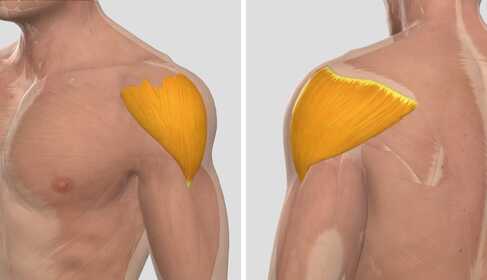

 What is frozen shoulder syndrome?
Frozen shoulder (medically known as adhesive capsulitis, formerly called periarthritis humeroscapularis) means that the capsule becomes diseased: inflammation develops in it, the connective tissue thickens and scars – the normally 3–4 millimetre capsule may swell to 1–2 centimetres – and the shoulder literally “freezes” inside its own capsule.
The vicious cycle is well known: because of the pain, you protect your shoulder, and because of the lack of movement, the capsule shrinks and sticks further, allowing you to move even less. First, lifting the arm and rotating it outwards become difficult – you cannot reach the shelf, fasten your bra or comb your hair – and later even passive movement assisted by the other hand becomes restricted.
 Key point
Frozen shoulder is a long-lasting condition – even with consistent treatment, full recovery may take 1–2 years. The good news is that, according to the largest comparative study, surgical solutions do not produce better results after one year than early, structured physiotherapy supplemented with an injection. In other words, the outcome is largely in your hands: daily, patient stretching and movement are the backbone of treatment – home physiotherapy can be added to this.
 What happens in the shoulder – and who develops it?
Research suggests that the condition is caused by a transformation of the connective-tissue cells in the capsule: under the effect of inflammation, collagen-producing cells change into “contractile” cells, and the capsule thickens, shrinks and sticks down.1 This also explains why the condition is so stubborn: it is not a simple inflammation that can be calmed by a course of medicine, but structural remodelling whose reversal requires time and regular mechanical stimulation – in other words, movement.

Frozen shoulder typically develops between the ages of 40 and 60 and is more common in women. Diabetes and thyroid disease are important risk factors – in people with diabetes, the condition is more common and more persistent – as is any situation in which the shoulder remains still for a longer period: surgery, fracture, plaster cast, or prolonged protection after a painful shoulder injury.1 This is why the most important prevention rule is: after a shoulder problem, do not leave your arm completely still for weeks – protecting it and keeping it completely immobile are not the same thing.
A study carried out in the United Kingdom provides a clear answer. More than 500 people with frozen shoulder were divided into three groups – manipulation under anaesthesia, arthroscopic surgical release, or early, structured physiotherapy with a steroid injection. One year later, there was no meaningful difference between the results of the three groups – surgery was not shown to be better, while its risk of complications was higher.2 The lesson is clear: in most cases, patient and consistent conservative treatment leads to the same outcome as surgery – but more safely.
 The three stages of the condition
| Stage | Typical duration | What do you experience? | What is the focus? |
|---|---|---|---|
| 1. “Freezing” – painful stage | 2–9 months | Increasing shoulder pain, also occurring at night and more pronounced in the morning; the range of movement slowly narrows | Pain relief, gentle – but not zero! – movement; medical diagnosis, injection if needed |
| 2. “Frozen” – stiff stage | 4–12 months | The pain eases, but the shoulder is very stiff; lifting the arm and rotating it outwards are severely restricted | Daily stretching and movement exercises – this is the stage that determines how quickly the shoulder loosens |
| 3. “Thawing” | 6–24 months | The range of movement gradually returns | Continue exercising and rebuild muscle strength – do not stop too early |
The durations are only indicative and may overlap – the key is the pattern: after the pain-dominated beginning, stiffness becomes the main enemy, and the condition eventually eases in most people. The aim of treatment is to shorten this process and regain as much movement as possible.
 Movement therapy at home – Shoulder Rope exercises
The backbone of treatment is daily movement – and the Shoulder Rope is brilliantly simple help with this: a rope passed over a pulley attached to a door, where your healthy arm pulls and lifts the affected one. This moves the painful shoulder passively, without using its own muscle strength – exactly what is needed to stretch the stuck capsule. With every exercise, hold the end position for 10–15 seconds and repeat 10 times, in one or two rounds a day:
Exercise 1 – lifting forwards and upwards: sit facing the door, with both hands on the handles. Slowly pull the rope backwards and downwards with your healthy arm – meanwhile, the affected arm rises forwards and upwards.
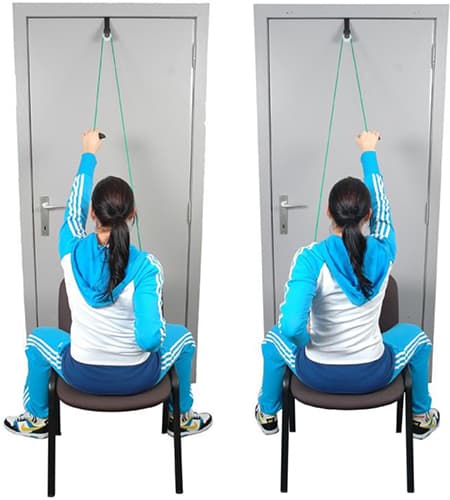
Exercise 2 – lifting with your back to the door: sit with your back to the door. Raise the healthy arm, then slowly move it forwards and downwards – the affected arm rises from below upwards.
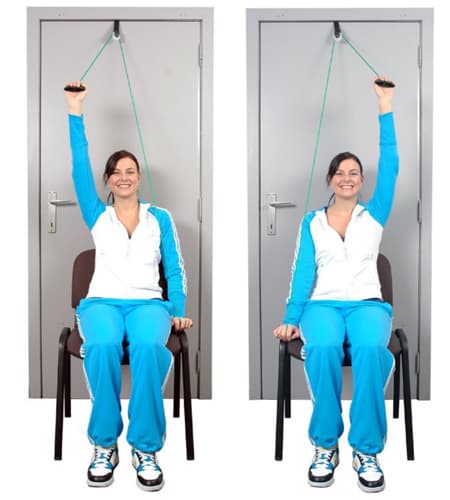
Exercise 3 – lifting to the side: with your back to the door, start with the healthy arm extended out to the side and 45 degrees upwards, then slowly let it down – the affected arm rises upwards from the side.
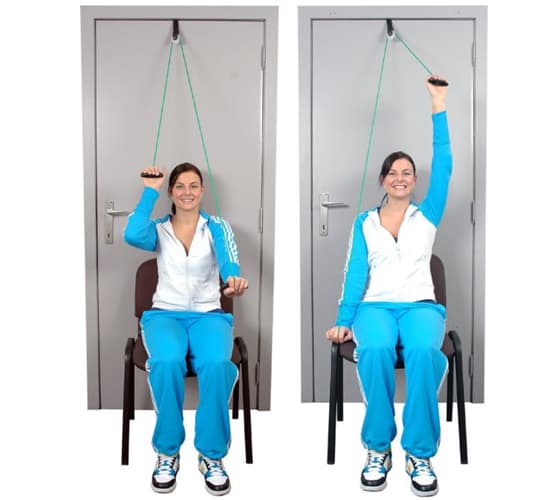
Exercise 4 – lifting through a higher range: a variation of the previous exercises through a larger range of movement – use it when the first exercises are already going well.
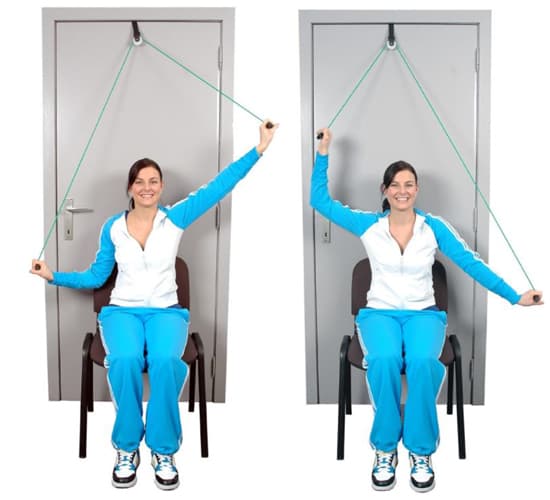
Exercise 5 – moving across the front of the body: sit sideways to the door, with the affected hand on the outside. As you lift the healthy arm, the affected arm moves inwards across the front of the body.
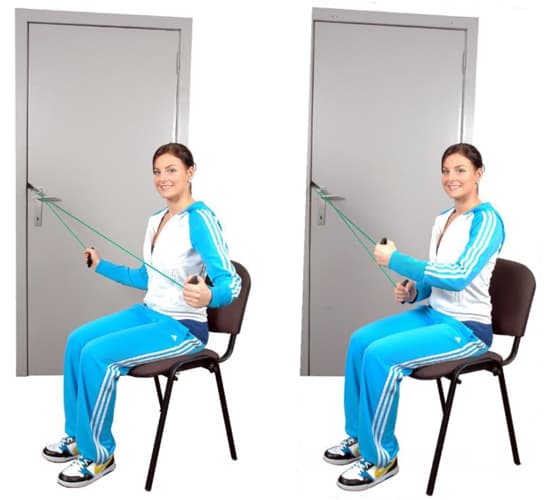
Exercise 6 – moving behind the back: still sitting sideways, move the affected arm inwards behind the back – this is the most difficult direction (you use it to fasten clothing and comb your hair), so work towards it patiently.
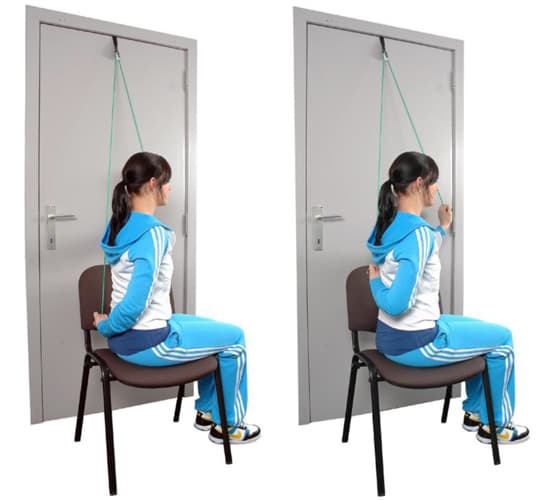
 My advice
Stretching may cause tension, but not sharp pain. “No pain, no gain” is particularly harmful here: forced, painful stretching creates protective muscle tension and more inflammation. The right amount is the amount you do not regret the next day. And keep a notebook: record each week how far you can get in each direction – frozen shoulder improves centimetre by centimetre, and visible progress helps you keep up the daily work.
Home physiotherapy – what is worth adding to the exercises?
Let us start with the honest order of priority: the strongest research evidence concerns soft laser treatment – according to the scientific review, adding soft laser to exercise meaningfully improved pain and function compared with exercise alone.3 I have written more about soft laser treatment here. The evidence for microcurrent (MCR) and muscle stimulation (EMS) is weaker – based on my own clinical experience, I recommend these as additions: microcurrent may support the regeneration of inflamed, painful tissues, while EMS may help loosen stiffness and work muscles weakened by protection. You can read about the background in the microcurrent article and the muscle stimulator guide, and about the principle of a multi-method approach in the article on multimodal treatment.
Microcurrent (MCR) treatment – electrode placement
Use a four-channel device and connect the electrode pairs crosswise so that the current from each channel passes through the painful focus in the shoulder. Microcurrent is so low in intensity that you typically do not feel it at all – this is normal and does not mean that the device is faulty.

Muscle stimulation (EMS) treatment – electrode placement and intensity
Place the electrodes on the shoulder and upper-arm muscles as shown in the illustration. Set the intensity at the upper limit of your comfort zone: the muscle contractions should be distinct, but not painful. A setting that is too cautious and barely perceptible will not produce results.

Suggested weekly schedule
| Period | Programme (from the device programme list) | Frequency |
|---|---|---|
| Weeks 1–4 | Shoulder–scapula–periarthritis (20 minutes) – MCR | daily |
| Rotator cuff inflammation (20 minutes) – MCR | daily | |
| Stiffness release / Upper limbs (20 minutes) – EMS | daily | |
| From week 5 until recovery | Rotator cuff inflammation (20 minutes) – MCR | twice daily |
| Stiffness release / Upper limbs (20 minutes) – EMS | Monday, Wednesday, Friday, Sunday | |
| Capillarisation / Upper limbs (20 minutes) – EMS | Tuesday, Thursday, Saturday |
Which device is for what?
Shoulder Rope
Start with this – it is the movement therapy device, so it belongs to the backbone of treatment. It is a pulley rope that can be attached to a door, allowing your healthy arm to move the affected arm through the six exercises. It is simple, inexpensive and does exactly what the stuck capsule needs: gentle daily stretching.
Premium 400
A four-channel TENS–EMS–MCR device: it provides all three programme types in the protocol above, and four channels are needed for crossed shoulder electrode placement. It is worth considering if you want to build the complete physiotherapy protocol alongside the exercises. Similar alternatives are the Genesy 300 Pro, the Triathlon Pro and the Activa 700 – one device is enough; you do not need to buy more.
B-Cure Laser Sport Pro
A soft laser device – the device family supported by the strongest research evidence for frozen shoulder when combined with exercise.3 Use it once a day, directly on the painful shoulder area. It is not an essential element: if you have to choose, the Shoulder Rope and daily exercises come first – the laser is an add-on.
And the usual honest statement: none of these devices solves anything on its own – daily repetition does. The devices are there to make the long months of home treatment feasible and more tolerable.
 Before starting home treatment
- Uninvestigated shoulder pain – obtain a medical diagnosis first: a rotator cuff tear, joint wear or another condition can also mimic the symptoms of frozen shoulder
- Pacemaker or another implanted electronic device – electrotherapy (MCR, EMS, TENS) must not be used
- Cancer in the area to be treated – local physiotherapy treatments are prohibited
- Pregnancy – electrotherapy only after medical consultation
- Recent injury, fracture or dislocation of the shoulder – stretching exercises may only begin with the doctor's permission and from the time specified by the doctor
- Skin injury or inflammation where the electrode or laser head is placed – allow the skin to heal first, then start treatment
 When should you see a doctor?
If the shoulder problem developed suddenly after an injury or fall; if your arm suddenly became weak or numb; if the pain is accompanied by fever, weight loss or night sweats; or if you have had cancer before – these are not symptoms of frozen shoulder but signs that require investigation. A doctor must also make the diagnosis of frozen shoulder: the home programme is based on this diagnosis, not a substitute for it.
Frequently asked questions
I do not want to sugar-coat it: yes, the complete course typically takes 1–2 years – this is the nature of the condition, not a failure of treatment. Consistent daily work can shorten the stiff stage, however, and the pain usually eases much earlier, over weeks or months. The worst strategy is to wait: by taking the “it will loosen on its own” approach, you choose the longest route, with the greatest risk of residual symptoms.
Not for the vast majority of people. In the largest comparative study, surgical solutions did not produce better results after one year than early physiotherapy with an injection – while the risk of complications was higher with surgery. Surgery may be considered in cases that do not respond to lengthy, consistent conservative treatment – but this is the exception, not the rule.
Up to tension, yes; up to sharp pain, no. During stretching, you should feel that the shoulder is “working” – but forcing an exercise through gritted teeth triggers protective muscle tension and backfires. The dose is right if the symptoms increase only mildly and temporarily after exercising, then return to their previous level by the next day.
Persistently high blood sugar also damages the proteins in connective tissue: sugar molecules attach to collagen fibres, making the capsule stiffer and more prone to sticking. If you have diabetes, you therefore have two tasks: alongside the shoulder programme, managing your blood sugar is also part of treatment – and you should know that the course may be more stubborn, so you will need even more patience.
With frozen shoulder, warmth is generally your friend: warming for 10–15 minutes before exercising (a warm shower or heat pad) loosens the tissues and makes stretching easier. Cooling may be useful in the first, highly painful stage and for a temporary flare-up after exercising.
A steroid injection into the shoulder joint is most useful in the painful first stage: it reduces inflammation and pain, opening the way for exercise – in the large study, the physiotherapy group also received an injection. Your doctor decides about the injection; on its own, without exercise, it provides only temporary relief.
 What does the research say?
“Why is this condition so stubborn?”
Because it is not a simple inflammation but structural remodelling. According to the most comprehensive scientific review of the condition, the connective-tissue cells in the capsule change into “contractile” cells, and the capsule becomes scarred, thickened and shortened – this causes the stiffness. Reversal requires time and regular mechanical stimulation, in other words daily movement; this is why neither simply waiting nor a one-off miracle cure works.1
“Would surgery not be quicker?”
The figures say no. In a British study that followed more than 500 people, manipulation under anaesthesia, surgical capsular release and early, structured physiotherapy with an injection produced virtually the same results for pain and shoulder function after one year – while the surgical groups had more serious complications.2 The conservative route is therefore not a “Plan B”, but an equally effective and safer first choice.
“Which home device has the strongest evidence?”
Soft laser. According to a scientific review of electrotherapy treatments for frozen shoulder, adding soft laser treatment to exercise meaningfully reduced pain and improved function compared with exercise alone, without side effects – for the other methods (ultrasound, magnetotherapy and TENS combinations), the evidence is uncertain.3 This is why my order of devices is also: exercise → laser → other additions.
 Summary – Quick overview
Read more
Scientific sources
- Millar NL, Meakins A, Struyf F, et al. (2022). Frozen shoulder. Nature Reviews Disease Primers, 8(1), 59. DOI: 10.1038/s41572-022-00386-2
- Rangan A, Brealey SD, Keding A, et al. (2020). Management of adults with primary frozen shoulder in secondary care (UK FROST): a multicentre, pragmatic, three-arm, superiority randomised clinical trial. The Lancet, 396(10256), 977–989. DOI: 10.1016/S0140-6736(20)31965-6
- Page MJ, Green S, Kramer S, Johnston RV, McBain B, Buchbinder R (2014). Electrotherapy modalities for adhesive capsulitis (frozen shoulder). Cochrane Database of Systematic Reviews, 2014(10), CD011324. DOI: 10.1002/14651858.CD011324