When might Mynd be suitable for you?
Episodic migraine (1–14 days per month) is the most common form. Mynd’s acute mode can be started at the first signs of an attack or during the pain — the earlier after onset, the greater the chance of effective relief. Preventive mode with daily 20-minute sessions aims to reduce attack frequency.
Chronic migraine (15+ headache days/month, of which at least 8 are migraine) imposes a heavy burden on quality of life. Mynd can be used as an adjunct to an existing neurological treatment plan (botox, anti‑CGRP injections, prophylactic medications). Regular daily use of the preventive mode aims to reduce overall symptom days. IMPORTANT: chronic migraine should be managed under neurologist supervision.
Side effects from triptans (sumatriptan, rizatriptan, etc.), NSAIDs (ibuprofen, naproxen), or ergot derivatives (dizziness, gastrointestinal upset, vasoconstriction) cause problems for many patients. Some patients cannot take certain migraine drugs due to cardiovascular risk. Mynd is a non-drug alternative — either as sole therapy or alongside existing treatment.
Many migraine medications (triptans, ergotamine) are contraindicated during pregnancy, so it is advisable to reduce medication use even in the preconception phase. Mynd can be a non-drug option during this transitional period. Discuss planning with your gynecologist and neurologist.
Mynd is a discreet, wearable device — applied to the forehead it can be used at home, in the office, on a flight, long train ride, or in a hotel. If you notice early signs of an attack linked to typical triggers (doctor visit, flight landing, fatigue, stress), start the acute mode immediately. The USB-rechargeable battery is practical for travel.
More neurologists are recommending non-drug alternatives as adjuncts to classic migraine treatment — especially for chronic patients with limitations on medication use. Mynd offers this option. Ideal approach: neurologist assessment, a 4–6 week trial period, and evaluation of effectiveness using an attack diary.
IMPORTANT: individual results vary greatly. Some patients experience significant relief, others little or none. Using Mynd is therefore a "trial" — what works for one person may not work for another. Clinical studies show average response rates around 50–60%. A realistic approach: a 4–6 week regular trial (acute use during attacks + daily prevention) and assessment via an attack diary. If it does not produce clear improvement, explore other options.
Migraine is common in childhood and adolescence. Mynd can be an option where classic medications are complicated. IMPORTANT: pediatrician/child neurologist approval is required. Under 12 years old should not use alone — only under adult supervision.
How does Mynd work?
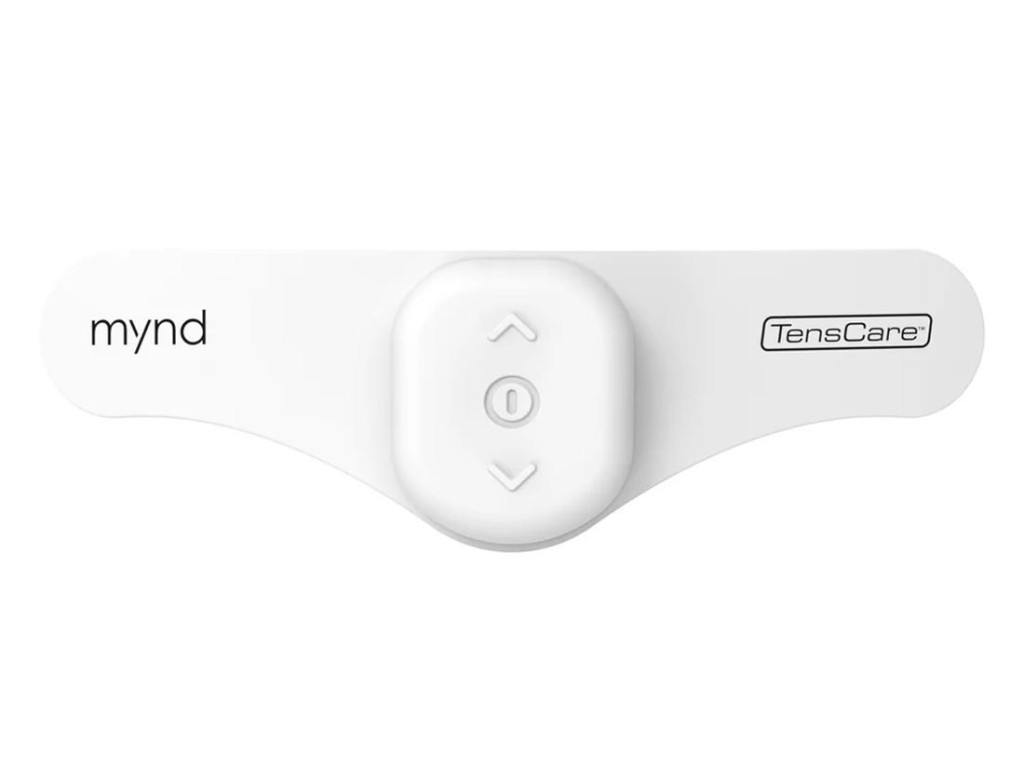
Mynd uses so-called cranial TENS (cTENS / CES) technology: weak electrical pulses are delivered via an electrode attached to the forehead to the frontal branch of the trigeminal nerve. Clinical studies suggest this stimulation can affect migraine pain transmission and pain threshold.
The trigeminal nerve (cranial nerve V) conveys sensations from the head and face to the brain. One main pathway for migraine pain is the frontal branch of the trigeminal nerve. Clinical observations show abnormal activity in these fibers during migraine attacks, causing the throbbing pain over the forehead and temple area.
Mynd, when placed on the forehead, stimulates these fibers with low-intensity electrical pulses. According to the classical TENS gate-control theory, low-intensity stimulation can block transmission of pain signals to the brain.
The acute mode is optimized for an ongoing or imminent migraine attack. Ideally start during the aura phase (signs before pain onset) or within the first hours of pain. The closer to the attack start you begin, the greater the chance of relief.
During the 60‑minute acute session you can gradually increase intensity and rest. Many patients benefit from being in a dark, quiet room and combining with cold/warm compresses. It DOES NOT replace typically taken acute medications — it can complement them (with physician consultation).
Preventive mode is used during pain-free periods — clinical studies indicate that regular short daily sessions can reduce trigeminal nerve "sensitivity," leading to lower frequency and intensity of attacks.
Typical protocol: 20 minutes daily, at approximately the same time (evening before bed or morning). Building effect requires regular daily use for 4–6 weeks — do not expect immediate improvement. Keep an attack diary to track changes.
Using Mynd DOES NOT EXCLUDE your prescribed medications. In some cases neurologists specifically recommend the combination:
- During acute attacks: Mynd + medication may provide better relief than medication alone.
- Prophylaxis: alongside existing prophylaxis, Mynd may further reduce attack numbers.
IMPORTANT: Never change medication doses on your own — consult your physician.
Clinical trials report average response rates of about 50–60% for forehead TENS treatment. This means some patients experience marked relief while others experience little or none.
Mynd is not a miracle cure — a probabilistic tool. A realistic approach: a 4–6 week regular trial with an attack diary. If it does not yield clear improvement, consider other treatment options. Be aware of this before purchase!
Frequently asked questions
No. A pacemaker, implanted defibrillator (ICD), or any implanted metal or electronic device is an absolute contraindication. Mynd’s electrical impulses can cause electrical interference. This is a FUNDAMENTAL safety rule — do not use under any circumstances if you have any such device.
Yes, Mynd MUST be used ONLY on the forehead. NOT on the chest, neck, back of the skull, or anywhere else. Using on the neck or chest can affect the heart, implanted devices, and may influence epilepsy seizure thresholds. Posterior skull stimulation would activate different mechanisms — not the protocol designed for this device.
If your migraine pain is concentrated at the nape of the neck, consult a neurologist, as this often indicates tension-type headache or another non-classical migraine disorder.
Individual results vary:
- During an acute attack: some patients notice relief within 15–30 minutes. Others take longer or see no clear improvement.
- In preventive mode: assess after 4–6 weeks of daily 20‑minute sessions. Earlier evaluation is unrealistic.
IMPORTANT: Mynd is not an instant miracle. Clinical trials show average response rates of 50–60%. Realistically expect a 4–6 week trial to determine effectiveness — keep an attack diary.
Yes, Mynd use does NOT exclude pharmacological therapy — in fact, combination is often recommended. During acute attacks, Mynd + physician-prescribed acute medication (triptan, NSAID) can provide better relief than either alone. For prophylaxis (anti‑CGRP, beta‑blocker, topiramate, etc.), Mynd may add further reduction.
IMPORTANT: Never change medication doses on your own — consult your physician. Inform your neurologist about Mynd use.
Tolerance like that seen with analgesic medications does not develop with Mynd treatment. The electrical stimulation does not "wear out." You can use it as often as needed — without medication-like side effects.
THIS DOES NOT MEAN effectiveness will only increase over time. In some patients initial effect may decrease or fluctuate — this is normal. Keeping a regular attack diary helps evaluation.
General recommendations:
- Prevention: once daily, 20 minutes — roughly at the same time each day.
- Acute attack: during the attack, as often as needed. After a 60‑minute session rest, and if pain persists you may restart.
Never use the device while driving or when performing tasks requiring attention. If you experience new or worsening symptoms (e.g., headache different from your usual migraine, neurological signs, weakness), stop and consult your physician.
A realistic approach: Mynd efficacy is not guaranteed for everyone. If after 4–6 weeks of regular use there is no clear improvement:
- Consult your neurologist — other treatment options may be available.
- Keep an attack diary so data are objective (often the diary shows fewer attacks even when subjective feeling is "no help").
- Try combining with another pharmacological prophylaxis.
- If ultimately not helpful, like many migraine patients you may seek other therapies — Mynd is only one option among many.
Do not be discouraged — most migraine treatments work for many but not all. This is biological variability, not a failure.
How to use it step by step?
1
Charge the battery (with the USB cable)
The device uses a lithium-ion battery and charges with the included USB cable. A full charge before first use is recommended. One full charge allows multiple treatments.
2
Prepare the forehead skin
Clean the forehead skin — remove creams, makeup, sweat, or oil. It is recommended to wipe the area with a disinfectant wipe (e.g., Clinell) before attaching the electrode. This ensures good adhesion and longer electrode life.
3
Attach a gel pad to the forehead
Connect a gel pad to the Mynd device, then place it in the center of your forehead (above the eyebrow, roughly at forehead center). IMPORTANT: Mynd MUST only be used ON THE FOREHEAD — NOT on any other body area (neck, chest, back of the skull, etc.).
4
Select mode (acute or prevention)
Choose between two modes:
- Acute attack: when migraine pain is already present. Start as early as possible after attack onset.
- Prevention: regular short daily sessions aimed at reducing attack frequency. Typically 20 minutes per day.
5
Gradually set intensity (40 levels)
Start at low intensity (levels 1–3) and INCREASE GRADUALLY to a level you find comfortable but that produces a clear tingling on the forehead. Women typically find lower levels sufficient (5–15), men often higher (15–30). You may be more sensitive during an attack — do not force high intensity.
6
Perform the treatment (in a comfortable position)
Lie or sit comfortably (many patients prefer a dark room during migraine). During treatment you can watch TV, read, or sleep. The program has an automatic timer. During an acute attack the session can be repeated as needed.
What’s in the package?
The Mynd basic package — with all accessories needed to start using it immediately.
- 1 pc Mynd device (wearable cranial TENS)
- 3 pcs self-adhesive gel pads (reusable electrodes)
- 1 pc USB charging cable
- 1 pc carrying bag (for travel)
- 1 pc Hungarian user manual
The 3 gel pads in the package are reusable — their lifespan depends on skin type and pre-treatment skin preparation. Tips to extend lifespan:
- Skin cleaning: wipe the skin with a Clinell disinfectant wipe before each use.
- Storage: return pads to the original protective foil after use.
- When to replace: replace when the adhesive no longer sticks adequately or when you no longer feel strong enough impulses during treatment.
- Replacement gel pads: available separately in the online store.
Mynd can be supplemented with additional accessories:
- Replacement gel pads: sold separately in 3‑piece packs.
- Clinell disinfectant wipes: for skin preparation — prolong pad life.
- Replacement USB cable: if the original cable is damaged or lost.
Technical specifications — detailed
| Property | Value | What it means for you |
|---|---|---|
| Type | CES (Cranial Electrotherapy Stimulation) / cranial TENS | Specifically designed to stimulate the frontal trigeminal nerve |
| Stimulation mode | CES (cranial TENS technology) | Migraine‑specific stimulation |
| Modes | 2: Acute (during attack) + Prevention (daily routine) | Two different goals, two optimized settings |
| Intensity levels | 40 adjustable levels | Fine tuning for every user |
| Placement | Center of forehead (above the eyebrow) | ONLY on the forehead — nowhere else |
| Electrodes | 3 reusable self‑adhesive gel pads | Lifetime depends on skin type and preparation |
| Power | Lithium‑ion battery, USB‑rechargeable | No battery replacement, portable |
| Carrying bag | Included | For travel and transport |
| Wearability | Compact, wearable on the forehead | Usable during rest, sitting, gentle movement |
| Tolerance | No tolerance development (TENS technology) | Use as often as needed |
| Certification | Class II medical device; MDR; ISO 13485 | European conformity, quality assurance |
| Manufacturer | TensCare Ltd (United Kingdom) | Manufactured to UK quality standards |
 When NOT to use Mynd
Mynd is a specific cranial TENS device and in certain situations its use may be dangerous. If any of the following apply to you, do not start using the device without physician consultation.
- Having a pacemaker, implanted defibrillator (ICD), or any implanted metal or electronic device — Mynd can cause electrical interference
- Unresolved brain or facial injuries, recent skull trauma
- Active or suspected cancer of the face, forehead, or skull area
- Epilepsy or other seizure disorders (frontal stimulation may affect seizure threshold)
- Pregnancy or possibility of pregnancy (a physician may allow use in individual cases, but generally avoid)
- Severe cardiovascular disease (post‑myocardial infarction phase, severe heart failure)
- Using Mynd on areas OTHER THAN the forehead (neck, chest, back of skull, etc.) — designed exclusively for the forehead
- Damaged skin on the forehead, recent scar, acute dermatitis or infection
- New, previously unexperienced type of headache (possible other neurological diagnosis — evaluation needed)
- Severe bleeding disorders or coagulopathy
- Near body-worn monitoring devices (Holter ECG, glucose monitor, etc. — risk of interference)
- Fever or acute infectious disease
- Children for unsupervised use (under 12 only under adult supervision and pediatrician approval)
Not sure? Consult your physician or neurologist before use — especially if you experience a new type of headache or have any implanted medical device. The cause of a new or unusually severe headache should always be medically investigated before attempting self‑treatment. See Dr. Zátrok Zsolt’s article for detailed information on electrotherapy contraindications.
 Important information
Mynd Migraine Relief is a CE‑certified Class II medical device (manufactured under MDR and ISO 13485 quality assurance), intended for home use. Nevertheless, its use does not replace medical diagnosis, an individualized neurologist protocol, or prescribed pharmacotherapy. The device can be used as a complementary tool within a comprehensive migraine therapy plan.
Individual results vary. Clinical studies report average response rates of 30–50% for forehead TENS treatment. This means some patients experience significant relief while others experience little or none. Realistically allow a 4–6 week trial period and evaluate effectiveness with an attack diary.
If you experience new or worsening headache (especially if different from your usual pattern, or accompanied by neurological signs — vision loss, sensory loss, weakness, speech disturbance) SEEK URGENT medical attention or call emergency services. A new type of headache may indicate a serious neurological condition that should not be "suppressed" with Mynd.
Do not drive or operate heavy machinery during or immediately after Mynd use — TENS stimulation may temporarily affect concentration or perception.
Never change medication doses on your own because of Mynd use — always consult your prescribing physician.
Use only original accessories. Keep the device out of reach of children.
The information on this page is for general guidance and does not replace individual medical advice, diagnosis, or treatment. Always consult your physician about your specific complaints.