What is it recommended for?
The device provides six programs for knee and ankle complaints: osteoarthritis, ankle sprain, knee pain, ankle sprain with edema, meniscal pain and knee osteoarthritis.
Photobiomodulation can be used as an adjunct treatment for joint pain and surrounding soft tissue complaints. It does not restore worn cartilage or a damaged meniscus, and does not replace physiotherapy, strengthening exercises or necessary orthopedic evaluation.
There are manufacturer programs for joint and myofascial shoulder pain, frozen shoulder, epicondylitis, carpal tunnel syndrome and finger pain.
Scanning programs target larger shoulder and muscle areas, while point programs target smaller attachment points or localized treatment sites. In the presence of neurological symptoms, sensory loss, muscle weakness or persistent range-of-motion limitation, prior evaluation is required.
The program set includes settings for chronic and acute back pain, back and neck pain with radiculopathy, myofascial neck pain, cervical osteoarthritis and temporomandibular pain.
Program names do not replace diagnosis. For limb-radiating pain, muscle weakness, sensory disturbance, urinary or fecal dysfunction, or complaints following injury, medical examination is required before starting laser treatment.
The PhysioLaser 1000 offers a specific program for Achilles tendon complaints, general tendon disorders and scanning treatment for injuries.
The advantage of 1000 mW is that the prescribed energy dose can be delivered faster. In clinic use this can shorten the treatment time per patient, but it does not by itself accelerate tissue healing.
Treatment should be combined with offloading, gradual return to loading and appropriate strengthening.
The device includes seventeen aesthetic and adjunct manufacturer programs for wrinkle treatment, skin rejuvenation, problematic skin, stretch marks, scars, cellulite and other specified indications.
These program names do not guarantee lifting, fat reduction, hair removal or cellulite elimination. The effect of photobiomodulation on skin is moderate and individual, and is not equivalent to invasive aesthetic procedures or high-fluence diode hair-removal lasers.
For acne, rosacea, telangiectasia or other skin lesions, dermatological diagnosis is recommended before treatment.
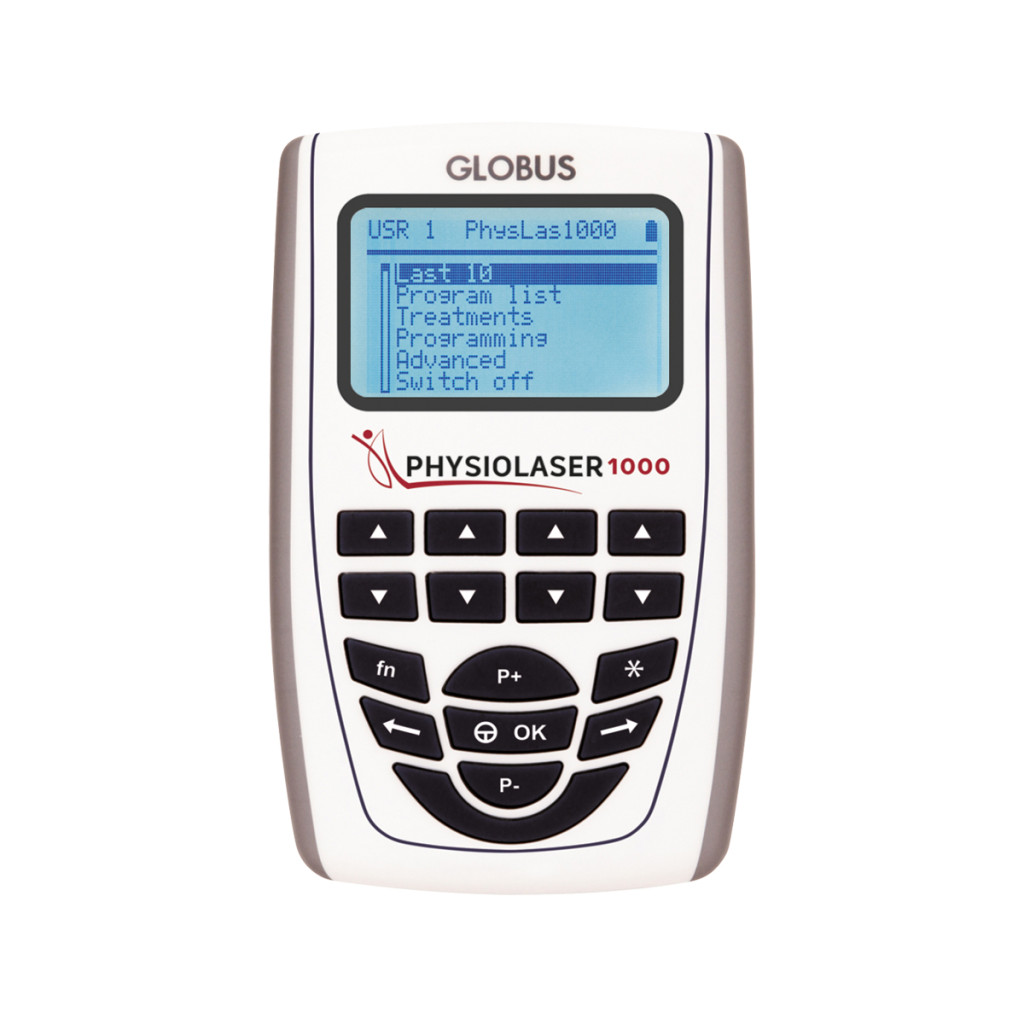
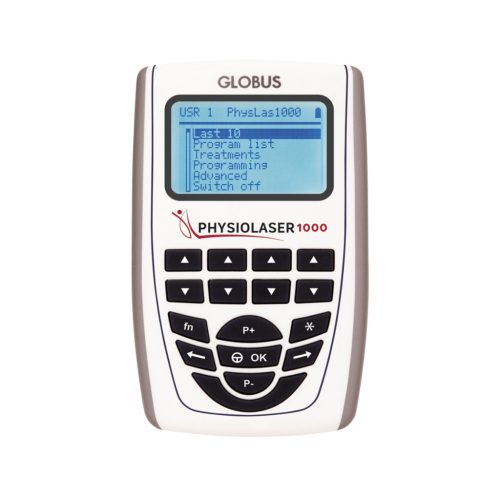
The MULTIuser function manages up to thirty user profiles. Therapists can use the same device with separate profiles, and the LAST 10 function provides quick access to the most recently performed treatments.
In the PROGRAMMING menu you can create and save custom protocols. This is useful when a clinic applies repeated, pre-documented treatment schemes.
The program list includes a scanning setting named “local lymph stasis.” This is an adjunct photobiomodulation program, not a standalone lymphedema treatment.
In lymphedema, complex decongestive therapy, compression, movement, skin care and, if needed, mechanical lymphatic drainage remain the treatment basis. Any swelling of unknown origin should be investigated first.
Why choose the PhysioLaser 1000?

1000 mW maximum optical power
At maximum continuous power, up to 60 Joules per minute can be delivered. Compared to the 500 model, the same dose can theoretically be delivered in about half the time.

40 built-in programs
Twenty-three health and rehabilitation and seventeen aesthetic, skin- or lymph-targeted manufacturer programs speed up setup.

MULTIuser – up to 30 profiles
Multiple therapists can work on the same device with separate user profiles, keeping clinic settings and workflows organized.
LAST 10 treatment memory
The last ten treatments can be quickly recalled, reducing menu time for repeated courses.

Create custom programs
Power, frequency, duty cycle and treatment time can be set manually and saved as a custom protocol.

Two laser-protective goggles and emergency stop
Operator and patient goggles required for Class 4 use, plus the emergency stop button, are included in the package.
Is the PhysioLaser 1000 right for you?
It may be a good choice if
you are a physiotherapist, physical therapist, sports rehabilitation or aesthetic professional performing a variety of treatments.
Especially practical if
shorter treatment time and higher daily treatment capacity are important to you.
Also advantageous in multi-therapist clinics,
because thirty user profiles, treatment memory and saving custom protocols support shared use.
Do not choose this if
you are looking for a simple, consumer home device with one-button operation. Class 4 safety rules and manual parameter setting require professional discipline.
The 1000 model is also not justified if
you only need occasional treatments for yourself or a family member and longer treatment time is acceptable. The PhysioLaser 500 may be more economical for that purpose.
The PhysioLaser 1000's forty built-in programs
Programs provide preset treatment parameters. They simplify treatment but do not replace diagnosis, checking contraindications or laser safety rules.
| Program | Mode | Wavelength |
|---|---|---|
| Osteoarthritis | Scanning | 808 nm |
| Ankle sprain | Point | 808 nm |
| Knee pain | Scanning | 808 nm |
| Ankle sprain with edema | Point | 808 nm |
| Meniscal pain | Scanning | 808 nm |
| Knee osteoarthritis | Scanning | 808 nm |
| Program | Mode | Wavelength |
|---|---|---|
| Articular shoulder pain | Scanning | 808 nm |
| Myofascial shoulder pain | Scanning | 808 nm |
| Frozen shoulder | Scanning | 808 nm |
| Epicondylitis – tennis elbow | Point | 808 nm |
| Carpal tunnel syndrome | Point | 808 nm |
| Finger pain | Point | 808 nm |
| Program | Mode | Wavelength |
|---|---|---|
| Chronic back pain | Scanning | 808 nm |
| Acute back pain | Scanning | 808 nm |
| Back pain with radiculopathy | Scanning | 808 nm |
| Temporomandibular pain | Point | 808 nm |
| Program | Mode | Wavelength |
|---|---|---|
| Neck pain | Scanning | 808 nm |
| Neck pain with radiculopathy | Scanning | 808 nm |
| Myofascial neck pain | Scanning | 808 nm |
| Cervical osteoarthritis | Scanning | 808 nm |
| Program | Mode | Wavelength |
|---|---|---|
| Achilles tendon complaint | Point | 808 nm |
| Tendon disorders | Point | 808 nm |
| Injuries | Scanning | 808 nm |
| Program | Mode | Wavelength |
|---|---|---|
| Wrinkle treatment | Scanning | 808 nm |
| Face lifting | Scanning | 808 nm |
| Dynamic wrinkles | Point | 808 nm |
| Neck wrinkles | Scanning | 808 nm |
| Skin rejuvenation | Scanning | 808 nm |
| Program | Mode | Wavelength |
|---|---|---|
| Acne | Scanning | 808 nm |
| Dehydrated skin | Scanning | 808 nm |
| Rosacea | Scanning | 808 nm |
| Telangiectasia | Point | 808 nm |
| Program | Mode | Wavelength |
|---|---|---|
| Edematous cellulite – thigh, hip, buttock | Scanning | 808 nm |
| Fibrous cellulite – thigh, hip, buttock | Scanning | 808 nm |
| Fat reduction and cellulite | Scanning | 808 nm |
Program names are manufacturer denominations. They do not guarantee fat reduction or cellulite elimination.
| Program | Mode | Wavelength |
|---|---|---|
| Breast stretch marks | Scanning | 808 nm |
| Stretch marks | Scanning | 808 nm |
| Scar treatment | Scanning | 808 nm |
| Hair removal | Scanning | 808 nm |
The "hair removal" program name is a manufacturer denomination. The PhysioLaser 1000 is not equivalent to high-fluence professional diode hair-removal systems, so permanent hair removal cannot be promised.
| Program | Mode | Wavelength |
|---|---|---|
| Local lymph stasis | Scanning | 808 nm |
Adjunct program that does not replace complex lymphedema treatment and investigation of swelling of unknown origin.
Professional functions: custom programs can be created in the PROGRAMMING menu; the LAST 10 function stores the last ten treatments; the MULTIuser system manages up to thirty profiles.
What does photobiomodulation mean?
During soft laser treatment, tissues are exposed to light of a defined wavelength and dose. This process is called photobiomodulation, or PBM for short.
Light interacts with cellular light-absorbing molecules and can influence several biological processes. Research examines effects on cellular energy metabolism, local inflammatory signaling and regenerative processes, among others.
The PhysioLaser 1000's maximum optical power is 1000 mW, i.e. 1 W. At maximum continuous power this means 1 Joule per second, or up to 60 Joules per minute.
The doubled power compared to the PhysioLaser 500 primarily allows faster dose delivery. With the same wavelength and treatment geometry it does not automatically provide double penetration depth or better clinical outcome.
Actual energy delivery depends on the program, power level, pulse settings, duty cycle and treatment time. Excessive dose is not necessarily more effective, so use manual programming only with appropriate knowledge.
How to use it in four steps
1
Select the user profile and program
For multiple therapists first choose your MULTIuser profile. Then start a built-in program, recall a previous treatment from the LAST 10 list, or select a documented custom protocol.
2
Ensure the conditions for Class 4 laser treatment
Both operator and patient must wear laser-protective goggles appropriate for 808 nm. Remove reflective objects, prevent unauthorized entry, and check the accessibility of the emergency stop.
3
Perform the point or scanning treatment
For point treatment keep the handpiece steady at the designated location. In scanning mode move slowly and evenly above the treatment surface at the distance and speed specified in the user manual.
4
Document and, if necessary, save the protocol
Record the treated area, program, energy dose and patient reaction. For repeated treatments use the memory; for custom programs save only verified parameters.
Frequently asked questions
1000 mW, i.e. 1 W, is the device's maximum optical power. At maximum continuous power this corresponds to up to 60 Joules per minute energy delivery. Individual programs may use lower power or pulsed operation.
No. A built-in program reduces parameter errors, but Class 4 laser safety, appropriate eye protection, inspection of the treatment area, checking contraindications and monitoring the patient's reaction remain the operator's responsibility.
Stop the device and seek urgent ophthalmological examination. Inform that an 808 nm Class 4 infrared laser of up to 1000 mW may have reached the eye. Lack of symptoms does not exclude injury.
Results depend on condition, dose, treatment plan and individual response. Some complaints may show early symptomatic changes, others require weeks of treatment. Higher power shortens treatment time but does not guarantee faster healing.
Frequency depends on the program, dose and complaint. Do not automatically apply multiple daily treatments for every acute problem. Follow manufacturer protocols, document the energy dose and observe tissue reaction.
The 1000 model's maximum power is 1000 mW; the 500's is 500 mW. The 1000 offers 40 programs, a 30-profile MULTIuser system and LAST 10 memory. The 500 is also programmable but has fewer programs and delivers the same dose more slowly.
The MULTIuser system manages up to thirty separate user profiles. The LAST 10 function makes the last ten used treatments quickly recallable, saving time for repeated clinic protocols.
The device includes seventeen manufacturer aesthetic and adjunct programs. They are based on possible effects of photobiomodulation on skin but do not guarantee lifting, permanent hair removal, fat reduction or cellulite elimination.
What does the package include?
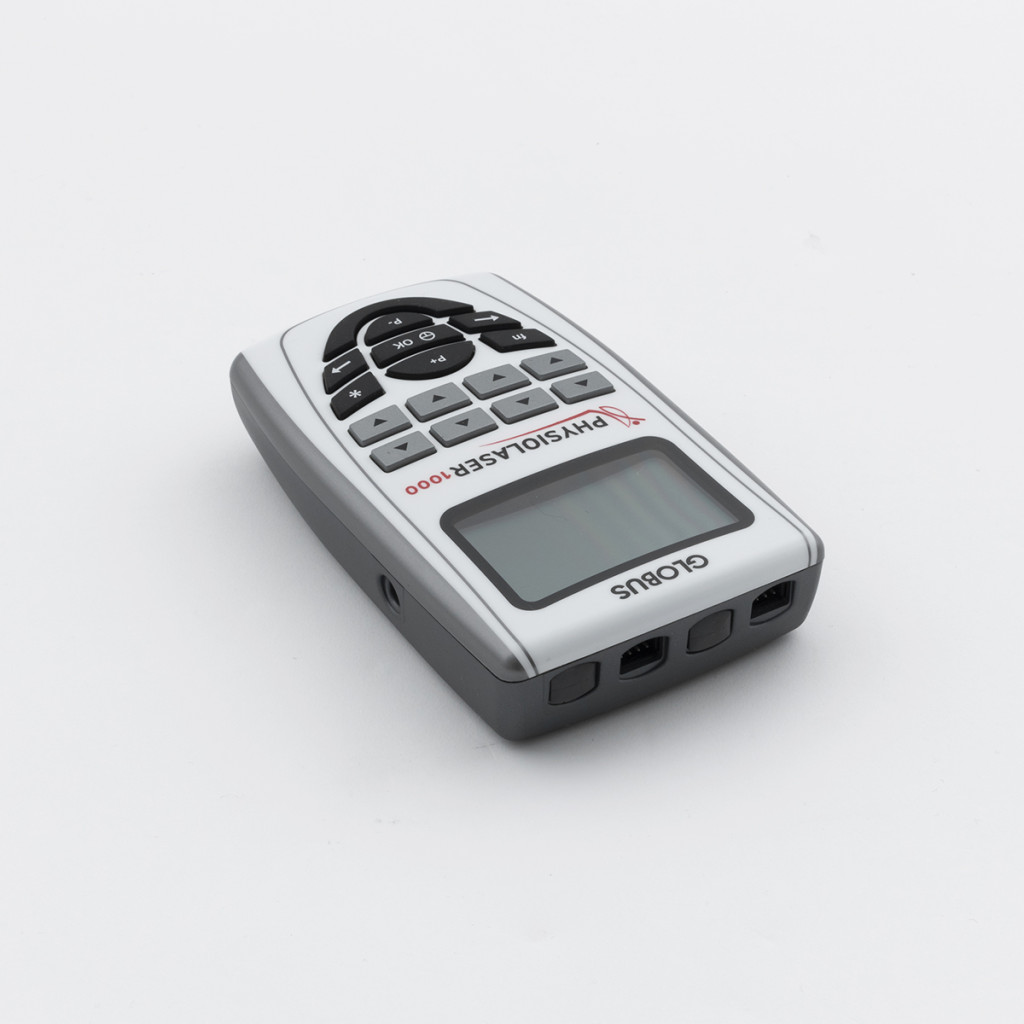
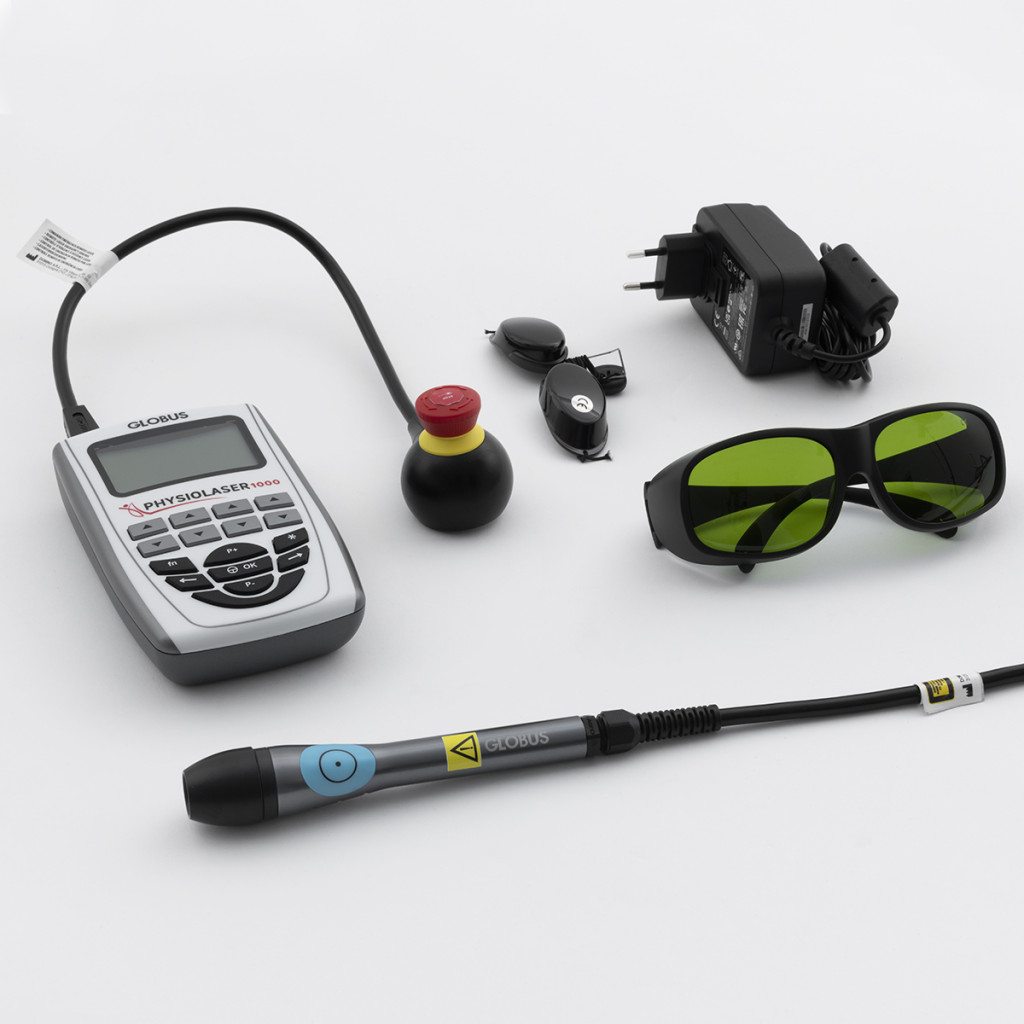
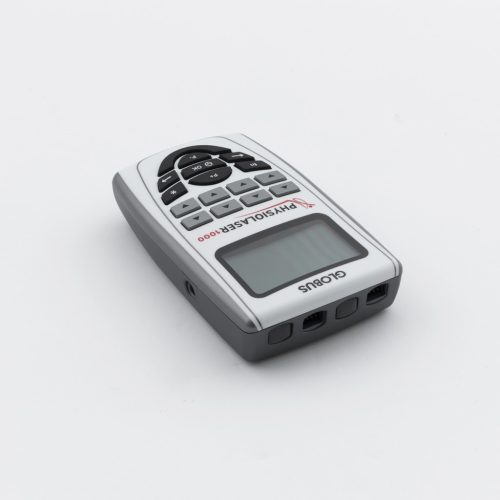
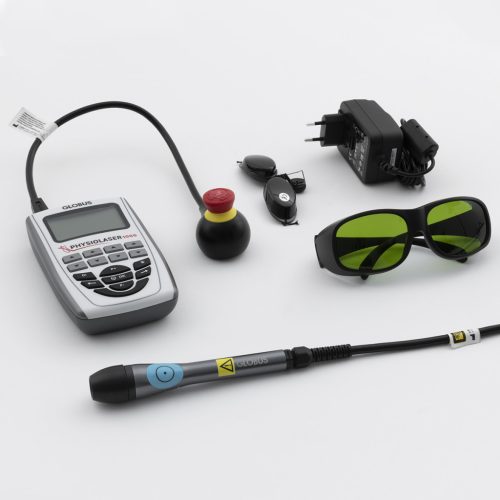
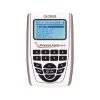
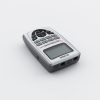
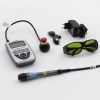
- 1 pc PhysioLaser 1000 central unit with digital LCD display
- 1 pc 808 nm laser handpiece, REF G5796
- 1 pc operator laser-protective goggles
- 1 pc patient laser-protective goggles
- 1 pc power adapter
- 1 pc USB charging cable
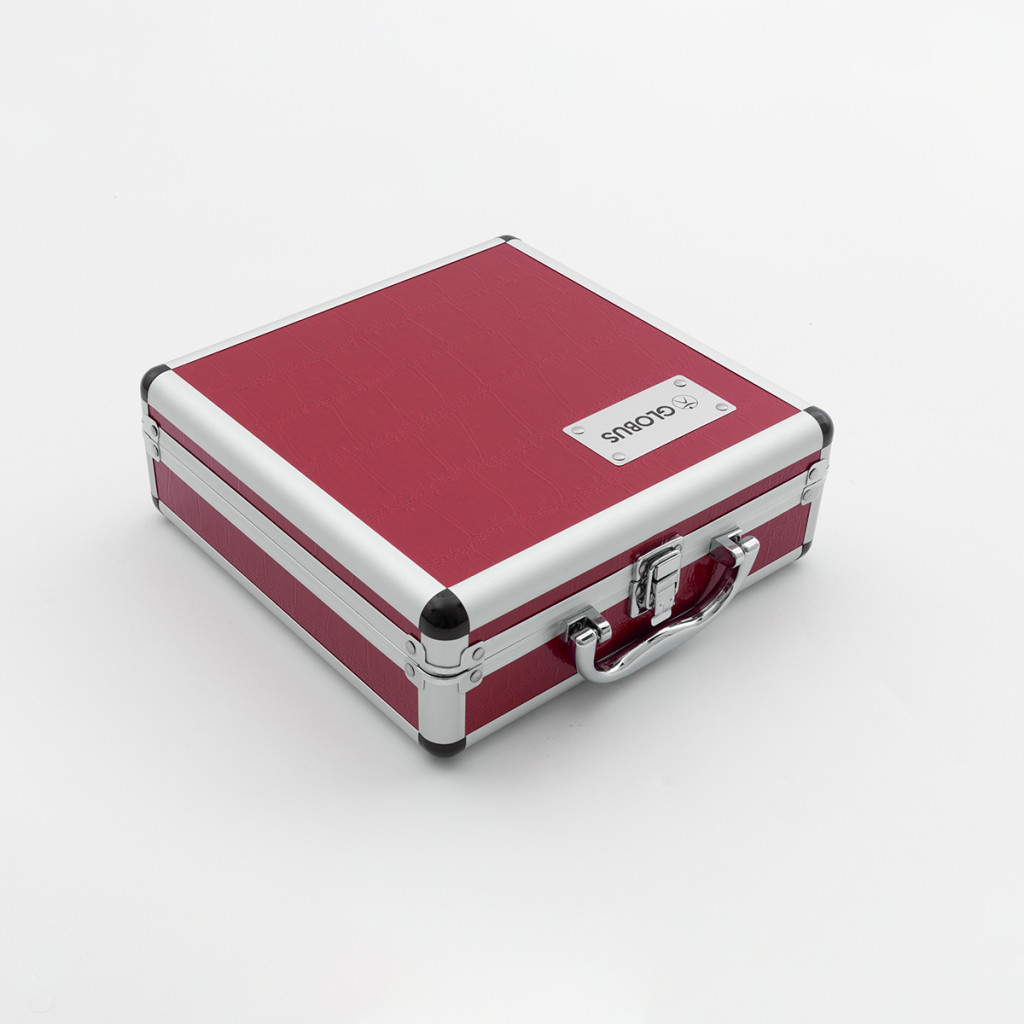
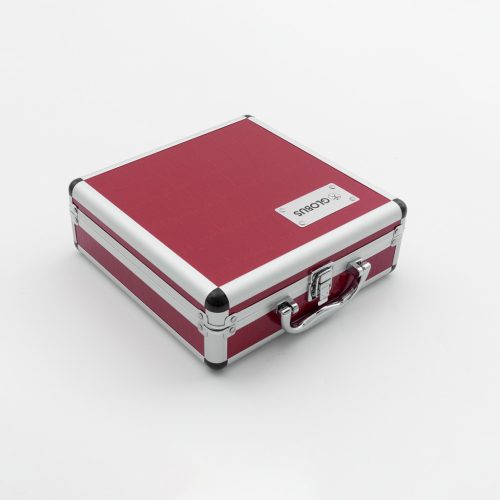
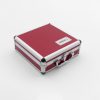
- 1 pc carrying case
- 1 pc user manual
- 1 pc emergency stop
When using a Class 4 laser both the operator's and the treated person's eyes must be protected. Use goggles that are undamaged, fit correctly and provide protection appropriate for the 808 nm wavelength.
Protect the optical surface from dust, greasy contamination and scratches. Clean only with materials and methods permitted in the user manual.
Do not use the device if the handpiece, cable, connector, goggles or optical surface are damaged. Follow manufacturer instructions for storage and battery maintenance.
PhysioLaser 500 or PhysioLaser 1000?
PhysioLaser 500
– a more economical choice for personal, family or lower treatment volume. 500 mW power and 20 built-in programs.
PhysioLaser 1000
– better suited for clinic use, multiple therapists and higher daily treatment throughput. 1000 mW power, 40 programs, MULTIuser and LAST 10 memory.
The main difference is not penetration depth but workflow and treatment speed:
the 1000 delivers the same energy dose faster, offers programs for more conditions and supports multiple therapists' work.
Technical specifications
| Laser type | GaAlAs laser diode |
| Wavelength | 808 nm ± 10 nm, infrared |
| Maximum optical power | 1000 mW, i.e. 1 W |
| Maximum theoretical energy delivery | 60 Joules per minute at maximum continuous power |
| Laser class | Class 4, CEI EN 60825-1 |
| Beam area | Approximately 0.95 cm², 11 mm spot diameter |
| Built-in programs | 40 programs: 23 health-rehabilitation and 17 aesthetic or adjunct programs |
| Treatment modes | Point treatment and scanning treatment |
| MULTIuser | Up to 30 user profiles |
| LAST 10 | Quick recall of the last 10 treatments |
| PROGRAMMING | Manual setting of power, frequency, duty cycle and treatment time; save custom program |
| Display | Digital LCD |
| Battery | Ni-MH, 7.2 V / 1.8 Ah, rechargeable |
| Dimensions | 160 × 99 × 35.4 mm |
| Weight | Approximately 440 grams |
| Handpiece | 808 nm, REF G5796 |
| Medical device classification | CE MDD, Class IIb medical device |
| Manufacturer | Globus Italia, Italy |
 When not to use the device?
- Never direct the laser beam into the eye or the immediate eye area.
- Do not use over the abdomen or pelvic area during pregnancy.
- Only use over a malignant tumor site with explicit approval from the treating physician.
- Do not treat directly over the thyroid or other endocrine glands.
- Do not directly treat large, dark nevi, pigmented lesions or unexplained skin changes.
- Consult a physician before treatment in cases of photosensitivity or when taking photosensitizing medication.
- Postpone treatment in febrile or acute general illness.
- Direct treatment over the heart area should be performed only for clear professional reasons and with medical approval.
Before Class 4 laser treatment check the full manufacturer contraindication list and laser safety rules. Detailed contraindications and safety information →
 Important information
The PhysioLaser 1000 is intended as an adjunct treatment. It does not replace medical or dermatological examination, diagnosis, prescribed treatment, physiotherapy or appropriate rehabilitation.
Due to its Class 4 classification the device's use requires training, an appropriate treatment environment, eye protection and documented safety procedures. Store the device out of reach of children and unauthorized persons.
A preset program name does not prove that a given complaint can be treated without evaluation, nor does it guarantee clinical or aesthetic outcome.
The product description is for information only and does not constitute personalized medical or laser safety training. Cited research examines the general applications of photobiomodulation and should not be considered device-specific evidence for all forty PhysioLaser 1000 programs.
Scientific background
Photobiomodulation has been studied for musculoskeletal pain, knee osteoarthritis, tendon disorders and plantar fasciitis, as well as skin regeneration and aesthetic applications. Results indicate the method's possibilities but do not constitute device-specific validation for every program.
-
Clijsen R et al.
(2017):
Effects of low-level laser therapy on pain in patients with musculoskeletal disorders: a systematic review and meta-analysis.
European Journal of Physical and Rehabilitation Medicine
, 53(4):603–610.
PubMed
Systematic review of soft-laser treatment for musculoskeletal pain. -
Stausholm MB et al.
(2019):
Efficacy of low-level laser therapy on pain and disability in knee osteoarthritis: systematic review and meta-analysis of randomised placebo-controlled trials.
BMJ Open
, 9(10):e031142.
PubMed
Meta-analysis of randomized trials in knee osteoarthritis. -
Naterstad IF et al.
(2022):
Efficacy of low-level laser therapy in patients with lower extremity tendinopathy or plantar fasciitis: systematic review and meta-analysis of randomised controlled trials.
BMJ Open
, 12(9):e059479.
PubMed
Systematic review in lower extremity tendon disorders and plantar fasciitis. -
Avci P et al.
(2013):
Low-level laser therapy in skin: stimulating, healing, restoring.
Seminars in Cutaneous Medicine and Surgery
, 32(1):41–52.
PubMed
Review of possible photobiomodulation effects on skin. -
Glass GE
(2021):
Photobiomodulation: The Clinical Applications of Low-Level Light Therapy.
Aesthetic Surgery Journal
, 41(6):723–738.
PubMed
Clinical review of photobiomodulation applications.
Treatment guides and further information
-
 Soft laser therapy – comprehensive guide →
-
 PhysioLaser 500 – lower-power model →
-
 Soft laser for knee pain and knee osteoarthritis →
-
 Soft laser as adjunct for disc herniation and low back pain →
-
 Soft laser for tendinopathy →
-
 Treating sports injuries with soft-laser therapy →
-
 Soft laser contraindications and safety information →
-
 Soft-laser devices – full range →
Are you looking for a programmable professional soft laser for higher treatment throughput?
The PhysioLaser 1000's main strengths are fast dose delivery and clinic workflow support: 1000 mW power, 40 programs, 30 user profiles, LAST 10 memory and saving custom protocols.