
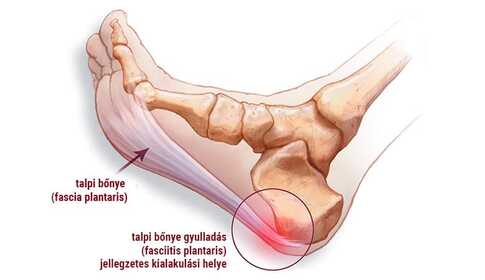
Plantar fascia inflammation, i.e. plantar fasciitis
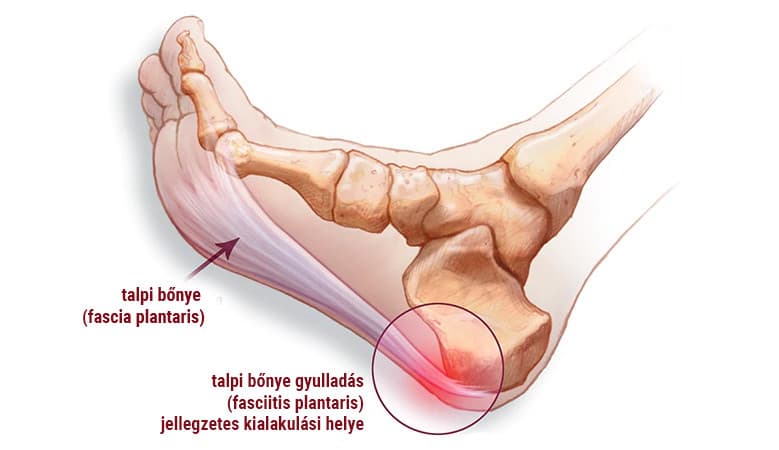
Plantar fascia inflammation (or medically fasciitis plantaris) is one of the most common causes of sole and heel pain. Beneath the skin of your sole runs a thick connective tissue sheet (formerly called fascia) from the toes to the heel bone. Its inflammation mainly occurs where it meets the bone, that is, at the heel bone or in front at the bases of the toes. The first symptom is a stabbing pain during the first steps in the morning. After a few steps it "warms up", but over time the pain lasts for increasingly long periods. It is very hard to "get rid" of. It can be treated at home, but be prepared for weeks — and more often months — of regular treatment to achieve full resolution.

What is the plantar fascia?
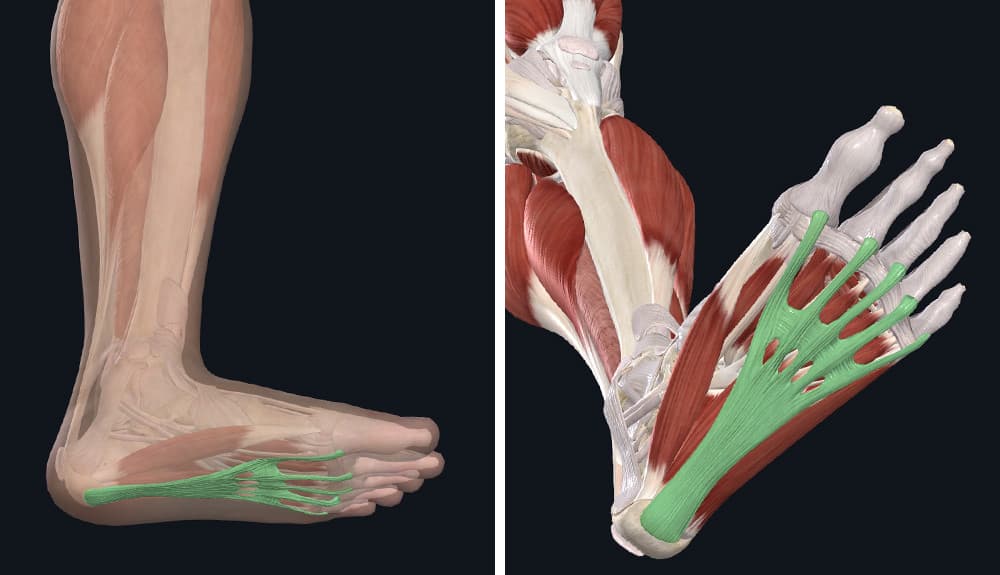
The plantar fascia (fascia plantaris) is a strong sheet of connective tissue that runs from the heel to the heads of the metatarsal bones (the bases of the toes). It plays an important role in maintaining the foot arches. One of the main tasks of the plantar fascia is to dampen the "impact vibration" generated by stepping. Its elasticity is crucial for this function.
Symptoms of plantar fasciitis
The symptom of plantar fascia inflammation is sole pain. Certain areas of the sole become highly sensitive. The pain is usually strongest at the heel bone attachment area or at the base of the toes (sometimes only one toe).
The inflammation causes the fascia to thicken and become stiffer. This reduces its function and thereby perpetuates the inflammation, which can become chronic. It can trouble the "victim" for months or even longer.
Overuse problem
Plantar fascia inflammation is a consequence that indicates the fascia is being overloaded and, as a result, inflammation develops.
Of course, athletes who run and jump a lot are particularly prone to the problem.
However, it can occur in non-athletes as well. Anyone can develop it if the plantar ligament is subjected to increased demand. It's common among people who are on their feet all day — manual workers, teachers, waiters — who spend most of their working time walking or standing on hard surfaces.
Improper footwear often contributes. Lately I've received several letters: "My sole hurts badly. We were on holiday for the past two weeks and I walked around in flip-flops the whole time. Now I can hardly walk."
Overweight itself is a major risk factor. Load on the foot arch and thus on the fascia increases, so obesity significantly raises the risk. Poorly designed footwear can also cause it — for example, thin sandals worn all summer or the consequences of barefoot walking.
Repeated forceful impacts (running, push-off, landing, etc.) or uneven loading can cause microinjuries in the connective tissue even in healthy people. With continuous loading, especially if you neglect stretching and recovery, it easily becomes chronic.
Aim for complete recovery!
When treating it, don't focus only on the painful spot, but on the cause that leads to overloading of the plantar fascia.
You need to replace poorly supporting shoes. Reduce excess weight and overload. Relax the calf muscles. Neglected, long-standing inflammation leads to many microinjuries and small tears in the fascia. Its healing involves scar tissue formation, which is less elastic, so the original function cannot be fully restored. The more scar tissue, the greater the potential loss of function.
If healing is partial, pain prevents you from putting your full weight on the foot. You limp and thus begin to load other joints of the leg incorrectly. Over time your ankle, knee, hip and spine will also start to hurt!
Relieve sole pain at home
Plantar fascia inflammation can generally be resolved within weeks or months. If you experience pain, start conservative treatment as early as possible! Here are some methods you can use to help your recovery.
Contrast cold–heat therapy
Apply a bag of ice to the painful area for 10–15 minutes. Not directly on the skin, as that can even cause frostbite. Read here about the benefits of cooling.
Cooling reduces inflammation and when you remove the ice, the body warms the cooled area, which increases circulation. This supports anti-inflammatory processes.
After 10–15 minutes of cooling let the muscles warm up (1 hour break). Repeat 3–4 times. Overcooling is not good — do not use this method for longer than 2–3 days in a row and do not cool for longer than 15 minutes at a time.
Another method is to freeze a 0.5‑liter mineral water bottle. Sit on a chair, place the frozen bottle on the floor in front of you and step on it with the sore sole. Roll it back and forth. It massages your sole while providing strong cooling. Do not place your full body weight on it — you should not cause pain, but stretch, relax and cool the fascia. Do this exercise for 2, maximum 5 minutes.
Reduce the load
Suspend training that includes running or jumping (swimming or cycling is allowed). If you do exercise, pay special attention to post-workout relaxation. Be particularly thorough in stretching your calf muscles. Use a foam roller as well.
Don't wear thin-soled sandals! Replace worn-out work shoes with ones that have a low heel, good arch support and shock absorption. Put a silicone heel insert into your shoe to "pad" the painful spot. Avoid high-heeled shoes. Don't walk barefoot, especially on hard surfaces, even at home.
Replace worn-out running shoes. Running shoes should be replaced after approximately 600–800 km of use.
Overload from excess weight alone can trigger plantar fascia inflammation. Maintain or restore a healthy body weight.
Stretch and massage your calves!!!!
In many cases plantar fascia inflammation is caused by tight calf muscles (due to standing all day or heavy sports load). Through their attachment to the Achilles tendon they "pull up" and tilt the heel bone forward, so the plantar fascia is tense even at rest. When you stand on the foot the tension increases until fascia fibers tear and a persistent inflammation develops.
Relaxing tight calf muscles lets the heel bone return to its normal position, eliminates the tension on the plantar fascia and thus removes the trigger for the inflammation. Then you "only" have to help the inflammation subside.
Relaxing the calf muscles is assisted by massage, rolling and muscle stimulation. I consider muscle stimulation the most effective.
Massaging the plantar fascia itself can also help. Sit cross‑legged, hold your sore foot in both hands and massage the painful area with your thumbs. No strong pressure is needed — the goal of massaging the plantar fascia is to stimulate blood circulation. That is what produces a healing effect. Massage for 5 minutes, 2–3 times daily is enough.
Drug‑free treatment methods
Inflammation is a physiological reaction intended for healing. However, if it is prolonged, it limits cellular function: energy production stops, not enough protein is produced for regeneration, etc.
In plantar fascia inflammation the first step is to reduce the symptoms of inflammation.
This is not easy, since your foot is constantly loaded with every step and you unintentionally work against the healing process.
Another problem is that ligaments and tendons have poorer blood supply than other tissues.
Physiotherapy methods that increase blood flow in the sole speed up healing.
Improving circulation above all
Good blood circulation is the basis of inflammation healing — it removes breakdown products and brings healing substances. The more methods you combine, the more they support each other and the faster the recovery.
Treat with therapeutic ultrasound!
Use a therapeutic ultrasound device with 1 MHz frequency. Ultrasound has excellent anti-inflammatory effects. It warms the treated tissues, relaxes the stiff ligament and speeds up circulation, thereby accelerating resolution of the inflammation.
The M-Sonic 950 therapeutic ultrasound is suitable for home use, while the MediSound 3000 is appropriate for professional treatment.
One treatment per day is enough. Use low intensity (because the plantar fascia is close to the surface). Treat the painful area for 5–8 minutes. Always use ultrasound gel and move the probe slowly and continuously! Continue treatment until full recovery, even after the pain has gone.
Use a muscle stimulation device!
The effect of electrical muscle stimulation is twofold: it promotes healing via improved blood flow and it reduces fascia tension by relaxing the calf muscles.
It is proven that muscle stimulation can increase blood flow in the treated muscle by up to 300%. Thus improved circulation in the lower leg favorably affects the nearby area, including the plantar fascia. You can perform the treatment at least once daily, even several times a day.
Use 5x9 or 5x10 cm ValueTrode, UltraStim or PALS electrodes. Apply a pair to the calf muscles.
The first electrode is placed two finger-widths below the popliteal crease. The second electrode is placed a palm’s width below that.
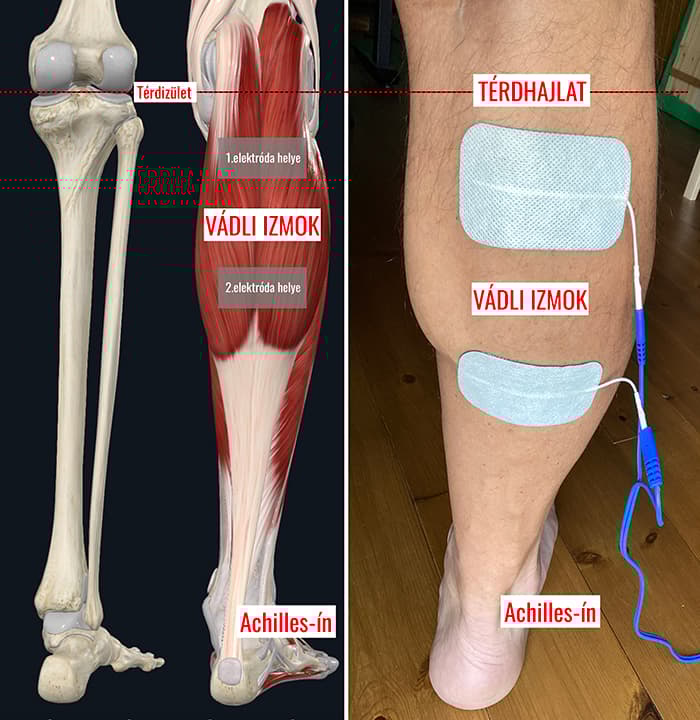
On your device look for programs such as capillarization, warm-up, relief of muscle stiffness, or active regeneration and start one of them.
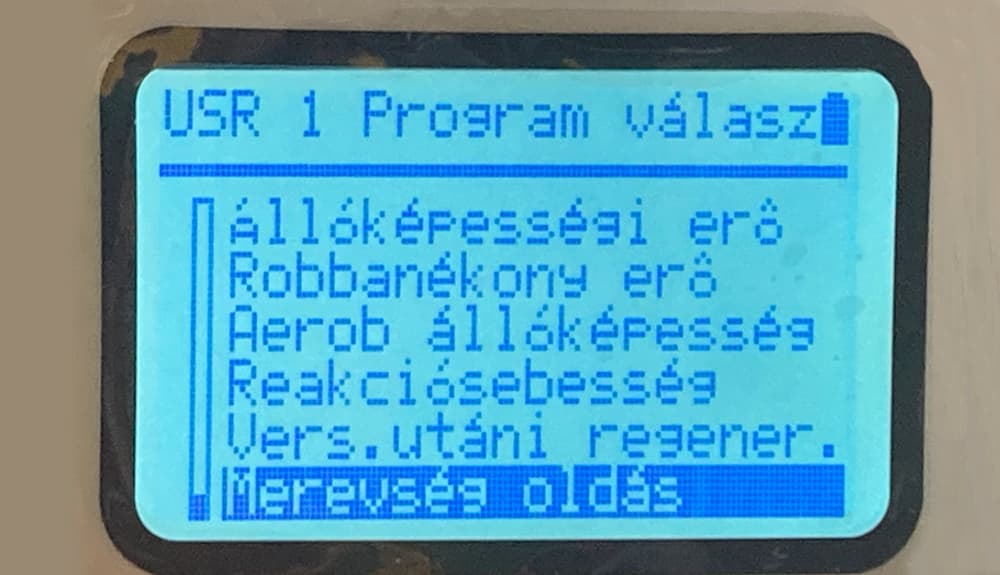
Set a medium current intensity, which in most cases is between 18–24 mA. Individual differences apply — this may be too strong for some and a bit more may be needed for others. The point: you should feel firm contractions, but the stimulation must be comfortable and completely free of unpleasantness (too high a current is painful, too low is ineffective). Appropriate choices include: Genesy 300 Pro, Genesy 600, Genesy 1500, Genesy 3000, Premium 400, Activa 700, Cycling Pro, Runner Pro, Soccer Pro, Triathlon Pro, The Champion
Apply microcurrent!
Microcurrent is still less widespread among electrotherapy methods, yet it is one of the most effective pain‑relieving and anti‑inflammatory treatments you can use at home. Read here about the effects of microcurrent.
Treat the painful area 2–3 times daily using the "tendinitis" microcurrent program. One session lasts 20 minutes.
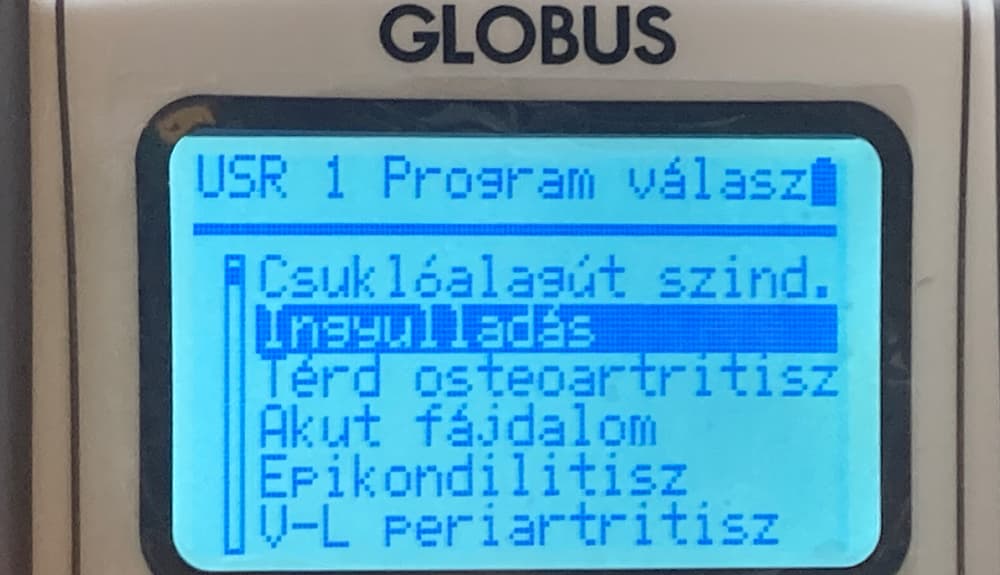
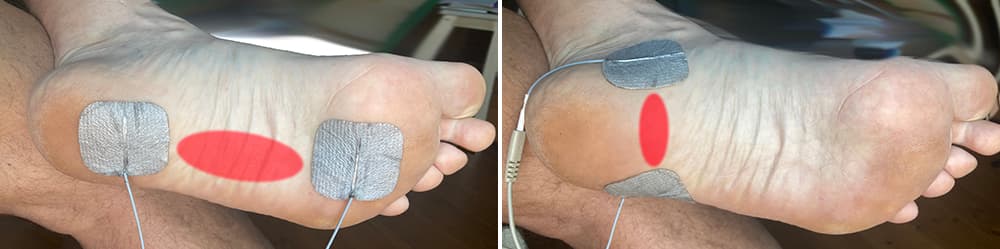
Use the gray cable for the treatment, and place the electrodes on the skin depending on the location of the pain and inflammation.
These pictures show the most common places — along the outer edge or the middle of the sole, lengthwise. Place one electrode above the heel bone and one by the metatarsal‑phalangeal joint.
Another common point is the heel‑bone attachment of the plantar fascia (this is also the site of heel spur pain). Place electrodes on both sides of that point.
Moreover, since Globus devices provide microcurrent treatment on 2 channels (outputs 1 and 3 on the left side of the device), you can do two electrode placements simultaneously.
Simply surround the painful area lengthwise and crosswise with electrodes.
Suitable choices may include: Genesy 300 Pro, Genesy 600, Genesy 1500, Genesy 3000, Premium 400, Activa 700, Cycling Pro, Runner Pro, Soccer Pro, Triathlon Pro, The Champion
Use softlaser!
Softlaser treatment has anti‑inflammatory effects similar to microcurrent. It is even easier to apply than electrical treatments.
You should hold the device over the painful spot until the therapeutic energy dose has been delivered. The required treatment time is indicated in the user manuals, but treating the Achilles area typically takes 5–10 minutes. Higher‑power softlasers deliver the necessary energy in a shorter time.
Suitable choices include: Personal Laser L400, Energy Laser L500 Pro, Energy Laser L2000 Pro
If these measures don't help, clinical physiotherapy treatments (shockwave therapy, irradiation) may be considered.

