No Progress Without Rest – The Importance of Quality Regeneration
Better sports performance depends not only on the amount of training you do. Physical and nervous system regeneration (rebuilding, re-regeneration) after workouts is extremely important. During rest the consequences of training are cleared away (repair of micro-injuries, removal of waste products), and this is when the effect "sets in": muscle fibers strengthen, cellular functions adapt, etc. Time spent resting is therefore not wasted — in fact, you can only progress and reach high levels of performance if you devote enough time to regeneration. Without rest the risk of injuries also increases. You can improve muscle regeneration in several ways; in this article I present the two most effective methods: muscle stimulation and compression therapy.
“After illness health tastes sweet, after adversity good things, after hunger satiety, after effort rest.” Heraclitus, Greek philosopher
It's worth spending at least as much time and energy on rest as you do on the training itself. If you start your workout fresh and well-rested, you'll be able to work much more effectively, so you'll progress faster than if you neglect recovery time. By increasing the effectiveness of rest, your performance capacity also increases.
It's no coincidence that athletes will do almost anything to find and apply the most effective post-training recovery techniques. Think of how many photos you've seen of Katinka Hosszú sitting up to her neck in an ice bath on Facebook… she doesn't do it for fun, she repeatedly takes the icy bath to help her muscles regenerate. She knows many others perform similarly hard training, so you must prevent them where you can — for example, by faster recovery. Especially when nothing else pushes you beyond your comfort zone.
Even if you don't want to become a world champion and exercise just for your health, your body still needs regeneration!
Without regeneration
- your muscles' capacity to tolerate load decreases,
- your immune system weakens,
- your body becomes more susceptible to illnesses and injuries.
Repeated workouts without adequate recovery lead to a rapid decline in performance. The more you train, the less things "work." If you feel this, then REST!
Why is regeneration necessary?
Many changes occur in your muscles during movement, but perhaps the two most important are the accumulation of metabolic by-products in the energy-producing processes and the micro-injuries of muscle fibers.
During intense training muscles require "fuel" to perform movement. The more intense the exercise, the more fuel is needed (similar to how a car consumes more when you drive fast). Energy-producing metabolic processes in the activated muscles produce breakdown products (metabolites, e.g., lactic acid). This is especially true when training intensity is high, in or near the anaerobic (low-oxygen) zone. Metabolites can even cause pain (muscle soreness). They are not fundamentally dangerous if you give enough time to rest. If they are not cleared, muscles and tendons become stiff, hindering effective training. No matter how hard you push, your performance will decline, you'll fail to reach the desired intensity and training efficiency drops — and the risk of injury increases!
During high-intensity muscle contractions microscopic tears occur in the muscle; many muscle fibers break. These do not immediately restrict function, but the damage causes the enzyme creatine kinase (CK) to be released. This signals the body to build stronger fibers, and the increased CK also triggers inflammation in your body. Inflammation has an effect similar to metabolites.
The importance of regeneration was recognized decades ago and post-workout "cool-down movements", massage, baths, etc., were used to increase muscle blood flow and speed removal of waste products. Let's run through the recovery options.
Active recovery
Active recovery means moving your joints through their full range of motion after training, for example with post-workout stretching, jogging, swimming, mobility exercises, or light bodyweight workouts. Movement increases blood supply to the muscles and thus accelerates local regeneration. The emphasis is on gentle activities that don't cause heavy fatigue.
Although muscle activity during active recovery is low intensity, additional metabolites are still produced (alongside the expected beneficial physiological effects)…
Passive recovery
Passive recovery means stimulating the removal of waste products without physical activity. Traditional methods include compression stockings, sauna, 10–20 minute ice baths, massage, using SMR (foam) rollers, etc.
Nowadays two technical-device methods are becoming more prominent because their effectiveness is significantly better: muscle stimulation and compression therapy (the version combined with cooling is even more effective).
Stimulating the most taxed muscle groups within at most 2 hours after training can remove 40–45% of the produced metabolites (e.g., lactic acid)! Some studies (for example, one from the French Olympic team's preparations) have shown that passive recovery performed with an electrostimulator is more effective than active recovery — and of course both recovery methods are far better than doing nothing at the end of a workout.
The principle of stimulator-assisted recovery is the same as a cool-down run or movement: it acts by accelerating circulation. However, while movement engages your whole body and can produce metabolites everywhere, stimulation allows you to concentrate on the muscle groups that received the most load. That explains its greater effectiveness.
Compression therapy devices are also necessary immediately after training. The method known in medicine as mechanical lymphatic drainage improves microcirculation in the limb and helps flush out metabolites and relax fatigued muscles. An advanced variation is cold-compression. Ice water circulates between the layers of the compression cuff, cooling the muscle, while the compression accelerates removal of creatine kinase and other metabolites, thereby speeding regeneration.
Other recovery-supporting recommendations
Avoid stress! Cut out stimulants, especially energy drinks. These can prevent the parasympathetic nervous system that supports rest and recovery from being dominant over the sympathetic nervous system.
Relaxing aerobic exercise: Low-intensity aerobic workouts that require only mild muscle work increase your heart rate and blood circulation so more nutrients can reach your muscles. A heart rate around 100 bpm generally serves recovery, but this of course depends on your fitness level.
It's a myth that you should train harder to work out muscle soreness. Muscle soreness is mainly due to micro-injuries formed during exercise. Heavy "pounding" increases the chance of injury.
One of the most important parts of recovery is adequate quantity and quality of sleep. During sleep the body rebuilds: sufficient, high-quality sleep affects blood pressure, the immune system, cognitive abilities, hormone balance, and a host of other functions.
Tip: Give your body what it needs: sleep 7–8 hours a night, preferably in a dark, cool, quiet room. Try to go to bed at the same time every night. Promote quality sleep by supporting melatonin production: avoid caffeine, large meals, and excessive fluids in the evening. Note: watching TV or reading right before bed can overstimulate the nervous system.
If you overwork yourself, psychological overload may develop in addition to physical. In such cases help yourself with elements of active mental regeneration: yoga, meditation, visualization, autogenic training, and other stress-relief techniques.
Hydrotherapy: Water has strong regenerative properties; alternating hot and cold showers train the blood vessels and make them more flexible. Cold water causes the vessels to constrict, heat makes them open.
Nutrition
The essence of nutrition is to meet your body's energy needs on a daily basis. To perform well and recover, you must ensure a balance of calories (and nutrient composition). This should of course be adapted to the difficulty and volume of your training.
Proper hydration (2–4 liters daily) and protein intake (1.5–2 g per kilogram of body weight) are important. During exercise the body loses water through breathing and sweating. Even a 1% change in body water content can already cause a noticeable drop in performance. Don't forget to replace the minerals lost in sweat as well.
Regarding supplements, if you exercise you may consider taking:
- multivitamin
- fast-absorbing post-workout protein (I recommend plant protein because it is easier to digest)
- fast-absorbing carbohydrates for after training
Other supplements recommended for muscle regeneration:
- vitamin C (before and after training)
- creatine (tri-creatine and malate) – creatine hydrates muscles by drawing water into cells
- omega-3 fatty acids – an anti-inflammatory agent mainly found in fish oil and flaxseed oil
- L-carnitine – improves muscles' nitrogen balance and enhances protein uptake
- chromium
- BCAA and glutamine – prevent post-workout muscle breakdown (catabolic processes)
- taurine – supports protein synthesis
- magnesium – against muscle cramps
Support your rest with the power of herbs. Examples include peppermint, lavender, St. John's wort, rosemary, and chamomile. Whether as an essential-oil or aroma bath, a sports cream, or a tea, they will help you regain strength.
Sport-specific electrostimulators
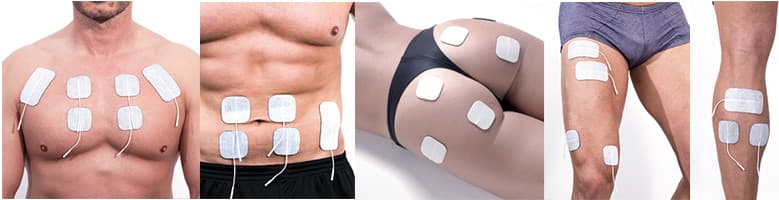
One of the main applications of sport-specific muscle stimulators is that they effectively aid muscle regeneration. Stimulation started within 90 minutes after training immediately removes 35–45% of the metabolites (lactic acid, etc.) from the muscle.
What is that good for? It's like you've already rested half a day! You can train again at high intensity much sooner and you won't feel muscle fatigue. This is an invaluable advantage in elite training.
If you're an amateur, you will notice that after some workouts your muscles are tired, it's harder to get out of bed the next day, your muscles are slower to "wake up" for the next session and you can't train at the same intensity as before. Stimulative recovery helps with this — it "blows that feeling away." Yes… a single treatment after training.
Both in preparatory phases and during the competition season it is important that your muscles are fresh, so don't underestimate the importance of regeneration.
In many sports a competition consists of consecutive matches, heats, bouts, rounds, etc. Used in the short rest between two heats (matches), the stimulator provides immediate help for muscle regeneration!
You only need to apply the recovery treatment to the most heavily used muscles. For example, cyclists or runners treat the thigh muscles, swimmers the back muscles.
Low and medium frequency impulses cause gentle twitches and contractions in your muscles. They stimulate blood flow, removal of waste products, and reduce muscle fatigue.
The effect of the impulse is determined by frequency, pulse duration and intensity. The same impulse acts differently on various muscles, which is primarily determined by the muscle bundle diameter and mass. Different settings are needed for forearm/upper arm/back/trunk/thighs, etc.
Fortunately you don't need to know the settings because on a modern stimulator you simply select the Muscle Regeneration program, then specify the muscle group to be treated, and the device will "know" the optimal treatment.
If you haven't used a muscle stimulator before, definitely try the muscle regeneration program! You'll immediately feel the beneficial effect — you'll be surprised and regret not starting earlier.
Compression therapy devices that assist recovery
The use of compression or pressure therapy for recovery is another craze that started in the U.S. At home these devices are often known as compression therapy units, which is a somewhat misleading name because they are not only for that purpose.
Boots, gloves or belt-like cuffs can be attached to the unit. These consist of multiple airchambers whose inflation-deflation in a specific rhythm and direction provides the treatment. The point is to compress muscles and tissues, which initiates lymphatic and blood flow toward the heart. Blood stagnating in the muscles and full of metabolites is flushed out and replaced by fresh blood rich in oxygen and nutrients. Muscle tension rapidly decreases.
Compression therapy units are not primarily made for athletes, but beyond medical uses they are excellently suited for athletes' use. The more airchambers a unit has, the more effective the recovery treatment can be expected to be.
Cold-therapy and ice-compression devices
"Ice therapy" is also a post-exercise recovery method. During training — however "gentle" you move — many muscle fibers and the fine threads within them tear. The consequence is the appearance of inflammatory symptoms. In ice-massage the device pumps and circulates icy water through a pad placed on the treated area, cooling your muscles. When cooling is stopped (to warm the area), blood circulation speeds up and flushes out inflammatory substances, improving recovery.
The Aquilo cold-recovery device is primarily recommended after lower-limb workouts; the IcePants trousers circulate icy (5–10°C) water over the entire inner surface. Studies show that a 15–20 minute treatment reduces creatine kinase accumulation by 40%.
Muscle stimulation, compression therapy and cold treatments provide a boost to your muscle regeneration that other methods cannot achieve. Perform recovery treatments as soon as possible after physical activity, but at most within 120 minutes. You can even take care of recovery while sitting in your office chair or while reading or watching TV!