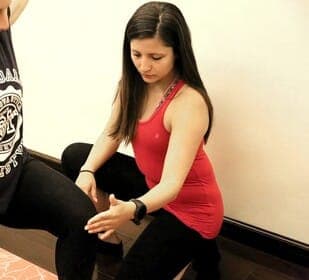
The importance of rehabilitation – a conversation with sports physiotherapist Gréta Hepp
In my series of articles about specialists, I am now introducing Gréta Hepp, a representative of the young, well-travelled generation. With her degree, experience and knowledge gained abroad, she wants to build her career at home. Her favourite field is movement rehabilitation for athletes. In other words, she helps them recover from various injuries and operations as quickly as possible and regain their pre-injury condition. She uses several methods, including the latest muscle stimulation techniques. I asked her about her work and goals.
Dr. Zsolt Zátrok (ZZs): What is your official qualification? What do you do?
Gréta Hepp (GH): According to my Italian degree, I am officially a sports physiotherapist. In Hungary, my qualification is recognised as that of a rehabilitation specialist or movement therapist.
ZZs: You studied in Italy and gained your professional experience there too. I know a few Italian sports rehabilitation specialists, and I could say that conditions there are different. Why did you return home? What did you bring with you? What can you use here?
GH: Prevention and rehabilitation play a major role in sport in Italy. Teams have several movement therapists and physiotherapists who work together with the coaches. In addition, there are sports rehabilitation centres across the country where professional, safe and, at the same time, as rapid as possible rehabilitation can begin immediately after musculoskeletal surgery. Time matters to athletes: the longer they are unable to train, the more their muscles deteriorate.

Here, early rehabilitation is often not available. In some cases, athletes receive one or two exercises in hospital. Most of the time, physiotherapy starts after the stitches have been removed. Athletes come to me 3–6 months later with problems such as insufficient muscle strength, muscles that are not developing, pain or fear of starting to run. Naturally, these problems can still be helped at this stage, but it would be better if they asked for help as early as possible.
ZZs: Movement rehabilitation concerns both amateur and professional athletes, but not only them. What kind of help can they get from you?
GH: Since professionals earn their living from sport, a high-quality, comprehensive and rapid recovery is very important to them. This can only be achieved through active rehabilitation, never through bed rest. Rehabilitation is possible and necessary even when one leg is in a cast! This is what modern medical technology devices are for. For example, they can help reduce the wasting of inactive muscles and the adhesion of connective-tissue structures. This allows us to gain a great deal of time later on.
Amateur athletes are not under the same financial pressure, but time away from sport still causes them a serious “loss”. An amateur cannot devote enough time to training, so their progress is slower too. If they miss several weeks because of an injury, an entire season may be wasted. By speeding up recovery, the “loss” can be reduced.
It also matters to the average person when they will be fit to work again. If rehabilitation is inadequate and they return to work with pain and restricted movement, they will not be able to perform their duties. In other words, the recovery process matters to everyone.
ZZs: Many devices support rehabilitation. Do you have any? Which is your favourite? Why?
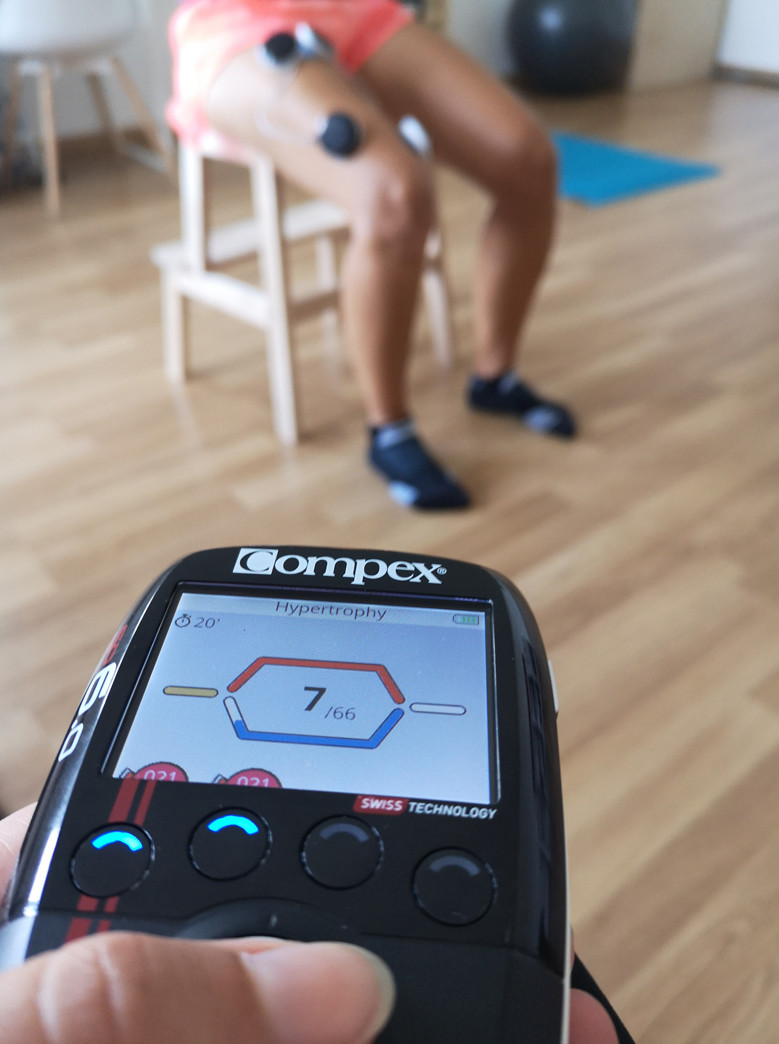
GH: Yes. Muscle stimulators can be used very effectively in movement rehabilitation, and I use them most often. I first encountered the technique in Italy, where we carried out a great deal of research using the device during the rehabilitation of people with cruciate ligament injuries. I even completed the training programme myself! I had undergone anterior cruciate ligament surgery four years earlier, and I wanted to find out whether the device could still improve my operated leg after all those years. It worked very well for me, and the results of our research were also very good!
I most often use the stimulator when the affected limb cannot yet be moved after surgery, but the muscles still need stimulation! I also often use it at a higher intensity during active exercises when the strength of the affected muscle lags behind the others.
ZZs: Many athletes suffer from chronic pain, and they seem to think this is a natural consequence of hard training. Do you come across cases like this?
GH: Of course, there are many! The most common causes are inappropriate loading or poorly structured training. Athletes often do not know their limits and receive no feedback about dysfunctions, meaning incorrectly performed movements. These can later lead to chronic pain.
Anyone who runs, cycles or trains for 3–4 hours a day places a heavy load on their joints and ligaments. If the body is not adequately prepared, joint instability or connective-tissue overload often develops. Chronic pain in the Achilles tendon, plantar fascia, knee and hip joints is particularly common.
These problems could be prevented if we placed greater emphasis on prevention: condition assessment, individual training plans based on the results, addressing deficiencies and adequate recovery. Anyone who wants to use their time efficiently can also choose muscle stimulation devices, as these can make both warm-up and recovery more effective!
ZZs: What are the most common complaints people come to you with?
GH: Athletes mainly come to me with knee and ankle problems. It is common for them to arrive with chronic pain, but many also ask for my help so that they can return to training as quickly and safely as possible after surgery. In such cases, sport-specific exercises are essential! I treat a runner quite differently from a handball player.
ZZs: What was your most difficult case?
GH: I consider someone a difficult case if they do not want to work with me. I once had an athlete who had been forced to come. Unfortunately, we could not make any progress because they did not do their exercises at home, or did them less often than they should have. After a few sessions, I no longer saw the point in working together, because it was not good for either of us!
ZZs: What are you proud of?
GH: I am most proud that I have many athletes, especially football, handball and volleyball players, who became more successful in their sport after rehabilitation than they had been before!
ZZs: How can people contact you? On Facebook: under the name Hepp Gréta pre- and rehabilitation coach or through the appointment-booking app on my website.
ZZs: I wish you every success with your rehabilitation work!
GH: Thank you very much!