
Acupuncture — Mysticism or Biophysics?
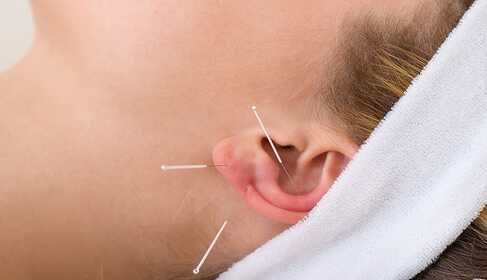
Acupuncture (the word's original meaning is "needle prick") involves inserting very thin needles through the skin into specific points on the body. This procedure is one of the most important methods of traditional Chinese medicine and is most commonly used for pain relief. Nowadays it is increasingly used to promote well-being and to manage stress. Needle-based therapies are used together with many other complementary techniques by practitioners experienced in Chinese medicine […]

Acupuncture (the word's original meaning is "needle prick") involves inserting very thin needles through the skin into specific points on the body. This procedure is one of the most important methods of traditional Chinese medicine and is most commonly used for pain relief. Nowadays it is increasingly used to promote well-being and to manage stress. Needle-based therapies are used together with many other complementary techniques by practitioners experienced in Chinese medicine as an adjunct to Western conventional medicine. These complementary techniques can include, for example, permanent needle therapy, laser acupuncture — which is primarily used for children and patients who are averse to needle insertion — acupressure, moxibustion, or cupping.
Traditional Chinese medicine identifies acupuncture as a technique to balance the flow of energy or life force — known as qi (pronounced "chee") — which is believed to flow through pathways (meridians) in the body. Practitioners who use this approach believe that blocked energy flow for some reason can be restored to balance by inserting needles at specific points along these meridians.
In contrast, many Western physicians regard acupuncture points as locations on the body that correspond to nerves, muscles, and connective tissue that can be stimulated. Some believe this stimulation enhances the body's natural pain-relief systems.
A brief history
Acupuncture has been a legal medical practice in Hungary since 1987. The Hungarian Society of Medical Acupuncturists (MAOT) was established on February 4, 1989. On January 26, 1992, the Health Science Council's statement was published in Orvosi Hetilap: acupuncture may only be performed by a physician trained in it.
There is also an acupuncture module in the training of non-medical naturopaths, within which students learn treatment of five points on the ear. These are very important points and can often be helpful, but in many cases these practitioners are not legally permitted to treat additional points either on the ear or on the body.
As a result of MAOT's efforts, the National Health Insurance Fund recognized acupuncture; however, it only finances treatments within healthcare institutions as part of the Homologous Disease Group point system, as a component of physiotherapy.
Today it is a treatment method officially recognized by the WHO and the Hungarian Academy of Sciences.
Acupuncture — why is it performed?
Acupuncture is primarily used to relieve symptoms of recurring conditions and acute complaints, including:
- Nausea and vomiting caused by chemotherapy and after surgery;
- Dental pain;
- Biliary disorders;
- Recurrent infections;
- Headache, including tension-type headache and migraine;
- Labor pain;
- Low back pain;
- Low and high blood pressure;
- Neck pain;
- Osteoarthritis — a disease process affecting all structural elements of a joint, which can eventually lead to joint deformity and impaired function;
- Menstrual cramps;
- Sleep disorders;
- Respiratory disorders, such as allergic rhinitis;
- it can also likely help in many other conditions.
Risks
The risks of acupuncture are small if you consult a knowledgeable, trained acupuncturist who uses sterile needles.
Common side effects include pain and minor bleeding or bruising at the needle insertion sites. The use of single-use disposable needles is now standard practice, so the risk of infection is minimal.
Acupuncture is not suitable for everyone. You may expose yourself to a higher risk of complications if:
- You have a bleeding disorder: the risk of bleeding or bruising from the needles increases if you have a bleeding disorder or are taking anticoagulants.
- You have a pacemaker: in such cases electro-acupuncture — that is, the application of mild electrical impulses through the needles — is prohibited, as it may interfere with pacemaker function.
- You are pregnant: some types of acupuncture are thought to be able to induce labor, which could lead to preterm delivery.
How to prepare for the treatment
There is no special preparation required before acupuncture.
Choosing the practitioner
If you are considering acupuncture, take the same steps you would when choosing any other specialist:
- Ask for recommendations from people you trust;
- Check the practitioner's qualifications;
- Talk with the practitioner. Ask what the treatment entails, how likely it is to help your condition, and how much it will cost;
- Tell your GP that you are considering acupuncture. They may be able to advise how successful this method is likely to be for your condition, or recommend an acupuncturist.
What to expect during acupuncture
First, a general health assessment will be conducted, and after a Western diagnosis the practitioner will perform an assessment according to Chinese medicine.
During an acupuncture treatment the practitioner inserts very thin needles into specific points of your body. Needle insertion usually causes little discomfort.
Every acupuncturist has an individual style and often mixes elements of Eastern and Western medical approaches. To determine which type of acupuncture treatment will help you best, the practitioner may ask about your symptoms, habits, and lifestyle. They may also thoroughly examine:
- your painful body areas;
- the shape, coating, and color of your tongue;
- the color of your face;
- the strength, rhythm, and quality of the pulse felt at your wrist.
This initial assessment and treatment can take up to 60 minutes. Follow-up appointments are generally around half an hour. For a single complaint, the usual treatment plan typically involves one or two sessions per week. The number of sessions depends on the condition being treated and its severity. Generally, six to eight treatments are common.
During the procedure
Acupuncture points cover every area of the body. Sometimes the appropriate points are far from the site of perceived pain.
The acupuncturist will explain the area of treatment and whether you need to remove any clothing. A gown, towel, or sheet will be provided if needed. The treatment is mostly conducted in a lying position and typically includes the following steps:
- Needle insertion: acupuncture needles are inserted at varying depths into specific points on your body. The needles are very thin, so insertion usually causes little discomfort. Patients often do not feel the insertion at all. A typical treatment involves between five and 20 needle insertions. You may feel mild discomfort when the needles reach the appropriate depth.
- Needle manipulation: after insertion your practitioner may gently move or rotate the needles, or stimulate them with heat or mild electrical impulses.
- Needle removal: in most cases the needles remain in place for 10–20 minutes while you lie quietly and rest. Removal generally causes no discomfort.
After the procedure
Some people feel relaxed after an acupuncture session, while others feel energized. Not everyone responds to acupuncture treatments. If your symptoms do not begin to improve within a few weeks, acupuncture may not be the appropriate therapy for you.
Results
The benefits of acupuncture can sometimes be difficult to measure. Many people find it useful as a tool to help manage various painful conditions.
Of course, it cannot completely cure incurable diseases — it helps in symptom relief.
If necessary, your practitioner will inform you about which conventional physician you should consult for your recovery.
However, many studies have shown that some types of so-called sham or superficial acupuncture treatments work just as well as real acupuncture procedures. There is also evidence that acupuncture works best in people who expect it to work — those who believe in it.
The therapy has few side effects, so it may be worth trying if conventional medical methods no longer sufficiently control your pain.

