
 ALS and functional stimulation (FES) – supporting quality of life
ALS (amyotrophic lateral sclerosis) is a serious neurological disease involving the gradual destruction of the nerve cells that control voluntary movement. The disease cannot currently be eliminated, but its symptoms – muscle weakness, stiffness and pain – may be eased, and the rate of deterioration may be slowed. Alongside medication and physiotherapy, functional electrical stimulation (FES) may also play an important role. This page explains which devices may support this – always under the guidance of your treating doctor.
 Only under specialist medical guidance
ALS treatment is complex and requires specialist medical care. The devices presented here are adjuncts to treatment and rehabilitation. They may only be used according to an individual plan approved by your treating doctor – they do not replace specialist treatment. There is no universally applicable stimulation protocol for ALS. Treatment must be adapted to your current symptoms and the stage of the disease. Be sure to consult your treating doctor before choosing and setting up a device.



Premium 400 multifunctional electrotherapy device. TENS / EMS / MCR-MENS / FES / iontophoresis. Specialized programs: running, cross-country skiing, combat sports, tennis, football, cycling. 4 channels, battery operated.
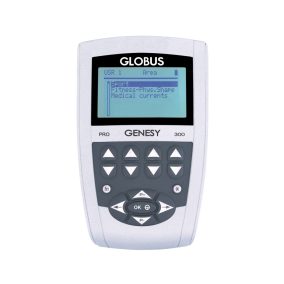


Genesy 300 Pro multifunctional electrotherapy device. TENS / EMS / MCR-MENS / FES / iontophoresis. 4 channels, battery-powered.
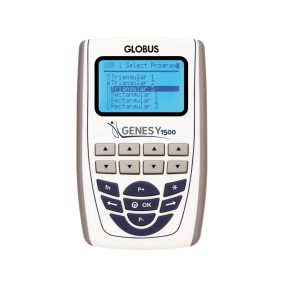


The Globus Genesy 1500 — one device for hundreds of complaints.
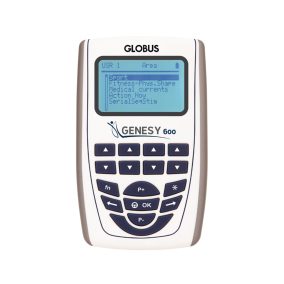


Genesy 600 multifunctional electrotherapy device. TENS / EMS / MCR-MENS / FES / iontophoresis / denervated. 4 channels, battery-powered.
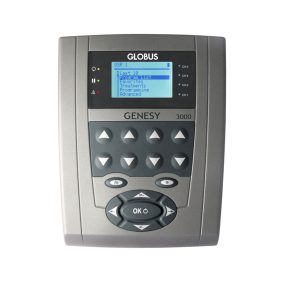


A Globus Genesy 3000 is a single device for hundreds of complaints.
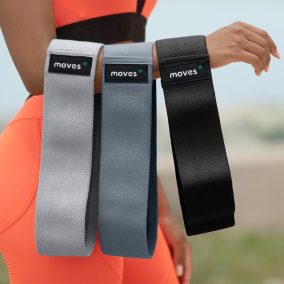


The Moves Resistance Fabric Loops set is a modern and comfortable solution for those who want to effectively develop their muscle strength, mobility, or stability. The set, containing three fabric loops with different levels of resistance, is an ideal choice for functional training, rehabilitation, and body shaping.
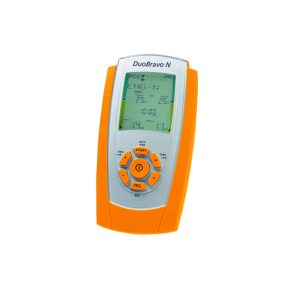
A device specialised for treating central paralysis (e.g., post-stroke) and movement disorders, with EMG-triggered muscle stimulation.




 How can functional stimulation help with ALS?
Functional electrical stimulation (FES) is a form of muscle stimulation intended to support a specific movement or ability – in ALS, primarily to preserve existing functions for as long as possible. Externally induced muscle contraction may help maintain muscle mass, ease stiffness, reduce pain, and support the function of the muscles needed for bladder and bowel control. It is important to be realistic: FES does not stop or reverse the disease. Instead, by easing symptoms and preserving functions, it supports quality of life – alongside medication and physiotherapy.
 Treatment is adapted to the stage of the disease
There is no one-size-fits-all approach to ALS. The appropriate stimulation method depends on the stage of the disease. In the early stage, while the muscle still has a nerve supply, conventional muscle stimulation (EMS/NMES) may be used. In the more advanced, so-called denervated stage (when the muscle loses its nerve connection), only a special, long-pulse selective stimulation current can trigger muscle contraction. This is why it is essential for your treating doctor to choose the device and settings, adapted to your current condition.
 Which type of device may be suitable?
The appropriate device depends on the type of stimulation you need. You and your treating doctor can decide this together. The overview below presents the main options.
While the muscles still have a nerve supply, multifunctional electrotherapy devices offering several programmes (EMS/NMES, TENS for pain, microcurrent) may be suitable for maintaining muscle mass, easing stiffness and relieving pain. They can be used flexibly for several types of symptoms. Set the specific programmes according to medical advice.
If the muscle has lost its nerve connection (denervated state), conventional muscle stimulation is no longer sufficient. A device that delivers a special, long-pulse selective stimulation current is then required. It is important to clarify this with your treating doctor in advance, because not every stimulator is suitable for this purpose. The right choice of device therefore depends on the stage of the disease.
EMG-triggered devices (which detect your own muscle effort and provide assistance in response) may help support remaining voluntary movement, primarily in movement disorders of central origin. Your treating doctor can assess whether this is relevant in your case based on your symptoms.
Important information
ALS treatment is a specialist medical task, and FES may only be used under medical guidance as part of that treatment. Stimulation on its own does not treat the disease and does not stop the process. The aim is to ease symptoms and preserve functions in order to support quality of life. Stimulation settings must be individualised. The wrong method may be ineffective or harmful, so professional supervision is essential. Electrical stimulation also has contraindications (for example, a pacemaker, a tumour in the stimulated area or fever). Discuss every step of device selection, programme choice and settings with your treating doctor or physiotherapist.
 Would you like to understand the details?
Dr. Zsolt Zátrok presents ALS and the role of functional stimulation in a detailed article – from the stages of the disease to choosing stimulation methods (EMS/NMES, selective stimulation current): ALS and functional muscle stimulation (FES) →
Frequently asked questions
No. ALS cannot currently be eliminated, and functional stimulation does not stop or reverse the disease. What FES may provide is relief from symptoms (the spread of muscle weakness, stiffness and pain), as well as preserving muscle mass and functions for as long as possible – in other words, supporting quality of life. This is an important goal, but it is best approached with realistic expectations and under the guidance of your treating doctor.
This is not a decision to make on your own. With ALS, the appropriate device depends on the stage of the disease. In the early stage, while the nerve connection is present, multifunctional (EMS/NMES) devices may be suitable. In the advanced, denervated stage, a device delivering a special selective stimulation current is required. Before buying anything, clarify with your treating doctor which type is suitable for your current condition. This helps prevent the purchase of an unnecessary or unsuitable device.
Because stimulation is more complex than taking a tablet. There is no protocol that applies to everyone, and treatment must be adapted to the symptoms and the stage of the disease. The wrong method may be ineffective or harmful, while a denervated muscle requires a special current waveform. Your treating doctor or physiotherapist can assess your current condition and create a safe, useful treatment plan accordingly.
Your treating doctor can advise you, but in general, early active involvement may help preserve muscle mass and functions for longer. The key is regular treatment guided by a doctor and adapted to changes in the disease. As your condition changes, the stimulation method must also be adjusted. This is why ongoing professional contact is particularly important.

