
Anesthesia — Should you be afraid of surgical general anesthesia?
Until the beginning of the last century, the main obstacle to the development of surgery was the lack of a method that could provide pain relief and calm during longer operations. It is obviously impossible to perform precise surgery on a patient who is screaming in pain, convulsing and struggling. Modern anesthesiology — the science of anesthesia and sedation — provides all this. Anesthesia […]

Until the beginning of the last century, the main obstacle to the development of surgery was the lack of a method that could provide pain relief and calm during longer operations. It is obviously impossible to perform precise surgery on a patient who is screaming in pain, convulsing and struggling. Modern anesthesiology — the science of anesthesia and sedation — provides all this. Anesthesia (literally “without sensation”, referring to loss of sensation) is a state in which those administering the anesthesia partially or completely block your perception, switch off pain sensation, and even the ability to move your muscles. In this state you not only cannot lift your arm, but your respiratory muscles also do not function. Thus the main objectives of anesthesiology — surgical anesthesia — are to reduce pain, prevent involuntary movements, and artificially maintain your vital functions during the procedure.
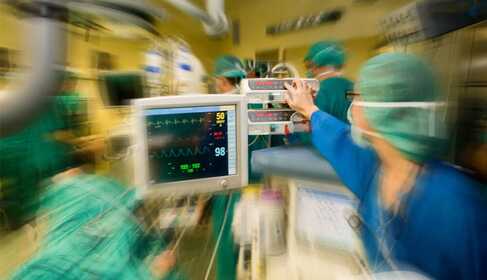
During a surgical procedure, the surgeon, the anesthesiologist and the assistants work together as a team.
General types of anesthesia
In the past, anesthetic agents were gaseous and had to be inhaled by the patient. Their use revealed an increasing number of side effects, which led to many studies to produce new agents with fewer side effects. A major milestone was the introduction of intravenously administered anesthetics, which are much more effective and require less equipment (although such agents also have disadvantages).
By method of application, anesthesia can be local, regional or general (affecting the whole body). In modern anesthesiology different types may be combined, which helps reduce the side effects of individual agents precisely because less of each drug is required.
With general anesthesia the anesthetized brain does not respond to pain signals and reflexes do not work. From the outside it may seem that you simply fell asleep, and you will probably perceive nothing of it, but in the background a much more complex neurological process is taking place.
During narcosis, or “general anesthesia”, all kinds of sensation/perception are shut down — besides pain, heat sensation, proprioception, motion sense and touch also disappear, and this effect extends to the whole body. Even consciousness is temporarily switched off. This is the origin of the term "anesthesia", although physiologically narcosis is not identical to natural sleep; rather it is a temporary paralysis of central nervous system cells caused by the anesthetic. The degree of brain function inhibition depends on the concentration of the anesthetic used. The course of narcosis can be divided into regularly following stages: the level of narcosis gradually deepens, analgesia develops, reflex activity decreases and muscle relaxation increases.
The main tasks of the anesthesiologist (also called the anesthetic physician) during and after surgical procedures are to eliminate and alleviate pain, and to monitor and maintain the patient's vital functions in balance. The anesthesiologist is also an intensive care physician and is therefore experienced in treating critically ill patients.
Anesthetic drugs (narcotics) are reversible (i.e., reversible) cellular poisons that have numerous side effects. Their side effects depend on the concentration of the drug used. Therefore the goal is always to use the anesthetic at the lowest effective concentration. There is no reason to worry, however, because before the procedure the anesthesiologist's task is to determine whether your body can tolerate the anesthesia or whether local or regional anesthesia (for example epidural anesthesia) should be used instead; they determine what to watch for and what treatments are necessary during and after the procedure.
Is general anesthesia really necessary?
The anesthesiologist or the specialist nurse will recommend the best anesthesia option for you in consultation with your surgeon, based on the type of surgery, your overall health and your individual preferences. For certain procedures the medical team may recommend general anesthesia. These include procedures that:
- take a long time,
- may involve significant blood loss,
- affect your breathing (especially chest or upper abdominal surgeries),
- cannot be adequately managed by other forms of anesthesia such as local anesthesia combined with light sedation (for a small area) or regional anesthesia (for a larger part of the body), which may not be suitable for more complex procedures.
Modern narcosis is up-to-date when the patient's airways are clear, mechanical ventilation is possible, the anesthetic can be administered precisely, and physiological parameters can be monitored continuously.
Before surgery the patient undergoes a thorough medical assessment. The preoperative evaluation depends on the nature of the surgery and the doctor's recommendation, but usually includes a complete blood count, ECG and chest x-ray.
Risks
General anesthesia is now very safe; most patients, even those with significant health problems, undergo it without major difficulties.
As mentioned earlier, several methods may be used for anesthetic administration. In mononarcosis a single agent is used to achieve the goal (e.g. classic ether narcosis). In combined general anesthesia the desired depth of “sleep” is achieved by combining several agents. The advantage of combined general anesthesia is that smaller amounts of each agent are sufficient, reducing the risk of overdose and avoiding harmful drug concentrations. Another advantage of combined general anesthesia is that it is easier to select the drug regimen that best suits the intended goal.
Before you worry about drug concentrations, it's important to know that complications depend more on the type of procedure and your general physical condition than on the anesthesia itself.
The main goals of surgical anesthesia are to switch off pain and harmful reflexes during the operation (reflex protection), to relax skeletal muscles, and to produce the unconscious state necessary for ideal exposure.
Older adults or those with severe health problems, particularly those undergoing extensive surgery, may be at increased risk of postoperative confusion, pneumonia, or even stroke and heart attack. Factors that increase the risk of these complications include:
- smoking,
- obstructive sleep apnea,
- obesity,
- high blood pressure,
- diabetes,
- previous stroke,
- other heart, lung or kidney conditions,
- medications such as aspirin that can increase bleeding,
- significant alcohol use in medical history,
- drug allergies,
- previous adverse reactions to anesthesia in the medical history.
These risks are usually more related to the surgery itself than to the anesthesia.
How the anesthetic is delivered to the body
Narcosis is achieved by delivering "anesthetic agents" (narcotics) to the cells and receptors of the central nervous system and to peripheral receptors.
Drugs reach their site of action via the bloodstream. There are several ways to introduce an anesthetic into the circulation.
A drug may enter the body through the gastrointestinal tract (via intestinal capillary circulation), across mucous membranes, by injection into tissues (intradermal injection, subcutaneous injection, intramuscular injection, intravenous injection), or by inhalation.
The pain relief and anesthetic methods used by anesthesiologists differ depending on whether they affect the whole body (general vs. local anesthesia) and whether the patient's consciousness is maintained during the procedure.
General anesthesia / narcosis / sedation
Under the effect of anesthetic agents administered intravenously or via a mask, the patient loses consciousness and the ability to feel pain. In some cases muscle relaxation is also necessary, so muscle relaxant drugs are given. In such cases the respiratory muscles do not function either, and mechanical ventilation is required during surgery (this is the purpose of anesthesia machines).
This approach is used for abdominal and thoracic surgeries. General anesthesia can be administered as inhalation anesthesia, intravenous anesthesia or combined anesthesia. Nowadays the latter is most commonly used, as it allows exploiting the advantages of both inhalation and intravenous methods, as mentioned earlier in this article.
Drugs used for anesthesia are generally given intravenously first, and maintenance is continued with inhaled agents. At the end of anesthesia, the effects of some of the drugs used can be reversed with appropriate antagonists. For other agents with no antagonist available, their effects gradually wear off once administration is stopped.
Spinal and epidural anesthesia
These are techniques close to the spinal cord, where an anesthetic is introduced with a thin needle into the appropriate part of the spinal canal (the epidural space), achieving analgesia by blocking the nerves running in the spinal cord.
In this case the patient remains conscious throughout; only the sensory nerves supplying the surgical area (a significant part of the body below the needle insertion point) are blocked. It is commonly used for lower limb or abdominal surgeries. Thanks to fine technique it is possible to block pain, touch and temperature sensation while preserving movement. This latter approach is often used in obstetric pain relief (so-called walking epidural analgesia). A single drug dose is often supplemented with a thin catheter, allowing continuous drug administration so that pain relief can be maintained for days.
Local anesthetic methods
These are generally used when it is sufficient to suspend the function of the nerve fibers supplying the surgical area by administering local anesthetic agents. Their use avoids some of the possible discomforts after general anesthesia, such as headache, nausea and vomiting. They are used in oral surgery and dermatological procedures. Generally, outpatient procedures are performed this way, but local anesthesia can also be used in hospital settings as part of combined modern anesthesia, as mentioned earlier.
Because artificial anesthesia is not a physiological state, it is advisable to use as little anesthesia as possible for any given patient. Some complex surgeries can only be performed through multiple, consecutive procedures. In such cases it is worth allowing some time between operations, as frequent anesthesia would be very taxing on the body.
Awareness during anesthesia
Estimates vary, but roughly one or two out of every 1,000 people may be partially aware during general anesthesia and experience the so-called unintended intraoperative awareness. Actual pain during such events is even rarer, but it can occur.
The selection of the appropriate anesthesia form is influenced by many factors. The primary consideration is the patient's overall condition. Important factors include blood pressure, heart status, body weight and age. In selecting the anesthesia type the surgeon's viewpoint is also considered: the surgical conditions (e.g. emergency surgery), the type and location of the surgery, the expected duration, and any special requirements (e.g. whether hypothermia (cooling of the body) is needed). The anesthesiologist's considerations are also decisive, including whether the surgery is planned (elective) or urgent.
Because muscle relaxants given before surgery prevent patients from moving or speaking, they cannot tell the doctors whether they are awake or feeling pain. In some patients this may cause long-term psychological problems, similar to post-traumatic stress disorder.
This phenomenon is so rare that it is difficult to establish clear associations. Some factors that may play a role include:
- emergency surgery,
- cesarean section,
- depression,
- the use of certain medications,
- heart or lung problems,
- daily alcohol consumption,
- use of a lower-than-necessary anesthesia dose during the procedure,
- errors by the anesthetic team — for example, not monitoring the patient or not measuring the anesthetic level in the body during the procedure.
General physical and exercise tests indicate whether the patient's body can "tolerate" anesthesia. With careful application, risks can be minimized and side effects treated.
How to prepare for anesthesia
General anesthesia relaxes the muscles in your digestive tract and airways that normally prevent food and stomach acid from entering your lungs. Therefore always follow your doctor's instructions about eating and drinking before surgery.
Usually fasting is required about six hours before the procedure. A few hours before surgery you may still drink clear fluids.
Your doctor may advise you to take some of your regularly taken medications during the fasting period, but only with a small sip of water. Be sure to discuss your regular medications with your doctor.
You may need to avoid certain medications at least a week before surgery, such as aspirin and some other over-the-counter blood thinners, because they can cause complications during surgery.
Regular use of some vitamins and herbal remedies — such as ginseng, garlic, Ginkgo biloba, St. John's wort and others — can also cause difficulties during surgery. Always discuss any dietary supplements with your treating physician.
If you have diabetes, discuss with your doctor how your medication will be adjusted during the fasting period. Usually oral diabetes medication is not taken on the morning of surgery. If you take insulin, your doctor may recommend a reduced dose.
If you have sleep apnea, inform your doctor. The anesthesiologist must carefully monitor your breathing during and after the procedure.
What to expect before, during and after the operation
Inhalation anesthesia is performed with gases (e.g. N2O) or vaporized agents.
Before the procedure
Before anesthesia the anesthesiologist will talk with you and may ask questions about:
- your medical history,
- prescription and over-the-counter medications and herbal supplements,
- allergies,
- previous experiences with anesthesia.
This helps the anesthesiologist choose the safest drugs for you.
During the procedure
The anesthesiologist usually administers anesthetic drugs via an intravenous line in your arm. Sometimes you may breathe a gas through a mask. Children often prefer to fall asleep with a mask.
General anesthesia begins with induction, which is the period from the start of administration of the induction agents to achieving suitability for surgery. During maintenance the necessary anesthesia is kept at the required level throughout the operation. During maintenance the patient's vital functions are continuously monitored. At the end of anesthesia (emergence), the patient is awakened either on the operating table or later in the recovery room or possibly in the intensive care unit.
After you have fallen asleep, the anesthesiologist may insert a tube into your mouth and trachea. The tube ensures you receive enough oxygen and protects your lungs from blood or other fluids, such as stomach contents. Before the doctors insert the tube you receive a muscle relaxant to loosen the muscles of the trachea.
Your doctor may use other options, such as a laryngeal mask airway, to help manage breathing during surgery.
One of the anesthesiologists watches you continuously while you sleep. They adjust your medications, breathing, temperature, fluid intake and blood pressure as needed. Problems arising during surgery are addressed with additional drugs, fluids and sometimes blood transfusion.
After the procedure
When the surgery is finished, the anesthesiologist stops giving the anesthetic agents to wake you. You will wake up slowly, either in the operating room or in the recovery area. When you first wake up you will likely feel somewhat groggy and confused. Common side effects include:
- nausea,
- vomiting,
- dry mouth,
- sore throat,
- muscle pain,
- itching,
- shivering,
- drowsiness,
- mild hoarseness.
After emerging from anesthesia you may also feel pain. The anesthetic care team will ask you about pain and other side effects. Side effects depend on your individual condition and the type of surgery. Your doctor may give medications after the procedure to reduce pain and nausea.
You will be monitored in a recovery room for a few hours where a nurse will continuously observe your condition, and after full recovery you will be moved back to the ward. Because of the anesthetic drugs, driving is not recommended for a few days after surgery, so arrange for a relative or friend to take you home.
General anesthesia is suitable for long operations because it allows surgeons to operate longer and work on parts of the body that are distant from each other. From your perspective it is important that you will feel no pain — time will pass quickly for you and you will not remember the surgery. Deep sleep can be achieved quickly and awakening after the procedure is rapid as the drugs are cleared.
General anesthesia in children
For children it is also important to achieve controlled unconsciousness during surgery or during longer examinations (e.g. MRI) with a general anesthesia that is safe for them. The anesthesiologist examines the child before surgery (to reduce the risk of complications) and provides all information about anesthesia.
In older children anesthesia may be given via an already placed intravenous cannula, whereas in younger children gas anesthesia is often used to minimize discomfort.
Complications may also occur in children after surgery; however, because they generally lack comorbidities and harmful addictions, the incidence is even lower than in adults.
Conclusion — the principle of “nil nocere”
Overall, general anesthesia is excellently applicable in children. They do not remember the surgery afterwards, and complete freedom from pain can be achieved for them, so their psychological burden is significantly lower.
Of course, like any activity, anesthesia carries risks. But so does everyday life — eating a meal, going out on the street, getting into a car — the list of seemingly harmless daily obligations is endless. We still do these things, and it is worth considering that if, for example, early-stage breast cancer is discovered in a young woman and surgery at that time could cure her, but she refuses the operation because she is very afraid of anesthesia, the curative operation could be delayed… Therefore trust your doctor's professional and ethical approach — and in planned cases it is not shameful to seek opinions from several specialists.
Many patients perceive anesthesia as something mystical and unknown, which causes serious fear. To prevent or reduce this fear it is very important that the patient receives all essential information about the upcoming procedure. In the doctor‑patient relationship, openness and trust are indispensable.
Technological progress is not only seen in surgery but also in surgical anesthesia, whose pharmaceutical and technical development has been rapid in recent decades. Thanks to this progress, even severely ill, elderly patients can undergo surgeries that would previously have been unthinkable.

