
 What is biofeedback and what is it good for?
The term biofeedback literally means biological feedback — a signal about how your body is functioning. A sensor shows in real time what a muscle is doing at the moment — for example how tense or relaxed it is — and by seeing or hearing this you can make subtle corrections. In short: you not only exercise the muscle, you also see whether you're doing it correctly.
This is especially useful in rehabilitation: pelvic floor exercises (for incontinence), relearning movement after a stroke, or regaining muscle control after a nerve injury are all much more effective when you get precise feedback about whether you are activating the right muscle.
 Can't decide which to choose?
Two things determine the choice: what you want to relearn (pelvic floor muscles for incontinence, or limb movement after stroke or nerve injury), and what type of sensing you prefer (EMG — electrical muscle signal, or pressure-based). In the detailed selection guide below we walk through all of this.
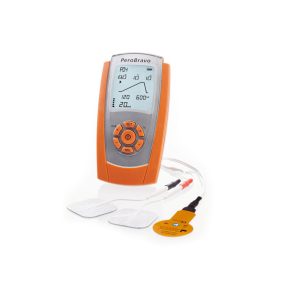
A selective stimulation device specialised for peripheral paralysis (e.g. peroneal or Bell's facial nerve palsy). Optimised for muscles that have lost their motor nerve (denervated muscle). Provides conventional and EMG-triggered stimulation.
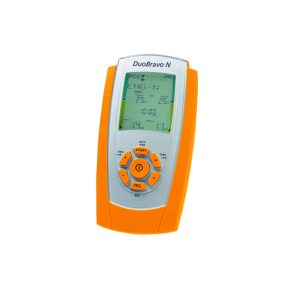
A device specialised for treating central paralysis (e.g., post-stroke) and movement disorders, with EMG-triggered muscle stimulation.
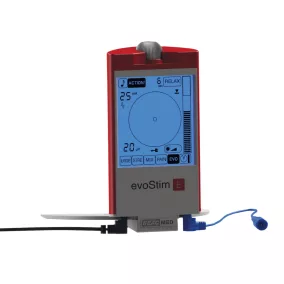
evoStim E stimulator with EMG-biofeedback / FES / ETS functions. Advanced incontinence therapy for stress, urge and mixed types. Vaginismus treatment.
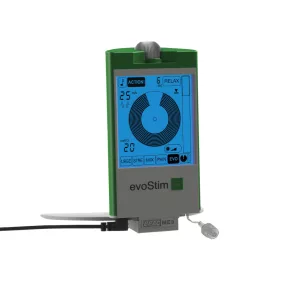
evoStim P: pressure-biofeedback / FES / ETS functions. Advanced incontinence treatment for stress, urge and mixed types. Vaginismus treatment.
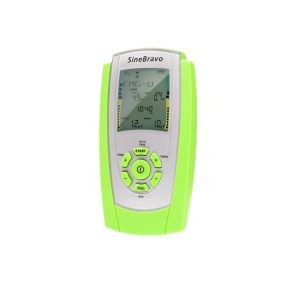
EMG-based biofeedback device that can help relearn movement after stroke and aid in incontinence treatment.
Biofeedback is a branch of electrotherapy treatments. Most devices listed here not only measure (provide feedback) but can also stimulate (FES / ETS), so feedback and targeted stimulation together support functional recovery.
 How does it work?
The device monitors a measurable signal from the body with a sensor and immediately feeds it back to you — on a display, or via sound or light. In rehabilitation the two most common sensing modes are:
- EMG (electromyography) based biofeedback – measures the electrical signal produced when a muscle contracts. It shows whether and how strongly you are activating the target muscle.
- Pressure-based biofeedback – a probe inserted into a body cavity (typically the vagina) measures the pressure generated during contraction. Many people find this more intuitive for pelvic floor training.
Many devices complement this with ETS (EMG-triggered stimulation): when you initiate a muscle contraction, the device delivers a stimulus pulse to "reinforce" the movement. This can aid relearning after stroke and is useful in pelvic floor training as well.
Which device should you choose?
The five devices in this category are designed for three distinct purposes: pelvic floor training / incontinence, post-stroke (central) rehabilitation, and muscle treatment after peripheral nerve injury. The table below helps you navigate.
| What do you want to achieve? | Sensing / mode | Recommended device |
|---|---|---|
| Incontinence | Muscle electrical activity (EMG) feedback + FES / ETS | evoStim E |
| Incontinence | Pressure feedback + FES / ETS | evoStim P |
| Post-stroke, relearning movement | EMG biofeedback without stimulation | SineBravo |
| Post-stroke, relearning movement | EMG-triggered stimulation (ETS) | DuoBravo N |
| Peripheral palsy (e.g. peroneal nerve, facial nerve) | Selective stimulation currents + EMG-triggered gait relearning | PeroBravo |
EMG or pressure for pelvic floor training?
If you are looking for a device for incontinence, you can choose between two approaches. Neither is inherently "better" — what matters is which gives you more understandable feedback.
 A brief guide
The evoStim E (EMG) reports the muscle's electrical activity — it subtly shows whether you are activating the correct muscle at all. The evoStim P (pressure) measures the pressure on the probe, which many users find more intuitive. Both can be used for stress, urge and mixed incontinence, and both offer stimulation (FES) in addition to feedback.
You can find a wider selection of pelvic floor devices among the incontinence treatment devices. If your goal is treating a denervated (nerve-lost) muscle specifically, also check the selective stimulation current devices.
What can biofeedback be used for?
Biofeedback can provide complementary help in many rehabilitation situations:
- Urinary and fecal incontinence: feedback can significantly increase the effectiveness of pelvic floor training
- Post-stroke rehabilitation: relearning movement and progressively regaining muscle control
- Peripheral nerve injury: targeted treatment of the nerve–muscle connection supported by feedback
- Post-prostate surgery control: supporting recovery of sphincter function
- Vaginismus: evoStim E and P devices can also be used for this purpose
 Dr. Zátrok's advice
The power of biofeedback lies in the fact that you see what the muscle is doing. Therefore the most important question is not how many programs a device has, but which type of feedback is clearest for you.
For incontinence and pelvic floor training, evoStim E (EMG) or evoStim P (pressure) are good starting points. For post-stroke movement relearning, consider SineBravo or DuoBravo N. For peripheral, denervated muscles, the target device is PeroBravo — ideally used under professional supervision.
Biofeedback is not magic, it is learning: regular, patient practice delivers the most tangible results.
 When NOT to use it?
These devices may provide stimulation (FES / ETS / electrical current) in addition to feedback, so the contraindications for electrical treatment apply. In the following cases, consult a physician before purchasing or using:
- Pacemaker or other implanted electronic device
- Severe cardiac arrhythmia
- Pregnancy
- Epilepsy
- Cancer in the treated area
- Active urinary or vaginal infection – before using a vaginal probe
- Damaged, inflamed or irritated skin – do not apply electrodes to such skin
The device does not replace medical examination
Biofeedback is an adjunct to rehabilitation and does not replace specialist medical care. In cases of stroke, nerve injury or incontinence, start treatment preferably in consultation with a professional and follow their recommended protocol.

