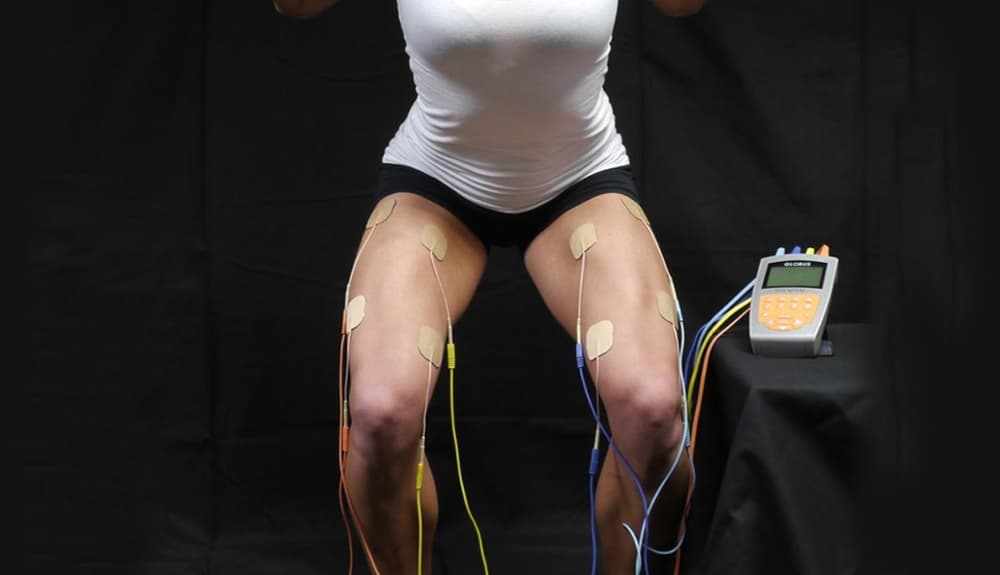
Biohacking with muscle stimulation
Improving performance (biohacking) is every athlete's dream. Improving performance, for example preparing for long-distance running, cycling, triathlon, etc., requires a lot of training. Most amateur athletes have the least time for that. They prepare in their spare time alongside work, family, and studies. In this article I will introduce a method with which you can “hack” training efficiency, and even gain training time! This method has long been part of medical therapy. In the 1970s–80s athletes also picked it up, but the technical level of the time did not allow the creation of sufficiently precise devices, so the initial enthusiasm quickly faded. However, technology has advanced enormously over the past 5–6 decades and today devices are available that make it possible to “dust off” the subject. Get to know the muscle stimulator and its sports applications.
Biohacking
Biohacking is a method aimed at improving human performance by consciously modifying biological processes. There are many places where you can intervene to improve performance. Nutrition has a proven effect on performance. Some new training methods (e.g., eccentric/concentric two-phase loading) provide more effective muscle development. The importance of mental preparation is also well known.
Biohacker
A biohacker is an individual who actively seeks methods and tools to optimize the functioning of their body.
A biohacker can be very technology-oriented, preferring devices, while others focus more on natural methods such as diet, lifestyle changes, or new training techniques.
Overall, the goal of biohacking is to find the best way to maximize your physical and mental capacity.
In this article I write about a medically recognized and proven biohacking method and the device for it that has been shown to be suitable for “hacking” treated muscles and improving performance — electrical muscle stimulation, i.e., EMS.
EMS (muscle stimulation) is not a new method!
Previously it did not spread because the devices were not effective enough. Nowadays it has become clear why! That is why today precise and effective muscle stimulator devices are available and applicable.
Many know the story that at the '72 Olympics the Soviet athletes used the muscle stimulation training developed by Dr. Kotz and attributed a significant portion of their sporting success to it.
Bruce Lee also experimented with the method, but finally gave it up because the treatment caused severe pain (it was only effective with high current intensity). These half-century-old “memories” remain in the public mind about the method, and for that reason it is little used.
In the meantime it turned out that the unpleasant sensation caused by the current was due to imperfect technical solutions, namely poor impulse generators. It is not enough to deliver an electric impulse; the "quality" of the impulse is very important. The more perfect square pulses the device delivers, the better the muscles respond, and with minimal discomfort.
Microchips have made it possible that today there are other precise impulse generators with which treatments can be carried out effectively — the kind of results hoped for in the 1970s.
Theory of muscle stimulation
I will not deal with the theory of muscle stimulation in this article. I will try to explain how you can apply it in sport, for example to improve endurance.
Read this article of mine: Basics of the theory of muscle stimulation, not only for athletes.
I will guide you through the basic and advanced knowledge of muscle stimulation. These are necessary for you to understand what I am talking about in this article:
Muscle stimulation – a supplementary method
Many people do not understand (or do not want to understand) what this is about. A muscle stimulator is of course not a replacement for training! It is considered as a supplement to training.
To be able to “hack” performance you need regular application (approximately 40–90 minutes daily) and for at least a few months.
If you have a hectic job, are constantly on the move, arrive home late and never sit down even for a moment, then (as with training) you will also have little time to stimulate — if this is your lifestyle, you will gain little benefit, at best it helps in case of injury.
If your work is mostly office-based and seated, then this is an ideal help for you. If you passively treat those muscle groups while sitting in the office, every treatment is like a "second" training session for those muscles! They will thank you a lot for it!
Muscle stimulation “intervention” possibilities
Muscle stimulation has exactly the same effect on the muscle as training, i.e., identical metabolic processes produce metabolites, muscle fibers break, the muscle fatigues and stiffens — but these are precisely what stimulate development.
The result can be influenced by the parameters of the stimulation impulse: with different impulses you can improve blood circulation, increase endurance, “wash out” metabolites, or relieve muscle cramps.
Let's review the possibilities offered by stimulators! You should know that — just as a single training session has no meaningful effect — you cannot expect effects from a single stimulation. Only regular, frequent application gives results. Integrate its use into your daily routine.
Muscle stimulation training programs
If you buy a sports muscle stimulator, you will find similar program names in every device.
- Warm-up (Warm-up): A short-duration program that raises the muscle temperature to prepare it for training. It triggers gentle, twitch-like muscle contractions, which stimulate blood flow and muscle metabolism and raise the temperature. Muscle and ligament stiffness decreases. The program thus creates the ideal physiological condition of muscle and tendon for training.
In injury treatment it is very useful because improved circulation brings oxygen- and nutrient-rich blood and simultaneously removes metabolites and toxins produced by the injury. - Pre-competition warm-up (PreCompetition Warm-up): Longer and deeper in effect than the Warm-up program. Should be used a few minutes before competition on the muscles most relevant to the given sport. If you train daily, use this rather than the regular Warm-up.
In injury treatment it is very useful because improved circulation brings oxygen- and nutrient-rich blood and simultaneously removes metabolites and toxins produced by the injury. - Capillarization (Capillarisation): This program is primarily recommended for endurance sports, but it is advisable for everyone in the early weeks of physical preparation. Use during season only for endurance sports!
It stimulates blood flow to the muscle, improves oxygen supply, and reduces fatigue during heavy physical work.
It supports the activity of the primary and secondary capillary systems to improve tissue oxygenation and reduce fatigue during heavy physical work. - Resistance (Resistance): Low-frequency treatment that mainly stimulates type I and to a lesser extent type IIa fibers. Recommended for endurance sports and rehabilitation (general recovery of muscle strength); it improves the muscle's long-term ability to exert high-level force and reduces fatigue by preparing for metabolite formation.
After injury, this is used to begin treatments aimed at regaining muscle strength. - Endurance (Endurance): Recommended for sports such as canoe/kayak, middle-distance running (800–1500 m), and combat sports where the muscle must operate at near-maximal effort for several minutes in an anaerobic (low-oxygen) state. It improves the muscle's ability to deliver high levels of force over a prolonged time; helps defend against toxin formation (acidosis), reducing fatigue. The program's long, forceful contractions are followed by short, active rest phases. Primarily stimulates type IIa fibers, thus improving the ability for several minutes of maximal effort.
- Aerobic resistance (Aerob resistance): Improves the ability to sustain a given effort long-term. Long-duration stimulation program adapted to improve the aerobic capacity of slow fibers.
You can use it after injury, but I recommend it only after you have completed a 10–14 day Resistance endurance course. - Hypertrophy (Hypertrophy): Can be used to increase muscle mass. High-frequency impulses targeting type IIb fibers produce intensive muscle work, which is primarily important for increasing muscle fiber size. Advantage: it can be focused on an important muscle or muscle group, so you can selectively train your weakest points.
After muscle injury, use this program only after full recovery. For rehabilitation or endurance sports, it is recommended at most once a week. Avoid in sclerosis and other neuromuscular damage, as the strong, tetanic contractions may increase spasticity. - Max. strength (Max. strength): Recommended when large force investment is required, for example in combat sports. Improves maximal force generation capacity and increases muscle mass. It can also reduce the risk of trauma when training with maximal weights.
After muscle injury, use this program only after full recovery. For rehabilitation purposes, use it only from the 3rd–4th week of a strength recovery course, and then only 1–2 times per week. - Reactivity (Reactivity): Optimal for ball sports and combat sports. Improves contraction speed. The stimulations are short, extremely intense and extremely fast. Reactivity is influenced in two ways: by accelerating fast fiber contraction and by increasing the activity of myotatic receptors.
After muscle injury, use this program only after full recovery. - Explosive strength (Explosive strength): Used for sports requiring maximal force in the shortest possible time (e.g., sprints, jumping and throwing events, volleyball, etc.). It increases the mass of muscle fibers that can be deployed in the shortest possible time, using the highest force level.
After muscle injury, use this program only after full recovery.
Muscle stimulation programs for cool-down and muscle regeneration
Studies show that regeneration stimulation started within 90 minutes after physical activity reduces muscle lactate levels by about 25–40%. Perhaps only compression ice-massage is more effective than this. The advantage of muscle stimulation, however, is that the device is small and easy to use, so you can deploy it anywhere and anytime, unlike the many-hundred-thousand forint compression and ice-massage machines.
- Active regeneration: Recommended for all sports, especially when there are multiple daily sessions. It stimulates muscle recovery, increases blood supply and reduces fatigue. It clears metabolites and lactate from muscles more effectively than traditional cool-downs, allowing the intensity of subsequent sessions to remain high. Especially recommended for repeated-load situations, for example during halftime breaks or between bouts in wrestling.
Excellent for relieving muscle stiffness and spasticity. - Post-competition regeneration: Longer and therefore more powerful than the Active regeneration program. Recommended after every training or competition in any sport. It aids the removal of metabolites and helps overcome muscle fatigue.
Excellent for relieving muscle stiffness and spasticity. - Muscle stiffness release: This program can be used anytime when a muscle has stiffened as a result of training and needs relaxation. It provides muscle relaxation and stimulates blood circulation (which helps remove waste products).
How to select treatment programs?
Whatever your goal, perform the Warm-up program before every training or competition on the especially important muscle group.
From my personal experience — as a physician, a former national-team athlete, and an amateur cyclist (about 5000 km/year) — I wholeheartedly recommend muscle stimulation to every athlete and sports enthusiast!