Blog
Do you know which sport you were born for? Of course this only matters if you compete and strive for the very best results. If you are not aware of your innate attributes and how they can be adjusted, you cannot rise above mediocrity. Your physical abilities are determined by many factors: your circulation, your breathing, the blood supply to your muscles, the development of your capillaries, the mitochondrial content of your muscles, the quality of your rest, your physical and mental state, your innate muscle-fiber ratio, and so on.

In our country, current statistics show that healthy life expectancy is around 50–52 years. Every second Hungarian adult has at least one chronic disease. These illnesses affect their daily lives, their ability to earn income, increase their expenses, and lower their standard of living. Yet no one addresses this. There are no awareness programs, and nowhere is the importance of a healthy lifestyle discussed. As a result, people are, of their own accord, rushing toward a fate determined by disease.
If you have joint inflammation, back pain, or any joint pain bothering you, you are almost always referred to physiotherapy, where you will very likely receive ultrasound therapy. If getting there is difficult or you are short on time, you can also buy a therapeutic ultrasound device. A good, usable device can be purchased for around 25,000 forints. That way you can use it at home.

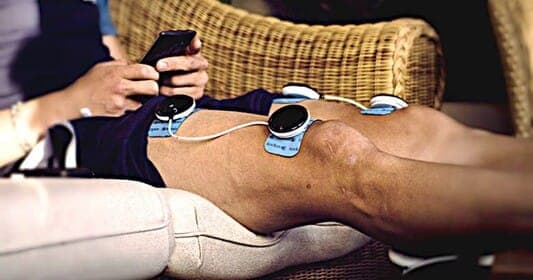
Electrical muscle stimulation (EMS) works on a simple principle: an electrical impulse sent through electrodes placed on the skin stimulates motor nerve fibers, and the action potential that travels along those fibers causes the muscle to contract just as when the brain sends a signal. This basic principle, however, is built on a complex physiological system — muscle fiber types, Henneman's size principle, frequency–fiber type relationships, and the limits of genetic predisposition.

You know that physical activity is important for your health and you exercise with some regularity. Yet instead of feeling fit and healthy, you constantly have pain somewhere. Your heel, knee, calf, hip. Do you feel like you step on a hedgehog when you take your first steps out of bed? You haven't been injured or strained and you can't understand what's wrong… If any of this sounds familiar, read my article! It's about the importance of warm-up.
Although ultrasound treatment is an excellent and effective method, it is not always suitable or applicable for everyone. What are the contraindications of ultrasound therapy? I discuss this in the third part of my film series on therapeutic ultrasound treatment. You can watch the previous part (Does the ultrasound beam itself heal?) by clicking here.
Therapeutic ultrasound treatment is almost a default physiotherapy method for muscle and joint complaints. But does the ultrasound beam itself heal, or does it only set the healing process in motion? I discuss this in the second part of my video series about therapeutic ultrasound treatment. You can watch the previous part (How ultrasound works) by clicking here.
The frequency of the ultrasound wave primarily determines how deeply it can penetrate tissues and thus what effect it is capable of producing. I discuss this in the fourth episode of my video series on therapeutic ultrasound treatment. You can watch the previous episode (Contraindications of ultrasound treatment) by clicking here.
The therapeutic ultrasound beam can be continuous or pulsed (intermittent). The continuous beam contains a lot of energy, which is excellent for chronic complaints. Fresh injuries are generally more sensitive to high energy, so in acute cases pulsed (with short breaks) ultrasound treatment is more appropriate. I discuss this in the fifth part of my video series about therapeutic ultrasound treatment.
Acute and chronic conditions require ultrasound beams of different strengths (intensities). A fresh injury needs a different treatment than one that has been present for a few months. I discuss this in the sixth episode of my video series about therapeutic ultrasound treatment. You can watch the previous episode (Information about continuous and pulsed ultrasound modes) by clicking here.
Ultrasound is excellent for cosmetic purposes. It can deliver the active ingredients of cosmetics into the deeper layers of the skin, which enhances the effect of these agents. I discuss this in the eighth episode of my film series on therapeutic ultrasound treatment. You can watch the previous episode (Determining the time required for an effective ultrasound treatment) by clicking here.