
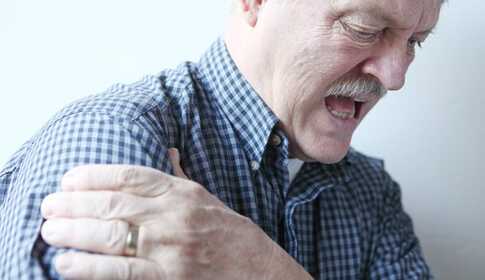
Can't get a therapy appointment despite your complaints? What can you do?
COVID has thoroughly reshaped medical care. Although the pandemic has subsided, the problem remains: clinic capacity is limited, access is centralized in many places, and waiting lists have grown. Pain, however, doesn't wait for a new appointment. What can you do if you have complaints but can't reach therapy fast enough—or if regular travel during working hours simply isn't possible? This article explains how to assemble an evidence-based home therapy system that complements (but does not replace) medical care.

First, the essentials: urgent or deferrable?
Some symptoms require immediate medical examination: sudden onset paralysis, chest pain, breathing difficulty, recent trauma with significant swelling/deformity, severe pain with fever, rapidly worsening neurological signs, suspected deep vein thrombosis, etc. These cases are not suitable for home treatment.
However, for chronic or recurrent musculoskeletal complaints, postoperative rehabilitation, persistent pain, circulatory/lymphatic problems, pelvic floor weakness, or peripheral nerve-related pain, home medical devices can help: they bridge waiting times and help maintain improvement between clinic visits.
Why is home treatment worth it?
Time-independence: you don't have to adapt to clinic opening hours. 20–40 minutes a day can be fitted into your routine.
Frequency: the effect of physiotherapy is dose-dependent. Less frequent clinic visits (1–2 per week) can be amplified by more frequent home treatments.
Cost-effectiveness: the price of a home device often rivals the cost of a 10–20 session course—while the device remains yours.
Continuity: treatment isn't undermined by missed appointments; improvements can be sustained.
What home medical devices could be considered?
The categories below are available as CE-marked devices designed for home use. The examples are not exhaustive but give a direction. Specific settings depend on the condition.
Pain relief and healing promotion
TENS (transcutaneous electrical nerve stimulation): proven for acute and chronic musculoskeletal pain. Several short daily treatments (20–40 minutes) are feasible; side effects are rare. Ideal as a "waiting-list bridge."
Microcurrent (MENS): low-intensity support for cellular-level processes; can be useful for stubborn, irritable tissue complaints, tendinopathies, and inflammatory processes.
Softlaser / photobiomodulation: anti-inflammatory and regenerative effects; an adjunct option for tendon, joint, skin and soft tissue problems, and wounds.
PEMF (pulsed electromagnetic field): used to support bone and soft tissue regeneration; an adjunct treatment for chronic pain.
Muscle strength, function, movement
NMES/EMS (muscle stimulation): muscle rebuilding after surgery/immobilization, targeted strengthening of quadriceps, gluteal and shoulder stabilizers; also a useful adjunct in neurological disorders.
Ultrasound therapy: local treatment for tight soft tissues, adhesions, and tendinopathies. It can open a "window" for less painful movement before physiotherapy.
Pelvic floor stimulators and biofeedback: structured home training for stress or urge incontinence, or weakness after childbirth/surgery.
Circulation and edema
Compression therapy unit (home pneumatic compression): an adjunct solution for lymphoedema, venous stasis, and the "heavy leg" sensation. Choosing the correct cuff size and pressure level is key.
How to build a safe home therapy routine?
1) Clarify the problem: test results, diagnosis, symptom diary. The diagnosis guides optimal device selection.
2) Match goal + device:
- pain → TENS / softlaser
- muscle weakness → EMS / NMES / Kotz stimulation
- tendon adhesions → ultrasound + SMR roller + stretching
- edema → compression therapy unit
- neuropathic pain → specific TENS protocols
- peripheral denervation → denervated (selective) stimulation, etc.
3) Regularity: more often, shorter, and consistently.
Typical—but not universal—durations: 20–40 minutes daily TENS, or 15–30 minutes EMS per channel, 1–2 softlaser treatments per day depending on area size.
4) Integrate movement: a device does not replace active therapy. Stretching, strengthening, proprioception and balance exercises—done in short, consistent blocks.
5) Checkpoints: assess weekly: pain scale, range of motion, load tolerance.
If there's no trend toward improvement within 2–4 weeks, modify the program or seek professional help.
Typical situations – what can you do now?
Low back pain, sedentary work: daily TENS blocks to reduce pain, targeted mobilization during micro-breaks, softlaser in the evening on paravertebral areas, and trunk muscle activation with EMS 3–4 times a week.
Post-knee surgery weakness: quadriceps EMS, softlaser around the surgical site (timed to the wound-healing phase), ultrasound later for scarred areas, and a daily physiotherapy exercise program.
Chronic ankle / Achilles complaints: softlaser and/or microcurrent cycles, ultrasound on tight areas, eccentric calf exercises. TENS to relieve pain after loading.
Leg swelling, “heavy legs”: compression therapy unit at low–medium pressure, leg elevation, compression stockings, gentle venous exercises. Seek medical check-up if asymmetry, sudden pain or redness appear.
Incontinence: pelvic floor stimulator and/or biofeedback program, gradual progression, and management of fluid and lifestyle routines. Regular objective checks (pad test, diary).
Safety — what to watch for
General: always follow the user manual. Some methods are contraindicated in acute infection, recent thrombosis, untreated cancer, or active bleeding.
Cardiac pacemakers/implants: do not place TENS over the chest-neck area in a way that current paths could cross the heart; individual medical consultation is recommended.
Skin: work on intact skin; pause and check if irritation occurs. Use sterile routines for wound treatment (softlaser).
Compression therapy: increase pressure gradually, use correct cuff size, and exclude medical contraindications (e.g., acute erysipelas).
"I don't have time to run around, but I'd like to heal." — fitting it into everyday life
Morning: 15–20 minutes EMS on the target muscle, two short TENS blocks during work, evening softlaser/ultrasound on the affected area, and 20–30 minutes compression therapy (if indicated). You don't need to do everything every day—but consistency is non-negotiable.
Financing — an investment in your time
Think in terms of a full course: if twice-weekly clinic visits for 6–8 weeks are unrealistic, a take-home device often "pays for itself" within a few weeks through saved travel, reduced lost work, and faster functional recovery. The device is also available later if symptoms recur.
Where to look?
On Medimarket.hu online store you can find controlled medical devices designed for home use.
We help you choose the right category and program (pain: TENS/microcurrent, inflammation/regeneration: softlaser/PEMF, muscle strengthening: EMS/NMES, tight soft tissues: ultrasound, edema: compression therapy unit, pelvic floor training: stimulator/biofeedback).
Have a question? Describe the diagnosis, symptoms, and goals — and you'll get a recommendation tailored to your daily life.

