
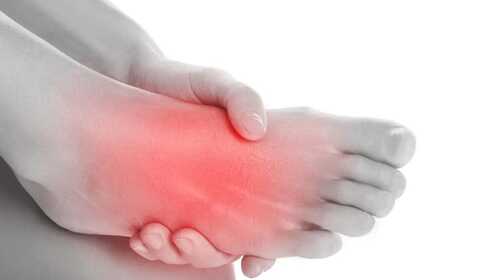
Causes of foot pain
The foot is a complex structure of bones, ligaments, tendons and muscles, containing 26 bones and 33 joints. It is strong enough to bear the entire body's weight. Because of its complexity, however, it is prone to injuries and pain. This can be caused by a condition affecting the whole body or by a problem local to the foot. Any part of the foot can be affected, from the toes to the Achilles tendon at the back of the heel.

Although mild stabbing pain often responds well to home treatment, it may take time to fully resolve. Severe foot pain should be evaluated by your doctor, and this is especially important if it appears after an injury. Therapy is often initiated by a rheumatologist or a rehabilitation specialist, but longer-term treatment is usually carried out with physiotherapy and physical therapy. In serious cases, surgical treatment of the foot may be necessary, but the postoperative care still includes physiotherapy and physical therapy.
Causes of foot pain
Achilles tendinitis
An overuse injury of the Achilles tendon. The tendon connects the calf muscles at the back of the lower leg to the heel bone.
It most commonly occurs, for example, in runners who suddenly increase the intensity or duration of their runs. It is also common in middle-aged people and in so-called weekend athletes who play tennis or basketball on their days off.
Most cases of Achilles tendon inflammation can be treated relatively simply with home care under medical supervision. Self-care measures are usually required to prevent recurrent symptoms. More severe cases can lead to tendon rupture, which may require surgery.
Achilles tendon rupture
An injury affecting the back of the lower leg. It mainly occurs in recreational athletes but can happen to anyone.
The Achilles tendon is a strong fibrous "rope" that connects the muscles at the back of your calf to your heel bone. If you overstretch this tendon it can tear partially or completely. The rupture is often accompanied by a popping sound, followed by immediate sharp pain at the back of your ankle and lower leg, which is likely to affect your normal walking ability.
Restoration often requires surgery, although in some cases non-surgical treatment is also effective.
Psoriatic arthritis
A form of inflammatory arthritis that affects some people with psoriasis — a condition that causes red patches of skin covered with silvery scales. In psoriasis, skin cells build up rapidly on the surface, forming those thick, silvery scales and itchy, dry, red patches that can be painful. In many people, psoriasis develops years before psoriatic arthritis is diagnosed. In others, joint problems may begin before or at the same time as the skin symptoms.
Joint pain, stiffness and swelling are the main signs and symptoms of psoriatic arthritis. These can affect any part of the body, including the fingertips and the spine, and the degree of pain can range from relatively mild to severe. Both psoriasis and psoriatic arthritis tend to flare and subside in alternating periods.
There is no cure. Treatment aims to control symptoms and prevent joint damage. Without therapy it can lead to disability.
Avulsion / fragment fracture
Occurs when a joint capsule, ligament, muscle attachment or origin is torn off the bone due to a dislocation or when a muscle must contract forcefully against resistance. When the soft tissue tears off the bone, a fragment of bone may also break away with it.
Ingrown nails
A common condition in which the corner or side of a nail grows into the soft flesh. The result is pain, redness, swelling and sometimes infection. It usually affects the big toe.
Often you can treat this pain yourself at home. However, if symptoms are severe or spreading, your doctor can take steps to relieve the discomfort and help prevent complications from an ingrown nail.
If you have diabetes or another condition that causes poor blood flow to your feet, you are at higher risk of potential complications.
Bunions
A bony bump that forms on the joint at the base of the big toe. It develops when some of the bones at the front of the foot move out of place. As a result, the tip of the big toe is pulled toward the smaller toes and the joint at the base of the big toe protrudes. The skin over the bunion can be red and painful.
Wearing tight, narrow shoes can cause or worsen bunions. They can also develop because of the shape of the foot, foot deformity or certain diseases, such as arthritis.
Smaller bunions can also appear on the joint of the little toe.
Bursitis (bursa inflammation)
A painful condition that affects the small, fluid-filled sacs called bursae that cushion the bones, tendons and muscles near joints and reduce friction between moving parts of the body's joints. It occurs when these small bursae become inflamed.
It most commonly affects the shoulder, elbow and hip, but can also occur in the knee, the heel (retrocalcaneal bursitis) and at the base of the big toe. It often occurs near joints that perform repetitive movements.
Treatment typically involves resting the affected joint and protecting it from further trauma. In most cases the pain subsides within a few weeks with appropriate treatment, but recurrent flare-ups are common.
Heel spur
A bony protrusion along the edge of a bone or at the point where a tendon attaches to the bone. The lesion is also referred to as an osteophyte.
Most heel spurs do not cause symptoms and may go unnoticed for years. The most troublesome symptoms are associated with spurs of the spine and the heel bone.
They develop where the Achilles tendon meets the heel bone and at the attachment of the plantar fascia to the heel. They cause severe pain, especially when taking the first steps.
Osteomyelitis (bone infection)
Infections can reach the bone through the bloodstream or spread from nearby tissue. They can also start in the bone itself if an injury exposes the bone to bacteria.
Smokers and people with chronic conditions such as diabetes or kidney failure are at greater risk of developing osteomyelitis. In the feet of people with diabetes, osteomyelitis can develop if they have a foot ulcer (diabetic foot).
Once considered incurable, osteomyelitis can now be treated successfully. Most people need surgery to remove dead bone, followed by prolonged high-strength intravenous antibiotics.
Diabetic neuropathy
High blood sugar (glucose) can damage nerves throughout the body, but most commonly damages nerves in the legs and feet.
Depending on the nerves involved, diabetic neuropathy symptoms can range from pain and numbness in the legs and feet to problems with digestion, the urinary tract, blood vessels and the heart. For some people symptoms are mild, while others may experience very painful, disabling symptoms.
It is a serious diabetic complication that can affect up to 50% of people with diabetes. However, it can often be prevented or its progression slowed by consistent blood glucose control and a healthy lifestyle.
Haglund deformity

It must be distinguished from a heel spur. Both Haglund deformity and heel spurs can cause pain at the back of the foot, but not in the same place. The Haglund heel develops at the origin of the Achilles tendon (the transition between the calf muscles and the tendon), whereas a spur forms where the Achilles tendon attaches to the posterior surface of the heel bone.
The Haglund deformity is associated with a bony prominence at the back of the heel that is often visible. It appears above the point where the Achilles tendon attaches to the bone. It is not always accompanied by calcification, but calcifications can develop if the Haglund deformity leads to chronic inflammation.
The Haglund deformity can impinge on the Achilles tendon, and the posterior heel prominence can grow into the tendon, where calcifications may form. People with a posterior heel prominence often find it difficult to find comfortable footwear.
Tendinitis (tendon sheath inflammation)
Inflammation or irritation of tendons — the thick fibrous "cords" that attach muscle to bone. This condition causes pain and tenderness near the joint.
It can occur in any tendon, most commonly around the shoulder, elbow, wrist, knee and heel. Some common names for various tendinopathies include:
- Tennis elbow
- Golfer's elbow
- Thrower's shoulder
- Swimmer's shoulder
- Jumper's knee
Most cases respond well to rest, physiotherapy and pain-relieving medications. If severe and leading to tendon rupture, surgery may be required.
Hammer toe
A foot deformity that usually develops due to an imbalance of the muscles, tendons or ligaments that normally keep the toe straight. Shoe type, foot structure, trauma and certain diseases can all contribute to these deformities.
A hammer toe is an abnormal bend in the middle joint of a toe. A bunion-like toe affects the joint closest to the toenail. Hammer toes and bunion-like toes usually affect the second, third and fourth toes.
Relieving pain and pressure caused by these conditions may include changing footwear and using shoe inserts. However, if the condition is more severe, surgery may be necessary to relieve pain.
Gouty arthritis
A common, complex form of arthritis characterized by sudden, severe attacks of pain, swelling, redness and tenderness in one or more joints, most often the big toe.
A gout attack can start suddenly, often waking you in the middle of the night with the sensation that your big toe is on fire. The affected joint is hot, swollen and so tender that even the weight of bed covers may be unbearable.
Gout symptoms come and go, but there are methods to treat symptoms and prevent flare-ups.
Flat feet (pes planus)
If the arch on the inside of the foot flattens, it is called flat feet. In this case the entire sole of the foot touches the floor when standing.
It is common and usually painless; it can occur when the arch fails to develop during childhood. In other cases it may develop after an injury or due to normal wear with aging.
Sometimes it can contribute to ankle and knee problems because it alters the optimal alignment of the legs. However, if you have flat feet and no pain, treatment is generally not necessary.
High heels or poorly fitting shoes
Metatarsalgia
A condition in which you experience pain and inflammation at the bases of the toes. Excessive pressure on the forefoot can affect the metatarsal bones — the long bones at the front of the foot, just under the toes. It can develop if you take part in activities that involve running and jumping. Other causes include foot deformity and shoes that are too tight or too loose.
Although usually not serious, it can incapacitate you for a while. Fortunately home treatments, such as ice packs and rest, often relieve symptoms. Wearing appropriate footwear with shock-absorbing insoles or arch support can prevent or minimize future problems.
Morton neuroma
A painful condition affecting the front of the foot, most commonly the area between the third and fourth metatarsal heads. It can feel as if you are standing on a pebble in your shoe or on a fold in your sock.
It involves a thickening of the tissue around one of the nerves leading to the toes. This can cause sharp, burning pain in the ball of the foot. The affected toes may experience stabbing, burning or numb sensations.
High heels or tight shoes have been associated with the development of Morton neuroma. Many people find relief by switching to lower heels and wider toe-box shoes. Sometimes corticosteroid injections or surgery are necessary.
Osteoarthritis and arthrosis
The most common form of arthritis, affecting millions worldwide. It develops when the protective cartilage that cushions the ends of the bones wears down. It can affect any joint but most commonly affects the hands, knees, hips and spinal joints.
Symptoms are generally manageable, although joint damage cannot be reversed. An active lifestyle (maintaining the strength of the muscles around the hip joint), maintaining a healthy weight and certain treatments can slow progression and help reduce pain and improve joint function.
"Osteoarthritis" refers to joint inflammation, while "osteoarthrosis" refers to joint degeneration. Arthrosis can be a consequence of long-standing joint inflammation.
Paget's disease
Disrupts the body's normal bone remodeling process, in which new bone tissue gradually replaces old bone tissue.
Over time the bones may become fragile and misshapen as a result.
It most often affects the pelvis, skull, spine and legs. The risk increases with age and if family members also have the disease.
For unknown reasons it has become less common in recent years, and when it does occur it tends to be less severe.
Complications may include bone fractures, hearing loss and nerve compression in the spine. Bisphosphonates — drugs used to strengthen bones weakened by osteoporosis — are mainstays of treatment. Surgery may be necessary for complications.
Peripheral neuropathy
The result of damage to the peripheral nerves — the nerves outside the brain and spinal cord.
It often causes weakness, numbness and pain, usually in the hands and feet. It can also affect other areas and bodily functions, including digestion, urination and circulation.
The peripheral nervous system sends information from the brain and spinal cord (central nervous system) to the rest of the body and also sends sensory information back to the central nervous system.
It can result from traumatic injuries, infections, metabolic problems, inherited causes and exposure to toxins. One of the most common causes is diabetes.
Pain is usually described as stabbing, burning or tingling. In many cases symptoms improve, especially if the underlying cause is treatable. Medications and TENS treatment can reduce complaints caused by peripheral neuropathy.
Raynaud's disease
A relatively common but often unrecognized syndrome that causes characteristic color changes in the toes due to arterial spasms. It can occur after exposure to cold, emotional stress, or other physical or drug-related triggers.
Distinguishing primary from secondary Raynaud's is important because secondary Raynaud's can lead to ischemic (poor blood supply) and gangrenous (tissue death) complications, whereas primary Raynaud's is usually benign.
Consultation with a rheumatologist is recommended to help assess for any underlying disease and guide future therapy.
Reactive arthritis
Joint pain and swelling triggered by an infection elsewhere in the body — most commonly the intestines, genitals or urinary tract.
It typically affects the knee and the ankle and foot joints. The inflammation can also involve the eyes, skin and urethra.
It was previously sometimes called Reiter's syndrome, which was characterized by inflammation of the eyes, urethra and joints.
It is not a common disease. In most people symptoms appear suddenly and then subside, often resolving within 12 months.
Rheumatoid arthritis
A chronic inflammatory disease that can affect not only the joints.
In some people the condition can harm many different body systems, including the skin, eyes, lungs, heart and blood vessels. It is an autoimmune disease in which the immune system mistakenly attacks the tissues of the body.
Unlike the wear-and-tear damage of osteoarthritis, rheumatoid arthritis affects the lining of the joints, causing painful swelling that can eventually result in bone erosion and joint deformity. As the synovial tissue (joint lining) becomes inflamed and thickened, fluid accumulates and the joints become eroded and break down.
The associated inflammation is what can damage other parts of the body. Although medications improve the condition, severe phases can still cause physical deformities.
Plantar fasciitis
One of the most common causes of heel pain. It involves inflammation of the thick fibrous band (plantar fascia) that runs along the bottom of the foot, connecting the heel bone to the toes.
It usually causes stabbing pain that is felt with the first steps in the morning. As you get up and move around, the pain typically decreases, but it can return after prolonged standing or when standing up after sitting for a long time.
It is more common in runners. Overweight people and those who wear insufficiently supportive footwear (e.g. walking barefoot on hard surfaces, thin-soled shoes, sandals) are also at increased risk of plantar fasciitis.
Plantar warts
Small growths that usually appear on the heel or other weight-bearing areas of the foot. Pressure can push them inward beneath a hard, thick layer of skin (callus).
They are caused by the HPV virus — the same virus types that cause warts on the hands and fingers. Due to their location they can be painful. The virus enters the body through tiny cuts, cracks or other weak spots on the foot.
They are mostly harmless and often disappear without treatment over time. You can try self-treatment or see your doctor to have the warts removed.
Tarsal tunnel syndrome
A syndrome of symptoms including pain, numbness and muscle weakness. The name refers to the fact that in the area an otherwise healthy nerve passes through a tunnel formed by tendons, muscles, vessels and bones; if this area narrows for some reason, the nerve is compressed in the tunnel. Similar conditions can occur elsewhere in the body (e.g. carpal tunnel syndrome).
In tarsal or plantar tunnel syndrome pain occurs from the big toe to the inner ankle due to compression of the tibial nerve, which can be caused, among other things, by wearing tight shoes.
Broken foot
An injury to one of the bones that make up the foot. It can happen in a car accident, from a misstep or a fall.
Severity varies: it ranges from small cracks in the bones to fractures that break through the skin.
Treatment depends on the exact location and severity of the fracture. In critical cases surgery may be required to insert plates, rods or screws into the broken bone to maintain proper alignment during healing.
An impact to the ankle can fracture one or more of the three bones that form the ankle joint — the fibula, tibia and talus. Twisting the ankle can cause fractures of the knob-like protuberances at the ends of the tibia and fibula.
Broken toe
A common injury most often caused by dropping something on your foot or stubbing your toe.
It is usually treated by taping the injured toe to an adjacent toe. However, if the fracture is severe — especially if the big toe is involved — a cast or even surgery may be needed for proper healing.
Most broken toes heal well, typically within 4-6 weeks. However, they can become infected or increase the risk of arthritis in that toe in the future.
Corns and calluses
Thick, hardened layers of skin that develop when the skin tries to protect itself from friction and pressure. They most commonly form on the feet and toes, as well as on the hands and fingers, and can be quite unsightly.
If you are generally healthy, treatment is only necessary if they cause discomfort. For most people, simply eliminating the source of friction or pressure will remove corns and calluses.
In diabetes or other conditions that cause poor blood flow to your feet, there is a greater risk of complications from corns and calluses. Ask your doctor for advice on proper treatment if you have any of these conditions.
Septic arthritis
A painful joint infection that can result from bacteria in the bloodstream from another part of the body. It can also occur if an injury, such as an animal bite or trauma, introduces bacteria directly into the joint.
It is most likely to occur in infants and older adults. People with artificial joints are also at increased risk. The knee is most commonly affected, but the hip, shoulder and other joints can be involved. The infection can rapidly and severely damage the cartilage and bone in the joint, so prompt treatment is crucial.
Treatment involves draining the joint with a needle or surgery and administering antibiotics.
Stress fractures
Small cracks in a bone caused by repetitive forces. They often result from overuse — for example, repeated hopping or long-distance running.
They can also occur during normal use if the bone is already weakened by a condition such as osteoporosis. They most commonly occur in the weight-bearing bones of the lower leg and foot.
Athletes and military recruits carrying heavy loads over long distances are at highest risk, but anyone can suffer a stress fracture.
If you start a new training program, you may develop a stress fracture if you do too much too soon.
When the foot is injured the body may alter the way the foot functions to reduce pain — but over time this can cause lasting movement problems: leading to further injuries and pain in other parts of the body (most commonly the knee, hip, neck or lower back).
The causes presented here are often associated with the symptoms described above. However, to establish an accurate diagnosis always work with your doctor or another health professional.
When should you see a doctor?
Even relatively mild foot pain can weaken both your physical and mental health.
Seek immediate medical attention if:
- You have severe pain or swelling.
- You have an open wound or the wound is producing pus.
- You notice signs of infection such as redness, warmth and tenderness in the affected area, or your temperature is above 37.8 °C (100 °F).
- You cannot walk or cannot really bear weight on your foot.
- You have diabetes and you have a wound that will not heal, or is deep, red, swollen or feels warm to the touch.
Schedule a clinic visit if:
- Your swelling is persistent and does not improve after 2-5 days of home treatment.
- You have long-term pain that does not lessen after several weeks.
- You experience burning pain, numbness or tingling, especially if it affects a large part or the entirety of the foot.
Self-care
If your foot pain is the result of an injury or overuse, it often responds well to rest and cold therapy. Avoid activities that worsen the pain and apply ice to the foot several times a day for 15–20 minutes. Over-the-counter anti-inflammatory medications also help with pain relief and healing.
Even with the best care, your foot may remain stiff or painful for several weeks, especially on waking or after activity. If you are unsure about the cause of your pain, or if it spreads or affects both feet (especially if you have diabetes), consult your doctor before trying home remedies.
Treatment depends on the cause and nature of the complaints and may include the following:
- Medication: If an underlying disease (gout, rheumatoid arthritis, lupus, diabetes) is causing the symptoms, treatment primarily targets those diseases. If a musculoskeletal injury is causing the symptoms, treatment often includes analgesics and anti-inflammatory drugs.
- Steroid injection: Used when pain is so severe that it "prevents" starting necessary physiotherapy.
- Orthotic devices: They do not replace physiotherapy; durable recovery is achieved by using them together with physiotherapy.
- Physiotherapy: Main elements include restoring muscle balance of the foot, improving foot mobility, strengthening and stretching.
- Physical therapy: Naturally produced energies help with pain relief and tissue healing. Treatments such as TENS, EMS, MENS, ultrasound therapy, softlaser treatments and magnet therapy can quickly, painlessly and affordably relieve symptoms. However, it is very important not to forget the importance of physiotherapy in conjunction with these treatments.
- Casting: Prolonged immobilization significantly reduces muscle strength and stiffens joints, so appropriate rehabilitation physiotherapy is very important after removing a cast or splint.
- Surgery: A major intervention that should only be performed when absolutely necessary and when other treatments have not been effective.

